
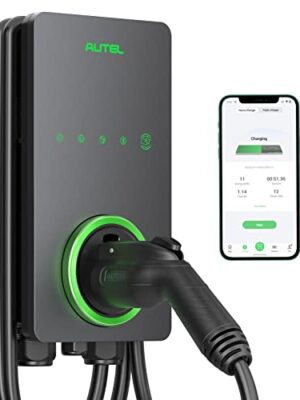
Autel Home Smart EV Charger delivers 50A (240V), up to 37 mi/hr. Hardwired, Wi-Fi/Bluetooth, 25-ft cable, NEMA 4, CSA-certified.
★★★★★
More details +
The Autel AC Lite EV Charger stands out for its fast charging speed, reliable safety features, and easy installation. Its high-quality build ensures durability, while the app integration adds convenience. While installation may require some attention to wire size, its performance makes it a solid choice for most EV owners.
PROS:
- Fast charging (50A, 12kW)
- Durable 25-foot cable
- Weatherproof NEMA Type 4
- Smart app control
- Easy installation
CONS:
- Small wire connection door
- Stiff charging cable
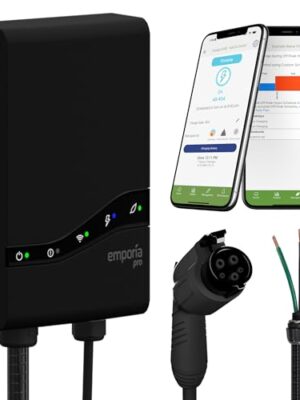
Emporia Pro EV Charger offers 48A fast Level 2 EV charging with PowerSmart Load Management. Includes NEMA 14-50 plug or hardwire installation options, 25' cable, and real-time energy optimization for efficient charging.
★★★★★
More details +
The Emporia Pro EV Charger is a feature-rich, futureproofed Level 2 charger that’s ideal for solar-ready homes. Its built-in PowerSmart Load Management and included Vue 3 Energy Monitor deliver exceptional energy savings and panel protection. Whether hardwired or plug-in, it’s a smart, powerful, and cost-effective EV charging solution.
PROS:
- Fast 48A charging (up to 11.5kW)
- PowerSmart Load Management for energy optimization
- Solar integration compatibility
- Wi-Fi-enabled with app control
- Flexible installation options (hardwired or plug-in)
- Built-in safety features and certifications
CONS:
- Requires dedicated electrical panel space for Vue 3 Energy Monitor installation
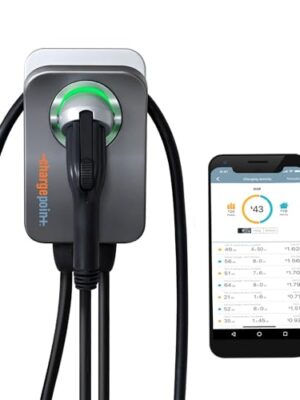
The ChargePoint Home Flex is a premium EV charger, offering fast charging, wide compatibility, and smart features for reliable, future-ready home use.
★★★★★
More details +
As an installer who’s worked with dozens of EV chargers, the ChargePoint Home Flex stands out for its flexibility, clean design, and smart features. The adjustable amperage makes it future-proof, and the app is unmatched in usability. A dependable choice for homeowners who value both performance and long-term reliability.
PROS:
- Easy installation with clear instructions and videos
- Flexible setup: plug-in or hardwired
- User-friendly mobile app for remote control and data
- Swiveling dock for tidy cable storage
- Safe and durable with UL certification
- Access to ChargePoint’s vast network of charging stations
CONS:
- Installation requires careful planning
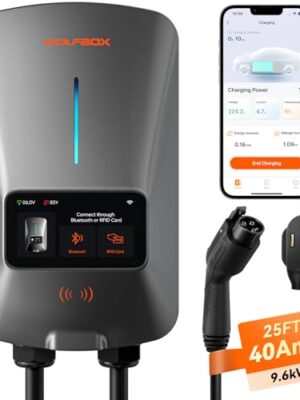
The WOLFBOX Level 2 EV Charger is a home Level 2 EV charger that offers fast, reliable charging with a sleek, weatherproof design. Featuring a 25ft cable, smart app integration, and compatibility with all J1772 EVs, it’s perfect for both home and public use. Choose between plug-in or hardwired models for convenient, future-proof charging at any location.
★★★★★
More details +
The WOLFBOX WE-40, WE-48, and WE-50 Smart Level 2 EV Chargers deliver dependable, high-power performance with durable construction, WiFi control, and excellent safety features. Each model suits different installation needs while maintaining consistent reliability and value. The WE-40 rates 8.7, the WE-48 scores 8.8, and the WE-50 leads at 8.9, averaging 8.8/10 overall.
PROS:
- Premium Quality Construction
- Smart Security Features
- Flexible Charging & Installation Options
- Durable and Weather-Resistant
- User-Friendly Design
CONS:
- Screen Visibility Issues in Direct Sunlight
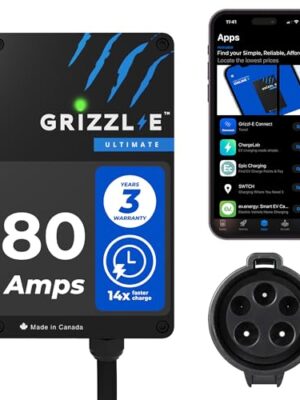
The Grizzl-E Ultimate 80A EV charger is a rugged, 80A Level 2 EV charger delivering up to 19.2 kW. Built for indoor/outdoor use with Wi-Fi, adjustable amperage, and J1772 or NACS connector.
★★★★★
More details +
The Grizzl-E Ultimate 80A EV charger impressed me with its rugged build and blazing 80A performance, its an 80 amp EV charger perfect for harsh outdoor installs and high-capacity EVs. But for future-proof smart charging, business applications, and solar EV charging integration, the Autel’s MaxiCharger 80A charger is the clear winner with V2G, bidirectional support, and OCPP 2.0.1 - it's built for homes and commercial applications that demand intelligence, not just speed.
PROS:
- Budget-friendly 80 Amp EV charger
- True OCPP Compliant
- Industry-leading 80A output for ultra-fast charging
- Rugged, weatherproof aluminum enclosure (NEMA 4X)
- Compatible with all EVs via J1772 or NACS
- Adjustable amperage for multiple breaker sizes
- Works offline and recovers after power interruptions
- Made in Canada with a 3-year warranty
CONS:
- No plug-in option (hardwired only)
- Smart features limited to OCPP 1.6
- No built-in energy optimization or load sharing
- App interface and diagnostics are basic compared to modern alternatives
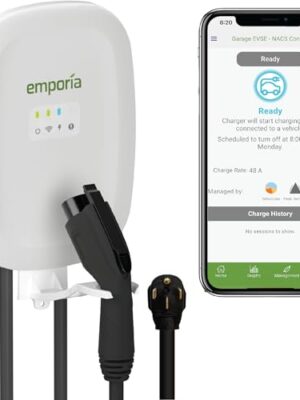
The EMPORIA Level 2 EV Charger delivers 48 amps of 240V charging with a 24ft cable and NEMA 14-50 plug. WiFi-enabled for smart features and remote monitoring, this J1772-compatible EVSE offers fast, reliable charging for electric vehicles. Ideal for home installations, it ensures efficient and convenient EV charging.
★★★★★
More details +
The Emporia EV Charger delivers fast, reliable Level 2 charging with flexible installation options, robust build quality, and smart app features for energy tracking and scheduling. It’s UL-listed, universally compatible, and competitively priced. While hardwiring can be challenging, its performance, value, and convenience make it an excellent choice for EV owners.
PROS:
- Fast charging up to 48 amps (46 miles/hour).
- Flexible installation: NEMA plug or hardwired.
- Smart app for energy tracking and scheduling.
- UL-listed and ENERGY STAR-certified for safety.
- Competitive price with strong build quality.
- Universal compatibility with SAE J1772 connector.
- Auto-restart after power outages.
CONS:
- App navigation could be improved.
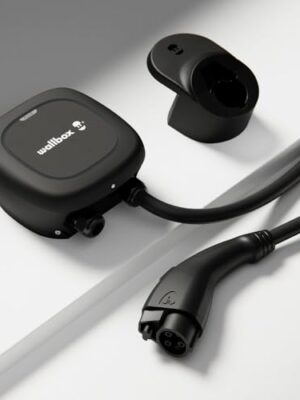
The Wallbox Pulsar Plus 48 Amp Level 2 EV Charger is an ultra-compact, smart charging solution with WiFi, Bluetooth, and voice control via Alexa/Google Home. Featuring a 25ft cable, it's Energy Star and UL certified for efficient, reliable charging. Suitable for indoor or outdoor use, and assembled in the USA.
★★★★★
More details +
The Wallbox Pulsar Plus 48-Amp EV Charger offers fast Level 2 charging, smart connectivity via the myWallbox app, and voice control through Alexa or Google Home. It’s versatile, with adjustable power settings and the ability to charge multiple EVs simultaneously. Compact, easy to install, and compatible with most EV models.
PROS:
- Compact and portable design, perfect for home or outdoor use.
- Smart connectivity with Alexa, Google Home, and the myWallbox app for remote control and scheduling.
- Adjustable power settings from 16A to 48A for flexible installation.
- NEMA-4 rating ensures durability in extreme weather conditions.
- Smart power-sharing allows charging of multiple EVs on one circuit.
CONS:
- Relies heavily on the myWallbox app, with minimal physical unit controls.
- Some users report Wi-Fi and Bluetooth connectivity issues, affecting remote access.
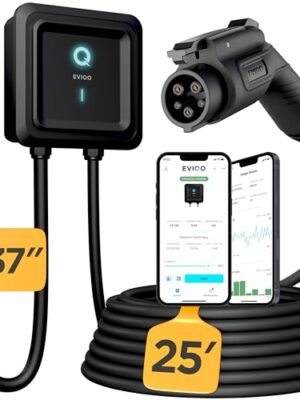
The EVIQO 48 Amp Level 2 EV Charger offers fast 240V charging with a 25-foot cord and NEMA 14-50 plug or hardwiring options. Energy Star and UL certified, this high-performance charger ensures safe, efficient charging for electric vehicles, making it ideal for both residential and commercial use.
★★★★★
More details +
The EVIQO 48 Amp EV Charger offers reliable, fast charging with adjustable amperage and a user-friendly app for scheduling and cost tracking. Its durable, weatherproof design ensures compatibility with all EVs, while the 25-foot cable provides flexibility. Efficient, easy to install, and supported by excellent customer service, it’s an excellent home EV charger.
PROS:
- Fast, efficient charging up to 48A.
- User-friendly app with scheduling and cost tracking.
- Durable, weatherproof design (NEMA 4, IP66).
- Flexible installation options for indoor and outdoor use.
- 25-foot cable offers ample reach.
- Broad compatibility with all EVs and PHEVs (Tesla requires adapter).
- Regular firmware updates and excellent customer support.
CONS:
- Cable can be stiff, making it less flexible during use.
- Hardwired installation required for full 48A performance.
- Requires NEMA 14-50 outlet or 60A+ circuit for installation.
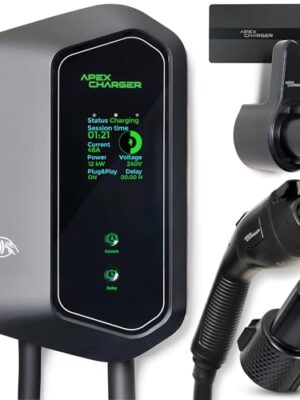
The ApexCharger MACH 1 EV Charger is a 48-amp Level 2 dual-connector charger supporting both J1772 and NACS EV charging. It features built-in Wi-Fi and Bluetooth, smart app control, and supports both NEMA 14-50 plug-in and hardwired installation.
★★★★★
More details +
The ApexCharger MACH 1 EV Charger is a high-performance 240V Level 2 EV charger that hits all the marks: fast charging, full EV compatibility, robust build quality, and intuitive smart features. Its dual-installation flexibility, built-in access control, and included Tesla adapter make it one of the most complete charging solutions on the market today.If you want a charger that’s built to grow with your EV ownership—whether for your first EV or your third—the MACH 1 delivers. For its price point and feature set, it’s one of the best 48 Amp EV chargers available in the market today.
PROS:
- Fast 48A Level 2 charging (11.52 kW)
- Compatible with all EVs, including Tesla (NACS adapter included)
- Flexible installation: NEMA 14-50 or hardwired
- Long 30ft cable and RFID access control
- Weatherproof, durable build (IP67 rated)
CONS:
- Not portable; best for permanent home use
- Smaller 2.4" screen with limited display features
- No Level 1 charging support
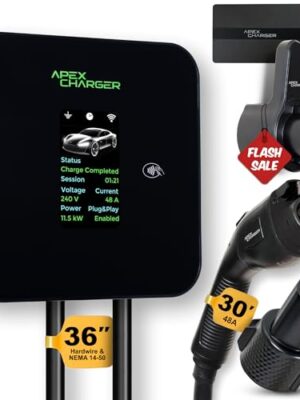
The ApexCharger MACH 2 EV Charger is a premium dual-connector 48A Level 2 charger featuring a 360° LED ring, a 5.7" smart display, Wi-Fi, app integration, and a rugged IP67-rated 30ft cable.
★★★★★
More details +
The ApexCharger MACH 2 blends fast 48A charging with sleek design and intuitive smart features. Its vivid display and LED ring elevate usability, though sunlight glare may affect visibility. Ideal for multi-EV households, it’s a solid pick, if you don’t need full Tesla app integration or a tight budget solution.
PROS:
- Fast 48A charging supports quicker EV top-ups.
- Dual installation options: NEMA 14-50 plug or hardwired.
- Bright 5" display and 360° LED ring enhance user feedback.
- RFID access control adds security.
- Compatible with both J1772 and Tesla (via adapter).
CONS:
- Display visibility suffers in direct sunlight.
- Lacks full Tesla app integration.
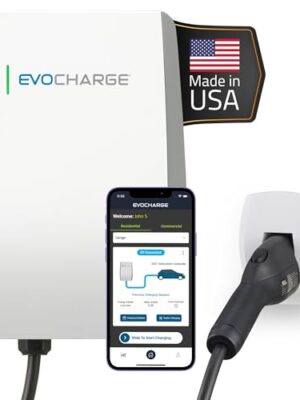
The EvoCharge Home 50 EV Charger is a 50 Amp, 240V Level 2 EV charger available in J1772 or NACS (Tesla) versions. Hardwired for safety, it delivers up to 45 miles of range per hour with smart scheduling, remote control, and energy tracking. Ideal for indoor or outdoor home installation.
★★★★★
More details +
The EvoCharge Home 50 is a premium-grade, hardwired Level 2 EV charger that delivers exactly what experienced EV owners need: fast, safe, and reliable home charging with smart control and high build quality.While it lacks the flashy design of the Wallbox Pulsar Plus or the in-depth analytics of Emporia, it wins on reliability, simplicity, and charging performance. It’s particularly well-suited for households with large-battery EVs or homeowners installing permanent 50A circuits with future expansion in mind.If you’re looking for a rugged, made-in-America charger with UL safety, Energy Star efficiency, and weatherproof reliability, the EvoCharge Home 50 is one of the best choices you can make today.
PROS:
- Hardwired 50A (12kW) charging delivers faster EV charging.
- Robust NEMA 4 weatherproof rating for indoor/outdoor use.
- Flexible installation with multiple conduit entry points.
- Mobile app supports scheduling, energy monitoring, and user sharing.
- Made in the USA with UL and ENERGY STAR certifications.
CONS:
- Direct manufacturer support and returns are no longer available.
- No J1772 to NACS (Tesla) adapter included; must purchase separately.
- Wall mount bracket sliding design complicates installation in lock boxes.
- Challenges with OCPP protocol access and internal web portal login
- 50A setup requires higher-rated breaker and thicker wiring, increasing installation cost.
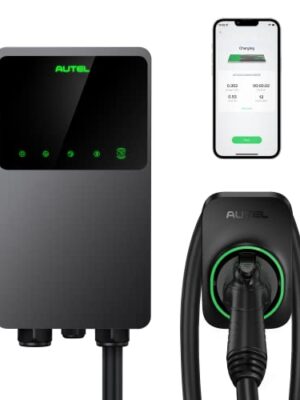
The Autel MaxiCharger Home EV Charger offers up to 50 Amps of 240V Level 2 charging with WiFi and Bluetooth connectivity for smart, remote control. Designed for both indoor and outdoor use, it features a 25-foot cable, a separate holster, and a rugged dark gray finish, ensuring durability and efficient charging.
★★★★★
More details +
Durable 25-foot cable with NEMA 4X protection for outdoor and indoor use.
Adjustable power output up to 50 Amps.
Reliable Wi-Fi, Bluetooth, and Ethernet connectivity for seamless updates.
Mobile app for tracking, scheduling, and optimization of charging.
Solid build quality with good customer support and a 3-year warranty.
PROS:
- App lacks intuitiveness, leading to confusion with scheduling features.
- Charging history resets yearly with app updates.
- Stiff charging cable is difficult to handle in cold weather.
- No screen on the charger to display key details like power or duration.
CONS:
- The Autel AC Elite EV Charger offers reliable performance with solid build quality and useful app features, though the app's confusing interface and cable stiffness in cold weather detract from its overall user experience. It’s a great choice for those seeking basic charging functionality and durability.
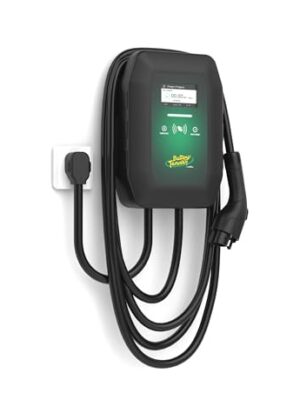
The Battery Tender eCharge 48 AMP EV Charger is a high-capacity Level 2 electric vehicle charger, optimized for 240V power to deliver rapid charging. Designed for both indoor and outdoor use, this powerful charger is ideal for high-demand EV charging scenarios, ensuring fast and reliable power for your electric vehicle.
★★★★★
More details +
The eCharge 48 AMP is a powerhouse with 48A output, designed for heavy-duty use, featuring durable materials, professional-grade craftsmanship, and fast charging speeds, its high price and complex installation are offset by unmatched performance, making it ideal for commercial or demanding residential EV charging needs.
PROS:
- Offers 48A output, providing the fastest charging times.
- Suitable for heavy use and commercial applications.
- Built to withstand tough conditions, both indoors and outdoors.
CONS:
- The most expensive model in the Battery Tender EV chargers lineup.
- Requires professional installation and setup.
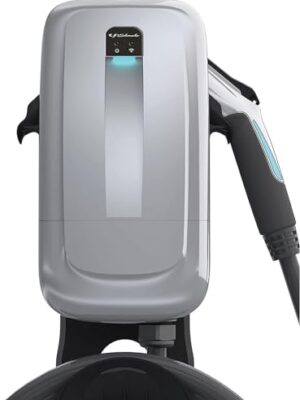
The Schumacher SEV1600P650 Level 2 EV Charger delivers 50 Amps of 240V charging, offering up to 9X faster charging than standard models. Compatible with NEMA 6-50 plug or hardwiring, it features Bluetooth/WiFi connectivity for remote monitoring and control. Ideal for indoor or outdoor installation, it ensures efficient, reliable performance.
★★★★★
More details +
The Schumacher 50 Amp EV Charger delivers fast, reliable EV charging with adjustable current up to 40A and a weather-resistant design for outdoor use. Its 25-foot cable adds flexibility, and the SchuPower app enables remote monitoring. However, it lacks smart home integration and requires a separate adapter for Tesla vehicles.
PROS:
- Fast charging with adjustable current (16A to 40A) for faster performance
- Weather-resistant raintight enclosure for reliable outdoor use
- 25-foot cable offers flexibility for garages and driveways
- Compact space-saving design with pulsing LED indicators
- SchuPower app allows remote tracking of charging progress
- Clear instructions make installation simple
CONS:
- Lacks integration with Google Home, Apple Home, or Alexa
- SchuPower app is functional but lacks advanced features
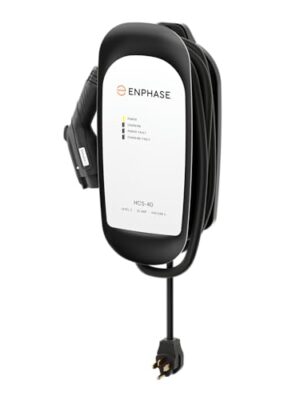
The Enphase 32 Amp Plug-in EV Charger (HCS-40) with NEMA 14-50 plug offers 7.7kW power for fast, reliable charging. Featuring a durable 25 ft cable and J1772 ruggedized connector, it ensures compatibility with all EVs. Backed by a 5-year warranty, this charger provides robust, long-term performance for home use.
★★★★★
More details +
The Enphase HCS-40 Level 2 EV Charger offers fast, safe charging with a durable design and easy installation. It works with all plug-in EVs and integrates with Enphase solar systems. While it’s pricier and has a tangling rubber cord, its reliability and performance make it a solid choice.
PROS:
- Fast charging up to 7.7 kW, seven times faster than Level 1 chargers.
- ETL safety certified and ENERGY STAR rated for reliability.
- Durable, weatherproof NEMA 4 enclosure.
- Easy installation with NEMA 14-50R outlet and 40 Amp circuit.
- Compatible with all plug-in EVs, ideal for models up to 7.7 kW.
- Integrates with Enphase solar systems for eco-friendly charging.
- Includes 5-year warranty and 24/7 support.
- 25-foot cable with storage options for convenience.
CONS:
- Expensive compared to other chargers.
- Rubberized cord can tangle and is hard to manage.
- Bulkier than some alternatives.
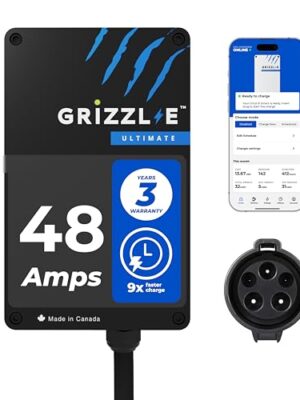
The Grizzl-E 48A Ultimate Level 2 EV Charger offers fast, efficient charging with a UL-tested, certified metal case. Designed for indoor and outdoor use, this hardwired station features a J1772 connector and a sleek black finish. With a maximum output of 48 amps, it provides reliable charging for all-electric vehicles, supporting 16A to 48A charging needs.
★★★★★
More details +
The Grizzl-E 48A Ultimate Level 2 EV Charger is a reliable and well-built product, offering efficient charging with a solid UL-tested metal case. The design is sleek, and it performs well across various amps (16A-48A). With strong brand reputation and excellent value, it provides good durability and craftsmanship for long-term use.
PROS:
- Fast, efficient charging with 48A output
- UL-tested, certified metal case for durability
- Suitable for both indoor and outdoor use
- Sleek design with J1772 connector
CONS:
- Requires hardwiring installation only, limiting flexibility
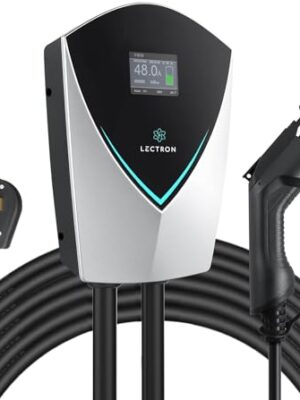
The Lectron V-Box 48 Amp Level 2 EV Charging Station offers 240V power with a NEMA 14-50 plug or hardwired option. Certified Energy Star and ETL, it ensures efficient, reliable charging for J1772-compatible electric vehicles. This robust charger delivers fast, safe performance, making it an ideal solution for home use.
★★★★★
More details +
The Lectron V-Box 48 is a powerful and reliable Level 2 charger, ideal for home EV charging. With a durable 20-foot cable, an IP55 rating, and Energy Star certification, it delivers solid performance. However, the lack of smart features and a shorter warranty compared to competitors are notable drawbacks.
PROS:
- 48-amp output for fast charging
- Energy Star certified; eligible for rebates
- Durable, IP55-rated enclosure
- Clear display with useful metrics
CONS:
- No smart features or WiFi connectivity
- Short 1-year standard warranty
- Connector feels less durable than competitors
- Cable could be longer
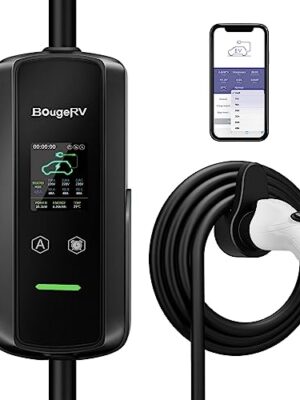
The BougeRV 48 Amp Level 2 EV Charger offers a maximum of 11.52kW output with an adjustable current and a customizable charging schedule. Featuring a NEMA 14-50P plug and a 25ft cable, it provides fast, flexible charging for electric vehicles in both indoor and outdoor settings, ensuring efficient, reliable power delivery.
★★★★★
More details +
The BougeRV 48 Amp EV Charger delivers fast Level 2 charging with adjustable currents and scheduling features. Its 25-foot cable and IP67 waterproof rating make it ideal for indoor or outdoor use. Safety protections, a 3-year warranty, and 24/7 support ensure reliability, all at an affordable $349.99 price point.
PROS:
- Durable construction with high-quality materials
- Flexible voltage compatibility supports various setups for seamless operation.
- Adjustable amp output with six current settings (10A-48A) provides customized charging for different needs.
- Scheduled charging feature optimizes efficiency and reduces energy costs during off-peak hours.
CONS:
- Heat issues can arise when exposed to direct sunlight in extremely hot conditions, requiring shaded placement.
- Limited Wi-Fi app functionality lacks advanced features for remote monitoring and control.
Show next