Supported by you via insider access, and when you purchase through links on our site, we may earn an affiliate commission. See our Affiliate Disclosure.
Best ENERGY STAR Certified EV Chargers
If your utility offers an EV charger rebate and you need to know which chargers qualify, you are in the right place, because ENERGY STAR certification is the qualifier that most major U.S. utility rebate programs require. Every charger in this grid carries verified ENERGY STAR status confirmed against the official EPA-certified products list. Rebates from utilities like PG&E, ConEd, Eversource, and Puget Sound Energy typically range from $200 to $1,500. When combined with the federal Alternative Fuel Vehicle Refueling Property Credit of up to 1,000 dollars, the combined benefit can offset most or all of a typical Level 2 installation.
What ENERGY STAR certification actually tests is different from what UL or ETL verify: the EPA focuses on standby power consumption (capped at 3 watts while no car is plugged in), active charging efficiency (minimum 88 to 90 percent of input power delivered to the battery), and smart grid integration capabilities that utilities need for demand response programs. Because of that, ENERGY STAR certification is both the efficiency badge and the financial gateway, and a charger carrying the mark has been verified to waste less electricity and communicate with grid programs in a way most utility back-end systems are built to use.
Before buying, verify the specific model in the ENERGY STAR Certified Products database at energystar.gov, since certification applies to specific model numbers and some brands have certified and uncertified variants within the same product line. Your utility’s rebate page will also specify whether pre-approval is required before purchase, since missing that step can make a rebate application ineligible even on a qualifying charger.
Our ENERGY STAR Certified EV Chargers Reviews
Independent reviews, rigorous testing standards, and expert insights to help you choose the most efficient, safe, and cost-effective ENERGY STAR Certified EV Charger for your home.
Use the “Compare” button on each product to select multiple chargers, then click the ⚖️ scale icon to see a full side-by-side comparison.
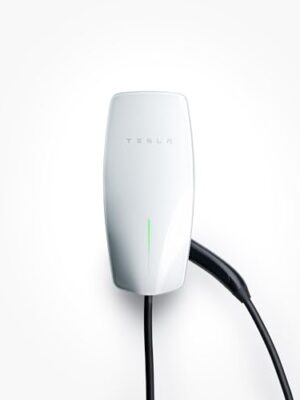
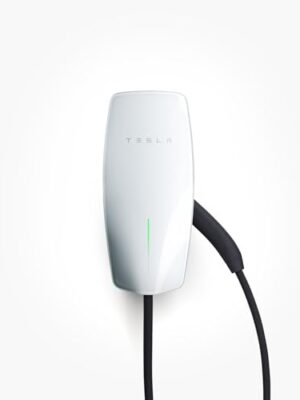
Tesla Universal Wall Connector delivers 11.5 kW smart EV charging for both residential and commercial use. Unique features include bidirectional charging, Group Power Management (GPM), Magic Dock, and a wide range of add-on EV charging accessories.
The Tesla Universal Wall Connector is a robust, forward-thinking EV charger designed for mixed EV households. It offers advanced smart charging features, including bidirectional charging when paired with compatible vehicles like the Ford F-150 Lightning and the Tesla Cybertruck. When integrated with renewable energy systems, it becomes an even more powerful solution, enabling efficient energy management. However, due to its high electrical load and complex features, professional installation and careful handling are essential to ensure optimal performance and safety, making it a top-tier choice for future-proofed EV charging setups.
Features
9.7
Real World Usage
9.5
Materials
9.5
Durability
9
Craftsmanship
9
Design
9
Monetary Value
9
Product Value
9.5
Brand Reputation
9.5
Expert Valuation
9.5
PROS:
Versatile Charging (Supports Tesla and J1772-compatible electric vehicles)
Advanced smart features
Renewable energy integration
Features a modern and minimalist design that complements most homes
Integrates into the Tesla mobile app for remote monitoring.
Allows bi-directional EV charging
CONS:
Requires professional installation
The non-replaceable J1772 adapter may limit flexibility for some users
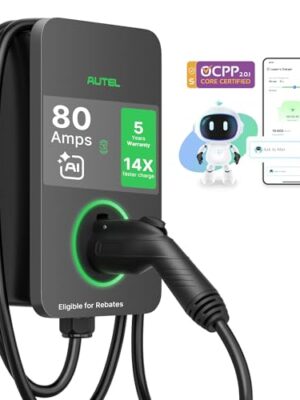
Autel MaxiCharger 80A EV charger delivers 19.2 kW smart EV charging for home, business, or commercial use with OCPP 2.0.1, Integrated Cloud with AI, and Wi-Fi/4G/Wi-SUN connectivity.
As an EV charger reviewer, I was impressed by the Autel MaxiCharger 80A’s power, smart EV charging capabilities for business, workplace and commercial installations, future-proof protocols, and rock-solid reliability. It delivers blazing-fast 19.2 kW charging, supports OCPP 2.0 and ISO 15118, and feels commercial-grade throughout.
Features
9.5
Real World Usage
9.5
Materials
9
Durability
9
Craftsmanship
9
Design
9
Monetary Value
9
Product Value
9
Brand Reputation
9
Expert Valuation
9
PROS:
80A / 19.2 kW ultra-fast Level 2 charging
OCPP 2.0 & ISO 15118 smart protocols
Rugged, pedestal/kiosk-ready design
Scalable for commercial or fleet use
Dynamic load management support
CONS:
More expensive than competing 80 Amp EV chargers like the Grizzl-E Ultimate 80 Amp EV charger.
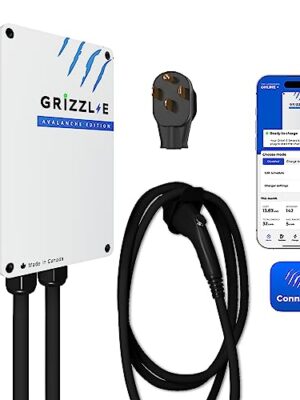
The Grizzl-E Smart Level 2 EV Charger (240V, 40A) is a budget-friendly smart EV charger with a rugged aluminum build, J1772 compatibility, UL-listed, Energy Star certified, and NEMA 14-50/6-50 plug support.
After months of testing, the Grizzl-E Smart cut my monthly charging costs through smart scheduling, saved me a $3,200 panel upgrade with load balancing, and as a solar owner, puts an extra $730 yearly back in my pocket. Add in $100 from utility Demand Response credits, and this charger pays for itself while the OCPP standard lets me switch apps anytime for better deals without replacing hardware.
Features
9
Real World Usage
9
Materials
9
Durability
9
Craftsmanship
9
Design
9
Monetary Value
9
Product Value
9
Brand Reputation
9
Expert Valuation
9
PROS:
The Grizzl-E Smart EV Charger is built to last, both indoors and outdoors.
Its minimalist design appeals to homeowners seeking a clean and modern aesthetic.
The Grizzl-E team is committed to enhancing the charger's features through regular updates and the Grizzl-E Connect app.
CONS:
Some users have reported concerns about the durability of the charging cable and connector.
The included wall mount may not be ideal for long-term use, potentially requiring additional support or accessories.
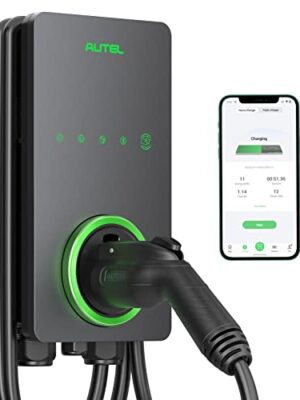
The Autel AC Lite EV Charger stands out for its fast charging speed, reliable safety features, and easy installation. Its high-quality build ensures durability, while the app integration adds convenience. While installation may require some attention to wire size, its performance makes it a solid choice for most EV owners.
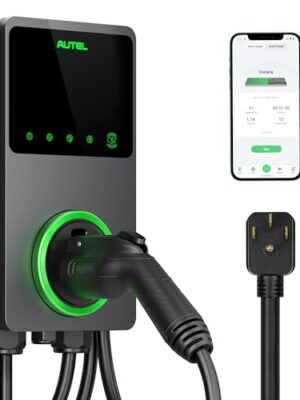
The Autel MaxiCharger Home Smart EV Charger (Autel AC Elite In-Body Holster EV Charger) offers NEMA 6-50 and 14-50 plug options for 40 amps and can be hardwired for 50 amps for faster charging. The built-in holster keeps the 25-foot cable organized, making it perfect for both indoor and outdoor use.
Charging Speed:12 kW
Max Amperage:50 Amps
Charging Level:Level 2
Connector Type:J1772
Cable Length:25 Feet
Connectivity:Bluetooth, Ethernet, Wi-Fi
Installation Type:Hardwired, NEMA 14-50, NEMA 6-50
The Autel AC Elite In-Body Holster EV Charger is an excellent choice for those seeking an easy-to-install, reliable, and feature-rich charging station. It delivers high performance, simplicity, and strong customer support, making it a great investment for EV owners.
Features
9
Real World Usage
8.5
Materials
9
Durability
9
Craftsmanship
9
Design
9
Monetary Value
9
Product Value
8.5
Brand Reputation
9
Expert Valuation
9
PROS:
Charges up to 7X faster than Level 1 chargers.
Supports both NEMA 6-50 and 14-50 plug options.
Adjustable power output up to 40 amps.
Easy installation (plug-in or hardwired).
User-friendly Autel mobile app for scheduling and optimization.
Wi-Fi, Bluetooth, and Ethernet connectivity for seamless operation.
25-foot cable for flexible reach.
NEMA 4 rating for reliable indoor and outdoor use.
Weather-resistant and durable construction.
3-year warranty with 24/7 customer support.
CONS:
App allows only one weekday and one weekend charge schedule.
No option for multiple off-peak timeframes in app.
May require a licensed electrician for installation (for hardwiring).
The latest Tesla Wall Connector adds smart features and now supports non-Tesla EVs. It offers fast, reliable charging, up to 44 miles of range per hour, with a 24-ft cable, app control, over-the-air updates, indoor/outdoor use, and a 4-year residential warranty. But is it worth it?
The Tesla Wall Connector offers fast, reliable charging with adjustable amperage and a 24-foot cord. It’s easy to install but requires professional installations. Pros include Wi-Fi connectivity and compatibility with Tesla electric vehicles compared to third party EV chargers. However, it lacks bi-directional charging for Cybertruck compatibility.
Features
9
Real World Usage
9
Materials
9
Durability
9.5
Craftsmanship
8.5
Design
9
Monetary Value
8.5
Product Value
8
Brand Reputation
9.5
Expert Valuation
8.5
PROS:
Fast, reliable charging (up to 44 miles per hour)
Adjustable amperage for flexible installation
24-foot cord for installation flexibility
Wi-Fi connectivity for over-the-air updates
Power-sharing for multiple chargers
CONS:
Requires professional installation
No bi-directional charging for Tesla Cybertruck powersharing compatibility
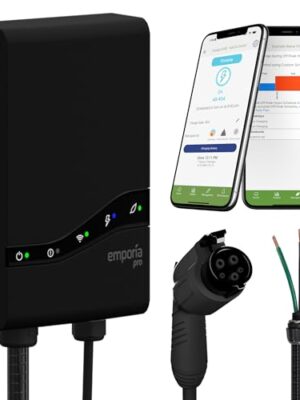
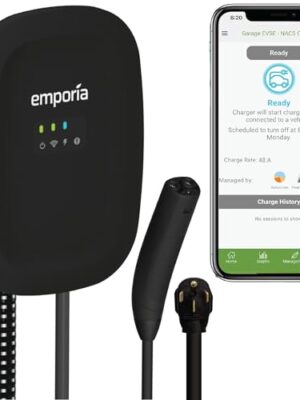
Emporia Pro EV Charger offers 48A fast Level 2 EV charging with PowerSmart Load Management. Includes NEMA 14-50 plug or hardwire installation options, 25' cable, and real-time energy optimization for efficient charging.
The Emporia Pro EV Charger is a feature-rich, futureproofed Level 2 charger that’s ideal for solar-ready homes. Its built-in PowerSmart Load Management and included Vue 3 Energy Monitor deliver exceptional energy savings and panel protection. Whether hardwired or plug-in, it’s a smart, powerful, and cost-effective EV charging solution.
Features
9
Real World Usage
8.5
Materials
9
Durability
9
Craftsmanship
8.5
Design
9
Monetary Value
9
Product Value
9
Brand Reputation
8.5
Expert Valuation
9
PROS:
Fast 48A charging (up to 11.5kW)
PowerSmart Load Management for energy optimization
Solar integration compatibility
Wi-Fi-enabled with app control
Flexible installation options (hardwired or plug-in)
Built-in safety features and certifications
CONS:
Requires dedicated electrical panel space for Vue 3 Energy Monitor installation
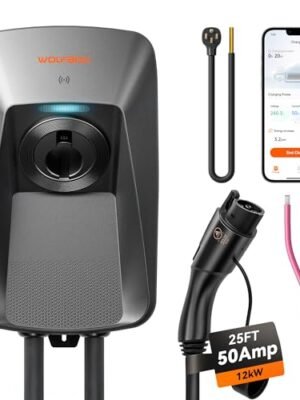
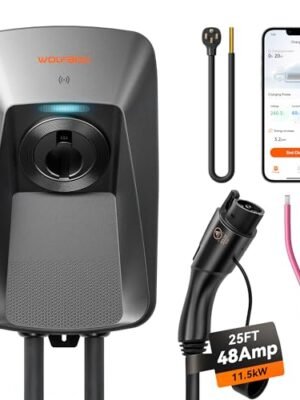
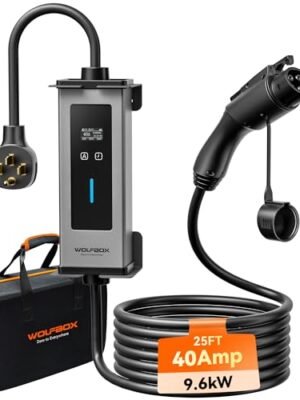
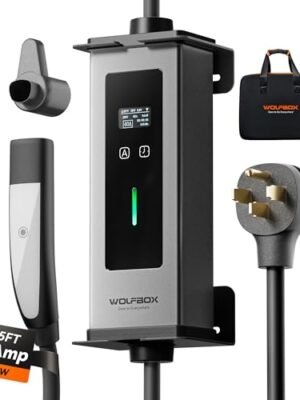
The WOLFBOX WE-50 hardwired Level 2 charger delivers 50 amps and up to 9.6 kW, providing fast charging for electric vehicles with a J1772 connector. Ideal for home or business use, it combines robust build quality with easy compatibility for most EVs.
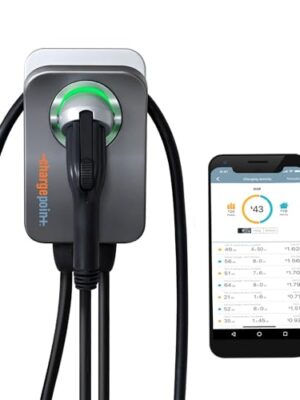
As an installer who’s worked with dozens of EV chargers, the ChargePoint Home Flex stands out for its flexibility, clean design, and smart features. The adjustable amperage makes it future-proof, and the app is unmatched in usability. A dependable choice for homeowners who value both performance and long-term reliability.
Features
9
Real World Usage
8.5
Materials
9
Durability
9
Craftsmanship
8.7
Design
8.5
Monetary Value
8.5
Product Value
9
Brand Reputation
9
Expert Valuation
9
PROS:
Easy installation with clear instructions and videos
Flexible setup: plug-in or hardwired
User-friendly mobile app for remote control and data
Swiveling dock for tidy cable storage
Safe and durable with UL certification
Access to ChargePoint’s vast network of charging stations
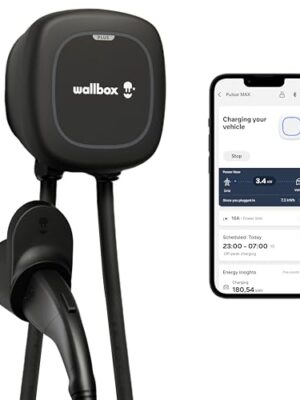
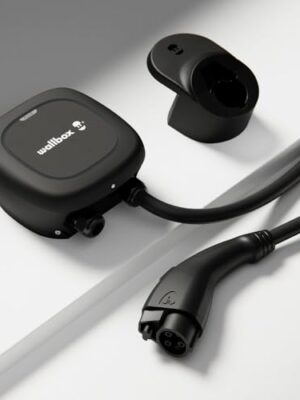
The Wallbox Pulsar Plus 40 Amp Level 2 EV Charger is an ultra-compact, smart charging solution with WiFi, Bluetooth, and voice control via Alexa/Google Home. Featuring a 25ft cable, it’s UL-certified for safety and suitable for both indoor and outdoor use. Assembled in the USA for reliable performance.
The Wallbox Pulsar Plus 40-Amp EV Charger offers fast, flexible charging with a compact design. It features smart app control, energy optimization, and solar integration. Its 25-foot cord ensures convenience, while power sharing supports multiple units. However, the plug holster’s stability and Bluetooth setup may need improvement.
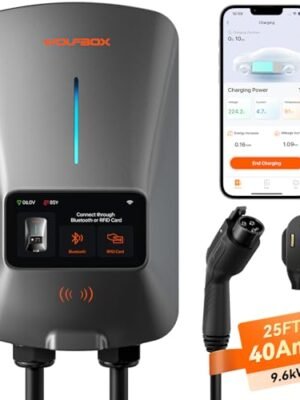
The WOLFBOX Level 2 EV Charger is a home Level 2 EV chargerthat offers fast, reliable charging with a sleek, weatherproof design. Featuring a 25ft cable, smart app integration, and compatibility with all J1772 EVs, it’s perfect for both home and public use. Choose between plug-in or hardwired models for convenient, future-proof charging at any location.
The WOLFBOX WE-40, WE-48, and WE-50 Smart Level 2 EV Chargers deliver dependable, high-power performance with durable construction, WiFi control, and excellent safety features. Each model suits different installation needs while maintaining consistent reliability and value. The WE-40 rates 8.7, the WE-48 scores 8.8, and the WE-50 leads at 8.9, averaging 8.8/10 overall.
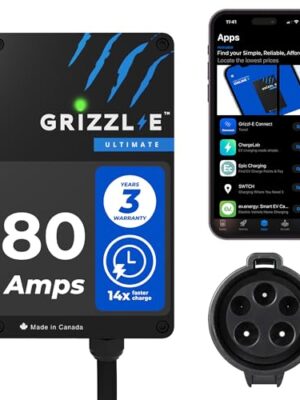
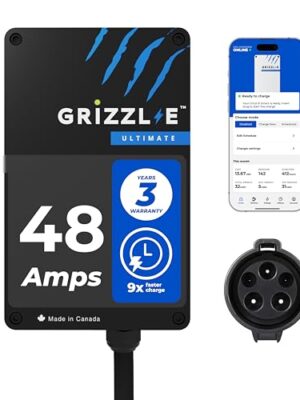
The Grizzl-E Ultimate 80A EV charger is a rugged, 80A Level 2 EV charger delivering up to 19.2 kW. Built for indoor/outdoor use with Wi-Fi, adjustable amperage, and J1772 or NACS connector.
The Grizzl-E Ultimate 80A EV charger impressed me with its rugged build and blazing 80A performance, its an 80 amp EV charger perfect for harsh outdoor installs and high-capacity EVs. But for future-proof smart charging, business applications, and solar EV charging integration, the Autel’s MaxiCharger 80A charger is the clear winner with V2G, bidirectional support, and OCPP 2.0.1 - it's built for homes and commercial applications that demand intelligence, not just speed.
Features
8.5
Real World Usage
8.5
Materials
9
Durability
9
Craftsmanship
8.5
Design
9
Monetary Value
9
Product Value
8.5
Brand Reputation
9
Expert Valuation
9
PROS:
Budget-friendly 80 Amp EV charger
True OCPP Compliant
Industry-leading 80A output for ultra-fast charging
Rugged, weatherproof aluminum enclosure (NEMA 4X)
Compatible with all EVs via J1772 or NACS
Adjustable amperage for multiple breaker sizes
Works offline and recovers after power interruptions
Made in Canada with a 3-year warranty
CONS:
No plug-in option (hardwired only)
Smart features limited to OCPP 1.6
No built-in energy optimization or load sharing
App interface and diagnostics are basic compared to modern alternatives
The WOLFBOX WE-48 is a hardwired Level 2 EV charger offering 48 amps of power with a J1772 connector. Designed for steady, fast home or workplace charging, it supports nearly all EV models and ensures a durable, efficient charge with professional hardwired installation.
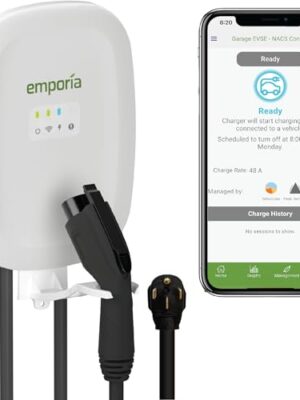
The EMPORIA Level 2 EV Charger delivers 48 amps of 240V charging with a 24ft cable and NEMA 14-50 plug. WiFi-enabled for smart features and remote monitoring, this J1772-compatible EVSE offers fast, reliable charging for electric vehicles. Ideal for home installations, it ensures efficient and convenient EV charging.
The Emporia EV Charger delivers fast, reliable Level 2 charging with flexible installation options, robust build quality, and smart app features for energy tracking and scheduling. It’s UL-listed, universally compatible, and competitively priced. While hardwiring can be challenging, its performance, value, and convenience make it an excellent choice for EV owners.
Grizzl-E Classic EV Charger Level 2 EV charger with 24-ft cable, UL, FCC, Energy Star, NEMA 14-50/6-50 plug, and NEMA 4X enclosure for indoor/outdoor use.
The Grizzl-E Classic excels as a durable, efficient, and cost-effective Level 2 charger. Its lack of smart features is seen as a benefit by many, reducing potential issues. It’s an ideal choice for users seeking a reliable, no-frills charging solution.
Features
7.5
Real World Usage
8.5
Materials
9
Durability
9
Craftsmanship
8.5
Design
8.5
Monetary Value
9
Product Value
9
Brand Reputation
9
Expert Valuation
9
PROS:
Simple installation with NEMA 14-50 plug.
Durable metal enclosure, weatherproof and UL-certified.
The Emporia Level 2 EV Charger with NACS delivers fast, reliable charging for Tesla and NACS vehicles. It offers up to 46 miles of range per hour, features easy installation, and is UL-listed for safety. Smart charging capabilities and durable construction make it a great value at a competitive price.
The Emporia Level 2 EV Charger with NACS offers excellent performance with up to 46 miles of range per hour. Features and real-world usage score high, and the materials and durability are top-notch. With solid craftsmanship and design, it provides strong value for money, earning high expert and brand reputation ratings.
Features
9
Real World Usage
8.5
Materials
9
Durability
9
Craftsmanship
8.5
Design
9
Monetary Value
8
Product Value
8.5
Brand Reputation
8.5
Expert Valuation
9
PROS:
No adapter needed for Tesla or NACS-compatible vehicles.
Charges up to 46 miles per hour, providing fast performance.
Durable, easy-to-use 24-foot cable.
Smart charging features with mobile app control.
CONS:
Installation may require electrical upgrades for some users.
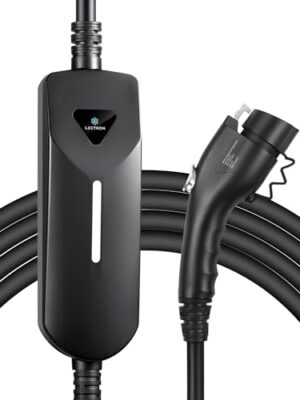
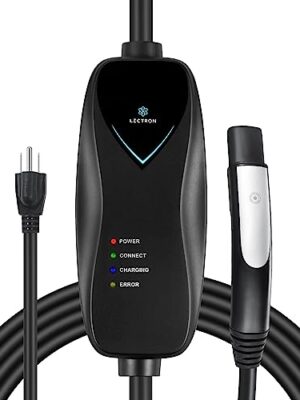
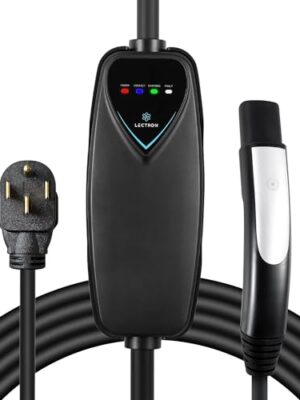
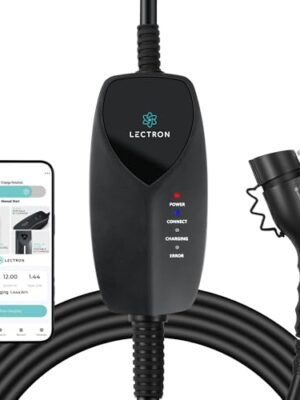
The Lectron Level 1 / Level 2 EV Charger is a practical, versatile, and affordable option for most EV drivers. It covers both charging speeds, works with virtually every J1772 vehicle, and goes wherever you go. The lack of smart features keeps the experience simple, and for many drivers, that's exactly what they want.It won't win any awards for cutting-edge technology, but it doesn't need to. What it does, it does well. If you're looking for a dependable portable charger that handles everyday needs without any hassle, the Lectron is a solid pick.
Features
9
Real World Usage
8
Materials
8.5
Durability
9
Craftsmanship
9
Design
9
Monetary Value
8.5
Product Value
8
Brand Reputation
9
Expert Valuation
8.5
PROS:
Dual plug compatibility (NEMA 5-15 & 14-50)
Supports both Level 1 and Level 2 charging
Portable and travel-friendly with carrying case
Safety features: overvoltage, overcurrent, short circuit protection
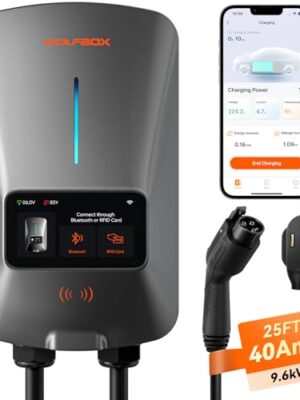
The WOLFBOX WE-40 is a powerful outdoor/indoor Level 2 EV charger with a NEMA 14-50 plug, delivering 40 amps and up to 9.6 kW charging power. Ideal for home charging with J1772 connector compatibility, it’s perfect for most electric vehicles seeking fast, reliable, and safe charging.
The WOLFBOX Level 2 40 Amp EV Charger delivers reliable, fast charging with smart features and a durable design. Its long cable and clear display add convenience, while excellent customer support ensures ongoing improvements. Minor display and heat issues appear in direct sunlight but can be managed with proper installation.
Features
8.8
Real World Usage
8.5
Materials
8.8
Durability
8.7
Craftsmanship
8.6
Design
8.7
Monetary Value
8.7
Product Value
8.8
Brand Reputation
8.8
Expert Valuation
8.7
PROS:
Fast and efficient 40 Amp charging
Durable, weather-resistant construction
Long 25-foot charging cable for easy reach
Clear, easy-to-read LCD display
Smart home compatibility and remote control via app
Built-in safety features including ground-fault protection
Responsive customer service with frequent firmware updates
Supports scheduled charging to save on energy costs
CONS:
Display can be hard to see when idle or in bright sunlight
Charger and cable can get hot if installed in direct sunlight
Some users may find the app features complex at first
Requires mounting location consideration to avoid overheating
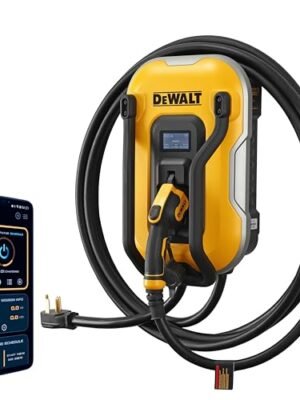
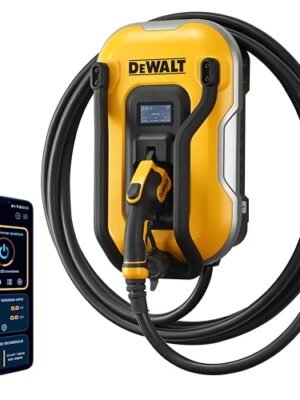
The DEWALT 40 Amp delivers reliable charging with jobsite-tough durability. Its 25-foot cable reaches easily but feels rigid in cold weather. Smart app features work well, though the ultra-short power cord limits mounting flexibility. Built for outdoor use with excellent weather resistance, it's a solid choice for homeowners prioritizing rugged construction and dependable daily EV charging.
PERSONALIZED EDITOR TAKE, 50 WORDS9:53 PMI've been using the DEWALT 40 Amp for three months, and it's been rock-solid through rain and cold. That cable's stiff, sure, but the rugged build and dead-simple app scheduling make my daily routine effortless. The short power cord was annoying during install, but overall? It just works, night after night.
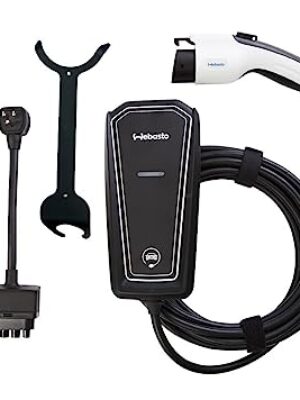
The Webasto Go Dual Voltage Portable EV Charger offers Level 1 and Level 2 charging (120V & 240V), ideal for home or on-the-go use. UL and IP67 rated for safety and durability, it delivers up to 7.7kW of power, charging up to 30 miles per hour. Compatible with all J1772-equipped EVs, including Tesla with an adapter.
The Webasto Go is a reliable, easy-to-use charger ideal for everyday use. It’s safe, efficient, and built with the needs of EV owners in mind, though potential buyers should consider its waterproof shortcomings.
Features
8
Real World Usage
8.5
Materials
9
Durability
9
Craftsmanship
8.5
Design
8.5
Monetary Value
9
Product Value
8.7
Brand Reputation
9
Expert Valuation
8
PROS:
Dual voltage (120V and 240V) for flexible charging
Advanced safety features with UL and cUL certifications
The Wallbox Pulsar Plus 48 Amp Level 2 EV Charger is an ultra-compact, smart charging solution with WiFi, Bluetooth, and voice control via Alexa/Google Home. Featuring a 25ft cable, it's Energy Star and UL certified for efficient, reliable charging. Suitable for indoor or outdoor use, and assembled in the USA.
The Wallbox Pulsar Plus 48-Amp EV Charger offers fast Level 2 charging, smart connectivity via the myWallbox app, and voice control through Alexa or Google Home. It’s versatile, with adjustable power settings and the ability to charge multiple EVs simultaneously. Compact, easy to install, and compatible with most EV models.
Features
8.5
Real World Usage
9
Materials
8.7
Durability
8.5
Craftsmanship
8.7
Design
9
Monetary Value
8.5
Product Value
8.5
Brand Reputation
8.5
Expert Valuation
8
PROS:
Compact and portable design, perfect for home or outdoor use.
Smart connectivity with Alexa, Google Home, and the myWallbox app for remote control and scheduling.
Adjustable power settings from 16A to 48A for flexible installation.
NEMA-4 rating ensures durability in extreme weather conditions.
Smart power-sharing allows charging of multiple EVs on one circuit.
CONS:
Relies heavily on the myWallbox app, with minimal physical unit controls.
Some users report Wi-Fi and Bluetooth connectivity issues, affecting remote access.
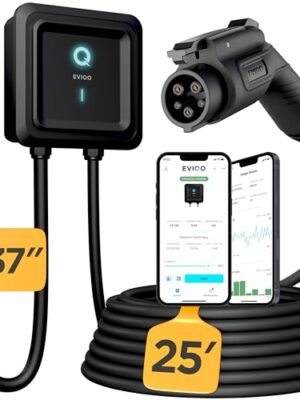
The EVIQO 48 Amp Level 2 EV Charger offers fast 240V charging with a 25-foot cord and NEMA 14-50 plug or hardwiring options. Energy Star and UL certified, this high-performance charger ensures safe, efficient charging for electric vehicles, making it ideal for both residential and commercial use.
The EVIQO 48 Amp EV Charger offers reliable, fast charging with adjustable amperage and a user-friendly app for scheduling and cost tracking. Its durable, weatherproof design ensures compatibility with all EVs, while the 25-foot cable provides flexibility. Efficient, easy to install, and supported by excellent customer service, it’s an excellent home EV charger.
Features
8.5
Real World Usage
9
Materials
8.5
Durability
8.5
Craftsmanship
8.5
Design
8.5
Monetary Value
8.5
Product Value
8.7
Brand Reputation
8.5
Expert Valuation
8.5
PROS:
Fast, efficient charging up to 48A.
User-friendly app with scheduling and cost tracking.
Durable, weatherproof design (NEMA 4, IP66).
Flexible installation options for indoor and outdoor use.
25-foot cable offers ample reach.
Broad compatibility with all EVs and PHEVs (Tesla requires adapter).
Regular firmware updates and excellent customer support.
CONS:
Cable can be stiff, making it less flexible during use.
Hardwired installation required for full 48A performance.
Requires NEMA 14-50 outlet or 60A+ circuit for installation.
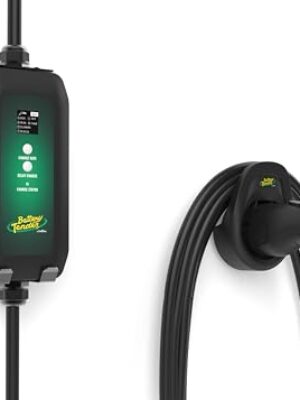
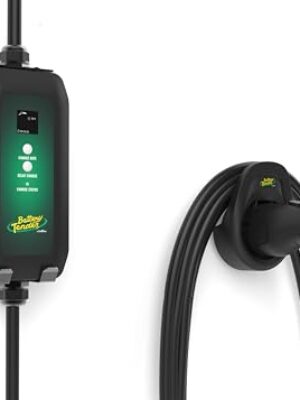
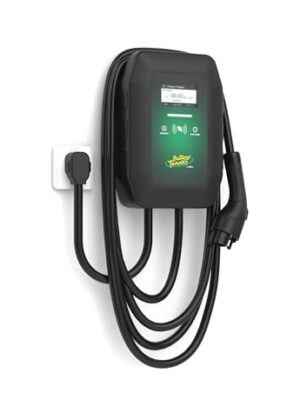
The Battery Tender eCharge 32 AMP EV Charger is a versatile Level 1+2 electric vehicle charger, compatible with 120V or 240V power sources. Offering 16A or 32A output, this portable EV charger is perfect for indoor and outdoor use, featuring multiple plug options like 5-15p, 5-20p, and NEMA 14-50R for flexible charging. Ideal for fast, reliable EV charging at home or on the go.
The Battery Tender eCharge 32 Amp is one of the more capable portable EV chargers on the market. It handles extreme temperatures, provides real-time data, adapts to your available power source, and doesn't require an app to function. If you want one charger for home and travel without compromise, this one earns its place in your trunk.
Features
9
Real World Usage
9
Materials
8
Durability
8.5
Craftsmanship
8.5
Design
8.5
Monetary Value
7.5
Product Value
8.5
Brand Reputation
9
Expert Valuation
9
PROS:
Can be used with both 120V and 240V power inputs, offering flexibility for different charging setups.
With options for 16A or 32A output, it provides fast charging times.
Suitable for both indoor and outdoor use, ensuring reliability in various conditions.
Comes with different plug types (5-15p, 5-20p, NEMA 14-50R) to fit various outlets.
CONS:
It’s on the higher end of the price spectrum, but the features justify the cost.
The variety of options might be overwhelming for some users.
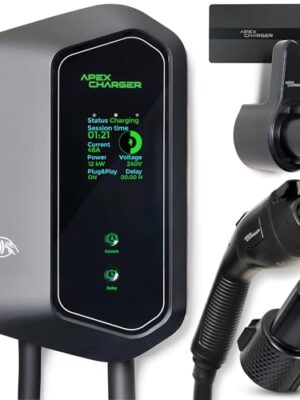
The ApexCharger MACH 1 EV Charger is a 48-amp Level 2 dual-connector charger supporting both J1772 and NACS EV charging. It features built-in Wi-Fi and Bluetooth, smart app control, and supports both NEMA 14-50 plug-in and hardwired installation.
The ApexCharger MACH 1 EV Charger is a high-performance 240V Level 2 EV charger that hits all the marks: fast charging, full EV compatibility, robust build quality, and intuitive smart features. Its dual-installation flexibility, built-in access control, and included Tesla adapter make it one of the most complete charging solutions on the market today.If you want a charger that’s built to grow with your EV ownership—whether for your first EV or your third—the MACH 1 delivers. For its price point and feature set, it’s one of the best 48 Amp EV chargers available in the market today.
Features
8.5
Real World Usage
9
Materials
8.5
Durability
8.5
Craftsmanship
8.5
Design
8.5
Monetary Value
8.5
Product Value
8.7
Brand Reputation
8.5
Expert Valuation
8.5
PROS:
Fast 48A Level 2 charging (11.52 kW)
Compatible with all EVs, including Tesla (NACS adapter included)
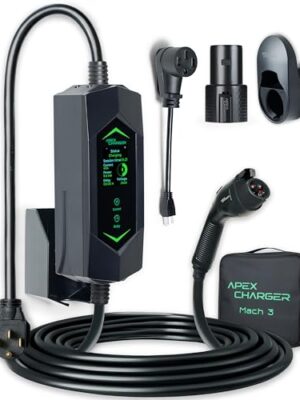
The ApexCharger MACH 3 EV Charger is a portable Level 1/2 dual-connector charger that supports both J1772 and NACS connectors. It features Wi-Fi app control, IP67 weather resistance, and pulsing LED indicators, making it a solid on-the-go and backup charging option.
Charging Speed:9.6 kW
Max Amperage:40 Amps
Charging Level:Level 1, Level 2
Connector Type:J1772, NACS
Cable Length:25 Feet
Connectivity:Bluetooth, Wi-Fi
Installation Type:NEMA 14-50, NEMA 5-15, NEMA 5-20
The ApexCharger MACH 3 EV Charger is the best option for EV drivers who want portability without sacrificing speed or smart features. With up to 40 Amps, dual-voltage input, Tesla compatibility, and a rugged, IP67-rated build, it beats most portable chargers on the market - especially in power and feature depth.While the ApexCharger MACH 2 is still the brand’s top-tier home unit, and the MACH 1 is the budget-friendly wall charger, the MACH 3 fills a different and crucial role: on-the-go charging wherever you need it, without calling an electrician.If you need a travel-ready backup or your lifestyle includes frequent road trips, the ApexCharger MACH 3 is one of the smartest, most reliable portable EV chargers available today.
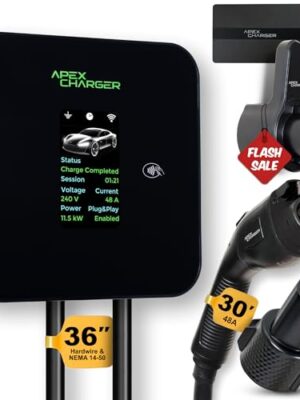
The ApexCharger MACH 2 EV Charger is a premium dual-connector 48A Level 2 charger featuring a 360° LED ring, a 5.7" smart display, Wi-Fi, app integration, and a rugged IP67-rated 30ft cable.
The ApexCharger MACH 2 blends fast 48A charging with sleek design and intuitive smart features. Its vivid display and LED ring elevate usability, though sunlight glare may affect visibility. Ideal for multi-EV households, it’s a solid pick, if you don’t need full Tesla app integration or a tight budget solution.
Features
8.7
Real World Usage
9
Materials
8.5
Durability
8.5
Craftsmanship
8.5
Design
8.5
Monetary Value
8.5
Product Value
8.7
Brand Reputation
8.5
Expert Valuation
8.5
PROS:
Fast 48A charging supports quicker EV top-ups.
Dual installation options: NEMA 14-50 plug or hardwired.
Bright 5" display and 360° LED ring enhance user feedback.
RFID access control adds security.
Compatible with both J1772 and Tesla (via adapter).
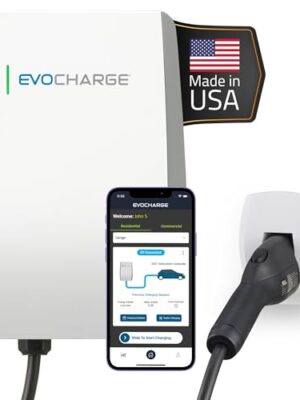
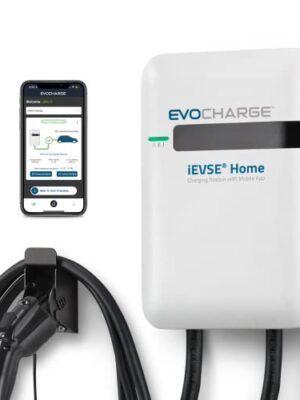
The EvoCharge Home 50 EV Charger is a 50 Amp, 240V Level 2 EV charger available in J1772 or NACS (Tesla) versions. Hardwired for safety, it delivers up to 45 miles of range per hour with smart scheduling, remote control, and energy tracking. Ideal for indoor or outdoor home installation.
The EvoCharge Home 50 is a premium-grade, hardwired Level 2 EV charger that delivers exactly what experienced EV owners need: fast, safe, and reliable home charging with smart control and high build quality.While it lacks the flashy design of the Wallbox Pulsar Plus or the in-depth analytics of Emporia, it wins on reliability, simplicity, and charging performance. It’s particularly well-suited for households with large-battery EVs or homeowners installing permanent 50A circuits with future expansion in mind.If you’re looking for a rugged, made-in-America charger with UL safety, Energy Star efficiency, and weatherproof reliability, the EvoCharge Home 50 is one of the best choices you can make today.
Features
8
Real World Usage
8.5
Materials
8.5
Durability
9
Craftsmanship
8.5
Design
9
Monetary Value
9
Product Value
9
Brand Reputation
8
Expert Valuation
8.5
PROS:
Hardwired 50A (12kW) charging delivers faster EV charging.
Robust NEMA 4 weatherproof rating for indoor/outdoor use.
Flexible installation with multiple conduit entry points.
Mobile app supports scheduling, energy monitoring, and user sharing.
Made in the USA with UL and ENERGY STAR certifications.
CONS:
Direct manufacturer support and returns are no longer available.
No J1772 to NACS (Tesla) adapter included; must purchase separately.
Wall mount bracket sliding design complicates installation in lock boxes.
Challenges with OCPP protocol access and internal web portal login
The EvoCharge iEVSE® Home 32 Smart Level 2 EV Charger offers up to 32 Amps of 240V charging, delivering up to 25 miles of range per hour. With WiFi connectivity, a 25-foot cable, and a NEMA 6-50 plug, it’s UL-listed for safety and suitable for both indoor and outdoor installations.
The EvoCharge iEVSE® Home 32 Smart Level 2 EV Charger is a reliable, easy-to-use, and energy-efficient solution for home EV charging, offering fast charging, Wi-Fi connectivity, and the potential for rebates.
Features
8
Real World Usage
8.5
Materials
8.5
Durability
9
Craftsmanship
9
Design
8
Monetary Value
8.5
Product Value
8.5
Brand Reputation
8
Expert Valuation
8.5
PROS:
Fast charging up to 8 times faster than Level 1 chargers.
Wi-Fi connectivity for easy scheduling and control via the Epic charging app.
Compatible with all North American EVs, including Tesla with J1772 adapter.
CONS:
Manufacturer support and warranty returns are no longer provided directly.
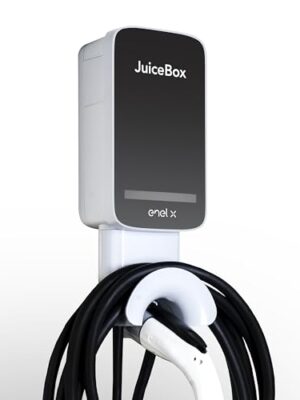
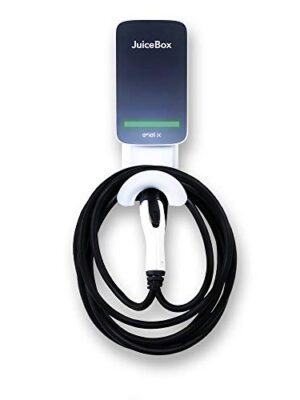
The JuiceBox 32 Amp EV Charger delivers reliable Level 2 charging with a 25-foot cable and NEMA 14-50 plug. UL and Energy Star certified, it’s perfect for indoor or outdoor use. Wi-Fi connectivity lets you schedule charging, monitor energy, and control your EV charger from anywhere.
Overall, I would say the JuiceBox 32 is a solid, dependable EV charger. It’s easy to install, performs consistently, and the smart features are genuinely useful. If you want something that feels professional and gives you flexibility, it’s a good choice.
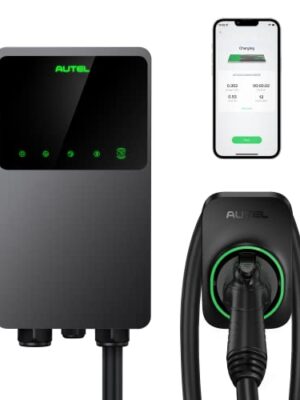
The Autel MaxiCharger Home EV Charger offers up to 50 Amps of 240V Level 2 charging with WiFi and Bluetooth connectivity for smart, remote control. Designed for both indoor and outdoor use, it features a 25-foot cable, a separate holster, and a rugged dark gray finish, ensuring durability and efficient charging.
Charging Speed:12 kW
Max Amperage:50 Amps
Charging Level:Level 2
Connector Type:J1772
Cable Length:25 Feet
Connectivity:Bluetooth, Cellular, Ethernet, Wi-Fi
Installation Type:Hardwired, NEMA 14-50, NEMA 6-50
Durable 25-foot cable with NEMA 4X protection for outdoor and indoor use.
Adjustable power output up to 50 Amps.
Reliable Wi-Fi, Bluetooth, and Ethernet connectivity for seamless updates.
Mobile app for tracking, scheduling, and optimization of charging.
Solid build quality with good customer support and a 3-year warranty.
Features
9
Real World Usage
9
Materials
8.5
Durability
8
Craftsmanship
8
Design
8.5
Monetary Value
8.5
Product Value
8
Brand Reputation
9
Expert Valuation
8
PROS:
App lacks intuitiveness, leading to confusion with scheduling features.
Charging history resets yearly with app updates.
Stiff charging cable is difficult to handle in cold weather.
No screen on the charger to display key details like power or duration.
CONS:
The Autel AC Elite EV Charger offers reliable performance with solid build quality and useful app features, though the app's confusing interface and cable stiffness in cold weather detract from its overall user experience. It’s a great choice for those seeking basic charging functionality and durability.
The Battery Tender eCharge 16 AMP EV Charger is a compact and efficient Level 1 charger designed for 120V power, making it perfect for standard wall outlets. Ideal for both indoor and outdoor use, this portable EV charger delivers reliable charging for everyday electric vehicle needs, ensuring convenience and ease of use.
The eCharge 16 AMP is a simple, affordable, and portable Level 1 charger with standard plugs, ideal for casual EV users, offering good durability and basic functionality, though limited in output, it provides solid value for entry-level needs and maintains Battery Tender’s reputation for reliability.
Features
8.5
Real World Usage
8.5
Materials
8
Durability
8.5
Craftsmanship
8
Design
8.5
Monetary Value
9
Product Value
8.5
Brand Reputation
9
Expert Valuation
8
PROS:
Simple plug-and-play design with standard wall plugs (5-15p or 5-20p)
Lightweight and easy to transport.
Durable enough for various environments.
CONS:
Only offers 16A output, which may be slower for some users.
The Battery Tender eCharge 40 AMP EV Charger is a high-performance Level 2 electric vehicle charger, designed for 240V power to deliver fast and efficient charging. Compatible with NEMA 14-50P or hardwired setups, this robust charger is perfect for both home and public use, offering reliable, high-speed charging for your EV.
The eCharge 40 AMP delivers fast 40A output, flexible hardwired or NEMA 14-50P installation, and robust construction for indoor/outdoor use, offering professional-grade performance and durability, its higher cost is justified by its efficiency, making it a top choice for serious EV owners seeking speed and reliability.
The Battery Tender eCharge 48 AMP EV Charger is a high-capacity Level 2 electric vehicle charger, optimized for 240V power to deliver rapid charging. Designed for both indoor and outdoor use, this powerful charger is ideal for high-demand EV charging scenarios, ensuring fast and reliable power for your electric vehicle.
The eCharge 48 AMP is a powerhouse with 48A output, designed for heavy-duty use, featuring durable materials, professional-grade craftsmanship, and fast charging speeds, its high price and complex installation are offset by unmatched performance, making it ideal for commercial or demanding residential EV charging needs.
Features
9.5
Real World Usage
9
Materials
8
Durability
8.5
Craftsmanship
8.5
Design
8.5
Monetary Value
6.5
Product Value
8.5
Brand Reputation
9
Expert Valuation
9
PROS:
Offers 48A output, providing the fastest charging times.
Suitable for heavy use and commercial applications.
Built to withstand tough conditions, both indoors and outdoors.
CONS:
The most expensive model in the Battery Tender EV chargers lineup.
Schumacher 12 Amp EV Charger is a Level 1 portable EV charger. It delivers 12 Amps at 120V with a 20-foot cable. Featuring a standard NEMA 5-15P plug and J1772 connector, it's a simple, reliable solution for home and travel, with ETL and Energy Star certifications.
The Schumacher SEV1670 is a straightforward, budget-friendly Level 1 charger. With a 20-foot cable and universal J1772 connector, it offers reliable charging for most EVs. Its IP65 rating ensures durability, though it's limited to 12 amps and lacks smart features.
Features
8
Real World Usage
8.5
Materials
8.5
Durability
9
Craftsmanship
8.5
Design
8.3
Monetary Value
8
Product Value
8.5
Brand Reputation
9
Expert Valuation
8.5
PROS:
20-foot cable provides ample reach for most parking setups.
Universal J1772 connector ensures compatibility with all major EV brands.
IP65 weather-resistant rating allows for indoor and outdoor use.
Plug-and-play design requires no installation.
LED indicators for clear charging status updates.
CONS:
Limited to 12 amps, resulting in slower charging speeds.
No smart features like Wi-Fi connectivity or app control.
Basic design lacks advanced user interface or customization options.
The WOLFBOX PE40 is a portable Level 2 charger delivering 40 amps and up to 9.6 kW with a J1772 connector. Its sleek design and 25-foot cable make it perfect for flexible, powerful charging at home or on the go for most electric vehicles.
The WOLFBOX PE40T provides portable, fast charging for Tesla owners with 40 amps, 9.6 kW output, and a built-in NACS connector. Compact and lightweight, it’s designed for easy use at home or on the road, ensuring Tesla compatibility without adapters.
The DEWALT 48 Amp Level 2 EV Charger is a hardwired charging station delivering up to 11.5 kW of power at 240V. Designed for indoor and outdoor use, it features a rugged, weather-resistant enclosure and a 25-foot UL-certified cable for flexible vehicle access. With smart app control via Bluetooth and Wi-Fi, it offers convenient scheduling and remote monitoring, compatible with all SAE J1772 EVs for reliable, fast home charging.
The DEWALT 48 Amp Level 2 EV Charger excels in delivering fast, reliable charging with rugged durability and advanced safety features. Its smart app connectivity adds convenience for scheduling and monitoring. Best suited for EV owners seeking a hardwired, all-weather charger with robust build quality and remote control capabilities. Installation requires professional setup.
Features
8.5
Real World Usage
8
Materials
8.5
Durability
9
Craftsmanship
8
Design
8.5
Monetary Value
8.5
Product Value
8.5
Brand Reputation
9
Expert Valuation
8
PROS:
Fast charging up to 48A
Durable, weatherproof design
Bluetooth & Wi-Fi app control
Long 25-ft cable included
3-year warranty with support
CONS:
Requires professional installation
Tesla adapter sold separately
Not portable
The DEWALT EV Charger App can be complex
Higher price point compared to its rugged competitors
The Schumacher SEV1600P650 Level 2 EV Charger delivers 50 Amps of 240V charging, offering up to 9X faster charging than standard models. Compatible with NEMA 6-50 plug or hardwiring, it features Bluetooth/WiFi connectivity for remote monitoring and control. Ideal for indoor or outdoor installation, it ensures efficient, reliable performance.
The Schumacher 50 Amp EV Charger delivers fast, reliable EV charging with adjustable current up to 40A and a weather-resistant design for outdoor use. Its 25-foot cable adds flexibility, and the SchuPower app enables remote monitoring. However, it lacks smart home integration and requires a separate adapter for Tesla vehicles.
Features
8
Real World Usage
7.5
Materials
8.5
Durability
9
Craftsmanship
8.5
Design
8.5
Monetary Value
8
Product Value
8.5
Brand Reputation
9
Expert Valuation
8.5
PROS:
Fast charging with adjustable current (16A to 40A) for faster performance
Weather-resistant raintight enclosure for reliable outdoor use
25-foot cable offers flexibility for garages and driveways
Compact space-saving design with pulsing LED indicators
SchuPower app allows remote tracking of charging progress
Clear instructions make installation simple
CONS:
Lacks integration with Google Home, Apple Home, or Alexa
SchuPower app is functional but lacks advanced features
The Lectron 16 Amp Level 1 EV Charger offers convenient 110V charging with a 21ft extension cord and NEMA 5-15 plug. Compatible with all J1772-equipped electric vehicles, this reliable charger provides a cost-effective solution for home use, ensuring smooth, hassle-free charging with safety and versatility for daily needs.
The Lectron Level 1 EV charger offers an affordable and reliable home charging solution. Using a 120-volt outlet, it provides 1.5 kW of power, adding 5-6 miles of range per hour. Ideal for overnight charging, it features durable materials, solid craftsmanship, and excellent value, backed by a reputable brand.
Features
8.5
Real World Usage
7.5
Materials
8.5
Durability
8
Craftsmanship
9
Design
8.7
Monetary Value
8.5
Product Value
8
Brand Reputation
9
Expert Valuation
8
PROS:
Affordable and great value for money
Easy to use with a standard 110-volt outlet
Reliable and consistent charging
Durable construction, handles regular use
Compact design with a long cable for flexibility
Trusted brand with a reputation for quality
CONS:
Slow charging at 1.5 kW (5-6 miles per hour)
Full charge can take up to 12 hours
Lacks advanced features like smart connectivity or faster speeds
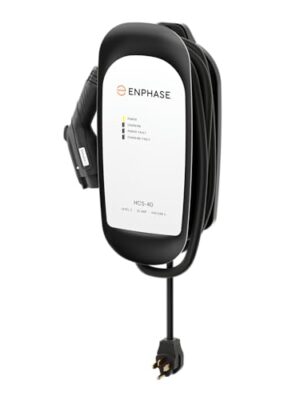
The Enphase 32 Amp Plug-in EV Charger (HCS-40) with NEMA 14-50 plug offers 7.7kW power for fast, reliable charging. Featuring a durable 25 ft cable and J1772 ruggedized connector, it ensures compatibility with all EVs. Backed by a 5-year warranty, this charger provides robust, long-term performance for home use.
Charging Speed:7.68 kW
Max Amperage:32 Amps
Charging Level:Level 2
Connector Type:J1772
Cable Length:25 Feet
Connectivity:Ethernet
Installation Type:Hardwired, NEMA 14-50, NEMA 6-50
The Enphase HCS-40 Level 2 EV Charger offers fast, safe charging with a durable design and easy installation. It works with all plug-in EVs and integrates with Enphase solar systems. While it’s pricier and has a tangling rubber cord, its reliability and performance make it a solid choice.
Features
8.5
Real World Usage
8.5
Materials
8
Durability
9
Craftsmanship
8
Design
9
Monetary Value
7.5
Product Value
8
Brand Reputation
8
Expert Valuation
9
PROS:
Fast charging up to 7.7 kW, seven times faster than Level 1 chargers.
ETL safety certified and ENERGY STAR rated for reliability.
Durable, weatherproof NEMA 4 enclosure.
Easy installation with NEMA 14-50R outlet and 40 Amp circuit.
Compatible with all plug-in EVs, ideal for models up to 7.7 kW.
Integrates with Enphase solar systems for eco-friendly charging.
Includes 5-year warranty and 24/7 support.
25-foot cable with storage options for convenience.
The Lectron Level 1 Tesla Charger offers fast and reliable home charging for Tesla vehicles. With an easy plug-and-play setup, it works with standard household outlets. Its compact design ensures convenience, while it provides safe and consistent power for everyday charging needs. Ideal for quick and efficient at-home use.
The Lectron Level 1 Tesla Charger offers a simple solution for charging your Tesla at home. It plugs directly into a standard 110-volt outlet and provides 15 Amps of charging current. This charger delivers 1.65 kW of power, adding 40-50 miles of range overnight. It works with Tesla models S, X, 3, and Y. The charger is lightweight and easy to use, with safety features like overvoltage and short circuit protection. For added convenience, consider using clamps to secure the cord and a housing unit for storage. Overall, the Lectron charger provides reliable, cost-effective charging.
Features
8.5
Real World Usage
7.5
Materials
8.5
Durability
8
Craftsmanship
9
Design
8.7
Monetary Value
8.5
Product Value
8
Brand Reputation
9
Expert Valuation
8
PROS:
Affordable pricing offers excellent value for money compared to other Tesla-compatible chargers on the market.
Broad compatibility works flawlessly with all Tesla models (X, Y, 3, S) and other EVs equipped with the NACS connector.
Convenient portability designed with a 16 ft extension cord, making it easy to charge at home or on the go without hassle.
Safety features equipped with overvoltage, overcurrent, and short circuit protection, ensuring safe and reliable charging at all times.
Energy-efficient Energy Star certified, helping reduce energy consumption during charging while maintaining performance.
Durable construction built from high-quality materials, ensuring longevity and reliable operation for years to come.
CONS:
Slower charging speed as a Level 1 charger (1.65 kW), it charges more slowly compared to Level 2 options, which may not suit users with higher power needs.
Limited range gain provides around 40-50 miles of range overnight, which may not meet the daily charging requirements of drivers with longer commutes or frequent road trips.
Outlet compatibility requires a standard NEMA 5-15 outlet, which may not be available in every location, limiting its convenience in certain settings.
The Lectron Level 2 Tesla Portable Charger is a solid, affordable option for Tesla owners looking for a reliable, portable charging solution. While it lacks smart features and advanced functionality compared to Tesla's Wall Connector, it excels in delivering fast, safe, and convenient charging, making it an excellent choice for those seeking an efficient and cost-effective charger for their Tesla Models X/Y/3/S and the Tesla Cybertruck.
The Lectron Level 2 Tesla Portable Charger provides fast, reliable charging with a 16-foot cable and NEMA 14-50 outlet compatibility. It delivers up to 36 miles of range per hour, offering great performance for home or on-the-go use. The charger is safe, durable, and affordable, making it an excellent value.
Features
8.5
Real World Usage
7.5
Materials
8.5
Durability
7.8
Craftsmanship
9.2
Design
8.5
Monetary Value
8.5
Product Value
7.8
Brand Reputation
9.2
Expert Valuation
8.1
PROS:
Fast charging with up to 36 miles of range per hour.
Compatible with all Tesla models and NACS EVs.
Portable and lightweight design.
16-foot cable for flexibility.
Safe with overvoltage, overcurrent, and short circuit protection.
Affordable compared to Tesla-branded chargers.
Durable with IP65-rated control box and IP55-rated handle.
CONS:
Basic compared to Tesla’s more advanced Wall Connector and the Tesla Wall Connector
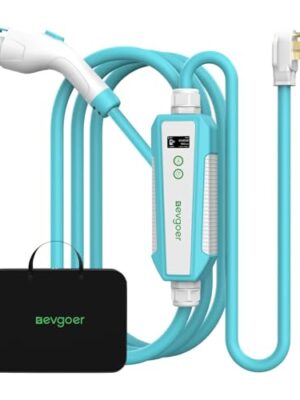
Evgoer J1772 40A Level 2 EV Charger delivers fast, safe charging with an adjustable 8A-40A current. The 20ft cable ensures flexibility. IP66's waterproof design supports indoor and outdoor use. Compatible with all J1772 electric vehicles.
The Evgoer J1772 40A EV Charger is a reliable Level 2 charging solution with dual voltage support (120V/240V), fast speeds, and adjustable current settings. It’s UL-certified, weather-resistant, and compatible with all J1772 EVs, including Tesla (adapter required). Easy installation, robust safety features, and versatile charging make it a top choice.
Features
9
Real World Usage
8.5
Materials
8
Durability
8.5
Craftsmanship
8
Design
8.5
Monetary Value
9
Product Value
8.5
Brand Reputation
8
Expert Valuation
8
PROS:
Fast charging speeds (up to 7x faster than Level 1)
Adjustable current settings for power optimization
Advanced safety features (short circuit, overcurrent, overheating protection)
IP66 waterproof rating for outdoor use
Portable design with a carrying case
Compatible with all J1772 EVs
Supports Level 1 and Level 2 charging
1-year warranty and lifetime support
Proven reliability in real-world conditions
Strong customer support experience
CONS:
NEMA 5-15P to 14-50R adapter sold separately
Increased risk of loose connections and voltage drop by using the NEMA 5-15P to a 14-50R adapter
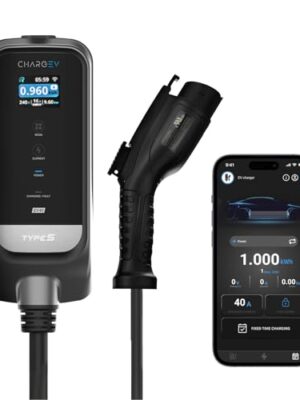
Fast, smart, and portable - the Type S 40A Level 2 EV Charger delivers up to 37 miles per hour with app control, adjustable amps, and a rugged build for safe indoor/outdoor charging.
The Type S 40A Level 2 EV Charger delivers fast, reliable home charging with smart app control, adjustable amps, and advanced safety features. It’s well-built, easy to install, and ideal for EV owners needing speed, flexibility, and remote monitoring—all in a sleek, portable design that works indoors or outdoors.
Features
7.5
Real World Usage
8
Materials
8.5
Durability
9
Craftsmanship
8.5
Design
9
Monetary Value
8
Product Value
8.5
Brand Reputation
8.5
Expert Valuation
8.5
PROS:
Premium looks
Adjustable amperage
Best rugged design In portable Portable EV chargers
Compact and WiFi-enabled, the Lectron 12 Amp EV Charger delivers 120V, 12 Amp charging with app control. Includes a 16 ft cord and NEMA 5-15 plug. Compatible with all J1772 EVs.
The Lectron 12 Amp Level 1 charger does what it says - and then some more through smart EV charging features not common in Level 1 EV chargers. You won’t be amazed by its charging speed or 16ft cable, but the smart EV charging features, Lectron app, portable design, and strong safety features make it one of the better 12 Amps Level 1 options on the market.
Features
8.5
Real World Usage
7.5
Materials
8.5
Durability Over Time
8
Craftsmanship
9
Design
8.7
Monetary Value
8.5
Product Value
8
Brand Reputation
9
Expert Valuation
8
PROS:
Works with all J1772 EVs.
App control via WiFi and Bluetooth.
Supports scheduled charging and usage tracking.
Lightweight and travel-friendly.
IP65-rated for outdoor use.
Compatible with solar generators and 120V outlets.
Ideal for 15A circuits and small panels.
Reliable overnight charging (4–5 miles/hour).
Includes durable carrying case.
Easy to set up and use.
CONS:
Slow charging speed (Level 1 only).
Limited to NEMA 5-15 outlets.
16-ft cord may be too short for some setups.
App requires stable WiFi for full functionality.
Not dual-voltage - supports only Level 1 (120V) charging, with no Level 2 (240V) option.
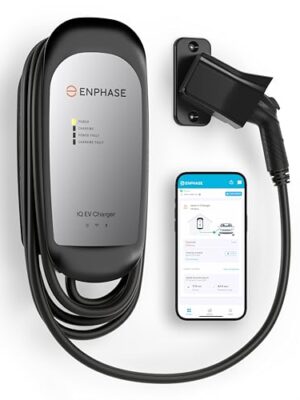
The Enphase IQ 50 40 Amp Smart EV Charger delivers 9.6kW of power at 240V with a hardwired installation and a 25ft cable. Featuring Wi-Fi connectivity, a ruggedized J1772 connector, and safety certifications, it ensures reliable, efficient charging. Backed by a 5-year warranty, it's ideal for home use and future-proofing.
Charging Speed:9.6 kW
Max Amperage:40 Amps
Charging Level:Level 2
Connector Type:J1772, NACS
Cable Length:25 Feet
Connectivity:Bluetooth, Wi-Fi
Installation Type:Hardwired, NEMA 14-50, NEMA 6-50
The Enphase IQ 50 EV charger is our favourite premium home EV charger with an overall score of 8.3. With its impressive combination of power, smart features, and a DIY-friendly plug-in option, the Enphase IQ 50 earns its place as a top contender for the best home EV charger. If you're looking for a powerful, user-friendly charger with advanced smart capabilities and a simple installation process, the Enphase IQ 50 is perfect for your EV charging needs.
Features
9
Real World Usage
8.5
Materials
8.5
Durability
8.3
Craftsmanship
8.5
Design
8
Monetary Value
7.5
Product Value
9
Brand Reputation
8
Expert Valuation
8
PROS:
Its compact size saves space in your garage and complements your home aesthetics.
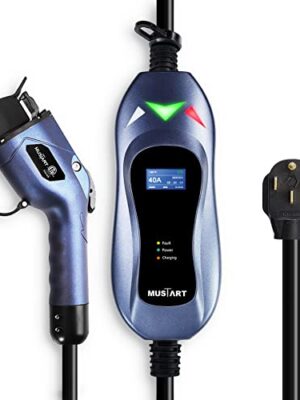
The Mustart 40 Amp EV Charger delivers fast 240V charging with a 25-foot cable and NEMA 14-50P plug for easy installation. ETL-certified for safety, this portable plug-in station is ideal for home use, providing reliable, high-speed charging for all-electric vehicles with convenience and efficiency.
The Mustart 40 Amp EV Charger provides fast charging, broad compatibility, and robust safety features. Its easy installation and reliable performance make it a solid option for EV owners.
Features
8.5
Real World Usage
8
Materials
8.5
Durability
8
Craftsmanship
8.5
Design
9
Monetary Value
8
Product Value
8
Brand Reputation
8
Expert Valuation
8.5
PROS:
Charged the 2025 Kia EV6 from 20-80% in 5 hours at 32A without issues.
Fits well in small electric vehicles storage compartment with additional accessories.
Works well with NEMA 14-50 outlets and the included adapters make it versatile for travel.
Priced lower than many other portable chargers, offering a good value for the features.
Cons:
CONS:
A few users report potential issues with the J-plug or charging port.
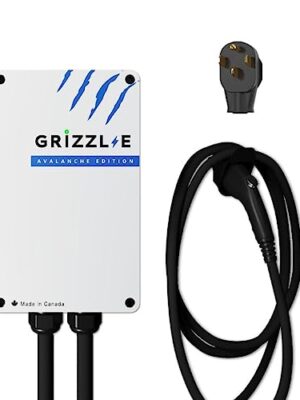
The Grizzl-E 48A Ultimate Level 2 EV Charger offers fast, efficient charging with a UL-tested, certified metal case. Designed for indoor and outdoor use, this hardwired station features a J1772 connector and a sleek black finish. With a maximum output of 48 amps, it provides reliable charging for all-electric vehicles, supporting 16A to 48A charging needs.
The Grizzl-E 48A Ultimate Level 2 EV Charger is a reliable and well-built product, offering efficient charging with a solid UL-tested metal case. The design is sleek, and it performs well across various amps (16A-48A). With strong brand reputation and excellent value, it provides good durability and craftsmanship for long-term use.
The JuiceBox 40 Smart EV Charging Station delivers 40 amps of Level 2 charging with a 25-foot cable and NEMA 14-50 plug. UL and Energy Star certified, it provides efficient, safe charging for both indoor and outdoor use. WiFi connectivity enables smart features for optimized performance and energy management.
The JuiceBox 40 used to be one of the best smart EV chargers you could buy. The hardware is still excellent, tough, powerful, and reliable. However, without company support and with the smart features failing, several scores have dropped. Features, real-world usage, product and monetary value, brand reputation, and expert valuation have all been negatively affected. Current owners can continue using their chargers without worry, but new buyers should consider other options that will receive support and updates for years to come.
Features
7.5
Real World Usage
8
Materials
9
Durability
8.5
Craftsmanship
8
Design
9
Monetary Value
8
Product Value
8
Brand Reputation
8
Expert Valuation
8
PROS:
Rugged build with excellent IP66 and NEMA 4X ratings for outdoor use
25-foot cable (longer than standard 18-20 feet)
40 amps and 9.6 kW output add about 30 miles of range per hour
Easy plug-in installation with NEMA 14-50 outlet
CONS:
The app has become buggy or non-functional since the company's exit
No customer support or warranty coverage available
Stiff, thick cable that's hard to coil in cold weather
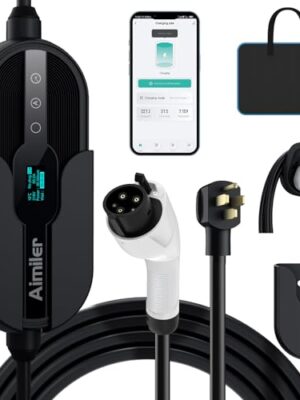
The Aimiler 32 Amp Level 2 EV Charger delivers 220V-240V power with a NEMA 14-50 plug and a 25ft cable, offering versatile indoor/outdoor charging. ETL listed and WiFi-enabled, it features a delay timer for customized charging schedules. Compatible with SAE J1772 EVs, it ensures fast, efficient, and reliable performance.
The Aimiler 32 Amp Level 2 EV Charger delivers fast, reliable charging with essential safety features and app-based control. Its durable design and compatibility with most EVs make it a great home portable EV charging solution. While the app offers basic scheduling, it lacks advanced smart features.
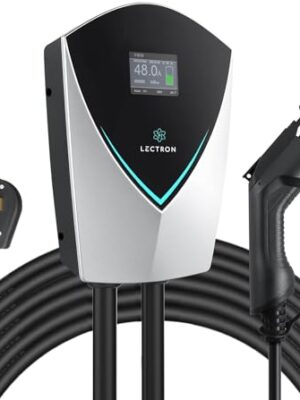
The Lectron V-Box 48 Amp Level 2 EV Charging Station offers 240V power with a NEMA 14-50 plug or hardwired option. Certified Energy Star and ETL, it ensures efficient, reliable charging for J1772-compatible electric vehicles. This robust charger delivers fast, safe performance, making it an ideal solution for home use.
The Lectron V-Box 48 is a powerful and reliable Level 2 charger, ideal for home EV charging. With a durable 20-foot cable, an IP55 rating, and Energy Star certification, it delivers solid performance. However, the lack of smart features and a shorter warranty compared to competitors are notable drawbacks.
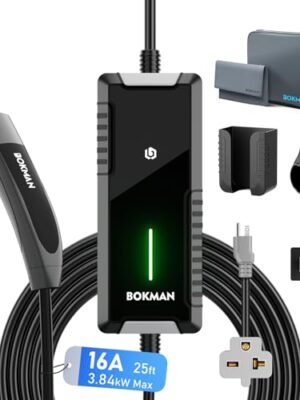
The Bokman Level 2 Mobile Charger delivers fast, efficient charging for Tesla vehicles, including Model 3/Y/X/S/Cybertruck. With a 16Amp power output and a 25ft cable, it features a NEMA 6-20 plug for Level 2 charging and NEMA 5-15 compatibility for Level 1, ensuring versatile, reliable performance at home or on the go.
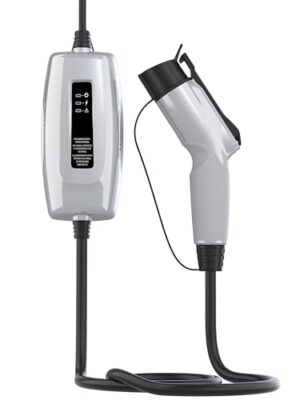
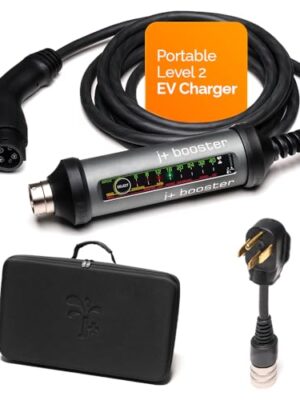
The J+ Booster 2 Portable EV Charger offers fast Level 2 charging (9.6 kW, 240V) for all-electric vehicles. With a 21ft cable, NEMA 14-50 plug, and ETL certification, it provides reliable power both indoors and outdoors. The included carrying case ensures easy storage and portability for convenient home charging.
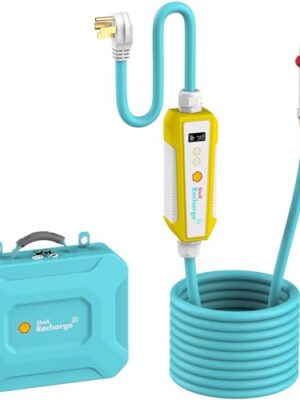
The Shell 40A Level 2 EV Charger provides fast, efficient charging for all J1772-compatible EVs. Adjustable 12–40A output, 24-ft cable, plug-in NEMA 14-50P, ETL certified, Energy Star rated, with smart scheduling. Perfect for home or garage use, delivering reliable and safe Level 2 charging.
The Shell 40A Level 2 EV Charger delivers reliable, high-speed charging with adjustable amperage from 12A to 40A. ETL certified and Energy Star rated, it features a 25-foot cable, universal J1772 connector, and smart scheduling options. Ideal for home use, it balances safety, efficiency, and convenience in one compact unit.
Features
7.5
Real World Usage
7.5
Materials
8.5
Durability
8
Craftsmanship
7.5
Design
7.9
Monetary Value
7.5
Product Value
8
Brand Reputation
8
Expert Valuation
7.5
PROS:
Adjustable amperage: 12A–40A
Smart scheduling for energy management
24-foot cable offers flexible reach
ETL certified and Energy Star rated
Compatible with all J1772 EVs
Plug-in NEMA 14-50P for easy installation
CONS:
Requires 240V outlet for full Level 2 charging
Slightly larger footprint than some compact chargers
Show next
Important Key Specs Table Legend:Level 1 = Level 1 only (120V). Level 1/Level 2 = dual-voltage portable (120V or 240V).
ENERGY STAR Certified EV Chargers
ENERGY STAR-rated EV chargers are electric vehicle supply equipment (EVSE) that meet strict energy efficiency and safety standards set by the U.S. Environmental Protection Agency (EPA). These chargers are designed to minimize energy waste, particularly when they are not actively charging a vehicle.
Utility Rebate Programs That Accept ENERGY STAR Chargers
Utility rebate programs change more frequently than product certifications, so we recommend verifying current amounts on your utility’s website before purchasing. The programs below have been consistently active in 2026 and represent the most significant rebate opportunities in each region.
California Utilities: PG&E, SCE, SDG&E
Pacific Gas and Electric, Southern California Edison, and San Diego Gas and Electric all offer rebates of $500 to $1,500 for ENERGY STAR Certified Level 2 chargers installed at residential properties, with most programs requiring installation by a licensed electrician and submission of an itemized receipt with the charger’s model number. California utilities also offer time-of-use rate plans that compound the savings by shifting charging cost to off-peak windows, so the total economic benefit of an ENERGY STAR charger in California can reach well beyond the initial rebate over the charger’s lifespan.
Northeast Utilities: ConEd, Eversource, National Grid
Consolidated Edison in New York offers rebates up to 500 dollars on ENERGY STAR qualified Level 2 chargers. At the same time, Eversource in Massachusetts and Connecticut, and National Grid across New York, Massachusetts, and Rhode Island run comparable programs in the same range. Northeast utilities often pair the rebate with managed charging rate programs that provide additional ongoing savings, and OCPP-compatible ENERGY STAR chargers are typically the only ones that qualify for the managed charging tier.
Pacific Northwest: PSE, Avista, Portland General Electric
Puget Sound Energy, Avista, and Portland General Electric offer rebates of $200 to $500 for ENERGY STAR EV chargers, and the Pacific Northwest grid’s high proportion of hydroelectric power means the per-kWh cost of EV charging at off-peak rates in this region is among the lowest in the country. Because of that low base rate, the efficiency gains from an ENERGY STAR charger compound more quickly in financial terms here than in higher-rate regions
Texas and Southern Utilities
Austin Energy, CPS Energy, and several Texas municipal utilities offer ENERGY STAR rebates in the 200 to 700-dollar range, and Florida Power and Light has expanded its EV charger rebate program to include ENERGY STAR as the primary qualifying criterion. The Southern U.S. market is still building out its rebate infrastructure, so checking your specific utility’s website is especially important here because programs vary more widely than in regions with longer EV charging histories.
How to Stack Rebates With the Federal Tax Credit
The federal Alternative Fuel Vehicle Refueling Property Credit provides 30 percent of the combined cost of charger hardware and installation, capped at $ 1,000 for residential installations. In most cases, this federal credit stacks directly with utility rebates because it is a tax credit rather than a rebate payment, meaning the two come from different programs rather than the same pool. Combined with a 500 to 1,000 dollar utility rebate, the effective cost of an ENERGY STAR charger and installation often drops to a fraction of the sticker price, which is why the financial case for buying an ENERGY STAR certified model is strong even before considering the ongoing electricity savings.
Why ENERGY STAR Certification Matters for Your Home
Beyond energy savings, certified chargers provide safety assurance, financial incentives, and future-ready smart grid capabilities.
Reduced Utility Bills
Certified chargers use 40% less energy in standby mode than standard models.
Safety Assurance
Many chargers sold online lack proper safety testing; the ENERGY STAR label guarantees the unit won’t pose a fire or shock hazard to your home.
Rebates and Incentives
Many local utilities offer significant rebates (often $250–$300) specifically for ENERGY STAR certified models.
Smart Grid Readiness
Certified smart EV chargers chargers can help you save more by participating in programs that optimize charging during off-peak hours.
What Gets Tested?
To earn the ENERGY STAR label, chargers undergo rigorous, independent testing in EPA-recognized laboratories across multiple critical areas, ensuring unbiased verification of performance claims and safety standards.
Standby Power Consumption
Chargers are tested for efficiency in “No Vehicle,” “Partial On,” and “Idle” modes. Since chargers spend approximately 85% of their lifetime in standby, this is the primary focus for energy savings.
Certified models must use significantly less power when not in use. ENERGY STAR chargers use roughly 40% less energy on average in standby mode compared to standard models.
Active Charging Efficiency
For AC Level 2 chargers with an output current of up to 80 Amperes (A), ENERGY STAR certification focuses primarily on reducing energy loss during non-active periods rather than active efficiency. This is because most of the power loss in AC charging occurs inside the vehicle’s onboard converter, which is outside the control of the charging station itself.
For DC fast chargers, the EPA tests for minimum active charging efficiency standards, such as at least 93% efficiency for units up to 65 kW output.
Idle and No-Vehicle Modes
The EPA sets strict watt limits for various states, such as “No Vehicle” mode (disconnected from the car) and “Idle” mode (connected but not charging).
Power Allowances
Extra power is allowed for units with energy-intensive features like high-resolution displays or network connectivity (Wi-Fi/Cellular) to ensure smart features don’t negate energy savings.
Automatic Brightness Control (ABC)
If the unit has a screen, it is tested to see if it dims automatically in low light to conserve energy and reduce light pollution.
Full Power Handling
Even at 80A, the internal components (relays, cables, and connectors) are verified for safety and minimal heat-related energy loss by Nationally Recognized Testing Laboratories.
ENERGY STAR Certified EV Charger Buyer's Guide
Because ENERGY STAR certification sets a higher bar than the minimum safety certifications, the chargers in this grid tend to be from established brands with smart features and app connectivity rather than basic plug-and-charge units, since the smart grid integration requirement effectively screens out simple chargers.
Verify Your Utility's Specific Rebate Before Buying
Rebate programs change amounts, qualifying product lists, and application requirements regularly, so checking your utility’s rebate page before purchasing is the single most important step in the process. Some utilities require a pre-approval application before purchasing the charger, and submitting the rebate after installation without that step can result in an ineligible application, even on a qualifying charger. Your utility’s rebate page, the ENERGY STAR rebate finder, and our EV charger rebate guide are the three resources to check in that order.
Keep Documentation for the Rebate Application
Most utility programs require itemized receipts showing the charger’s exact model number, the purchase date, the installation date, and the installing electrician’s license number, along with photos of the installed charger and the circuit breaker panel showing the new circuit. Because collecting all of this documentation retroactively after installation is difficult, setting up a folder for it at the time of purchase and asking the electrician for a copy of their license at the start of the job saves significant trouble at application time.
ENERGY STAR vs UL: Which Matters More?
They address entirely different things: UL, ETL, or CSA certification confirms the charger is electrically safe, while ENERGY STAR certification confirms it is efficient and qualifies for rebates. Because these are non-overlapping requirements, the question of which matters more is somewhat misleading, and most premium chargers carry both a safety mark and ENERGY STAR certification precisely because the market well understands the buyer’s need for both.
Efficiency Savings Beyond the Rebate
Even for buyers whose utilities offer no rebate, an ENERGY STAR charger saves money through lower standby power draw and higher active charging efficiency over its lifespan. The 3-watt standby limit saves roughly 100 kWh per year compared to uncertified chargers that draw 15 watts in standby. At the same time, the 88 to 90 percent active efficiency means less electricity is wasted as heat during charging sessions. Over a 10-year charger lifespan, those savings compound to a meaningful amount even at modest electricity rates.
How to Identify ENERGY STAR Certified Chargers
Follow these three essential steps to ensure you’re purchasing a genuinely certified and safe EV charger.
Check for the distinctive blue ENERGY STAR logo on the product packaging, the unit’s permanent nameplate, or the manufacturer’s official website. This is your first indicator of certification.
The most reliable verification method is to search the official ENERGY STAR Product Finder for AC chargers or the DC Product Finder for fast chargers. This database is regularly updated by the EPA.
Confirm the product also displays a safety mark from a Nationally Recognized Testing Laboratory such as UL, ETL, or CSA. This ensures efficiency claims are backed by a safety-certified build.
ENERGY STAR Certified EV Charger Frequently Asked Questions
You’ve Got ENERGY STAR Certified EV Charger Questions, We’ve Got Answers.
Will an ENERGY STAR Charger Qualify Me for a Utility Rebate?
In most major U.S. utility rebate programs, yes, because ENERGY STAR certification is the common qualifying criterion, though you need to verify your specific utility's current requirements, as programs change regularly. Your utility's rebate page and the ENERGY STAR rebate finder at energystar.gov are the authoritative sources for current amounts and qualifying model lists.
How Do I Verify a Charger Is ENERGY STAR Certified?
Search the ENERGY STAR Certified Residential EV Charging Stations database at energystar.gov using the manufacturer and model number. Because some brands have both certified and uncertified variants in their lineup, matching the exact model number rather than just the brand is essential, since a rebate application for an uncertified variant will be rejected even if a certified version of the same product exists.
Can I Stack the Utility Rebate With the Federal Tax Credit?
In most cases, yes, because the federal Alternative Fuel Vehicle Refueling Property Credit is a tax credit from a different program than the utility rebate, so the two do not offset each other. Combined, a 500- to 1,000-dollar utility rebate and a federal credit of up to 1,000 dollars can cover most of the cost of a typical Level 2 installation.
Does ENERGY STAR Mean the Charger Is Safe?
ENERGY STAR tests energy efficiency and smart grid functionality rather than electrical safety, so a charger can be ENERGY STAR certified and still require a UL, ETL, or CSA safety mark for legal code-compliant installation. Most ENERGY STAR chargers also carry an NRTL safety mark, but confirming both rather than assuming one implies the other is the correct approach.
Do I Need Pre-Approval Before Buying for a Utility Rebate?
Some utility programs require a pre-approval application before you purchase the charger, and submitting the rebate after installation without that approval can make the application ineligible,e regardless of whether the charger qualifies. Checking your utility's specific program requirements before purchase is the step that prevents the most common, st avoidable rebate mistakes.
Are All Smart EV Chargers ENERGY STAR Certified?
No, because ENERGY STAR requires specific efficiency thresholds and smart grid capabilities that some smart EV chargers do not meet, so the certification is not automatic for any charger with wireless features. The ChargePoint Home Flex, Emporia EV Charger, and Wallbox Pulsar Plus are among the certified options. At the same time, some other smart chargers are not certified, which affects their eligibility for utility rebates.
How Long Does the Rebate Application Process Take?
Typically, 8 to 16 weeks from the date of payment submission, depending on the utility. PG&E and Eversource tend to process applications in 8 to 12 weeks, while some smaller utilities may take longer during high-volume periods. Planning the rebate as a delayed cash benefit rather than an immediate offset against the installation cost is the realistic expectation.
Does ENERGY STAR Certification Make a Charger Slower?
No, because ENERGY STAR tests standby power and charging efficiency rather than maximum current output, so certification does not limit how fast the charger delivers power. ENERGY STAR-certified chargers are available across all amperage tiers from 32 to 80 amps, and the certification simply verifies that they do so efficiently.
What Is the 3-Watt Standby Limit and Why Does It Matter?
ENERGY STAR requires certified chargers to draw less than 3 watts of power when no car is plugged in, because a charger that sits on the wall for 16 hours a day in standby at 15 watts wastes roughly 100 kWh per year compared to a certified unit. Over a 10-year charger lifespan at typical U.S. electricity rates, that standby waste alone adds up to $150-$200 in avoidable costs.
We’ve organized EV chargers according to the five main North American certifications (CSA, ENERGY STAR, ETL, FCC, and UL) so you can compare them more easily. By grouping them this way, you can quickly see what each certification covers, how it’s recognized, and what it means for safety and compliance. This helps you avoid unnecessary research and choose a charger with confidence. Our Home EV Charger Certifications guide covers all five marks side by side with verification steps for each.
Use this table to see how all five EV charger certifications compare at a glance, since buyers who need both a safety mark and rebate eligibility often need to confirm a single charger carries both before purchasing.
Certification
Focus Area
Why Buyers Search For It
Testing Body
UL Listed
Electrical and Fire Safety
Required by home insurers and electrical inspectors
Underwriters Laboratories
ETL Listed
Electrical and Fire Safety
Same safety standard as UL; often faster to market
Intertek (OSHA NRTL)
ENERGY STAR
Efficiency and Rebates
Qualifies charger for utility rebates of $300 to $1,500+
U.S. EPA
FCC Listed
Wireless Compliance
Ensures smart charger Wi-Fi does not interfere with home internet
Federal Communications Commission
CSA Certified
North American Safety
Required for Canadian market and cold climate installations
Canadian Standards Association
Disclaimer
We offer independent EV charger reviews and guides. ENERGY STAR® is a registered trademark of the U.S. Environmental Protection Agency, and we are not affiliated with or endorsed by the EPA.