Supported by you via insider access, and when you purchase through links on our site, we may earn an affiliate commission. See our Affiliate Disclosure.
Best NACS EV Chargers Reviewed: Tesla and NACS-Compatible Picks
The North American Charging Standard (NACS, also known as SAE J3400) is the plug Tesla developed, and every major automaker has now adopted.
If you drive a Tesla or a 2024-or-newer EV from Ford, GM, Rivian, Hyundai, Honda, Polestar, Volvo, or Mercedes, you have NACS. A native NACS home charger plugs straight into your car. No adapter needed.
Every NACS charger below was tested on real Teslas, Cybertrucks, and 2024-and-newer Fords with native NACS ports. Scores reflect hands-on testing, not manufacturer claims.
How We Tested
Each NACS charger was tested for 30+ days on a Tesla Model Y, Model 3, Cybertruck, or Ford Mustang Mach-E. We measured charging current under load, verified Tesla app and Tesla Pay integration on native Tesla-compatible units, stress-tested connector latches through 500 plug cycles, validated charging handshakes, and evaluated cold-weather performance during winter conditions.
Our Top NACS Charger Picks
Four awards, four buyer scenarios. Every other charger on this page is scored on the same 1 to 10 scale and ranked underneath these picks.
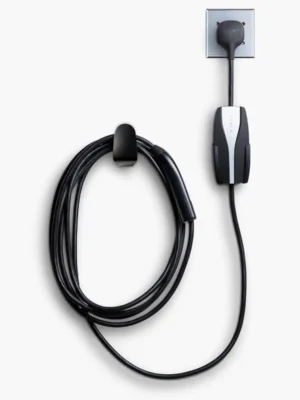
Built-in Magic Dock J1772 adapter, bidirectional charging support on Cybertruck and Model Y Performance, Group Power Management for multi-Tesla households, and full Tesla app integration. The best-rated charger on the page, and it’s the right pick if you want a single wall unit that handles every car your household will own.
The original Tesla Wall Connector design, refined. 48 amps, 11.5 kW, native Tesla app integration, and a price meaningfully below the Universal model. The right pick if you own only Teslas and don’t need the Magic Dock or bidirectional charging.
Bidirectional V2L and V2V support on compatible Teslas, interchangeable NEMA 14-50 and 5-15 adapters for both 240V and 120V outlets, and up to 7.68 kW on a NEMA 14-50. The best travel and renter option we have reviewed.
The cheapest reliable native NACS unit on the market. 16 amp portable Level 1 charging, ETL certified, and 16 feet of cable. A solid overnight top-up for Tesla owners with modest daily mileage who do not need Level 2 speeds at home.
Check out our NACS charger reviews, ranked by tested editor score. Each card links to a full hands-on review. Use this list to quickly compare key specifications before clicking through for the complete review.
Use the “Compare” button on each product to select multiple chargers, then click the ⚖️ scale icon to see a full side-by-side comparison.
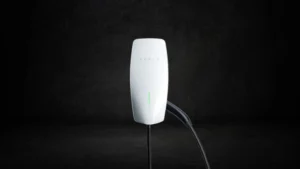
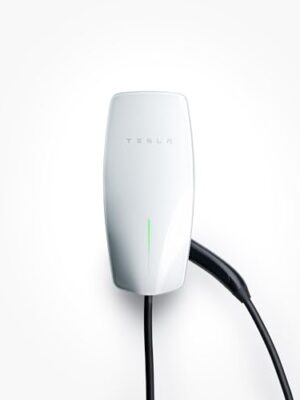
Tesla Universal Wall Connector delivers 11.5 kW smart EV charging for both residential and commercial use. Unique features include bidirectional charging, Group Power Management (GPM), Magic Dock, and a wide range of add-on EV charging accessories.
The Tesla Universal Wall Connector is a robust, forward-thinking EV charger designed for mixed EV households. It offers advanced smart charging features, including bidirectional charging when paired with compatible vehicles like the Ford F-150 Lightning and the Tesla Cybertruck. When integrated with renewable energy systems, it becomes an even more powerful solution, enabling efficient energy management. However, due to its high electrical load and complex features, professional installation and careful handling are essential to ensure optimal performance and safety, making it a top-tier choice for future-proofed EV charging setups.
Features
9.7
Real World Usage
9.5
Materials
9.5
Durability
9
Craftsmanship
9
Design
9
Monetary Value
9
Product Value
9.5
Brand Reputation
9.5
Expert Valuation
9.5
PROS:
Versatile Charging (Supports Tesla and J1772-compatible electric vehicles)
Advanced smart features
Renewable energy integration
Features a modern and minimalist design that complements most homes
Integrates into the Tesla mobile app for remote monitoring.
Allows bi-directional EV charging
CONS:
Requires professional installation
The non-replaceable J1772 adapter may limit flexibility for some users
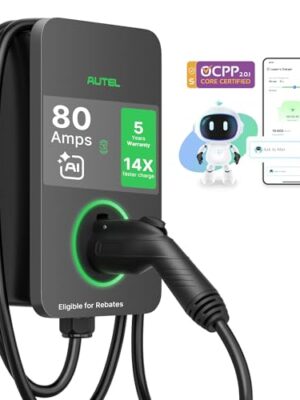
Autel MaxiCharger 80A EV charger delivers 19.2 kW smart EV charging for home, business, or commercial use with OCPP 2.0.1, Integrated Cloud with AI, and Wi-Fi/4G/Wi-SUN connectivity.
As an EV charger reviewer, I was impressed by the Autel MaxiCharger 80A’s power, smart EV charging capabilities for business, workplace and commercial installations, future-proof protocols, and rock-solid reliability. It delivers blazing-fast 19.2 kW charging, supports OCPP 2.0 and ISO 15118, and feels commercial-grade throughout.
Features
9.5
Real World Usage
9.5
Materials
9
Durability
9
Craftsmanship
9
Design
9
Monetary Value
9
Product Value
9
Brand Reputation
9
Expert Valuation
9
PROS:
80A / 19.2 kW ultra-fast Level 2 charging
OCPP 2.0 & ISO 15118 smart protocols
Rugged, pedestal/kiosk-ready design
Scalable for commercial or fleet use
Dynamic load management support
CONS:
More expensive than competing 80 Amp EV chargers like the Grizzl-E Ultimate 80 Amp EV charger.
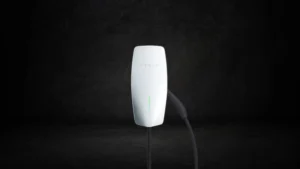
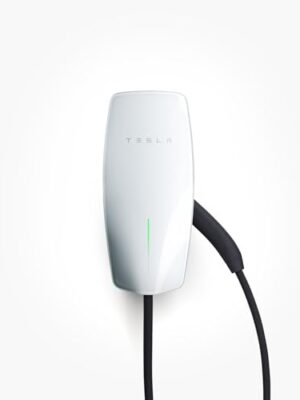
The latest Tesla Wall Connector adds smart features and now supports non-Tesla EVs. It offers fast, reliable charging, up to 44 miles of range per hour, with a 24-ft cable, app control, over-the-air updates, indoor/outdoor use, and a 4-year residential warranty. But is it worth it?
The Tesla Wall Connector offers fast, reliable charging with adjustable amperage and a 24-foot cord. It’s easy to install but requires professional installations. Pros include Wi-Fi connectivity and compatibility with Tesla electric vehicles compared to third party EV chargers. However, it lacks bi-directional charging for Cybertruck compatibility.
Features
9
Real World Usage
9
Materials
9
Durability
9.5
Craftsmanship
8.5
Design
9
Monetary Value
8.5
Product Value
8
Brand Reputation
9.5
Expert Valuation
8.5
PROS:
Fast, reliable charging (up to 44 miles per hour)
Adjustable amperage for flexible installation
24-foot cord for installation flexibility
Wi-Fi connectivity for over-the-air updates
Power-sharing for multiple chargers
CONS:
Requires professional installation
No bi-directional charging for Tesla Cybertruck powersharing compatibility
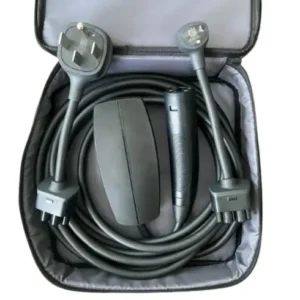
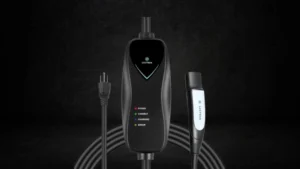
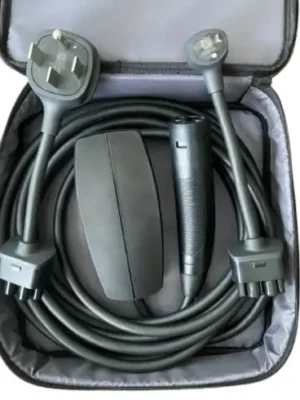
The Tesla Gen 3 Mobile Connector is the latest Tesla mobile charger, delivering up to 7.6 kW (32 amps at 240V) via a NEMA 14-50 or 6-50 adapter, which is roughly 30 miles of range per hour. It also works with standard 120V outlets at 1.3 kW. Offers PowerShare support on compatible vehicles like the Cybertruck and Model Y Performance, enabling basic bi-directional charging, including Vehicle-to-Load (V2L) and Vehicle-to-Vehicle (V2V), making it the most capable portable Tesla charger yet.
Charging Speed:7.68 kW
Max Amperage:32 Amps
Charging Level:Level 1, Level 2
Connector Type:NACS
Cable Length:20 Feet
Connectivity:Wi-Fi
Installation Type:NEMA 14-50, NEMA 5-15, NEMA 6-50
The Tesla Mobile Connector Gen 3 is our #1 rated NACS mobile charger here at Electric Vehicle Geek. It's a serious upgrade over its predecessor, bi-directional charging (Vehicle-to-Load (V2L), Vehicle-to-Vehicle (V2V), Vehicle-to-Grid (V2G), PowerShare support, and a higher charging capacity make it the most capable portable Tesla charger yet. It's the ideal pick for owners who want flexible, on-the-go charging without committing to a permanent wall installation.
Features
9
Real World Usage
8.5
Materials
8.5
Durability
9
Craftsmanship
8.5
Design
9
Monetary Value
9
Product Value
8.5
Brand Reputation
9.5
Expert Valuation
9
PROS:
Bi-directional charging (V2L & V2V)
PowerShare support
Portable and plug-and-play
Higher charging capacity than previous gen
No installation required
CONS:
No V2H & V2G support
Lower amperage than Universal Wall Connector
Requires compatible vehicle for bi-directional features
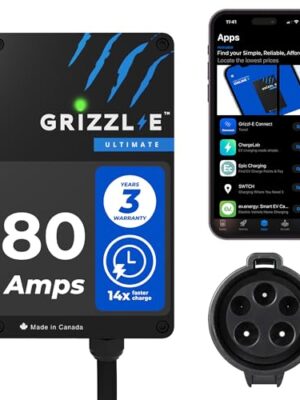
The Grizzl-E Ultimate 80A EV charger is a rugged, 80A Level 2 EV charger delivering up to 19.2 kW. Built for indoor/outdoor use with Wi-Fi, adjustable amperage, and J1772 or NACS connector.
The Grizzl-E Ultimate 80A EV charger impressed me with its rugged build and blazing 80A performance, its an 80 amp EV charger perfect for harsh outdoor installs and high-capacity EVs. But for future-proof smart charging, business applications, and solar EV charging integration, the Autel’s MaxiCharger 80A charger is the clear winner with V2G, bidirectional support, and OCPP 2.0.1 - it's built for homes and commercial applications that demand intelligence, not just speed.
Features
8.5
Real World Usage
8.5
Materials
9
Durability
9
Craftsmanship
8.5
Design
9
Monetary Value
9
Product Value
8.5
Brand Reputation
9
Expert Valuation
9
PROS:
Budget-friendly 80 Amp EV charger
True OCPP Compliant
Industry-leading 80A output for ultra-fast charging
Rugged, weatherproof aluminum enclosure (NEMA 4X)
Compatible with all EVs via J1772 or NACS
Adjustable amperage for multiple breaker sizes
Works offline and recovers after power interruptions
Made in Canada with a 3-year warranty
CONS:
No plug-in option (hardwired only)
Smart features limited to OCPP 1.6
No built-in energy optimization or load sharing
App interface and diagnostics are basic compared to modern alternatives
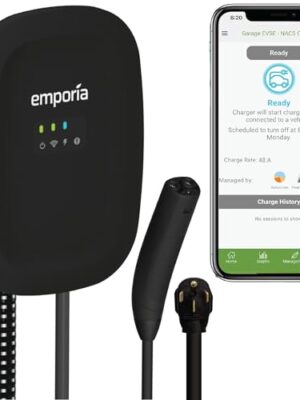
The Emporia Level 2 EV Charger with NACS delivers fast, reliable charging for Tesla and NACS vehicles. It offers up to 46 miles of range per hour, features easy installation, and is UL-listed for safety. Smart charging capabilities and durable construction make it a great value at a competitive price.
The Emporia Level 2 EV Charger with NACS offers excellent performance with up to 46 miles of range per hour. Features and real-world usage score high, and the materials and durability are top-notch. With solid craftsmanship and design, it provides strong value for money, earning high expert and brand reputation ratings.
Features
9
Real World Usage
8.5
Materials
9
Durability
9
Craftsmanship
8.5
Design
9
Monetary Value
8
Product Value
8.5
Brand Reputation
8.5
Expert Valuation
9
PROS:
No adapter needed for Tesla or NACS-compatible vehicles.
Charges up to 46 miles per hour, providing fast performance.
Durable, easy-to-use 24-foot cable.
Smart charging features with mobile app control.
CONS:
Installation may require electrical upgrades for some users.
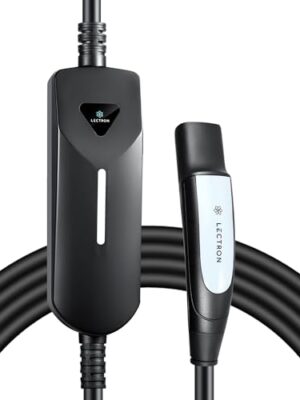
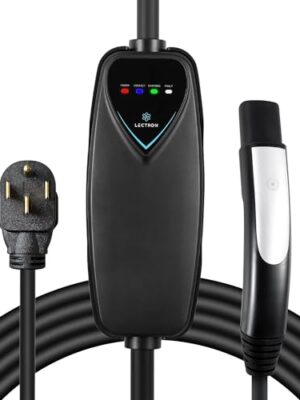
The Lectron Level 1/2 Tesla/NACS Charger offers portable, flexible charging with interchangeable 120V and 240V plugs. It supports Tesla Models 3, Y, S, X, and other NACS EVs, delivering up to 9.6 kW for reliable home or travel charging.
The Lectron Level 1/2 is a versatile dual-mode charger with solid in-built safety features and dependable performance at both 12A and 40A. It’s a smart pick if you want one unit that covers both slow overnight charging and faster Level 2 sessions.You might want to look at Tesla’s chargers, such as the Tesla Wall Connector or the Tesla Universal Wall Connector, if seamless integration with your Tesla and the Tesla app is a priority. Tesla’s native units offer smart charging features and real-time monitoring directly through the app. By contrast, the Lectron Level 1/2 keeps things simple: a reliable plug-and-charge unit without connectivity.Should you upgrade if you own the Lectron Level 1 Portable Charger? Yes, if you’re ready for faster 240V charging. Otherwise, stick with your Level 1 unless you hate its slow charging speeds.
Features
9
Real World Usage
8
Materials
8.5
Durability
9
Craftsmanship
9
Design
9
Monetary Value
8.5
Product Value
8
Brand Reputation
9
Expert Valuation
8.5
PROS:
Dual-level charging (12A Level 1 & 40A Level 2)
Compatible with Tesla and other NACS EVs
Interchangeable NEMA 5-15 and 14-50 plugs
Portable and travel-friendly
ETL certified with built-in safety protections
Real-time LED charging status indicators
CONS:
Level 2 charging requires NEMA 14-50 outlet installation
Not hardwired, less durable than wall chargers
Limited maximum amperage compared to some hardwired chargers
The Tesla Mobile Connector is a portable charger compatible with standard 120V and 240V outlets using interchangeable adapters. It delivers up to 7.6 kW of power, providing flexible, reliable charging for Tesla Models 3, Y, S, and X at home or on the go with a simple setup.
The Tesla Mobile Connector offers portability and ease of use, ideal for occasional charging or travel. However, it falls short as a daily home charger due to slower speeds, a lack of smart features, and update limitations, especially for non-Tesla owners. Best suited as a backup or secondary charger.
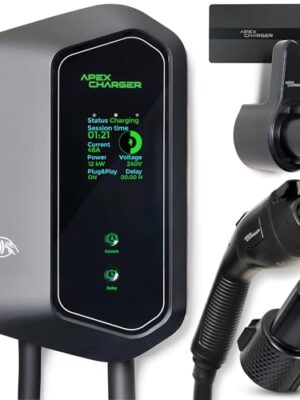
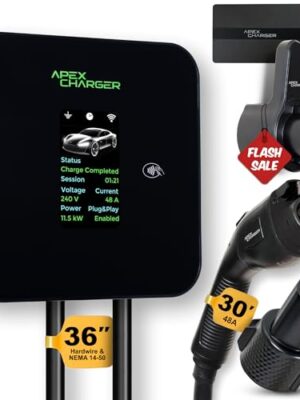
The ApexCharger MACH 1 EV Charger is a 48-amp Level 2 dual-connector charger supporting both J1772 and NACS EV charging. It features built-in Wi-Fi and Bluetooth, smart app control, and supports both NEMA 14-50 plug-in and hardwired installation.
The ApexCharger MACH 1 EV Charger is a high-performance 240V Level 2 EV charger that hits all the marks: fast charging, full EV compatibility, robust build quality, and intuitive smart features. Its dual-installation flexibility, built-in access control, and included Tesla adapter make it one of the most complete charging solutions on the market today.If you want a charger that’s built to grow with your EV ownership—whether for your first EV or your third—the MACH 1 delivers. For its price point and feature set, it’s one of the best 48 Amp EV chargers available in the market today.
Features
8.5
Real World Usage
9
Materials
8.5
Durability
8.5
Craftsmanship
8.5
Design
8.5
Monetary Value
8.5
Product Value
8.7
Brand Reputation
8.5
Expert Valuation
8.5
PROS:
Fast 48A Level 2 charging (11.52 kW)
Compatible with all EVs, including Tesla (NACS adapter included)
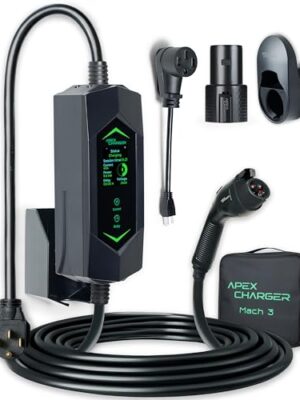
The ApexCharger MACH 3 EV Charger is a portable Level 1/2 dual-connector charger that supports both J1772 and NACS connectors. It features Wi-Fi app control, IP67 weather resistance, and pulsing LED indicators, making it a solid on-the-go and backup charging option.
Charging Speed:9.6 kW
Max Amperage:40 Amps
Charging Level:Level 1, Level 2
Connector Type:J1772, NACS
Cable Length:25 Feet
Connectivity:Bluetooth, Wi-Fi
Installation Type:NEMA 14-50, NEMA 5-15, NEMA 5-20
The ApexCharger MACH 3 EV Charger is the best option for EV drivers who want portability without sacrificing speed or smart features. With up to 40 Amps, dual-voltage input, Tesla compatibility, and a rugged, IP67-rated build, it beats most portable chargers on the market - especially in power and feature depth.While the ApexCharger MACH 2 is still the brand’s top-tier home unit, and the MACH 1 is the budget-friendly wall charger, the MACH 3 fills a different and crucial role: on-the-go charging wherever you need it, without calling an electrician.If you need a travel-ready backup or your lifestyle includes frequent road trips, the ApexCharger MACH 3 is one of the smartest, most reliable portable EV chargers available today.
The ApexCharger MACH 2 EV Charger is a premium dual-connector 48A Level 2 charger featuring a 360° LED ring, a 5.7" smart display, Wi-Fi, app integration, and a rugged IP67-rated 30ft cable.
The ApexCharger MACH 2 blends fast 48A charging with sleek design and intuitive smart features. Its vivid display and LED ring elevate usability, though sunlight glare may affect visibility. Ideal for multi-EV households, it’s a solid pick, if you don’t need full Tesla app integration or a tight budget solution.
Features
8.7
Real World Usage
9
Materials
8.5
Durability
8.5
Craftsmanship
8.5
Design
8.5
Monetary Value
8.5
Product Value
8.7
Brand Reputation
8.5
Expert Valuation
8.5
PROS:
Fast 48A charging supports quicker EV top-ups.
Dual installation options: NEMA 14-50 plug or hardwired.
Bright 5" display and 360° LED ring enhance user feedback.
RFID access control adds security.
Compatible with both J1772 and Tesla (via adapter).
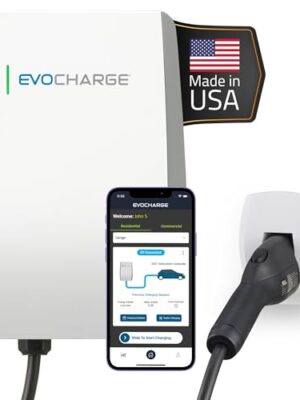
The EvoCharge Home 50 EV Charger is a 50 Amp, 240V Level 2 EV charger available in J1772 or NACS (Tesla) versions. Hardwired for safety, it delivers up to 45 miles of range per hour with smart scheduling, remote control, and energy tracking. Ideal for indoor or outdoor home installation.
The EvoCharge Home 50 is a premium-grade, hardwired Level 2 EV charger that delivers exactly what experienced EV owners need: fast, safe, and reliable home charging with smart control and high build quality.While it lacks the flashy design of the Wallbox Pulsar Plus or the in-depth analytics of Emporia, it wins on reliability, simplicity, and charging performance. It’s particularly well-suited for households with large-battery EVs or homeowners installing permanent 50A circuits with future expansion in mind.If you’re looking for a rugged, made-in-America charger with UL safety, Energy Star efficiency, and weatherproof reliability, the EvoCharge Home 50 is one of the best choices you can make today.
Features
8
Real World Usage
8.5
Materials
8.5
Durability
9
Craftsmanship
8.5
Design
9
Monetary Value
9
Product Value
9
Brand Reputation
8
Expert Valuation
8.5
PROS:
Hardwired 50A (12kW) charging delivers faster EV charging.
Robust NEMA 4 weatherproof rating for indoor/outdoor use.
Flexible installation with multiple conduit entry points.
Mobile app supports scheduling, energy monitoring, and user sharing.
Made in the USA with UL and ENERGY STAR certifications.
CONS:
Direct manufacturer support and returns are no longer available.
No J1772 to NACS (Tesla) adapter included; must purchase separately.
Wall mount bracket sliding design complicates installation in lock boxes.
Challenges with OCPP protocol access and internal web portal login
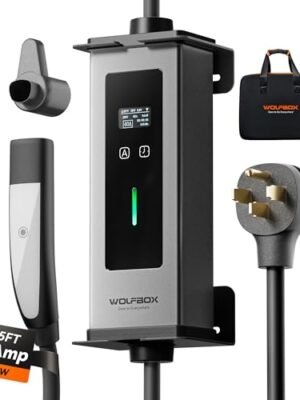
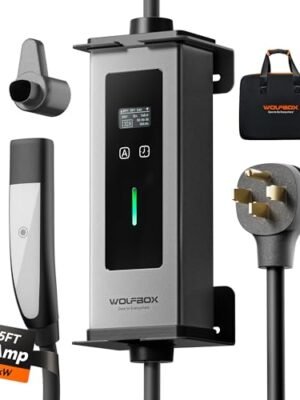
The WOLFBOX PE40T provides portable, fast charging for Tesla owners with 40 amps, 9.6 kW output, and a built-in NACS connector. Compact and lightweight, it’s designed for easy use at home or on the road, ensuring Tesla compatibility without adapters.
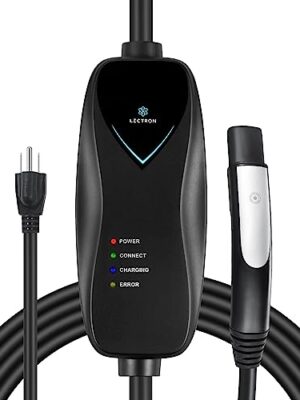
The Lectron Level 1 Tesla Charger offers fast and reliable home charging for Tesla vehicles. With an easy plug-and-play setup, it works with standard household outlets. Its compact design ensures convenience, while it provides safe and consistent power for everyday charging needs. Ideal for quick and efficient at-home use.
The Lectron Level 1 Tesla Charger offers a simple solution for charging your Tesla at home. It plugs directly into a standard 110-volt outlet and provides 15 Amps of charging current. This charger delivers 1.65 kW of power, adding 40-50 miles of range overnight. It works with Tesla models S, X, 3, and Y. The charger is lightweight and easy to use, with safety features like overvoltage and short circuit protection. For added convenience, consider using clamps to secure the cord and a housing unit for storage. Overall, the Lectron charger provides reliable, cost-effective charging.
Features
8.5
Real World Usage
7.5
Materials
8.5
Durability
8
Craftsmanship
9
Design
8.7
Monetary Value
8.5
Product Value
8
Brand Reputation
9
Expert Valuation
8
PROS:
Affordable pricing offers excellent value for money compared to other Tesla-compatible chargers on the market.
Broad compatibility works flawlessly with all Tesla models (X, Y, 3, S) and other EVs equipped with the NACS connector.
Convenient portability designed with a 16 ft extension cord, making it easy to charge at home or on the go without hassle.
Safety features equipped with overvoltage, overcurrent, and short circuit protection, ensuring safe and reliable charging at all times.
Energy-efficient Energy Star certified, helping reduce energy consumption during charging while maintaining performance.
Durable construction built from high-quality materials, ensuring longevity and reliable operation for years to come.
CONS:
Slower charging speed as a Level 1 charger (1.65 kW), it charges more slowly compared to Level 2 options, which may not suit users with higher power needs.
Limited range gain provides around 40-50 miles of range overnight, which may not meet the daily charging requirements of drivers with longer commutes or frequent road trips.
Outlet compatibility requires a standard NEMA 5-15 outlet, which may not be available in every location, limiting its convenience in certain settings.
The Lectron Level 2 Tesla Portable Charger is a solid, affordable option for Tesla owners looking for a reliable, portable charging solution. While it lacks smart features and advanced functionality compared to Tesla's Wall Connector, it excels in delivering fast, safe, and convenient charging, making it an excellent choice for those seeking an efficient and cost-effective charger for their Tesla Models X/Y/3/S and the Tesla Cybertruck.
The Lectron Level 2 Tesla Portable Charger provides fast, reliable charging with a 16-foot cable and NEMA 14-50 outlet compatibility. It delivers up to 36 miles of range per hour, offering great performance for home or on-the-go use. The charger is safe, durable, and affordable, making it an excellent value.
Features
8.5
Real World Usage
7.5
Materials
8.5
Durability
7.8
Craftsmanship
9.2
Design
8.5
Monetary Value
8.5
Product Value
7.8
Brand Reputation
9.2
Expert Valuation
8.1
PROS:
Fast charging with up to 36 miles of range per hour.
Compatible with all Tesla models and NACS EVs.
Portable and lightweight design.
16-foot cable for flexibility.
Safe with overvoltage, overcurrent, and short circuit protection.
Affordable compared to Tesla-branded chargers.
Durable with IP65-rated control box and IP55-rated handle.
CONS:
Basic compared to Tesla’s more advanced Wall Connector and the Tesla Wall Connector
The WOLFBOX PE32T offers portable Level 2 charging with 32 amps and a built-in NACS connector, made specifically for Tesla vehicles. With a 25-foot cable and 7.68 kW output, it’s ideal for Tesla owners seeking a compact, versatile charger for home or travel.
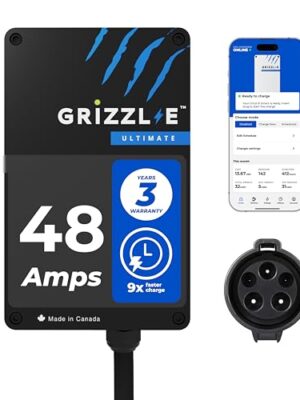
The Grizzl-E 48A Ultimate Level 2 EV Charger offers fast, efficient charging with a UL-tested, certified metal case. Designed for indoor and outdoor use, this hardwired station features a J1772 connector and a sleek black finish. With a maximum output of 48 amps, it provides reliable charging for all-electric vehicles, supporting 16A to 48A charging needs.
The Grizzl-E 48A Ultimate Level 2 EV Charger is a reliable and well-built product, offering efficient charging with a solid UL-tested metal case. The design is sleek, and it performs well across various amps (16A-48A). With strong brand reputation and excellent value, it provides good durability and craftsmanship for long-term use.
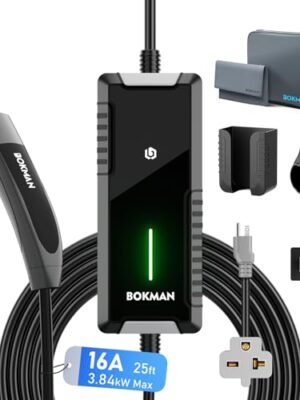
The Bokman Level 2 Mobile Charger delivers fast, efficient charging for Tesla vehicles, including Model 3/Y/X/S/Cybertruck. With a 16Amp power output and a 25ft cable, it features a NEMA 6-20 plug for Level 2 charging and NEMA 5-15 compatibility for Level 1, ensuring versatile, reliable performance at home or on the go.
Important Key Specs Table Legend:Level 1 = Level 1 only (120V). Level 1/Level 2 = dual-voltage portable (120V or 240V).
Is NACS the right plug for your car?
Look at your charge port. A NACS port is small, oval, and has five flush metal contacts. A J1772 port is larger, round, and has five visible pins set into the plastic.
If your EV is any Tesla, or a 2024-or-newer Ford, GM, Rivian, Hyundai, Honda, Polestar, Volvo, or Mercedes EV, you almost certainly have NACS, and you are on the right page. If your car is an older non-Tesla EV, you have J1772 and should head to the J1772 chargers archive instead.
For the full breakdown of how the NACS standard works, the history of Tesla's connector design, and the timeline of automaker adoption, read our NACS charger guide.
Native NACS Chargers vs Dual-Connector Chargers
Two types of chargers appear in this archive, serving different buyers.
A native NACS charger ships with a NACS plug on the end of the cable and nothing else. Tesla makes most of these, including the Wall Connector, the Universal Wall Connector, the Gen 3 Mobile Connector, and the older Mobile Connector. A few third parties have started shipping native NACS units, notably Lectron and Bokman, mostly in the portable end of the market. A native NACS charger is the right choice for Tesla-only households and anyone who values plug-and-go simplicity.
A dual-connector charger ships with a primary connector (usually J1772) plus a separate NACS plug or an integrated NACS adapter. The Autel MaxiCharger 80A and the Grizzl-E Ultimate 80A are the best examples. They appear in this archive because they support NACS, but they shine in mixed households with one Tesla and one non-Tesla EV, or when you expect to switch car brands and want to keep your wall hardware. If you are a pure Tesla household with no plans ever to charge a J1772 car, a native Tesla unit makes more sense.
Choose a NACS Charger by Use Case
Use the scenarios below to narrow the field before clicking into individual reviews.
If you own one or more Teslas and nothing else
Go native. The Tesla Universal Wall Connector is the best-rated unit in this archive. It integrates with the Tesla app, supports Group Power Management for multi-Tesla households, and includes bidirectional charging on the Cybertruck and Model Y Performance. The Tesla Gen 3 Wall Connector is the cheaper option, lacking the Magic Dock or bidirectional support, and remains a strong pick
If you own a Tesla and a non-Tesla EV
The Tesla Universal Wall Connector handles this scenario natively through its Magic Dock J1772 adapter, which extends from the unit itself rather than requiring a separate accessory. The dual-connector Autel MaxiCharger 80A is the alternative if you want a single charger with two physical plugs you can switch between, depending on which car is plugged in.
If you drive a 2024 or newer non-Tesla EV with NACS
You need a native NACS charger. The Emporia Level 2 Charger with NACS is the best-rated non-Tesla native NACS unit. The Tesla Universal Wall Connector also works on any NACS-equipped EV, not just Teslas, and is the higher-rated option if budget allows.
If you want portability, or if you rent
The Tesla Gen 3 Mobile Connector is the best portable NACS charger we have tested. It supports PowerShare on compatible Teslas (Vehicle-to-Load and Vehicle-to-Vehicle), handles both 120V and 240V outlets through interchangeable adapters, and delivers up to 7.68 kW. The Lectron Level 1/2 Tesla NACS Charger is the budget alternative if you do not need PowerShare.
If you want bidirectional charging now
The only home unit in this archive that supports bidirectional charging today is the Tesla Universal Wall Connector paired with a Cybertruck, Model Y Performance, or compatible Ford Lightning. Vehicle-to-Home and Vehicle-to-Grid remain Tesla ecosystem features for now. Expect this to expand through 2026 and 2027 as more automakers ship V2X-capable EVs.
A NACS charger is an EV charger that uses the North American Charging Standard (also called SAE J3400 or the Tesla connector). It is a compact, lightweight plug that supports both AC charging up to 19.2 kW and DC fast charging up to 1 MW via a single physical interface.
NACS is the default connector on every Tesla and on every 2024-or-newer EV from Ford, GM, Rivian, Hyundai, Honda, Polestar, Volvo, and Mercedes. For the full technical breakdown, including pin layout,signaling, and the SAE J3400 standardization process, read our NACS charger guide.
NACS EV Charger Specs at a Glance
The chart below shows the lowest, average, and highest values for key specifications across all NACS chargers we’ve reviewed, including charging power, weight, operating temperature range, cable length, and warranty length. NACS chargers are designed natively for Tesla vehicles and any EV that has adopted the North American Charging Standard connector. Use this chart as a quick benchmark when comparing individual models.
NACS charging power ranges from a low of 3.6 kW on the Lectron Level 1 Tesla Charger, which is best used as a backup or overnight top-up, to a high of 19.2 kW on dual-connector models. The average across the lineup is 9.0 kW. Among pure native-NACS chargers, the ceiling is 11.52 kW, with the Tesla Universal Wall Connector the highest-rated at 9.3 kW.
Weights range from 4.41 lbs for the Bokman 16A Portable Tesla to around 20 lbs for wall-mounted units. The lower category average of 11.2 lbs reflects the higher share of portable units in the NACS lineup. If portability is key, both the older Tesla Mobile Connector and the Tesla Gen 3 Mobile Connector weigh 5.2 lbs and are rated 8.7 and 8.9, respectively, with the Gen 3 edging ahead on smart features.
Cable lengths range from 16 feet to 30 feet, averaging 23.1 feet. The Lectron Level 1 Tesla Charger and the Lectron Level 2 Tesla Portable both come with 16-foot cables. If reach is a priority, the ApexCharger MACH 1 and MACH 2 offer the full 30 feet, the longest in the category. Both are rated 8.6, and the MACH 2 is the stronger pick if you also want load management.
All reviewed NACS chargers handle up to 122 degrees Fahrenheit on the high end. On the cold end, most rate to minus 22 degrees, with an average low of minus 23.9. For harsh winter installs, the ApexCharger MACH 1, MACH 2, and MACH 3 all operate down to minus 31 degrees Fahrenheit. The MACH 2 is the top pick for cold-weather installs, given its 30-foot cable, 5-year warranty, and lowest operating temperature in the category.
NACS vs J1772 vs CCS, which plug do you actually need?
NACS (SAE J3400) is the new North American standard. If you bought a new EV in 2025 or 2026 from Tesla, Ford, GM, Rivian, Volvo, Polestar, Hyundai, Kia, Honda, Acura, Nissan, Lucid, or Mercedes, your car either has a native NACS port or ships with a free NACS adapter.
J1772 is the older Level 2 standard still used on most pre-2025 non-Tesla EVs. CCS Combo is the DC fast-charging port used on those same older non-Tesla EVs.
For home charging, buy native NACS unless you specifically need to share a charger between an older J1772 EV and a newer NACS EV. In that case, a dual connector unit such as Autel MaxiCharger, Grizzl E Ultimate, EvoCharge Home 50, or ApexCharger MACH is a cleaner solution than carrying an adapter.
More amps mean higher costs, both in the charger itself and in the electrical work to support it. Match the charger to your car, not the other way around.
Breaker sized at 125% of continuous load per NEC 625 · Range estimates assume ~3.1 mi/kWh average efficiency
Breaker Sizing Rule
NEC requires the breaker to be sized at 125% of the charger's continuous load, which is why a 48A charger needs a 60A breaker, and an 80A charger needs a 100A breaker. Most existing 200A residential panels can support 48A. Going to 80A often means a service upgrade.
Smart vs dumb NACS charger, when is the app worth it?
A smart charger with WiFi, app control, or OCPP support is worth it if you have time-of-use electricity pricing and want to schedule off-peak charging, if you want to track the cost per charging session, or if you plan to add solar or a home battery system later.
Skip smart features if you have flat electricity rates and your EV already has built-in charging schedules, which most modern EVs include.
Hardwired vs. plug-in
If you rent or plan to move soon, a plug-in is usually better. If you own your home and want maximum performance, hardwired is the better choice.
Frequently Asked Questions
Do I need a CCS to NACS adapter for a home charger?
No. A native NACS charger plugs directly into any vehicle with a NACS port. The adapter conversation only comes up at public DC fast chargers where your car has a NACS port, but the station has a CCS plug, or vice versa. This is not relevant to home Level 2 charging.
Can I use a NACS charger with an older Ford Mach E or Kia EV6?
Yes, with the J1772-to-NACS adapter that came free with your vehicle, or a 30- to 50-dollar third-party adapter if you bought a used vehicle. Many automakers shipped adapters to existing owners through 2024 and 2025. Alternatively, you can buy a dual-connector charger. The Autel MaxiCharger 80A and Grizzl E Ultimate 80A both ship with both plugs.
Does a 48 amp NACS charger need a 60 amp breaker?
Yes. The 80 percent continuous load rule in NEC 625 means a 48A charger draws 48A continuously, which requires the breaker to be rated at 125 percent of that load, or 60A. The same math gives you a 50A breaker for a 40A charger and a 100A breaker for an 80A charger. Skipping this is a code violation and a fire risk.
Can home NACS chargers reach Tesla Supercharger speeds?
No. Supercharger speeds are DC fast charging at 250 kW and above. Home NACS chargers are Level 2 AC and are limited by your car's onboard charge,r which is typically 7.7 to 19.2 kW. The NACS plug supports both AC and DC charging, ng but the home wiring and charger hardware do not deliver Supercharger-level power.
Should I buy a NACS charger now or wait?
NACS is fully locked in. SAE finalized it as J3400 in late 2024, every major automaker has committed to it, and the connector itself is mechanically identical to what Tesla has used since 2012. No next version is expected that would make a 2026 NACS charger obsolete.
Is the Tesla Wall Connector worth more than cheaper NACS chargers?
If you own a Tesla and want the cleanest aesthetics, automatic communication with the car, and Powerwall integration, then yes. If you drive a non-Tesla NACS EV or do not care about the Tesla app ecosystem, the Emporia Level 2 with NACS gives you most of the Tesla Wall Connector experience at a lower cost.
Will a NACS charger work with my 2024 Ford F-150 Lightning, Mustang Mach-E, or other non-Tesla NACS EV?
Yes, for the new vehicles that have native NACS ports from the factory, including 2025-and-newer Fords, GMs, Rivians, Hyundais, Hondas, Polestars, and Mercedes EVs For older non-Tesla EVs that shipped with J1772 and were promised a NACS adapter, you can use a NACS charger with that adapter installed on the car side. The charger does not care which direction the adapter sits on.
Can I install a Tesla Wall Connector myself?
Only if you hold a residential electrician licence in your jurisdiction, since the unit is hardwired and most code authorities require a licensed installer for any 48 amp 240V circuit. Tesla strongly recommends professional installation and most insurance policies require it. The unit itself is well-documented and the wiring is straightforward, but the permit, panel inspection, and load calculations are not optional.
How fast does a NACS home charger charge a Tesla?
A 48 amp Tesla Wall Connector adds about 44 miles of range per hour to a Model 3, Model Y, or Cybertruck. The Universal Wall Connector at the same 48 amps performs identically. Portable units like the Gen 3 Mobile Connector top out at 32 amps and add about 30 miles of range per hour on a NEMA 14-50 outlet.
Is a Tesla Universal Wall Connector worth the price premium over the Gen 3?
If you own only Teslas and never expect to plug in a J1772 car, the Gen 3 is the better value. The Universal Wall Connector justifies its premium when you have a mixed-EV household, when you want bidirectional charging support on a Cybertruck or Model Y Performance, or when you want the convenience of the Magic Dock instead of carrying a separate adapter.
Do all NACS chargers work with all NACS-equipped EVs?
Physically, yes. Every NACS plug fits every NACS port. In practice, smart features and integrations differ. Tesla Wall Connectors offer the deepest integration with Tesla vehicles through the Tesla app, including remote start, scheduled charging, and over-the-air firmware updates. Third-party NACS chargers like the Lectron and Emporia units charge a Tesla at full speed but rely on their own apps for smart features.
Can my NACS home charger charge a friend's older J1772 car?
Yes, with a NACS-to-J1772 adapter on the car side. These adapters cost roughly 20 to 80 US dollars and are widely available. NACS and J1772 use the same underlying AC signaling, so no protocol conversion happens. The adapter is purely a physical interface. The Tesla Universal Wall Connector handles this scenario natively through its built-in Magic Dock and is the cleanest solution for households that regularly host J1772 vehicles.
Will NACS replace J1772 entirely?
On new cars, yes, that transition is already underway. On home chargers, no time soon. The roughly 3 million J1772-equipped EVs already on US and Canadian roads will need J1772-compatible home charging for the next 10 to 15 years. Public Level 2 chargers will keep shipping with J1772 well into the late 2020s. If your car is an older J1772 model, the J1772 charger archive is the right place to shop.