Supported by you via insider access, and when you purchase through links on our site, we may earn an affiliate commission. See our Affiliate Disclosure.
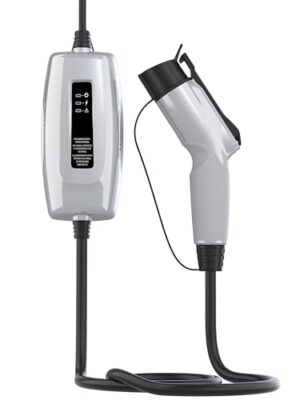
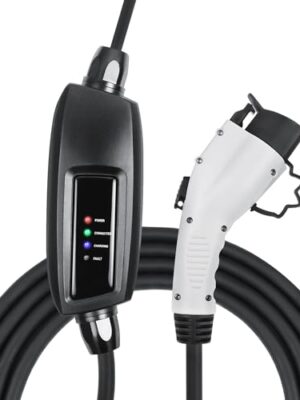
A 120V EV charger (Level 1 charging) is the simplest and budget-friendly home EV charging solution available in the U.S., and its defining feature is that you already have everything you need to use one.
One of the biggest advantages of 120V EV charging is that virtually every American home already has the electrical infrastructure needed to support it. A standard household outlet and a nearby parking space are often all you need to start charging. There are no installation costs, no electrician visits, no permits, and no waiting for a new circuit to be added. Simply plug in the charger, connect your EV, and start charging at home the same day.
What you gain with a 120V EV charger is simplicity, but that convenience comes at the cost of charging speed. A 120V outlet on a 15-amp circuit delivers a maximum of 12 amps of continuous charging under the NEC 80 percent rule, which translates to 1.44 kilowatts and about 3 to 5 miles of range per hour, on a 20-amp circuit with a NEMA 5-20 outlet that ceiling rises to 16 amps and 1.92 kilowatts, the highest Level 1 power available in the U.S. For most plug-in hybrid drivers and many BEV owners with moderate daily mileage, that range addition is enough to refill what a typical commute uses before the next morning.
Use the EV Charging Calculator to check whether 120V covers your specific daily mileage before buying.
All Our 120V EV Chargers Reviews
Every EV charger featured below works with a standard 120V household outlet, making it easy to start charging at home without electrical upgrades. Our top picks include dedicated 12-amp Level 1 chargers for reliable everyday charging, dual-voltage models that can switch to 240V if you upgrade in the future, and options compatible with both NEMA 5-15 and NEMA 5-20 outlets. Click any charger title to read our in-depth review, see real-world performance results, and find the best fit for your EV.
Use the “Compare” button on each product to select multiple chargers, then click the ⚖️ scale icon to see a full side-by-side comparison.
The Tesla Gen 3 Mobile Connector is the latest Tesla mobile charger, delivering up to 7.6 kW (32 amps at 240V) via a NEMA 14-50 or 6-50 adapter, which is roughly 30 miles of range per hour. It also works with standard 120V outlets at 1.3 kW. Offers PowerShare support on compatible vehicles like the Cybertruck and Model Y Performance, enabling basic bi-directional charging, including Vehicle-to-Load (V2L) and Vehicle-to-Vehicle (V2V), making it the most capable portable Tesla charger yet.
Charging Speed:7.68 kW
Max Amperage:32 Amps
Charging Level:Level 1, Level 2
Connector Type:NACS
Cable Length:20 Feet
Connectivity:Wi-Fi
Installation Type:NEMA 14-50, NEMA 5-15, NEMA 6-50
The Tesla Mobile Connector Gen 3 is our #1 rated NACS mobile charger here at Electric Vehicle Geek. It's a serious upgrade over its predecessor, bi-directional charging (Vehicle-to-Load (V2L), Vehicle-to-Vehicle (V2V), Vehicle-to-Grid (V2G), PowerShare support, and a higher charging capacity make it the most capable portable Tesla charger yet. It's the ideal pick for owners who want flexible, on-the-go charging without committing to a permanent wall installation.
Features
9
Real World Usage
8.5
Materials
8.5
Durability
9
Craftsmanship
8.5
Design
9
Monetary Value
9
Product Value
8.5
Brand Reputation
9.5
Expert Valuation
9
PROS:
Bi-directional charging (V2L & V2V)
PowerShare support
Portable and plug-and-play
Higher charging capacity than previous gen
No installation required
CONS:
No V2H & V2G support
Lower amperage than Universal Wall Connector
Requires compatible vehicle for bi-directional features
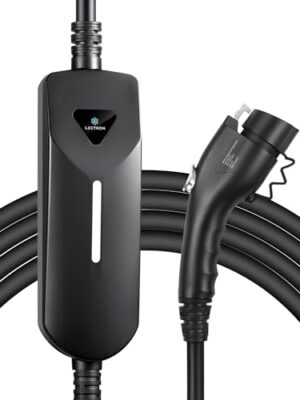
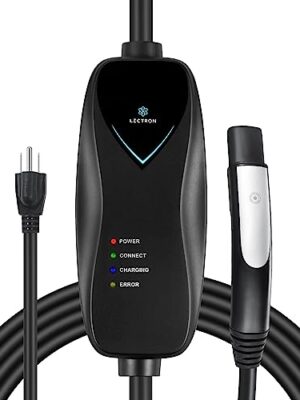
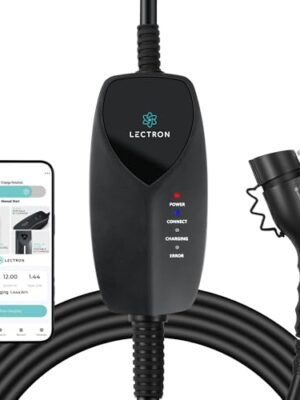
The Lectron Level 1 / Level 2 EV Charger is a practical, versatile, and affordable option for most EV drivers. It covers both charging speeds, works with virtually every J1772 vehicle, and goes wherever you go. The lack of smart features keeps the experience simple, and for many drivers, that's exactly what they want.It won't win any awards for cutting-edge technology, but it doesn't need to. What it does, it does well. If you're looking for a dependable portable charger that handles everyday needs without any hassle, the Lectron is a solid pick.
Features
9
Real World Usage
8
Materials
8.5
Durability
9
Craftsmanship
9
Design
9
Monetary Value
8.5
Product Value
8
Brand Reputation
9
Expert Valuation
8.5
PROS:
Dual plug compatibility (NEMA 5-15 & 14-50)
Supports both Level 1 and Level 2 charging
Portable and travel-friendly with carrying case
Safety features: overvoltage, overcurrent, short circuit protection
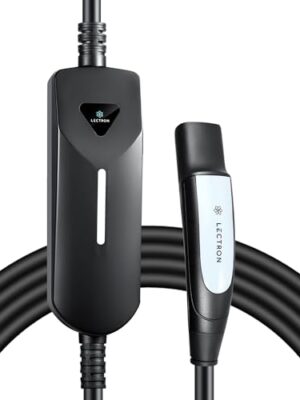
The Lectron Level 1/2 Tesla/NACS Charger offers portable, flexible charging with interchangeable 120V and 240V plugs. It supports Tesla Models 3, Y, S, X, and other NACS EVs, delivering up to 9.6 kW for reliable home or travel charging.
The Lectron Level 1/2 is a versatile dual-mode charger with solid in-built safety features and dependable performance at both 12A and 40A. It’s a smart pick if you want one unit that covers both slow overnight charging and faster Level 2 sessions.You might want to look at Tesla’s chargers, such as the Tesla Wall Connector or the Tesla Universal Wall Connector, if seamless integration with your Tesla and the Tesla app is a priority. Tesla’s native units offer smart charging features and real-time monitoring directly through the app. By contrast, the Lectron Level 1/2 keeps things simple: a reliable plug-and-charge unit without connectivity.Should you upgrade if you own the Lectron Level 1 Portable Charger? Yes, if you’re ready for faster 240V charging. Otherwise, stick with your Level 1 unless you hate its slow charging speeds.
Features
9
Real World Usage
8
Materials
8.5
Durability
9
Craftsmanship
9
Design
9
Monetary Value
8.5
Product Value
8
Brand Reputation
9
Expert Valuation
8.5
PROS:
Dual-level charging (12A Level 1 & 40A Level 2)
Compatible with Tesla and other NACS EVs
Interchangeable NEMA 5-15 and 14-50 plugs
Portable and travel-friendly
ETL certified with built-in safety protections
Real-time LED charging status indicators
CONS:
Level 2 charging requires NEMA 14-50 outlet installation
Not hardwired, less durable than wall chargers
Limited maximum amperage compared to some hardwired chargers
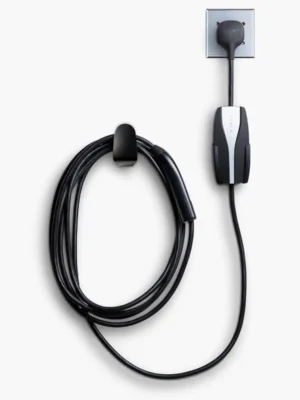
The Tesla Mobile Connector is a portable charger compatible with standard 120V and 240V outlets using interchangeable adapters. It delivers up to 7.6 kW of power, providing flexible, reliable charging for Tesla Models 3, Y, S, and X at home or on the go with a simple setup.
The Tesla Mobile Connector offers portability and ease of use, ideal for occasional charging or travel. However, it falls short as a daily home charger due to slower speeds, a lack of smart features, and update limitations, especially for non-Tesla owners. Best suited as a backup or secondary charger.
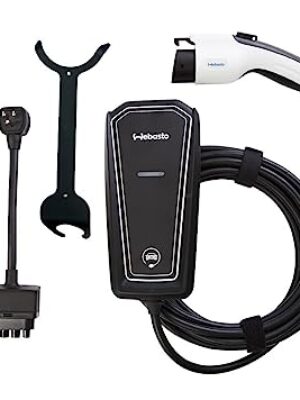
The Webasto Go Dual Voltage Portable EV Charger offers Level 1 and Level 2 charging (120V & 240V), ideal for home or on-the-go use. UL and IP67 rated for safety and durability, it delivers up to 7.7kW of power, charging up to 30 miles per hour. Compatible with all J1772-equipped EVs, including Tesla with an adapter.
The Webasto Go is a reliable, easy-to-use charger ideal for everyday use. It’s safe, efficient, and built with the needs of EV owners in mind, though potential buyers should consider its waterproof shortcomings.
Features
8
Real World Usage
8.5
Materials
9
Durability
9
Craftsmanship
8.5
Design
8.5
Monetary Value
9
Product Value
8.7
Brand Reputation
9
Expert Valuation
8
PROS:
Dual voltage (120V and 240V) for flexible charging
Advanced safety features with UL and cUL certifications
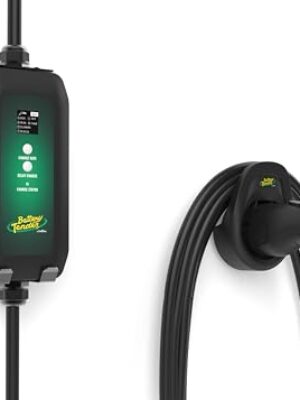
The Battery Tender eCharge 32 AMP EV Charger is a versatile Level 1+2 electric vehicle charger, compatible with 120V or 240V power sources. Offering 16A or 32A output, this portable EV charger is perfect for indoor and outdoor use, featuring multiple plug options like 5-15p, 5-20p, and NEMA 14-50R for flexible charging. Ideal for fast, reliable EV charging at home or on the go.
The Battery Tender eCharge 32 Amp is one of the more capable portable EV chargers on the market. It handles extreme temperatures, provides real-time data, adapts to your available power source, and doesn't require an app to function. If you want one charger for home and travel without compromise, this one earns its place in your trunk.
Features
9
Real World Usage
9
Materials
8
Durability
8.5
Craftsmanship
8.5
Design
8.5
Monetary Value
7.5
Product Value
8.5
Brand Reputation
9
Expert Valuation
9
PROS:
Can be used with both 120V and 240V power inputs, offering flexibility for different charging setups.
With options for 16A or 32A output, it provides fast charging times.
Suitable for both indoor and outdoor use, ensuring reliability in various conditions.
Comes with different plug types (5-15p, 5-20p, NEMA 14-50R) to fit various outlets.
CONS:
It’s on the higher end of the price spectrum, but the features justify the cost.
The variety of options might be overwhelming for some users.
The Schumacher 16 Amp EV Charger is a reliable, 16A portable charger with a 28-ft cable, Level 1/2 support, 120V/240V compatibility, and efficient EV charging.
The Schumacher Schumacher 16 Amp EV Charger is a reliable, portable EV charger that caters to both Level 1 and Level 2 charging needs. Its ergonomic design, durable construction, and flexible cable make it a practical choice for EV owners. However, those seeking advanced features like adjustable amperage or smart connectivity might need to explore other options.
Features
8
Real World Usage
8.5
Materials
8.5
Durability
9
Craftsmanship
8.5
Design
8.3
Monetary Value
8
Product Value
8.5
Brand Reputation
9
Expert Valuation
8.5
PROS:
Portable and lightweight, easy to carry or store
28-foot cable offers excellent reach for most parking setups
Universal J1772 connector compatible with all major EVs
Supports both Level 1 (120V) and Level 2 (240V) charging
Durable construction with water-resistant features
LED indicators provide clear charging status
CONS:
Fixed 16-amp output; no adjustable amperage
Lacks smart features such as Wi-Fi, app control, or scheduling
Slightly bulky compared to small, plug-and-play Level 1 chargers
Slower charging on 120V adapter compared to full 240V output
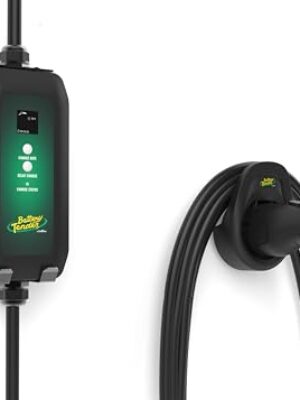
The Battery Tender eCharge 16 AMP EV Charger is a compact and efficient Level 1 charger designed for 120V power, making it perfect for standard wall outlets. Ideal for both indoor and outdoor use, this portable EV charger delivers reliable charging for everyday electric vehicle needs, ensuring convenience and ease of use.
The eCharge 16 AMP is a simple, affordable, and portable Level 1 charger with standard plugs, ideal for casual EV users, offering good durability and basic functionality, though limited in output, it provides solid value for entry-level needs and maintains Battery Tender’s reputation for reliability.
Features
8.5
Real World Usage
8.5
Materials
8
Durability
8.5
Craftsmanship
8
Design
8.5
Monetary Value
9
Product Value
8.5
Brand Reputation
9
Expert Valuation
8
PROS:
Simple plug-and-play design with standard wall plugs (5-15p or 5-20p)
Lightweight and easy to transport.
Durable enough for various environments.
CONS:
Only offers 16A output, which may be slower for some users.
Schumacher 12 Amp EV Charger is a Level 1 portable EV charger. It delivers 12 Amps at 120V with a 20-foot cable. Featuring a standard NEMA 5-15P plug and J1772 connector, it's a simple, reliable solution for home and travel, with ETL and Energy Star certifications.
The Schumacher SEV1670 is a straightforward, budget-friendly Level 1 charger. With a 20-foot cable and universal J1772 connector, it offers reliable charging for most EVs. Its IP65 rating ensures durability, though it's limited to 12 amps and lacks smart features.
Features
8
Real World Usage
8.5
Materials
8.5
Durability
9
Craftsmanship
8.5
Design
8.3
Monetary Value
8
Product Value
8.5
Brand Reputation
9
Expert Valuation
8.5
PROS:
20-foot cable provides ample reach for most parking setups.
Universal J1772 connector ensures compatibility with all major EV brands.
IP65 weather-resistant rating allows for indoor and outdoor use.
Plug-and-play design requires no installation.
LED indicators for clear charging status updates.
CONS:
Limited to 12 amps, resulting in slower charging speeds.
No smart features like Wi-Fi connectivity or app control.
Basic design lacks advanced user interface or customization options.
The Lectron 16 Amp Level 1 EV Charger offers convenient 110V charging with a 21ft extension cord and NEMA 5-15 plug. Compatible with all J1772-equipped electric vehicles, this reliable charger provides a cost-effective solution for home use, ensuring smooth, hassle-free charging with safety and versatility for daily needs.
The Lectron Level 1 EV charger offers an affordable and reliable home charging solution. Using a 120-volt outlet, it provides 1.5 kW of power, adding 5-6 miles of range per hour. Ideal for overnight charging, it features durable materials, solid craftsmanship, and excellent value, backed by a reputable brand.
Features
8.5
Real World Usage
7.5
Materials
8.5
Durability
8
Craftsmanship
9
Design
8.7
Monetary Value
8.5
Product Value
8
Brand Reputation
9
Expert Valuation
8
PROS:
Affordable and great value for money
Easy to use with a standard 110-volt outlet
Reliable and consistent charging
Durable construction, handles regular use
Compact design with a long cable for flexibility
Trusted brand with a reputation for quality
CONS:
Slow charging at 1.5 kW (5-6 miles per hour)
Full charge can take up to 12 hours
Lacks advanced features like smart connectivity or faster speeds
The Lectron Level 1 Tesla Charger offers fast and reliable home charging for Tesla vehicles. With an easy plug-and-play setup, it works with standard household outlets. Its compact design ensures convenience, while it provides safe and consistent power for everyday charging needs. Ideal for quick and efficient at-home use.
The Lectron Level 1 Tesla Charger offers a simple solution for charging your Tesla at home. It plugs directly into a standard 110-volt outlet and provides 15 Amps of charging current. This charger delivers 1.65 kW of power, adding 40-50 miles of range overnight. It works with Tesla models S, X, 3, and Y. The charger is lightweight and easy to use, with safety features like overvoltage and short circuit protection. For added convenience, consider using clamps to secure the cord and a housing unit for storage. Overall, the Lectron charger provides reliable, cost-effective charging.
Features
8.5
Real World Usage
7.5
Materials
8.5
Durability
8
Craftsmanship
9
Design
8.7
Monetary Value
8.5
Product Value
8
Brand Reputation
9
Expert Valuation
8
PROS:
Affordable pricing offers excellent value for money compared to other Tesla-compatible chargers on the market.
Broad compatibility works flawlessly with all Tesla models (X, Y, 3, S) and other EVs equipped with the NACS connector.
Convenient portability designed with a 16 ft extension cord, making it easy to charge at home or on the go without hassle.
Safety features equipped with overvoltage, overcurrent, and short circuit protection, ensuring safe and reliable charging at all times.
Energy-efficient Energy Star certified, helping reduce energy consumption during charging while maintaining performance.
Durable construction built from high-quality materials, ensuring longevity and reliable operation for years to come.
CONS:
Slower charging speed as a Level 1 charger (1.65 kW), it charges more slowly compared to Level 2 options, which may not suit users with higher power needs.
Limited range gain provides around 40-50 miles of range overnight, which may not meet the daily charging requirements of drivers with longer commutes or frequent road trips.
Outlet compatibility requires a standard NEMA 5-15 outlet, which may not be available in every location, limiting its convenience in certain settings.
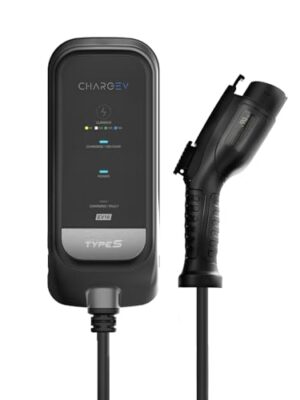
The Type S 16A Level 1 EV Charger supports 120V and 240V EV charging via NEMA 5-15, 6-20, and 10-30 outlets. Compact, weather-resistant, and adjustable, it's perfect for home, travel, or emergencies.
The Type S 16A Level 1 EV Charger is a premium-feeling, dependable Level 1 charger that does exactly what it promises: simple, safe, and reliable charging from any standard outlet. It’s not flashy, it’s not fast, but it’s highly practical and well built. If you’re okay with slower charging speeds and want a no-hassle EV charger for everyday or backup use, this is a solid choice.If you already have a Level 2 charger or want faster charging, consider stepping up to the Type S 40 Amp or other Level 2 options. Otherwise, give this a try—you won’t be disappointed.
Compact and WiFi-enabled, the Lectron 12 Amp EV Charger delivers 120V, 12 Amp charging with app control. Includes a 16 ft cord and NEMA 5-15 plug. Compatible with all J1772 EVs.
The Lectron 12 Amp Level 1 charger does what it says - and then some more through smart EV charging features not common in Level 1 EV chargers. You won’t be amazed by its charging speed or 16ft cable, but the smart EV charging features, Lectron app, portable design, and strong safety features make it one of the better 12 Amps Level 1 options on the market.
Features
8.5
Real World Usage
7.5
Materials
8.5
Durability Over Time
8
Craftsmanship
9
Design
8.7
Monetary Value
8.5
Product Value
8
Brand Reputation
9
Expert Valuation
8
PROS:
Works with all J1772 EVs.
App control via WiFi and Bluetooth.
Supports scheduled charging and usage tracking.
Lightweight and travel-friendly.
IP65-rated for outdoor use.
Compatible with solar generators and 120V outlets.
Ideal for 15A circuits and small panels.
Reliable overnight charging (4–5 miles/hour).
Includes durable carrying case.
Easy to set up and use.
CONS:
Slow charging speed (Level 1 only).
Limited to NEMA 5-15 outlets.
16-ft cord may be too short for some setups.
App requires stable WiFi for full functionality.
Not dual-voltage - supports only Level 1 (120V) charging, with no Level 2 (240V) option.
The Skysword Ⅱ is a versatile, portable EV charger. It offers both Level 1 and Level 2 charging, supporting 100-240V and 16A. With a 25-foot cable and included NEMA 6-20 and 5-15 plugs, it provides flexibility. It’s a safe, simple solution with LED indicators, ideal for home and travel.
The MEGEAR Skysword Ⅱ is a 25-foot portable charger, designed for convenience and practicality, making it ideal for everyday use whether at home, work, or while traveling.
Features
7.5
Real World Usage
8.5
Materials
8
Durability
7.5
Craftsmanship
8.5
Design
8
Monetary Value
8.5
Product Value
8
Brand Reputation
8.5
Expert Valuation
8
PROS:
Compatible with most electrical panels without requiring upgrades.
An affordable charging solution.
Built with a rigid structure for reliable portability.
Features straightforward error detection for easy troubleshooting.
boasts a smart-chip detection system that monitors charging issues
CONS:
1-year limited warranty for manufucturing defects and technical queries
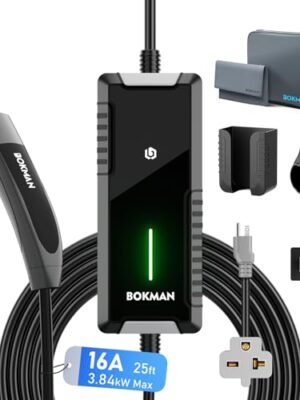
The Bokman Level 2 Mobile Charger delivers fast, efficient charging for Tesla vehicles, including Model 3/Y/X/S/Cybertruck. With a 16Amp power output and a 25ft cable, it features a NEMA 6-20 plug for Level 2 charging and NEMA 5-15 compatibility for Level 1, ensuring versatile, reliable performance at home or on the go.
Important Key Specs Table Legend:Level 1 = Level 1 only (120V). Level 1/Level 2 = dual-voltage portable (120V or 240V).
Our 120V EV charger reviews are carefully ranked by expert ratings, highlighting the best chargers available today. Each charger is evaluated on a detailed 1–10 scale across key factors such as Features, Real-World Performance, Build Quality, Durability, Design, Value for Money, Brand Trust, and Overall Expert Assessment.
By applying consistent standards to every model, we provide an unbiased comparison that covers everything from reliability and ease of use to long-term performance. Use our in-depth ratings to confidently choose the ideal 120V EV charger for efficient home charging.
For full details, click a charger image or title to read the complete review. Comparing multiple chargers? Use the “Compare” button below each charger, then click the ⚖️ scale icon to see a side-by-side comparison of specs and expert ratings, helping you make a confident, informed decision.
What is a 120V EV Charger?
A 120V EV charger – also known as a Level 1 charger – plugs into a standard household outlet and delivers 1.0 to 1.9 kW of power, typically adding 2 to 5 miles of range per hour. It draws 8 to 16 amps from a 120V circuit and is best suited for overnight charging, plug-in hybrids, or light daily EV use. With no special installation required, it’s a low-cost, convenient solution for both home and portable EV charging.
How Fast Does a 120V EV Charger Charge?
A 120V charger on a standard NEMA 5-15 outlet delivers 1.44 kW and adds 3 to 5 miles of range per hour, over a full 10-hour overnight charge that is 30 to 50 miles of added range, which covers the average U.S. daily commute of 35 miles with a comfortable margin on most nights.
Moving to a NEMA 5-20 outlet on a 20-amp circuit lifts output to 1.92 kW and 5 to 7 miles per hour, the highest Level 1 speed available in the U.S. Over the same 10-hour window, that is 50 to 70 miles, meaningfully more than a 5-15 and often enough to shift from marginal to comfortable for daily BEV charging without touching 240V.
Where 120V falls short is full battery recovery from a depleted state. A Tesla Model Y with a 75 kWh battery takes about 57 hours to charge from empty on a NEMA 5-15, more than two days, which is why BEV owners who regularly arrive home with a low battery almost always benefit from a 240V EV charger upgrade.
Whether you drive a Tesla, Jeep, Ford Mustang Mach-E, Chevy Bolt, or any other EV, a 120V charger is great for slow, trickle charging at home or on the go. However, if you want faster charging speeds, we recommend upgrading to a 240V EV charger – provided your home electrical system supports 240V circuits.
Why Choose a 120V EV Charger?
While 240V Level 2 chargers get most of the spotlight, there are several compelling reasons why a 120V Level 1 charger might be the best fit for your lifestyle:
Plug-and-Play Simplicity
No electrician. No panel upgrades. Just plug it into a standard outlet and start charging. Great for renters and those in older homes without 240V wiring.
Ideal for PHEV Owners
If you drive a plug-in hybrid like the Jeep Wrangler 4xe, Toyota Prius Prime, Ford Escape PHEV, or Honda Clarity, a 120V EV charger provides overnight charging without overkill.
Portability for Travel or Backup
Lightweight and compact, most 120V EV chargers fit easily in your trunk. Use it on the go or keep it as a backup in case your primary charging station gets lost or stops working.
Budget-Friendly
120V EV chargers are typically more affordable than 240V EV chargers. They’re an excellent entry point into EV ownership without additional installation costs.
What Are the Electrical Requirements for a 120V EV Charger?
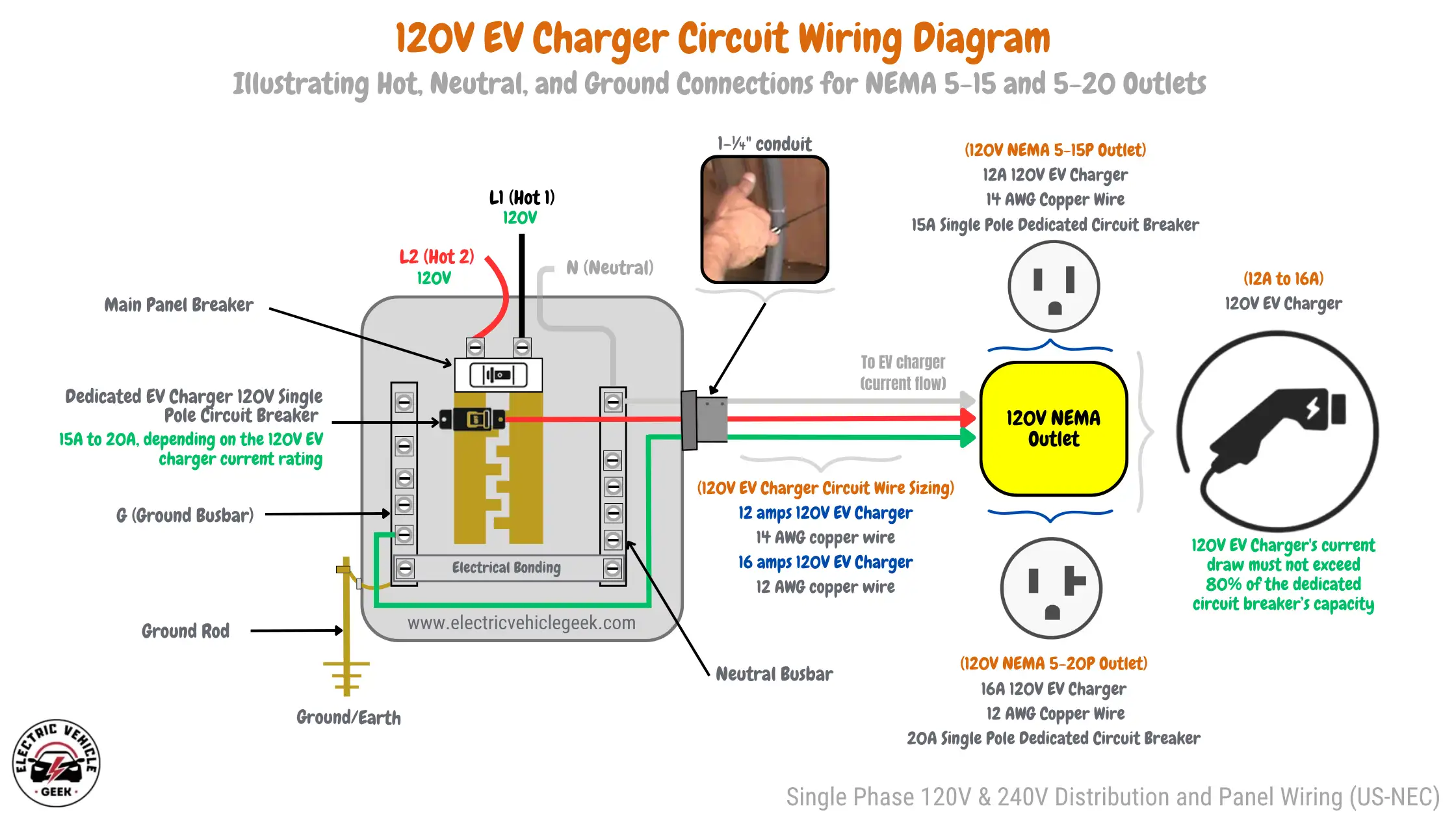
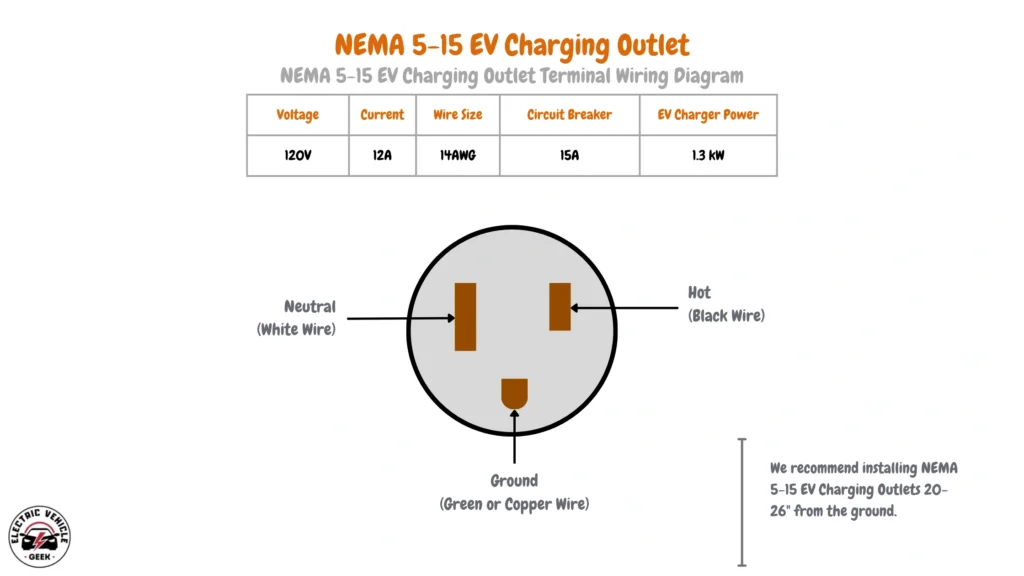
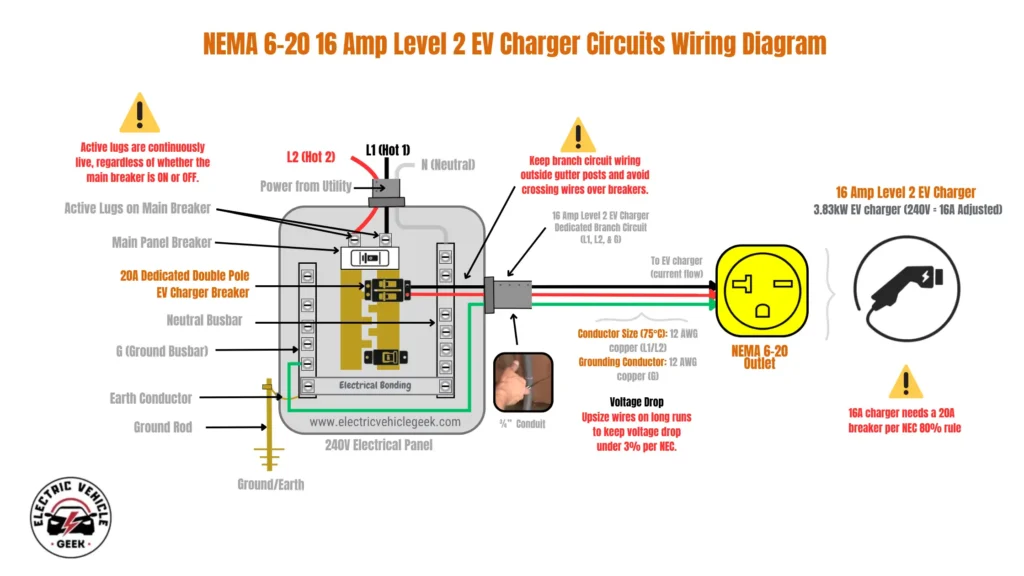
A 120V EV charger operates on a 120V single-phase circuit protected by a dedicated single-pole 15A or 20A EV charger breaker. It connects to standard NEMA 5-15 or NEMA 5-20 120V outlets, commonly found in residential settings. 120V EV charger circuit wiring typically uses 14 AWG (for 15A) or 12 AWG (for 20A) solid copper conductors, as illustrated in the 120V EV charger circuit wiring diagram below.
For safe and code-compliant installation, proper wire sizing, breaker selection, grounding, and use of industrial-grade NEMA outlets are essential. A 120V EV charger branch circuit must follow the NEC 80% continuous load rule, limiting charging to 12A on a 15A circuit or 16A on a 20A circuit. Adhering to these standards ensures reliable and safe home charging.
The 80 Percent Rule: Why 120V Tops Out at 12 or 16 Amps
The NEC 80 percent continuous load rule limits any load running more than three hours to 80 percent of the breaker’s rated current. EV charging always qualifies as continuous because it runs for hours, which is why a 15-amp breaker supports only 12 amps of EV charging and a 20-amp breaker supports only 16 amps. These two numbers are the ceiling of 120V EV charging under the U.S. code, regardless of how the charger itself is rated.
This rule also explains why a 12-amp charger and a 16-amp charger both require different circuits, even though both run on 120V. A 16-amp charger must be on a 20-amp circuit with a NEMA 5-20 outlet, because plugging it into a standard NEMA 5-15 outlet on a 15-amp circuit exceeds the continuous load limit and will trip the breaker after an extended session. The outlet pattern (the T-shaped slot on a 5-20 versus the standard vertical slots on a 5-15) physically prevents this mistake by making the two plugs incompatible.
The practical takeaway is simple: if your garage has a NEMA 5-15 outlet, your 120V charging ceiling is 12 amps and 1.44 kW. If it has a NEMA 5-20 outlet, or if you have a 20-amp circuit upgraded to a 5-20 receptacle for around 200 to 400 dollars installed, your ceiling rises to 16 amps and 1.92 kW. Neither requires a 240V circuit, a new panel capacity evaluation, or anything beyond a standard residential outlet.
120V EV Charger Outlet Guide: NEMA 5-15 vs NEMA 5-20
Two outlet patterns cover all 120V EV charging in the U.S. Understanding which one you have takes about 30 seconds and determines your charging speed ceiling before you buy anything.
The NEMA 5-15 is the standard three-prong household outlet found throughout most homes in the United States. Connected to a 15-amp circuit with 14 AWG copper wiring, it can safely support 12 amps of continuous EV charging under the NEC’s 80 percent rule, delivering up to 1.44 kW of charging power.
The NEMA 5-15 outlets are already installed in virtually every home, they offer the simplest and most accessible way to charge an EV without electrical upgrades. For garage and outdoor installations, GFCI protection is required under NEC 210.8(A), a feature commonly found in homes built or updated since 1996. For charger recommendations, see our NEMA 5-15 charger guide, and explore the outlets below for our top-rated NEMA 5-15 EV charging receptacles.
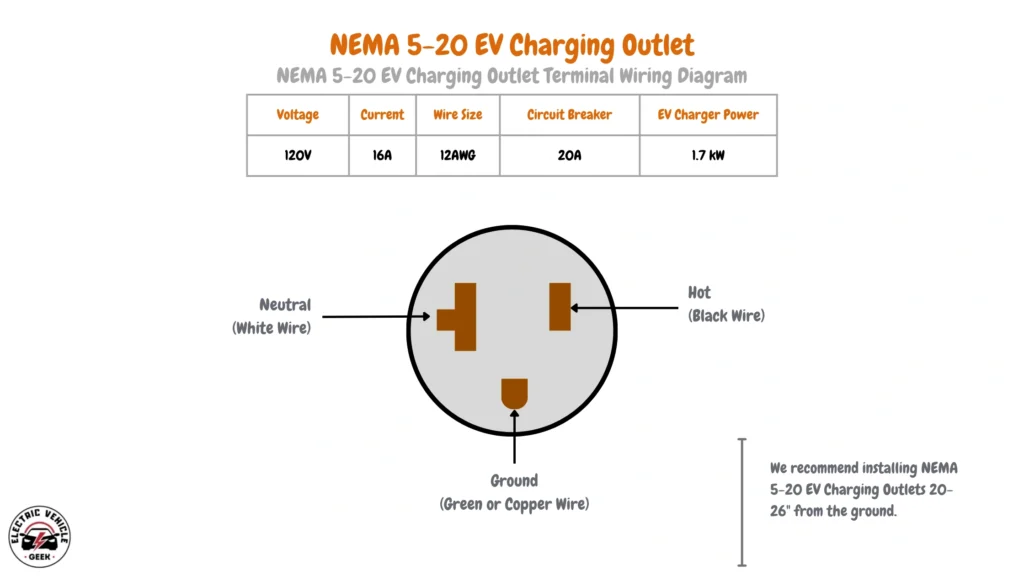
The NEMA 5-20 EV charging outlet looks nearly identical to a 5-15 but has a T-shaped horizontal extension on the left slot, indicating a 20-amp circuit with 12 AWG copper wiring.
The NEMA 5-20 EV charging outlet supports 16 amps of continuous charging, delivering 1.92 kW, the highest Level 1 speed in the U.S. Look for it in kitchens, workshops, and garages with higher-draw appliance circuits. Installing a new 5-20 outlet on an existing 20-amp circuit costs 20 to 30 dollars in parts. A new 20-amp circuit installed by a licensed electrician costs 200 to 500 dollars. See our NEMA 5-20 charger guide for compatible units.
Is 120V EV Charger Right for Your EV? A Straightforward Decision Guide
The honest answer is that 120V is the right long-term solution for a specific type of EV owner, and the wrong one for another, and knowing which you are before buying a charger saves money and frustration.
120V EV Charger Is the Right Answer If
You drive a plug-in hybrid with a small battery (Toyota Prius Prime at 8.8 kWh, Ford Escape PHEV at 14.4 kWh, Jeep Wrangler 4xe at 17.3 kWh, BMW 330e at 12 kWh), since these batteries fully charge from a NEMA 5-15 outlet in 4 to 11 hours overnight without any issues. You are a renter who cannot install a 240V circuit and charges at the outlets provided in the parking structure. You want an emergency backup or travel charger that works anywhere without planning. You drive a BEV with a modest daily commute (under 35 miles) and consistently arrive home with more than 50 percent battery remaining.
120V EV Charger Is Not Enough If
You drive a long-range BEV (Tesla Model Y, Hyundai Ioniq 5, Ford Mach-E, Rivian R1T) and regularly arrive home with under 30 percent battery. You drive more than 60 miles per day on average, because a NEMA 5-15 cannot refill more than about 50 miles in a 10-hour overnight window. You have two EVs sharing a single home charger. You own a large battery truck (F-150 Lightning, Tesla Cybertruck, Rivian) where a 120V charger takes weeks to recover from a depleted state.
When Upgrading to 240V EV Charger Makes More Sense Than You Think.
The cost jump from 120V to entry-level 240V is smaller than most buyers expect. A NEMA 6-20 EV charger circuit (240V, 20-amp) costs 200 to 400 dollars installed and delivers 3.84 kW, nearly three times faster than a NEMA 5-15.
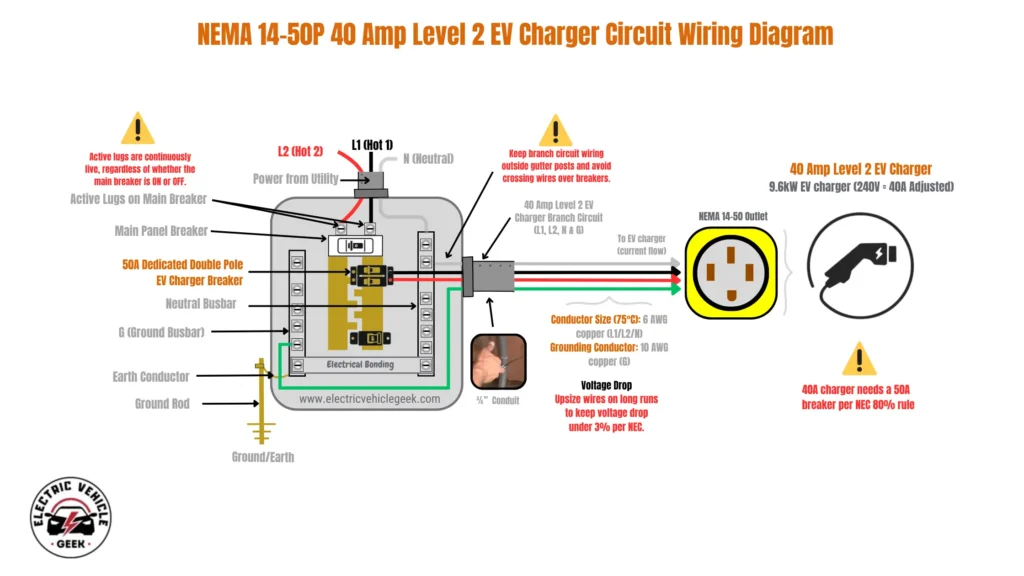
A NEMA 14-50 EV charger circuit costs 600 to 1,200 dollars installed and delivers 9.6 kW, nearly seven times faster. If you plan to own an EV for more than two years and your daily mileage is over 40 miles, the upgrade pays back quickly in convenience. Our 240V EV charger archive covers the full 240V tier in detail.
120V EV Charger Buyer's Guide
Dual Voltage Chargers: Buy Once, Upgrade Later
The smartest 120V purchase is often a dual-voltage charger that runs at 1.44 kW on your existing NEMA 5-15 outlet today and switches to 7.68 kW or higher when you add a 240V outlet later. Because the charger auto-detects voltage, you pay once and carry the unit forward through any outlet upgrade rather than replacing it. For buyers who plan to move to 240V eventually but are not ready now, dual voltage is almost always worth the modest premium.
A 120V charger spends more time being moved than a wall-mounted Level 2 charger because it often travels between the car and the house or serves as a travel backup EV charger (Portable EV Charger). Look for at least 20 feet of cable, a cable that remains pliable in cold temperatures (tested to at least minus 22 degrees Fahrenheit), and a carry bag included or available separately. A cable that stiffens and cracks in winter is one of the most common failure modes on frequently handled 120V units.
GFCI Protection: Required, Not Optional
Garage and outdoor outlets require GFCI protection under NEC 210.8(A). Most post-1996 homes already have GFCI outlets in these locations (look for the red Test and Reset buttons on the outlet face). If your garage outlet does not have a GFCI, swapping it for a GFCI outlet costs 20 to 30 dollars in parts and is a straightforward DIY replacement in most states. Never plug an EV charger into a garage outlet without GFCI protection.
Certified Is Non-Negotiable
Every 120V charger in our grid carries a UL, ETL, or CSA certification mark. Even at 1.44 kW, a charger running 8 to 10 hours nightly for years creates enough thermal cycling to reveal quality differences between certified and uncertified units. The uncertified chargers flooding online marketplaces skip the safety testing that certified units pass, and the failure modes (overheating plugs, degraded ground connections, tripped breakers) are exactly what that testing is designed to prevent. See our certifications guide to verify any mark before purchasing.
120V EV chargers ship with either a J1772 connector (for non-Tesla EVs and older Tesla adapters) or a NACS connector (for Tesla natively and 2024-plus EVs from Ford, GM, and Rivian). Tesla vehicles come with a NACS to J1772 adapter, so a J1772 charger works with a Tesla. Non-Tesla vehicles need a J1772 connector or a NACS to J1772 adapter. Confirm your car’s port type before buying to avoid an unnecessary adapter purchase.
Which EVs Work Best With 120V Charging
Plug-in hybrids are the strongest match for 120V charging because their batteries are small enough to charge fully overnight at 12 to 16 amps. The Toyota Prius Prime (8.8 kWh) charges in about 6 hours at 12 amps, the Ford Escape PHEV (14.4 kWh) in about 9 hours, the Jeep Wrangler 4xe (17.3 kWh) in about 12 hours, the BMW 330e (12 kWh) in about 8 hours, and the Chrysler Pacifica Hybrid (16 kWh) in about 11 hours. All of these finish within a standard overnight window.
Small battery BEVs work reasonably well at 120V for moderate daily mileage. The Nissan Leaf 40 kWh charges from 20 percent to 80 percent in about 14 hours at 12 amps, the Mini Cooper SE in about 9 hours, and the Mazda MX-30 in about 12 hours. For commutes under 35 miles, these vehicles rarely arrive home fully depleted, so overnight 120V charging often refills the used portion comfortably.
Large battery BEVs (Tesla Model Y Long Range, Hyundai Ioniq 5, Ford Mach-E, F-150 Lightning) can use 120V chargers as emergency or travel backup,p but not as reliable daily charging solutions, since a 75+ kWh battery takes 40 to 57 hours to charge from near-empty at 1.44 kW. For those vehicles, the 240V upgrade is not optional if you want reliable overnight recovery. See our 240V EV charger archive for the right tier.
Save up to 20% on buying and installing your 120V home EV charger by making smarter choices. We’ll help you find a reliable charger that meets your needs today and is ready for the future. Click below for a personalized recommendation and installation consultation tailored to your EV and home.
Upgrade your EV routine with a dependable 120V EV charger – perfect for overnight EV charging, daily top-offs, and plug-in hybrids. Explore our curated collection and find the safest, most convenient way to trickle charge at home or on the go.
120V EV Charger Frequently Asked Questions
You’ve Got 120V EV Charger Questions, We’ve Got Answers.
Do I Need to Install Anything for a 120V EV Charger?
No, in most cases. A 120V charger plugs into the same standard wall outlet you use for lamps and appliances. The only thing to confirm is that your garage or outdoor outlet has GFCI protection, which is required by NEC 210.8(A). Most homes built after 1996 already have this. If yours does not, a GFCI outlet replacement costs about 25 dollars and takes 15 minutes to swap.
Can a 120V EV Charger Damage My Car Battery?
No. AC charging at any rate from 12 amps upward is handled by the car's onboard charger, which converts the power to the correct DC voltage and current for the battery. The battery management system controls the charge rate and prevents overcharging. Slow 120V charging actually places less thermal stress on the battery than fast DC charging, so it is the gentlest option available.
How Long Does It Take to Charge My EV on 120V?
It depends on your battery size and how depleted the car is. A plug-in hybrid with an 8 to 18 kWh battery fully charges in 4 to 12 hours overnight. A small battery BEV (Nissan Leaf 40 kWh) takes about 24 to 30 hours from empty to full. A large battery BEV (Tesla Model Y 75 kWh) takes about 57 hours. For daily top-ups of 20 to 40 miles, a 120V outlet refills that amount in 5 to 13 hours, which fits overnight for most commuters.
What Is the Difference Between NEMA 5-15 and NEMA 5-20 for EV Charging?
The NEMA 5-15 is the standard household outlet on a 15-amp circuit, supporting 12 amps of continuous EV charging at 1.44 kW. The NEMA 5-20 has a T-shaped slot on a 20-amp circuit, supporting 16 amps at 1.92 kW, the highest Level 1 speed in the U.S. The plug shapes are different, so you cannot accidentally use a 5-20 charger on a 5-15 outlet. If you have a 20-amp workshop or kitchen circuit in your garage, a 5-20 outlet upgrade gives 33 percent faster charging without a 240V circuit.
Can I Use a 120V EV Charger as My Only Home Charger?
Yes, for PHEVs and for BEV owners with under 35 miles of daily driving who consistently arrive home with plenty of charge remaining. It becomes inadequate when you regularly arrive home with under 20 percent battery in a large battery BEV, or if your daily mileage exceeds about 50 miles, since the overnight charge window cannot refill that much at 1.44 kW. A dual-voltage charger that works on 120V now and 240V later is the flexible answer.
Can I Plug a 120V EV Charger Into an Extension Cord?
No. Never use an ordinary extension cord with any EV charger. EV charging draws current continuously for hours, which ordinary extension cords are not rated for, and the cord heats up progressively until it becomes a fire hazard. Plug the charger directly into the wall outlet. If you need more reach, buy a charger with a longer built-in cable rather than extending with a separate cord.
Does 120V Charging Work in Cold Weather?
Yes, but with caveats. The charger itself operates in cold weather down to the manufacturer's rated minimum, typically minus 22 degrees Fahrenheit on quality units. In very cold weather, the car's battery management system may accept slower charging while the battery warms up, which slightly reduces the effective rate for the first 20 to 30 minutes. The cable also becomes stiffer in cold weather, which is why cold-temperature cable flexibility is a key factor in our testing.
Is It Safe to Leave a 120V Charger Plugged in Overnight?
Yes. EV chargers draw no current when the car is not connected, and the car's battery management system stops the charging flow when the battery is full. Leaving the charger plugged into the wall outlet is the normal usage pattern for most owners. The only reason to unplug from the wall is if you need the outlet for something else.
Will My 120V Charger Work With Any EV?
Any EV sold in the U.S. accepts Level 1 charging at 120V, since every vehicle includes an onboard charger compatible with the J1772 or NACS standard. The connector on the charger has to match your car's port (J1772 for most non-Tesla, NACS for Tesla and 2024-plus Ford, GM, Rivian). EV Charger Adapters bridge the two standards for about 35 to 75 dollars if your charger and car use different connectors.