Supported by you via insider access, and when you purchase through links on our site, we may earn an affiliate commission. See our Affiliate Disclosure.
A 12-amp EV charger is the slowest and most common trickle charging home charger sold in the U.S. It plugs into a standard 120-volt wall outlet. You get about 3 to 5 miles of range per hour of charging.
This is the only amp tier that works with any wall outlet in any American home. No electrician needed. No new circuit. No permit. Just plug it in and charge overnight.
Every charger below was tested at full 12-amp draw on real 15-amp circuits. We checked breaker stability, plug temperature, and cord wear under daily use.
How We Tested This Amp Tier
We test 12-amp chargers on a 120-volt, 15-amp circuit for at least 30 days; each unit undergoes a 4-hour continuous-load test with a calibrated clamp meter. We use thermal imaging on the plug body to catch heat buildup. The NEMA 5-15 cord cap is stress-tested to 500 plug cycles. Voltage drop is measured at full load across the supplied cable.
Best 12 AMP EV Chargers
Searching for the best 12 AMP EV charger? We’ve handpicked the top 4 models after extensive testing. Whether you’re charging at home or on the go, these expert-approved chargers offer the perfect balance of performance, safety, and value.
Each charger below is capable of delivering 12-amps, either natively or through configurable current settings. We evaluate every unit on a 10-point scale across performance, build quality, durability, design, value, and brand reputation. Click any title to read the full hands-on review. With modest power requirements and broad circuit compatibility, 16-amp chargers are an excellent choice for overnight home charging.
Use the “Compare” button on each product to select multiple chargers, then click the ⚖️ scale icon to see a full side-by-side comparison.
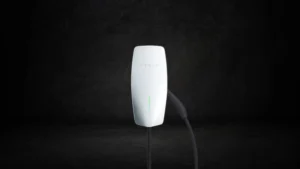
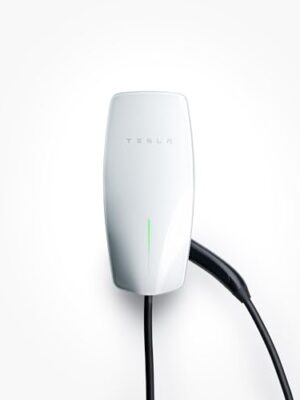
Tesla Universal Wall Connector delivers 11.5 kW smart EV charging for both residential and commercial use. Unique features include bidirectional charging, Group Power Management (GPM), Magic Dock, and a wide range of add-on EV charging accessories.
The Tesla Universal Wall Connector is a robust, forward-thinking EV charger designed for mixed EV households. It offers advanced smart charging features, including bidirectional charging when paired with compatible vehicles like the Ford F-150 Lightning and the Tesla Cybertruck. When integrated with renewable energy systems, it becomes an even more powerful solution, enabling efficient energy management. However, due to its high electrical load and complex features, professional installation and careful handling are essential to ensure optimal performance and safety, making it a top-tier choice for future-proofed EV charging setups.
Features
9.7
Real World Usage
9.5
Materials
9.5
Durability
9
Craftsmanship
9
Design
9
Monetary Value
9
Product Value
9.5
Brand Reputation
9.5
Expert Valuation
9.5
PROS:
Versatile Charging (Supports Tesla and J1772-compatible electric vehicles)
Advanced smart features
Renewable energy integration
Features a modern and minimalist design that complements most homes
Integrates into the Tesla mobile app for remote monitoring.
Allows bi-directional EV charging
CONS:
Requires professional installation
The non-replaceable J1772 adapter may limit flexibility for some users
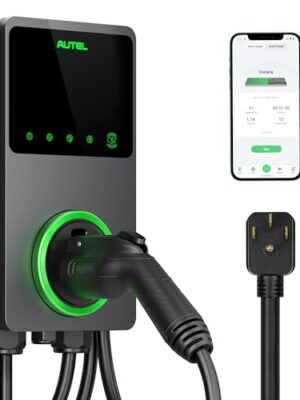
The Autel MaxiCharger Home Smart EV Charger (Autel AC Elite In-Body Holster EV Charger) offers NEMA 6-50 and 14-50 plug options for 40 amps and can be hardwired for 50 amps for faster charging. The built-in holster keeps the 25-foot cable organized, making it perfect for both indoor and outdoor use.
Charging Speed:12 kW
Max Amperage:50 Amps
Charging Level:Level 2
Connector Type:J1772
Cable Length:25 Feet
Connectivity:Bluetooth, Ethernet, Wi-Fi
Installation Type:Hardwired, NEMA 14-50, NEMA 6-50
The Autel AC Elite In-Body Holster EV Charger is an excellent choice for those seeking an easy-to-install, reliable, and feature-rich charging station. It delivers high performance, simplicity, and strong customer support, making it a great investment for EV owners.
Features
9
Real World Usage
8.5
Materials
9
Durability
9
Craftsmanship
9
Design
9
Monetary Value
9
Product Value
8.5
Brand Reputation
9
Expert Valuation
9
PROS:
Charges up to 7X faster than Level 1 chargers.
Supports both NEMA 6-50 and 14-50 plug options.
Adjustable power output up to 40 amps.
Easy installation (plug-in or hardwired).
User-friendly Autel mobile app for scheduling and optimization.
Wi-Fi, Bluetooth, and Ethernet connectivity for seamless operation.
25-foot cable for flexible reach.
NEMA 4 rating for reliable indoor and outdoor use.
Weather-resistant and durable construction.
3-year warranty with 24/7 customer support.
CONS:
App allows only one weekday and one weekend charge schedule.
No option for multiple off-peak timeframes in app.
May require a licensed electrician for installation (for hardwiring).
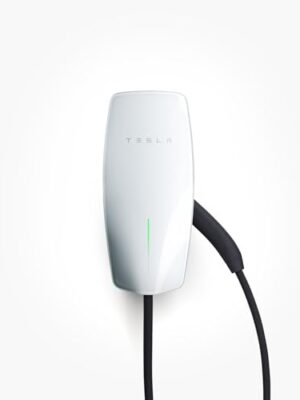
The latest Tesla Wall Connector adds smart features and now supports non-Tesla EVs. It offers fast, reliable charging, up to 44 miles of range per hour, with a 24-ft cable, app control, over-the-air updates, indoor/outdoor use, and a 4-year residential warranty. But is it worth it?
The Tesla Wall Connector offers fast, reliable charging with adjustable amperage and a 24-foot cord. It’s easy to install but requires professional installations. Pros include Wi-Fi connectivity and compatibility with Tesla electric vehicles compared to third party EV chargers. However, it lacks bi-directional charging for Cybertruck compatibility.
Features
9
Real World Usage
9
Materials
9
Durability
9.5
Craftsmanship
8.5
Design
9
Monetary Value
8.5
Product Value
8
Brand Reputation
9.5
Expert Valuation
8.5
PROS:
Fast, reliable charging (up to 44 miles per hour)
Adjustable amperage for flexible installation
24-foot cord for installation flexibility
Wi-Fi connectivity for over-the-air updates
Power-sharing for multiple chargers
CONS:
Requires professional installation
No bi-directional charging for Tesla Cybertruck powersharing compatibility
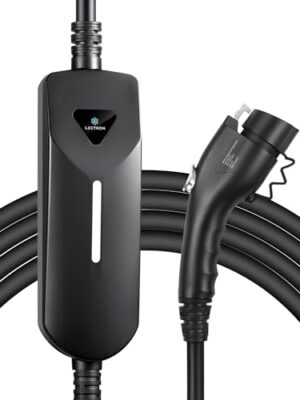
The Lectron Level 1 / Level 2 EV Charger is a practical, versatile, and affordable option for most EV drivers. It covers both charging speeds, works with virtually every J1772 vehicle, and goes wherever you go. The lack of smart features keeps the experience simple, and for many drivers, that's exactly what they want.It won't win any awards for cutting-edge technology, but it doesn't need to. What it does, it does well. If you're looking for a dependable portable charger that handles everyday needs without any hassle, the Lectron is a solid pick.
Features
9
Real World Usage
8
Materials
8.5
Durability
9
Craftsmanship
9
Design
9
Monetary Value
8.5
Product Value
8
Brand Reputation
9
Expert Valuation
8.5
PROS:
Dual plug compatibility (NEMA 5-15 & 14-50)
Supports both Level 1 and Level 2 charging
Portable and travel-friendly with carrying case
Safety features: overvoltage, overcurrent, short circuit protection
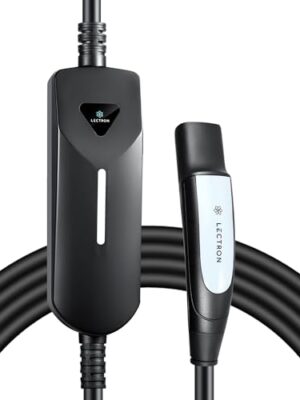
The Lectron Level 1/2 Tesla/NACS Charger offers portable, flexible charging with interchangeable 120V and 240V plugs. It supports Tesla Models 3, Y, S, X, and other NACS EVs, delivering up to 9.6 kW for reliable home or travel charging.
The Lectron Level 1/2 is a versatile dual-mode charger with solid in-built safety features and dependable performance at both 12A and 40A. It’s a smart pick if you want one unit that covers both slow overnight charging and faster Level 2 sessions.You might want to look at Tesla’s chargers, such as the Tesla Wall Connector or the Tesla Universal Wall Connector, if seamless integration with your Tesla and the Tesla app is a priority. Tesla’s native units offer smart charging features and real-time monitoring directly through the app. By contrast, the Lectron Level 1/2 keeps things simple: a reliable plug-and-charge unit without connectivity.Should you upgrade if you own the Lectron Level 1 Portable Charger? Yes, if you’re ready for faster 240V charging. Otherwise, stick with your Level 1 unless you hate its slow charging speeds.
Features
9
Real World Usage
8
Materials
8.5
Durability
9
Craftsmanship
9
Design
9
Monetary Value
8.5
Product Value
8
Brand Reputation
9
Expert Valuation
8.5
PROS:
Dual-level charging (12A Level 1 & 40A Level 2)
Compatible with Tesla and other NACS EVs
Interchangeable NEMA 5-15 and 14-50 plugs
Portable and travel-friendly
ETL certified with built-in safety protections
Real-time LED charging status indicators
CONS:
Level 2 charging requires NEMA 14-50 outlet installation
Not hardwired, less durable than wall chargers
Limited maximum amperage compared to some hardwired chargers
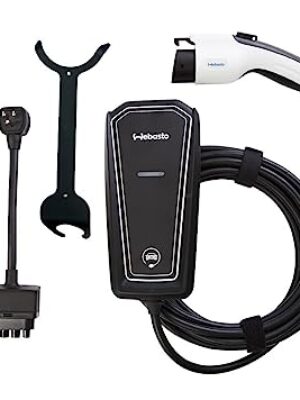
The Webasto Go Dual Voltage Portable EV Charger offers Level 1 and Level 2 charging (120V & 240V), ideal for home or on-the-go use. UL and IP67 rated for safety and durability, it delivers up to 7.7kW of power, charging up to 30 miles per hour. Compatible with all J1772-equipped EVs, including Tesla with an adapter.
The Webasto Go is a reliable, easy-to-use charger ideal for everyday use. It’s safe, efficient, and built with the needs of EV owners in mind, though potential buyers should consider its waterproof shortcomings.
Features
8
Real World Usage
8.5
Materials
9
Durability
9
Craftsmanship
8.5
Design
8.5
Monetary Value
9
Product Value
8.7
Brand Reputation
9
Expert Valuation
8
PROS:
Dual voltage (120V and 240V) for flexible charging
Advanced safety features with UL and cUL certifications
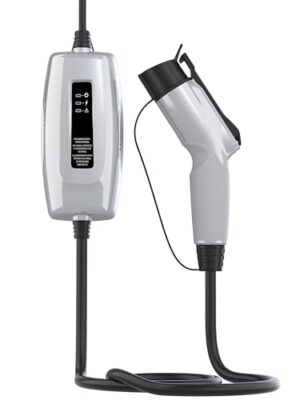
Schumacher 12 Amp EV Charger is a Level 1 portable EV charger. It delivers 12 Amps at 120V with a 20-foot cable. Featuring a standard NEMA 5-15P plug and J1772 connector, it's a simple, reliable solution for home and travel, with ETL and Energy Star certifications.
The Schumacher SEV1670 is a straightforward, budget-friendly Level 1 charger. With a 20-foot cable and universal J1772 connector, it offers reliable charging for most EVs. Its IP65 rating ensures durability, though it's limited to 12 amps and lacks smart features.
Features
8
Real World Usage
8.5
Materials
8.5
Durability
9
Craftsmanship
8.5
Design
8.3
Monetary Value
8
Product Value
8.5
Brand Reputation
9
Expert Valuation
8.5
PROS:
20-foot cable provides ample reach for most parking setups.
Universal J1772 connector ensures compatibility with all major EV brands.
IP65 weather-resistant rating allows for indoor and outdoor use.
Plug-and-play design requires no installation.
LED indicators for clear charging status updates.
CONS:
Limited to 12 amps, resulting in slower charging speeds.
No smart features like Wi-Fi connectivity or app control.
Basic design lacks advanced user interface or customization options.
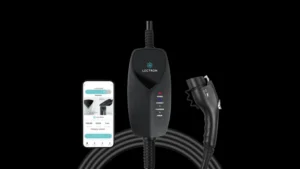
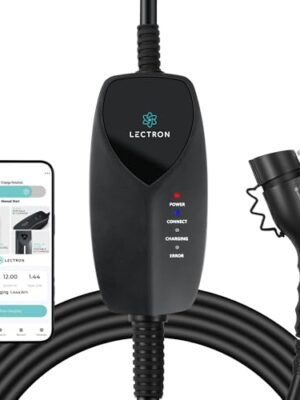
Compact and WiFi-enabled, the Lectron 12 Amp EV Charger delivers 120V, 12 Amp charging with app control. Includes a 16 ft cord and NEMA 5-15 plug. Compatible with all J1772 EVs.
The Lectron 12 Amp Level 1 charger does what it says - and then some more through smart EV charging features not common in Level 1 EV chargers. You won’t be amazed by its charging speed or 16ft cable, but the smart EV charging features, Lectron app, portable design, and strong safety features make it one of the better 12 Amps Level 1 options on the market.
Features
8.5
Real World Usage
7.5
Materials
8.5
Durability Over Time
8
Craftsmanship
9
Design
8.7
Monetary Value
8.5
Product Value
8
Brand Reputation
9
Expert Valuation
8
PROS:
Works with all J1772 EVs.
App control via WiFi and Bluetooth.
Supports scheduled charging and usage tracking.
Lightweight and travel-friendly.
IP65-rated for outdoor use.
Compatible with solar generators and 120V outlets.
Ideal for 15A circuits and small panels.
Reliable overnight charging (4–5 miles/hour).
Includes durable carrying case.
Easy to set up and use.
CONS:
Slow charging speed (Level 1 only).
Limited to NEMA 5-15 outlets.
16-ft cord may be too short for some setups.
App requires stable WiFi for full functionality.
Not dual-voltage - supports only Level 1 (120V) charging, with no Level 2 (240V) option.
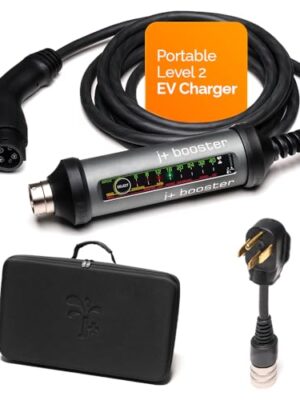
The J+ Booster 2 Portable EV Charger offers fast Level 2 charging (9.6 kW, 240V) for all-electric vehicles. With a 21ft cable, NEMA 14-50 plug, and ETL certification, it provides reliable power both indoors and outdoors. The included carrying case ensures easy storage and portability for convenient home charging.
Important Key Specs Table Legend:Level 1 = Level 1 only (120V). Level 1/Level 2 = dual-voltage portable (120V or 240V).
What is a Level 12 AMP EV Charger?
A 12 Amp EV charger delivers up to 2.88 kW (Level 2, 240V) or 1.44 kW (Level 1, 120V), depending on the circuit and voltage. It typically provides 3–8 miles of range per hour (over a full 10-hour overnight charge, you get 30 to 50 miles.), making it ideal for overnight charging, light daily use, or situations with limited electrical capacity. These chargers require a dedicated 15A circuit with 14 AWG wiring and must comply with NEC 80% load rules. Depending on the setup, they may be hardwired or plugged into outlets such as NEMA 5-15 (Level 1) or 6-15 (Level 2).
Do We Recommend a 12-Amp EV Charger?
For many U.S. drivers, the answer is yes. The average American drives roughly 35 miles per day, and a 12-amp charger can usually recharge that daily mileage during an overnight charging session. For drivers with shorter commutes or access to regular overnight charging, 12 amps is often sufficient.
Where 12 amps falls short is full battery recovery. A Tesla Model Y from empty takes about 57 hours. If you drive 80+ miles a day, a 12-amp charger will not keep up. You need Level 2 instead.
12 Amp Level 1 charger vs 12 Amp Level 2 charger
While both 12 Amp Level 1 and Level 2 chargers draw the same current, their voltage differences result in distinct charging speeds and setup needs.
12 Amp Level 1 Charger
Uses a standard 120V outlet (NEMA 5-15) on a dedicated 15A circuit with 14 AWG wiring. Delivers up to 1.44 kW, adding roughly 2–4 miles of range per hour. Ideal for overnight charging, low-capacity home load panels, and low-mileage drivers who don’t need fast turnaround. Easy to install using common household outlets; GFCI protection and proper grounding are essential for safety
12 Amp Level 2 Charger
Uses a 240V outlet (typically NEMA 6-15) on a dedicated 15A double-pole circuit with 14 AWG copper wiring. Delivers up to 2.88 kW, adding 3–8 miles of range per hour. Well-suited for overnight charging or light daily driving needs where electrical capacity is limited. It may be hardwired or plug-in, with GFCI protection required and compliance with NEC standards for circuit load, wire sizing, and installation safety. Professional installation is recommended if a 240V outlet is not already in place.
12 Amp Level 1 EV Charger Circuits
A 12 Amp Level 1 EV charger must be connected to a dedicated 120V circuit using a single-pole 15A breaker. The circuit should be wired with 14 AWG solid copper conductors (hot and neutral) and a 14 AWG copper ground, rated for at least 75°C insulation (THHN or equivalent). These chargers typically use a standard NEMA 5-15P outlet. GFCI protection is required in most residential installations and must be installed per local electrical codes.
The 80 Percent Rule Explained: Why 12 Amps Matters.
The 80 percent rule is the most important number in EV charging. Any load that runs for more than 3 hours straight (like EV charging) cannot exceed 80 percent of a breaker’s rating.
For a 15-amp breaker, that means a maximum of 12 amps. This is exactly why 12 amps is the standard Level 1 ceiling. Push it higher on a 15-amp circuit, and the breaker will trip.
The rule exists for safety. Breakers heat up under sustained load. Running at 100 percent of rated current for hours can wear out the breaker and start a fire. The 80 percent buffer keeps things cool.
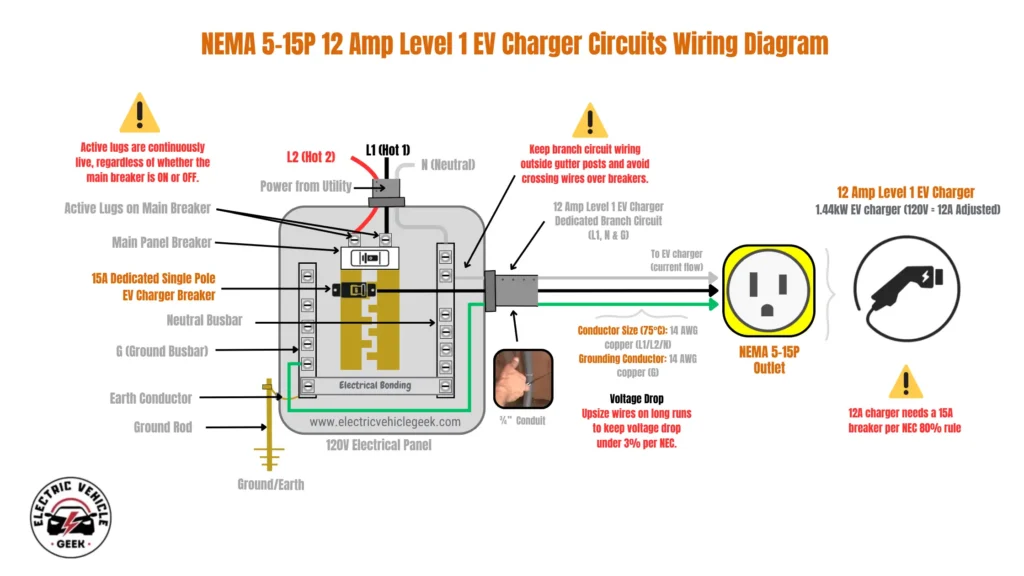
NEMA 5-15P 12 Amp Level 1 EV Charger Circuits Wiring Diagram
The diagram below shows a 120V dedicated branch circuit wiring for a 12A Level 1 EV charger (1.44 kW) using a NEMA 5-15P outlet. A 15A single-pole breaker feeds three 14 AWG copper wires — black (Hot), white (Neutral), and green (Ground) — through a conduit to the outlet. A plug-in 12 Amp EV charger (NEMA 5-15 Charger) connects to the receptacle.
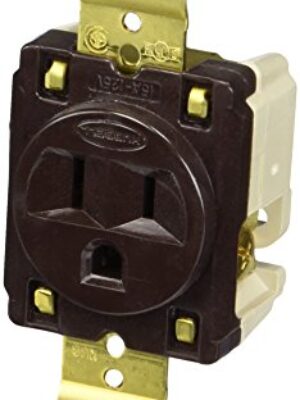
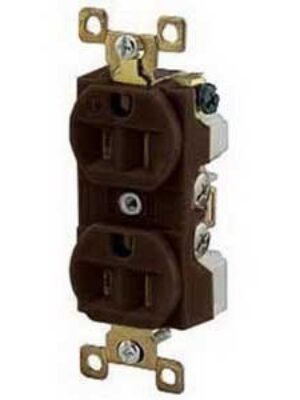
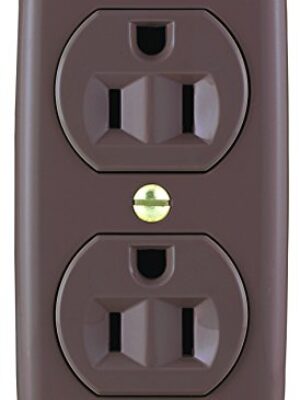
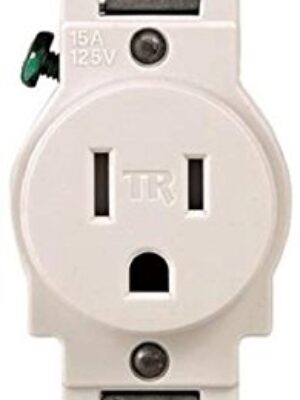
If you’re installing a 12A Level 1 charger, make sure your setup includes a high-quality NEMA 5-15 outlet rated for continuous EV charging. Explore the best NEMA 5-15 outlets for EV use to ensure long-term safety, durability, and code compliance.
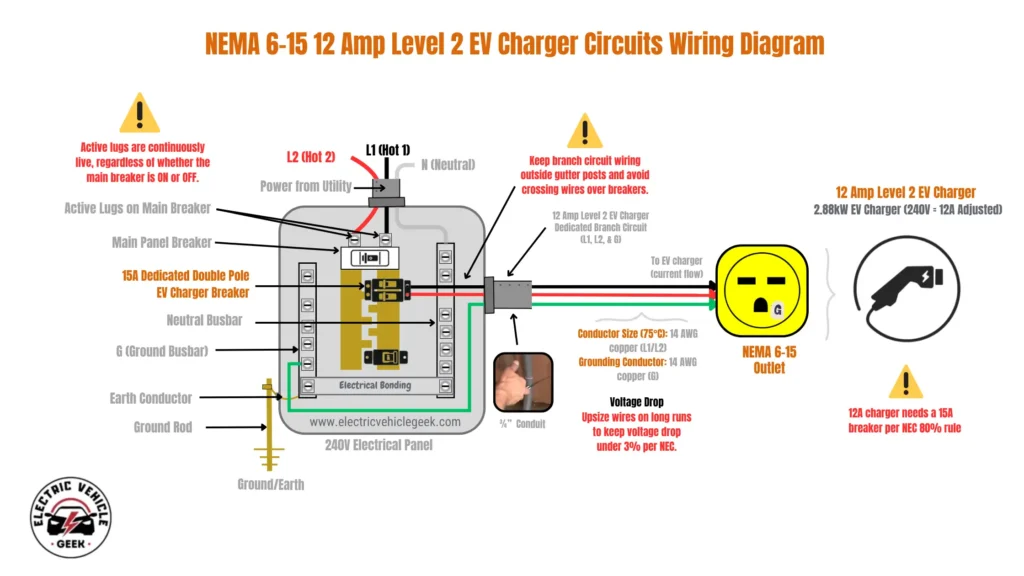
A 12 Amp Level 2 EV charger must be connected to a dedicated 240V circuit using a double-pole breaker rated for 15 amps. The circuit should be wired with 14 AWG solid copper conductors and a 14 AWG copper ground, rated for at least 75°C insulation (THHN or equivalent). These chargers may be hardwired or installed using a NEMA 6-15 outlet, depending on the charger’s configuration. GFCI protection is typically required and must be installed in accordance with local electrical codes (NEC 210.8(A)(2)).
Do not share 12-amps EV charger circuit with major loads, such as freezers or space heaters. Sharing causes nuisancebreaker trips because the combined draw exceeds 12 amps.
Want charging speed math instead of circuit specs? See our 1.44 kW EV charger archive for range per hour and the time it takes your specific EV to charge.
Hardwired 12 Amp Level 2 EV Charger Circuits Wiring Diagram
The diagram below shows a code-compliant circuit wiring diagram for a 12A Level 2 EV charger (2.88 kW). It uses a 15A double-pole breaker in a 240V panel, feeding 14 AWG copper wires – black (L1), red (L2), and green (ground) – through conduit to a junction box and then to the charger.
NEMA 6-15 12 Amp Level 2 EV Charger Circuits Wiring Diagram
The diagram below details a 240V wiring setup for a 12A Level 2 EV charger (2.88 kW) using a NEMA 6-15 outlet. A 15A double-pole breaker feeds three 14 AWG copper wires: black (L1), red (L2), and green (Ground), routed through the conduit to the outlet. A plug-in EV charger connects directly to the receptacle.
12 Amp EV Charger Buyer's Guide
Buying a 12-amp charger is the simplest EV charger decision you will make. You do not need to match it to your wiring, because every American home already has a 15-amp circuit somewhere.
Plug-In Only at This Tier
Every native 12-amp charger is portable and plug-in. None is hardwired. They all ship with a NEMA 5-15 plug, the standard 3-prong plug used in homes across America. You can move the charger between homes or take it on road trips.
GFCI Protection on Outdoor Outlets
If your garage or driveway outlet is older than 1996, it may not have GFCI protection. NEC 210.8(A)(2) requires GFCI on garage and outdoor outlets. The fix costs about 30 dollars: swap the outlet for a GFCI version. Most homes built after 1996 already have this.
Cable Length and Storage
Cable length matters because 12-amp chargers move around. Look for at least 20 feet of cable. Some units offer 25 or 30 feet. A storage bag or wall hook helps the cable last longer by preventing kinks and UV damage.
When to Upgrade From 12 Amps
Upgrade to a Level 2 EV charger if you drive more than 60 miles a day, own a BEV with a 75+ kWh battery, and often arrive home empty, or have two EVs sharing the same charger. The upgrade cost is real (typically $1,000 to $1,500 installed), but the speed gain is huge.
EVs That Match a 12 Amp Charger
Every EV sold in the U.S. supports 12-amp Level 1 charging. The question is whether 12 amps is fast enough for your daily mileage.
Best matches at 12 amps are plug-in hybrids and small battery EVs. The Toyota Prius Prime, Ford Escape PHEV, Kia Niro PHEV, Chrysler Pacifica Hybrid, and BMW 330e all charge fully overnight at 12 amps. Bigger EVs like the Tesla Model Y, Hyundai Ioniq 5, and Ford Mach-E will charge, but not fast enough to keep up with heavy daily use.
Want Faster Charging? Explore Popular Home EV Charger Amperages
12 amp EV chargers add about 3–8 miles of range per hour – ideal for light use, apartments, or homes with small solar systems for EV charging. This is the most common low-amperage EV charger used by many EV owners. For faster charging, explore 16A to 80A EV chargers below.
Need a charger with a different amperage? Our EV Charger Amperage hub covers every tier from 12 amps to 80 amps and links to each dedicated review archive.
12 Amp EV Charger Frequently Asked Questions
You’ve Got 12 Amp EV Charger Questions, We’ve Got Answers.
Do I Need an Electrician for a 12 Amp Charger?
No. A 12-amp charger plugs into any standard 120-volt wall outlet in your home: no new wiring, no new breaker, no permit. The only thing to check is that your garage or outdoor outlet has GFCI protection, which most homes built after 1996 already have.
Can I Plug a 12 Amp Charger Into a Power Strip?
No. Never plug an EV charger into a power strip, surge protector, or extension cord. EV charging runs continuously for many hours. Power strips and most extension cords are not rated for sustained current. The plug or strip will overheat. Plug your charger directly into the wall outlet.
Will a 12 Amp Charger Trip My Circuit Breaker?
It should not be if the circuit is dedicated or has only small loads. Problems happen when you share a circuit with a chest freezer, space heater, or other big appliance. Their combined draw plus 12 amps exceeds the 15-amp breaker rating. The fix is to find a different outlet on a different circuit, or unplug the other appliance during charging.
How Long Does It Take to Charge an EV at 12 Amps?
It depends on your battery size. A plug-in hybrid with a 12 to 18 kWh battery fully charges in 8 to 11 hours, an overnight cycle. A Tesla Model Y with a 75 kWh battery takes about 57 hours to go from empty, or more than 2 days. Most BEV owners use 12-amp chargers for daily top-ups, not for full charges.
Is 12 Amps Considered Level 1 Charging?
Yes. Level 1 charging is any AC charging at 120 volts. The SAE J1772 standard defines Level 1 as 120V up to 1.92 kilowatts. 12 amps at 120V is 1.44 kilowatts, well inside the Level 1 range
Can I Use a 12 Amp Charger in Cold Weather?
Yes, but check the operating temperature rating. Most 12-amp chargers work down to minus 22 degrees Fahrenheit. The cable becomes stiffer in cold weather and harder to handle. Storing the cable indoors when not in use helps it last longer. If you live where temperatures regularly drop below -30, look for a charger rated to -40, like certain Autel models.
Do All 12 Amp Chargers Use the Same Plug?
On the wall side, yes. Every 12-amp charger sold in the U.S. uses a NEMA 5-15 plug, the standard 3-prong plug. On the car side, J1772 chargers fit non-Tesla EVs, and NACS chargers fit Tesla and 2024+ EVs from Ford, GM, Rivian, and others. Some chargers ship with both plugs or with adapters.
Can I Leave a 12 Amp Charger Plugged In All the Time?
Yes. EV chargers are designed for continuous outdoor and indoor use. The unit draws no power when nothing is plugged into the car side. Leaving it on the wall is fine and is how most owners use them. The only reason to unplug is if you need the outlet for something else.
Why Are Some 12 Amp Chargers Called 1.44 kW Instead?
Both numbers describe the same charger. 12 amps is the current draw. 1.44 kilowatts is the power delivered (12 amps times 120 volts). EV charger brands choose whichever number sounds better for marketing. Look at both and make sure they match (12A and 1.44 kW go together; 12A and 2.0 kW do not).