
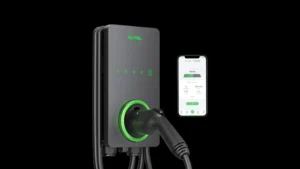
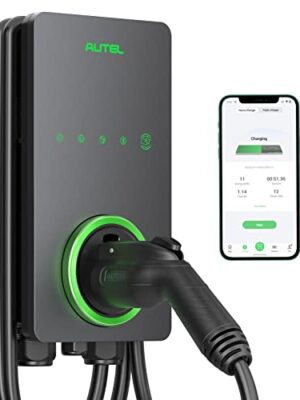
Autel Home Smart EV Charger delivers 50A (240V), up to 37 mi/hr. Hardwired, Wi-Fi/Bluetooth, 25-ft cable, NEMA 4, CSA-certified.
★★★★★
More details +
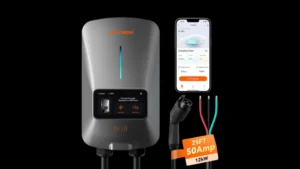
The Autel AC Lite EV Charger stands out for its fast charging speed, reliable safety features, and easy installation. Its high-quality build ensures durability, while the app integration adds convenience. While installation may require some attention to wire size, its performance makes it a solid choice for most EV owners.
PROS:
- Fast charging (50A, 12kW)
- Durable 25-foot cable
- Weatherproof NEMA Type 4
- Smart app control
- Easy installation
CONS:
- Small wire connection door
- Stiff charging cable
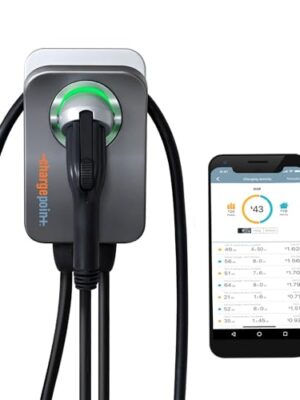
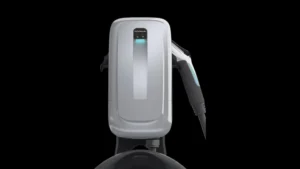
The ChargePoint Home Flex is a premium EV charger, offering fast charging, wide compatibility, and smart features for reliable, future-ready home use.
★★★★★
More details +
As an installer who’s worked with dozens of EV chargers, the ChargePoint Home Flex stands out for its flexibility, clean design, and smart features. The adjustable amperage makes it future-proof, and the app is unmatched in usability. A dependable choice for homeowners who value both performance and long-term reliability.
PROS:
- Easy installation with clear instructions and videos
- Flexible setup: plug-in or hardwired
- User-friendly mobile app for remote control and data
- Swiveling dock for tidy cable storage
- Safe and durable with UL certification
- Access to ChargePoint’s vast network of charging stations
CONS:
- Installation requires careful planning
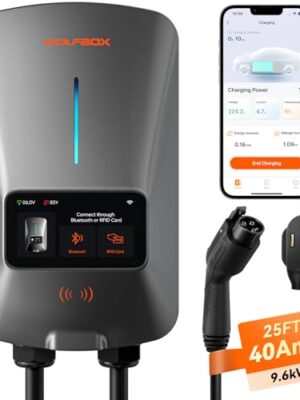
The WOLFBOX Level 2 EV Charger is a home Level 2 EV charger that offers fast, reliable charging with a sleek, weatherproof design. Featuring a 25ft cable, smart app integration, and compatibility with all J1772 EVs, it’s perfect for both home and public use. Choose between plug-in or hardwired models for convenient, future-proof charging at any location.
★★★★★
More details +
The WOLFBOX WE-40, WE-48, and WE-50 Smart Level 2 EV Chargers deliver dependable, high-power performance with durable construction, WiFi control, and excellent safety features. Each model suits different installation needs while maintaining consistent reliability and value. The WE-40 rates 8.7, the WE-48 scores 8.8, and the WE-50 leads at 8.9, averaging 8.8/10 overall.
PROS:
- Premium Quality Construction
- Smart Security Features
- Flexible Charging & Installation Options
- Durable and Weather-Resistant
- User-Friendly Design
CONS:
- Screen Visibility Issues in Direct Sunlight
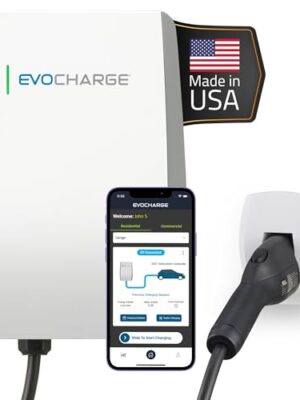
The EvoCharge Home 50 EV Charger is a 50 Amp, 240V Level 2 EV charger available in J1772 or NACS (Tesla) versions. Hardwired for safety, it delivers up to 45 miles of range per hour with smart scheduling, remote control, and energy tracking. Ideal for indoor or outdoor home installation.
★★★★★
More details +
The EvoCharge Home 50 is a premium-grade, hardwired Level 2 EV charger that delivers exactly what experienced EV owners need: fast, safe, and reliable home charging with smart control and high build quality.While it lacks the flashy design of the Wallbox Pulsar Plus or the in-depth analytics of Emporia, it wins on reliability, simplicity, and charging performance. It’s particularly well-suited for households with large-battery EVs or homeowners installing permanent 50A circuits with future expansion in mind.If you’re looking for a rugged, made-in-America charger with UL safety, Energy Star efficiency, and weatherproof reliability, the EvoCharge Home 50 is one of the best choices you can make today.
PROS:
- Hardwired 50A (12kW) charging delivers faster EV charging.
- Robust NEMA 4 weatherproof rating for indoor/outdoor use.
- Flexible installation with multiple conduit entry points.
- Mobile app supports scheduling, energy monitoring, and user sharing.
- Made in the USA with UL and ENERGY STAR certifications.
CONS:
- Direct manufacturer support and returns are no longer available.
- No J1772 to NACS (Tesla) adapter included; must purchase separately.
- Wall mount bracket sliding design complicates installation in lock boxes.
- Challenges with OCPP protocol access and internal web portal login
- 50A setup requires higher-rated breaker and thicker wiring, increasing installation cost.
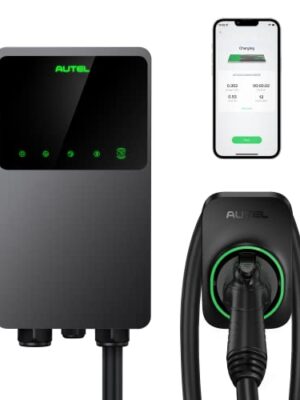
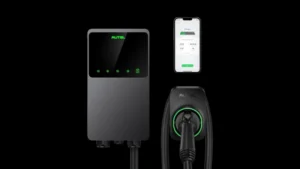
The Autel MaxiCharger Home EV Charger offers up to 50 Amps of 240V Level 2 charging with WiFi and Bluetooth connectivity for smart, remote control. Designed for both indoor and outdoor use, it features a 25-foot cable, a separate holster, and a rugged dark gray finish, ensuring durability and efficient charging.
★★★★★
More details +
Durable 25-foot cable with NEMA 4X protection for outdoor and indoor use.
Adjustable power output up to 50 Amps.
Reliable Wi-Fi, Bluetooth, and Ethernet connectivity for seamless updates.
Mobile app for tracking, scheduling, and optimization of charging.
Solid build quality with good customer support and a 3-year warranty.
PROS:
- App lacks intuitiveness, leading to confusion with scheduling features.
- Charging history resets yearly with app updates.
- Stiff charging cable is difficult to handle in cold weather.
- No screen on the charger to display key details like power or duration.
CONS:
- The Autel AC Elite EV Charger offers reliable performance with solid build quality and useful app features, though the app's confusing interface and cable stiffness in cold weather detract from its overall user experience. It’s a great choice for those seeking basic charging functionality and durability.
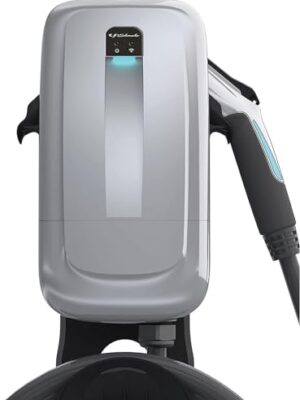
The Schumacher SEV1600P650 Level 2 EV Charger delivers 50 Amps of 240V charging, offering up to 9X faster charging than standard models. Compatible with NEMA 6-50 plug or hardwiring, it features Bluetooth/WiFi connectivity for remote monitoring and control. Ideal for indoor or outdoor installation, it ensures efficient, reliable performance.
★★★★★
More details +
The Schumacher 50 Amp EV Charger delivers fast, reliable EV charging with adjustable current up to 40A and a weather-resistant design for outdoor use. Its 25-foot cable adds flexibility, and the SchuPower app enables remote monitoring. However, it lacks smart home integration and requires a separate adapter for Tesla vehicles.
PROS:
- Fast charging with adjustable current (16A to 40A) for faster performance
- Weather-resistant raintight enclosure for reliable outdoor use
- 25-foot cable offers flexibility for garages and driveways
- Compact space-saving design with pulsing LED indicators
- SchuPower app allows remote tracking of charging progress
- Clear instructions make installation simple
CONS:
- Lacks integration with Google Home, Apple Home, or Alexa
- SchuPower app is functional but lacks advanced features
Show next