Supported by you via insider access, and when you purchase through links on our site, we may earn an affiliate commission. See our Affiliate Disclosure.
We recommend NEMA 6-50 EV chargers for Level 2 charging on a 240V, 50-amp circuit, providing fast, reliable home charging. We typically see 25–45 miles of range per hour, making them ideal for daily drivers and larger battery EVs, though they require a professionally installed dedicated outlet. Since EV chargers don’t require a neutral conductor, we often prefer this configuration for EVSE installations due to its simplicity and reliability.
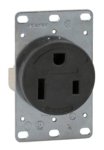
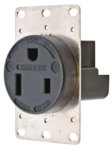
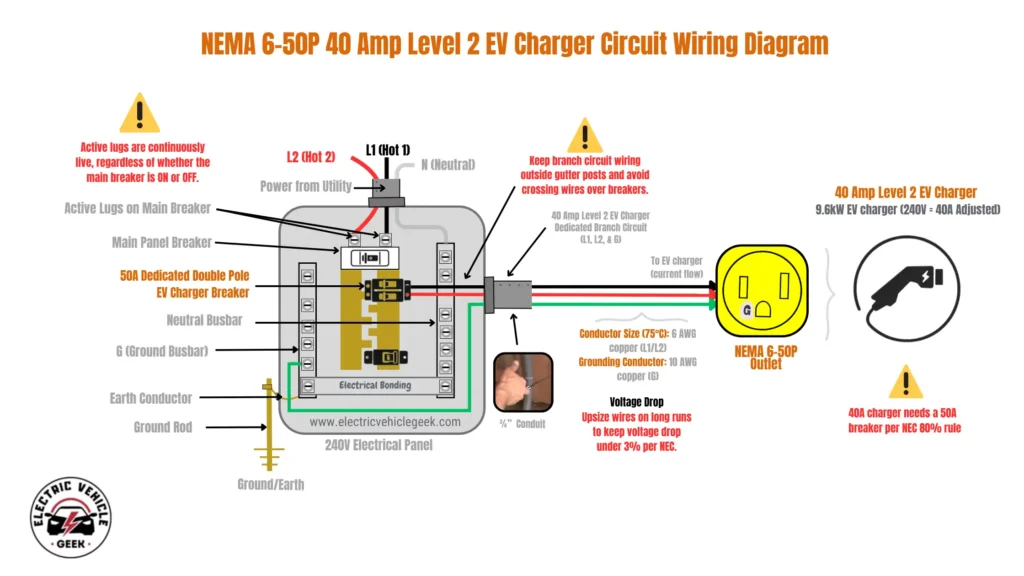
A NEMA 6-50 outlet is a 240V 50 amp outlet with two horizontal blades and a round ground hole, no neutral. It is most commonly known as the welding outlet because welding equipment uses this pattern. If you have one, you can run a 40-amp, 9.6-kW Level 2 EV charger.
The 6-50 outlet sits in workshops, machine shops, and garages with serious electrical infrastructure. Most homes do not have one, but those that do often have an unused 50A circuit perfect for EV charging without any new wiring.
Every charger reviewed below was tested with NEMA 6-50 plug configurations on dedicated 50A circuits with 6 AWG copper conductors. The 6-50 install is similar to NEMA 14-50 in current capacity, but the wiring lacks a neutral, which changes which chargers physically fit.
How We Tested This Amp Tier
We test NEMA 6-50 chargers on a dedicated 240V, 50A circuit with 6 AWG copper wiring. Sustained 40 amp continuous draw is measured across 12-hour stress windows. The 6-50 plug body and outlet face are thermally imaged at full load. We verify the charger does not require the neutral conductor (some 14-50 EV chargers will not function safely on a 6-50 outlet because they expect a neutral reference).
Our NEMA 6-50 EV Charger Reviews
Each charger below can deliver up to 50 amps via a standard NEMA 6-50 power plug, operating on a 240V circuit for high-performance Level 2 charging. We evaluate every unit on a 10-point scale across performance, build quality, durability, design, value, and brand reputation. Click any title to read the full hands-on review. While not as fast as hardwired high-amperage EV chargers, these units deliver strong charging speeds and excellent reliability, making them well-suited for daily home charging, long-distance drivers, and EVs with larger battery packs that require faster overnight replenishment.
Use the “Compare” button on each product to select multiple chargers, then click the ⚖️ scale icon to see a full side-by-side comparison.
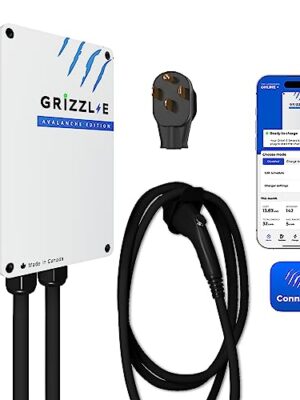
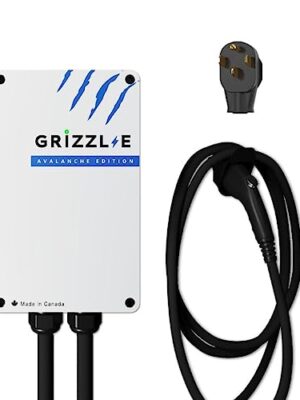
The Grizzl-E Smart Level 2 EV Charger (240V, 40A) is a budget-friendly smart EV charger with a rugged aluminum build, J1772 compatibility, UL-listed, Energy Star certified, and NEMA 14-50/6-50 plug support.
After months of testing, the Grizzl-E Smart cut my monthly charging costs through smart scheduling, saved me a $3,200 panel upgrade with load balancing, and as a solar owner, puts an extra $730 yearly back in my pocket. Add in $100 from utility Demand Response credits, and this charger pays for itself while the OCPP standard lets me switch apps anytime for better deals without replacing hardware.
Features
9
Real World Usage
9
Materials
9
Durability
9
Craftsmanship
9
Design
9
Monetary Value
9
Product Value
9
Brand Reputation
9
Expert Valuation
9
PROS:
The Grizzl-E Smart EV Charger is built to last, both indoors and outdoors.
Its minimalist design appeals to homeowners seeking a clean and modern aesthetic.
The Grizzl-E team is committed to enhancing the charger's features through regular updates and the Grizzl-E Connect app.
CONS:
Some users have reported concerns about the durability of the charging cable and connector.
The included wall mount may not be ideal for long-term use, potentially requiring additional support or accessories.
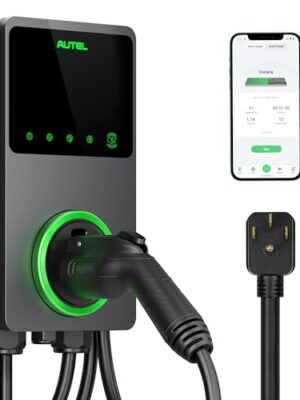
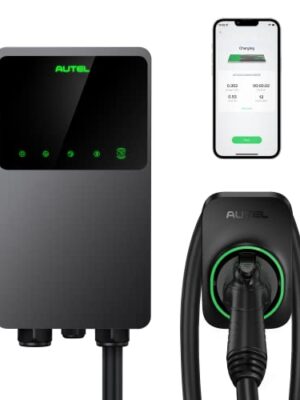
The Autel MaxiCharger Home Smart EV Charger (Autel AC Elite In-Body Holster EV Charger) offers NEMA 6-50 and 14-50 plug options for 40 amps and can be hardwired for 50 amps for faster charging. The built-in holster keeps the 25-foot cable organized, making it perfect for both indoor and outdoor use.
Charging Speed:12 kW
Max Amperage:50 Amps
Charging Level:Level 2
Connector Type:J1772
Cable Length:25 Feet
Connectivity:Bluetooth, Ethernet, Wi-Fi
Installation Type:Hardwired, NEMA 14-50, NEMA 6-50
The Autel AC Elite In-Body Holster EV Charger is an excellent choice for those seeking an easy-to-install, reliable, and feature-rich charging station. It delivers high performance, simplicity, and strong customer support, making it a great investment for EV owners.
Features
9
Real World Usage
8.5
Materials
9
Durability
9
Craftsmanship
9
Design
9
Monetary Value
9
Product Value
8.5
Brand Reputation
9
Expert Valuation
9
PROS:
Charges up to 7X faster than Level 1 chargers.
Supports both NEMA 6-50 and 14-50 plug options.
Adjustable power output up to 40 amps.
Easy installation (plug-in or hardwired).
User-friendly Autel mobile app for scheduling and optimization.
Wi-Fi, Bluetooth, and Ethernet connectivity for seamless operation.
25-foot cable for flexible reach.
NEMA 4 rating for reliable indoor and outdoor use.
Weather-resistant and durable construction.
3-year warranty with 24/7 customer support.
CONS:
App allows only one weekday and one weekend charge schedule.
No option for multiple off-peak timeframes in app.
May require a licensed electrician for installation (for hardwiring).
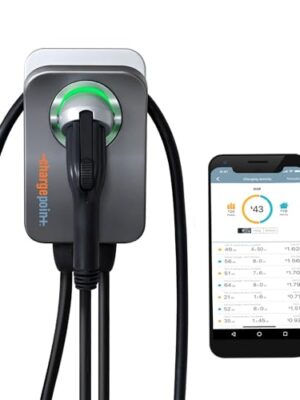
As an installer who’s worked with dozens of EV chargers, the ChargePoint Home Flex stands out for its flexibility, clean design, and smart features. The adjustable amperage makes it future-proof, and the app is unmatched in usability. A dependable choice for homeowners who value both performance and long-term reliability.
Features
9
Real World Usage
8.5
Materials
9
Durability
9
Craftsmanship
8.7
Design
8.5
Monetary Value
8.5
Product Value
9
Brand Reputation
9
Expert Valuation
9
PROS:
Easy installation with clear instructions and videos
Flexible setup: plug-in or hardwired
User-friendly mobile app for remote control and data
Swiveling dock for tidy cable storage
Safe and durable with UL certification
Access to ChargePoint’s vast network of charging stations
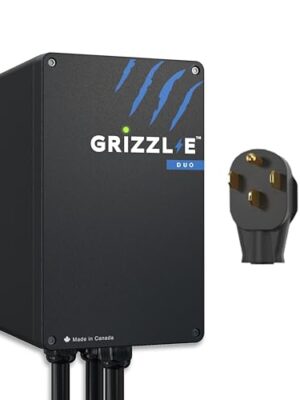
The Grizzl-E Duo Level 2 EV Charger delivers up to 40 Amps of power with two 24-foot premium cables and a NEMA 14-50 plug. Designed for dual vehicle charging, it provides fast, efficient power for two electric vehicles simultaneously. Ideal for home use, offering reliable, high-performance charging.
The Grizzl-E Duo is a reliable dual-port EV charger. It offers fast, 240V Level 2 charging with up to 40A. Durable, weather-resistant, and easy to install. It’s ideal for charging two cars simultaneously. A great space-saver and cost-efficient solution for home EV charging.
Grizzl-E Classic EV Charger Level 2 EV charger with 24-ft cable, UL, FCC, Energy Star, NEMA 14-50/6-50 plug, and NEMA 4X enclosure for indoor/outdoor use.
The Grizzl-E Classic excels as a durable, efficient, and cost-effective Level 2 charger. Its lack of smart features is seen as a benefit by many, reducing potential issues. It’s an ideal choice for users seeking a reliable, no-frills charging solution.
Features
7.5
Real World Usage
8.5
Materials
9
Durability
9
Craftsmanship
8.5
Design
8.5
Monetary Value
9
Product Value
9
Brand Reputation
9
Expert Valuation
9
PROS:
Simple installation with NEMA 14-50 plug.
Durable metal enclosure, weatherproof and UL-certified.
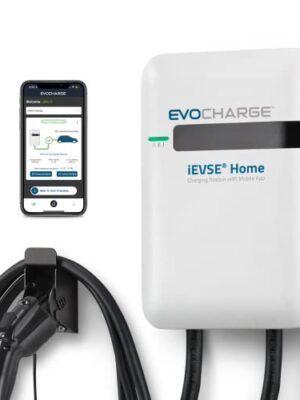
The EvoCharge iEVSE® Home 32 Smart Level 2 EV Charger offers up to 32 Amps of 240V charging, delivering up to 25 miles of range per hour. With WiFi connectivity, a 25-foot cable, and a NEMA 6-50 plug, it’s UL-listed for safety and suitable for both indoor and outdoor installations.
The EvoCharge iEVSE® Home 32 Smart Level 2 EV Charger is a reliable, easy-to-use, and energy-efficient solution for home EV charging, offering fast charging, Wi-Fi connectivity, and the potential for rebates.
Features
8
Real World Usage
8.5
Materials
8.5
Durability
9
Craftsmanship
9
Design
8
Monetary Value
8.5
Product Value
8.5
Brand Reputation
8
Expert Valuation
8.5
PROS:
Fast charging up to 8 times faster than Level 1 chargers.
Wi-Fi connectivity for easy scheduling and control via the Epic charging app.
Compatible with all North American EVs, including Tesla with J1772 adapter.
CONS:
Manufacturer support and warranty returns are no longer provided directly.
The Autel MaxiCharger Home EV Charger offers up to 50 Amps of 240V Level 2 charging with WiFi and Bluetooth connectivity for smart, remote control. Designed for both indoor and outdoor use, it features a 25-foot cable, a separate holster, and a rugged dark gray finish, ensuring durability and efficient charging.
Charging Speed:12 kW
Max Amperage:50 Amps
Charging Level:Level 2
Connector Type:J1772
Cable Length:25 Feet
Connectivity:Bluetooth, Cellular, Ethernet, Wi-Fi
Installation Type:Hardwired, NEMA 14-50, NEMA 6-50
Durable 25-foot cable with NEMA 4X protection for outdoor and indoor use.
Adjustable power output up to 50 Amps.
Reliable Wi-Fi, Bluetooth, and Ethernet connectivity for seamless updates.
Mobile app for tracking, scheduling, and optimization of charging.
Solid build quality with good customer support and a 3-year warranty.
Features
9
Real World Usage
9
Materials
8.5
Durability
8
Craftsmanship
8
Design
8.5
Monetary Value
8.5
Product Value
8
Brand Reputation
9
Expert Valuation
8
PROS:
App lacks intuitiveness, leading to confusion with scheduling features.
Charging history resets yearly with app updates.
Stiff charging cable is difficult to handle in cold weather.
No screen on the charger to display key details like power or duration.
CONS:
The Autel AC Elite EV Charger offers reliable performance with solid build quality and useful app features, though the app's confusing interface and cable stiffness in cold weather detract from its overall user experience. It’s a great choice for those seeking basic charging functionality and durability.
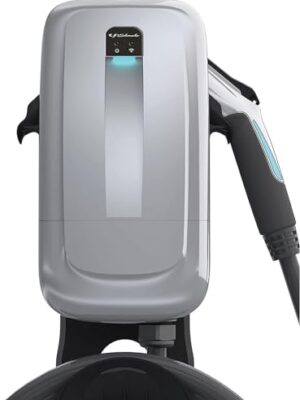
The Schumacher SEV1600P650 Level 2 EV Charger delivers 50 Amps of 240V charging, offering up to 9X faster charging than standard models. Compatible with NEMA 6-50 plug or hardwiring, it features Bluetooth/WiFi connectivity for remote monitoring and control. Ideal for indoor or outdoor installation, it ensures efficient, reliable performance.
The Schumacher 50 Amp EV Charger delivers fast, reliable EV charging with adjustable current up to 40A and a weather-resistant design for outdoor use. Its 25-foot cable adds flexibility, and the SchuPower app enables remote monitoring. However, it lacks smart home integration and requires a separate adapter for Tesla vehicles.
Features
8
Real World Usage
7.5
Materials
8.5
Durability
9
Craftsmanship
8.5
Design
8.5
Monetary Value
8
Product Value
8.5
Brand Reputation
9
Expert Valuation
8.5
PROS:
Fast charging with adjustable current (16A to 40A) for faster performance
Weather-resistant raintight enclosure for reliable outdoor use
25-foot cable offers flexibility for garages and driveways
Compact space-saving design with pulsing LED indicators
SchuPower app allows remote tracking of charging progress
Clear instructions make installation simple
CONS:
Lacks integration with Google Home, Apple Home, or Alexa
SchuPower app is functional but lacks advanced features
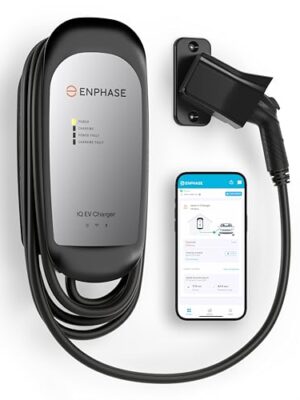
The Enphase IQ 50 40 Amp Smart EV Charger delivers 9.6kW of power at 240V with a hardwired installation and a 25ft cable. Featuring Wi-Fi connectivity, a ruggedized J1772 connector, and safety certifications, it ensures reliable, efficient charging. Backed by a 5-year warranty, it's ideal for home use and future-proofing.
Charging Speed:9.6 kW
Max Amperage:40 Amps
Charging Level:Level 2
Connector Type:J1772, NACS
Cable Length:25 Feet
Connectivity:Bluetooth, Wi-Fi
Installation Type:Hardwired, NEMA 14-50, NEMA 6-50
The Enphase IQ 50 EV charger is our favourite premium home EV charger with an overall score of 8.3. With its impressive combination of power, smart features, and a DIY-friendly plug-in option, the Enphase IQ 50 earns its place as a top contender for the best home EV charger. If you're looking for a powerful, user-friendly charger with advanced smart capabilities and a simple installation process, the Enphase IQ 50 is perfect for your EV charging needs.
Features
9
Real World Usage
8.5
Materials
8.5
Durability
8.3
Craftsmanship
8.5
Design
8
Monetary Value
7.5
Product Value
9
Brand Reputation
8
Expert Valuation
8
PROS:
Its compact size saves space in your garage and complements your home aesthetics.
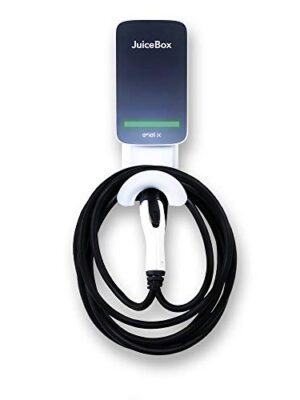
The JuiceBox 40 Smart EV Charging Station delivers 40 amps of Level 2 charging with a 25-foot cable and NEMA 14-50 plug. UL and Energy Star certified, it provides efficient, safe charging for both indoor and outdoor use. WiFi connectivity enables smart features for optimized performance and energy management.
The JuiceBox 40 used to be one of the best smart EV chargers you could buy. The hardware is still excellent, tough, powerful, and reliable. However, without company support and with the smart features failing, several scores have dropped. Features, real-world usage, product and monetary value, brand reputation, and expert valuation have all been negatively affected. Current owners can continue using their chargers without worry, but new buyers should consider other options that will receive support and updates for years to come.
Features
7.5
Real World Usage
8
Materials
9
Durability
8.5
Craftsmanship
8
Design
9
Monetary Value
8
Product Value
8
Brand Reputation
8
Expert Valuation
8
PROS:
Rugged build with excellent IP66 and NEMA 4X ratings for outdoor use
25-foot cable (longer than standard 18-20 feet)
40 amps and 9.6 kW output add about 30 miles of range per hour
Easy plug-in installation with NEMA 14-50 outlet
CONS:
The app has become buggy or non-functional since the company's exit
No customer support or warranty coverage available
Stiff, thick cable that's hard to coil in cold weather
Finicky 2.4GHz WiFi connectivity issues
Show next
Important Key Specs Table Legend:Level 1 = Level 1 only (120V). Level 1/Level 2 = dual-voltage portable (120V or 240V).
How Fast Will an EV Charge on a NEMA 6-50 Charger?
A NEMA 6-50 charger delivers up to 9.6 kW of Level 2 power. That works out to 30 to 36 miles of range added per hour, the same as a NEMA 14-50 outlet at the same amperage.
Over an 8-hour overnight charge, you get 240 to 288 miles of range. That covers any U.S. driver’s daily mileage, including back-to-back long highway days.
A 75 kWh Tesla Model Y takes about 8.7 hours to refuel at 9.6 kW. For a 40-mile daily commute drawing 12 kWh, the 6-50 outlet refills it in about 1.3 hours overnight.
How to Identify a NEMA 6-50 Outlet in Your Home
A NEMA 6-50 outlet is unmistakable if you know what to look for, but it is uncommon enough that many homeowners pass it by without recognizing it.
The 6-50 has two horizontal blade slots side by side (rotated 90 degrees from the typical household outlet) plus a round ground hole below. The blade slots are wider than on a 6-20. There are only 3 prongs total. Compare to a NEMA 14-50, which has 4 prongs (2 hot, 1 neutral, 1 ground).
Where You Will Find It
Look in detached workshops, machine shop spaces, welding bays, and dedicated tool rooms. Auto repair shops and farm workshops are common locations. If you bought a house with a serious workshop already wired in, the existing welder outlet is very likely a NEMA 6-50. Some older RV pads also have 6-50 outlets that predate the 14-50 standard.
If you don’t already have a NEMA 6-50 outlet, or you’re looking to install a dedicated 240V, 50-amp circuit for high-performance home EV charging, here are the best NEMA 6-50 solutions we recommend for reliable Level 2 charging performance.
Standard NEMA 6-50 outlets at home centers are uncommon and may cost $5 to $0 when found. The receptacle is less of a commodity item than NEMA 14-50 because the consumer market is small.
Commercial-grade NEMA 6-50 receptacles from Hubbell or Bryant run $50 to $80. The premium over consumer outlets is larger here than at other tiers due to lower volume. For continuous EV charging loads of 40 amps, the commercial-grade upgrade is highly recommended.
If the existing NEMA 6-50 receptacle in your workshop shows any discoloration around the blade slots, replace it before installing your EV charger. Discoloration from past welding loads indicates the receptacle has already seen thermal stress, and adding nightly EV charging will accelerate failure.
How to Test If It Is Wired Correctly
Use a multimeter to confirm 240V across the two horizontal slots. Confirm continuity from the ground slot to a grounded reference point. Then check the breaker in your panel: it should be a 50A two-pole breaker. If the breaker is smaller (30A or 40A two-pole), the outlet is on an undersized circuit, and the rated 40A EV charging load may trip the breaker.
NEMA 6-50 EV Charger Buyer's Guide
Choosing a NEMA 6-50 charger is about confirming the unit ships with the right plug (or accepts the adapter) and that your existing welder circuit is correctly sized for 40 amp continuous EV charging.
The 6-50 vs 14-50 Plug Difference
Most modern EV chargers ship with a NEMA 14-50 plug because that is the consumer standard. NEMA 6-50 chargers are less common. Some brands offer 6-50 specific plugs (Schumacher, certain Wallbox models). Others offer adapter cables from 14-50 to 6-50. Confirm the adapter is UL-listed and rated for 50 amps continuous before using.
Why Welder Circuits Sometimes Trip With EV Chargers
Welder circuits are designed for short bursts of high current (welding lasts only seconds). EV charging is a continuous load for hours at a time. At some point, if your welder circuit is wired with cheap conductors or thermal-fatigued breakers, EV charging will reveal those weaknesses faster than welding ever did. Have an electrician inspect the circuit before adding a sustained EV load.
Sharing With a Welder
A 50A circuit can only carry 40 amps continuous under the NEC 80 percent rule. If you also use a welder on the same circuit, the EV charger and welder cannot both draw current at the same time. The simplest solution is a manual interlock switch (200 to 400 dollars installed) that physically prevents both devices from running together. Never use a generic Y splitter on a 50A circuit.
When to Convert 6-50 to 14-50 EV Charger
If you plan to use the outlet exclusively for EV charging and your wiring includes a neutral conductor (some 6-50 installs do, even though the outlet does not use it), you can convert to NEMA 14-50 by swapping the outlet and adding the neutral connection. The conversion costs 100 to 200 dollars in labor and opens up the wider 14-50 charger market. If neutral was never pulled, you have to either stick with 6-50 chargers or run new conductors.
EVs That Work With a NEMA 6-50 Charger
NEMA 6-50 supports up to 40 amp continuous charging, which serves most modern EVs with onboard chargers of 32 amps or higher.
Best matches at NEMA 6-50 include the Tesla Model 3 and Model Y (32 amp onboard, charges in 11 hours from empty), Rivian R1T and R1S with the 48 amp onboard charger (the wall unit caps at 40 amps and the car accepts the full amount), Hyundai Ioniq 5 SE/SEL on J1772 (about 11 hours from empty), and Ford Mach-E (about 12 hours from empty). Larger BEVs like the F-150 Lightning still charge but cannot use the car’s full 80-amp onboard rating from this outlet.
Related Amp and kW Coverage
A NEMA 6-50 outlet supports the same circuit as our 40 Amp EV Charger archive, which covers breaker sizing, conductor gauge, and NEC code citations. For charging speed, mat,h, and vehicle range per hour, see our 9.6 kW EV Charger archive.
NEMA 6-50 EV Charger Frequently Asked Questions
You’ve Got NEMA 6-50 EV Charger Questions, We’ve Got Answers.
Can I Use a NEMA 14-50 Charger on a NEMA 6-50 Outlet?
Sometimes, with an adapter. The two outlets share voltage and amperage, but the 14-50 has 4 prongs (with neutral), and the 6-50 has 3 prongs (no neutral). Many EV chargers do not actually use the neutral wire, even though their plug includes it, so a 14-50 to 6-50 adapter works. Confirm the charger does not require the neutral reference before using such an adapter. Some chargers will not function on a 6-50 because they monitor neutral for safety.
Is NEMA 6-50 Safe for EV Charging?
Yes, on a properly installed 50A two-pole circuit with 6 AWG copper conductors. The lack of a neutral conductor does not affect safety because EV chargers operate on the two hot conductors and ground. The 6-50 outlet has been a U.S. NEC standard for decades and is fully code-compliant for EV charging at a 40-amp continuous load.
Why Is My Welder Circuit Listed as 50 Amps But Only Carries 40 for EV Charging?
Because of the NEC 80 percent continuous load rule, a 50-amp breaker can carry 50 amps for short bursts (welding), but only 40 amps continuously for loads running over 3 hours (EV charging). The breaker is not undersized; it is rated correctly for both uses. The 40-amp continuous limit applies specifically to EV charging duty cycles.
Can I Convert a NEMA 14-50 Outlet to a NEMA 6-50?
Yes, by removing the neutral connection at the outlet (capping off the neutral wire and replacing the outlet with a 6-50 receptacle). The conversion offers no practical benefit because 14-50 supports more chargers and costs no more than 6-50. Most installers go the other direction (6-50 to 14-50) when neutral is available.
Do Welder Circuits Need GFCI Protection for EV Charging?
Yes, under NEC 625.41 for plug-in EVSE installations. The GFCI requirement applies regardless of the circuit's original purpose. If the existing welder circuit does not have GFCI protection, either install a GFCI breaker or use a charger with internal GFCI that meets your local AHJ interpretation.
Will My Tesla Wall Connector Work on a NEMA 6-50 Outlet?
No. Tesla Wall Connectors are all hardwired (not plug-in) and do not have a NEMA 6-50 plug option. To use a 6-50 outlet with a Tesla, buy a plug-in EV charger that ships with a 6-50 plug (Schumacher, Wallbox, and certain other brands offer this), or use a Tesla Mobile Connector with a NEMA 6-50 adapter. Adapters are sold by Tesla and third parties.
Can I Run a Welder and an EV Charger on the Same 6-50 Circuit at Different Times?
Yes, but only with a manual interlock switch that prevents both devices from running simultaneously. A simple toggle switch or transfer switch (costing $200 to $400 installed) handles this safely. Never use a generic Y splitter that allows both devices to draw current simultaneously, because the combined load will exceed the breaker rating and trip the circuit.
Is NEMA 6-50 Cheaper to Install Than NEMA 14-50?
Slightly. NEMA 6-50 uses one less conductor (no neutral), which saves about $20 to $50 in wire cost over a 100-foot run. The receptacle itself is priced similarly. The labor cost is roughly the same. For a brand-new install, NEMA 14-50 is the best choice because it supports more chargers. NEMA 6-50 makes sense when reusing an existing welder circuit.
What Happens If I Plug an EV Charger Into a 6-50 Outlet Wired for 30 Amps?
The EV charger breaker trips repeatedly. A 40-amp continuous EV charging load exceeds the capacity of a 30-amp breaker at any load duration. Some outlets get installed on undersized circuits when the original purpose was lighter (a small welder or smaller shop tool). Have an electrician verify the breaker rating before relying on the outlet for EV charging.