A good off-grid solar EV charger is optimized with smart safety features and specifications that make it ideal for off-grid solar EV charging systems.
Check out Electric Vehicle Geek’s favorite picks for reliable off-grid home EV charging solutions.
This list is different from our general best home solar EV chargers because it focuses only on chargers that work best for off-grid solar EV home charging systems (microgrids).
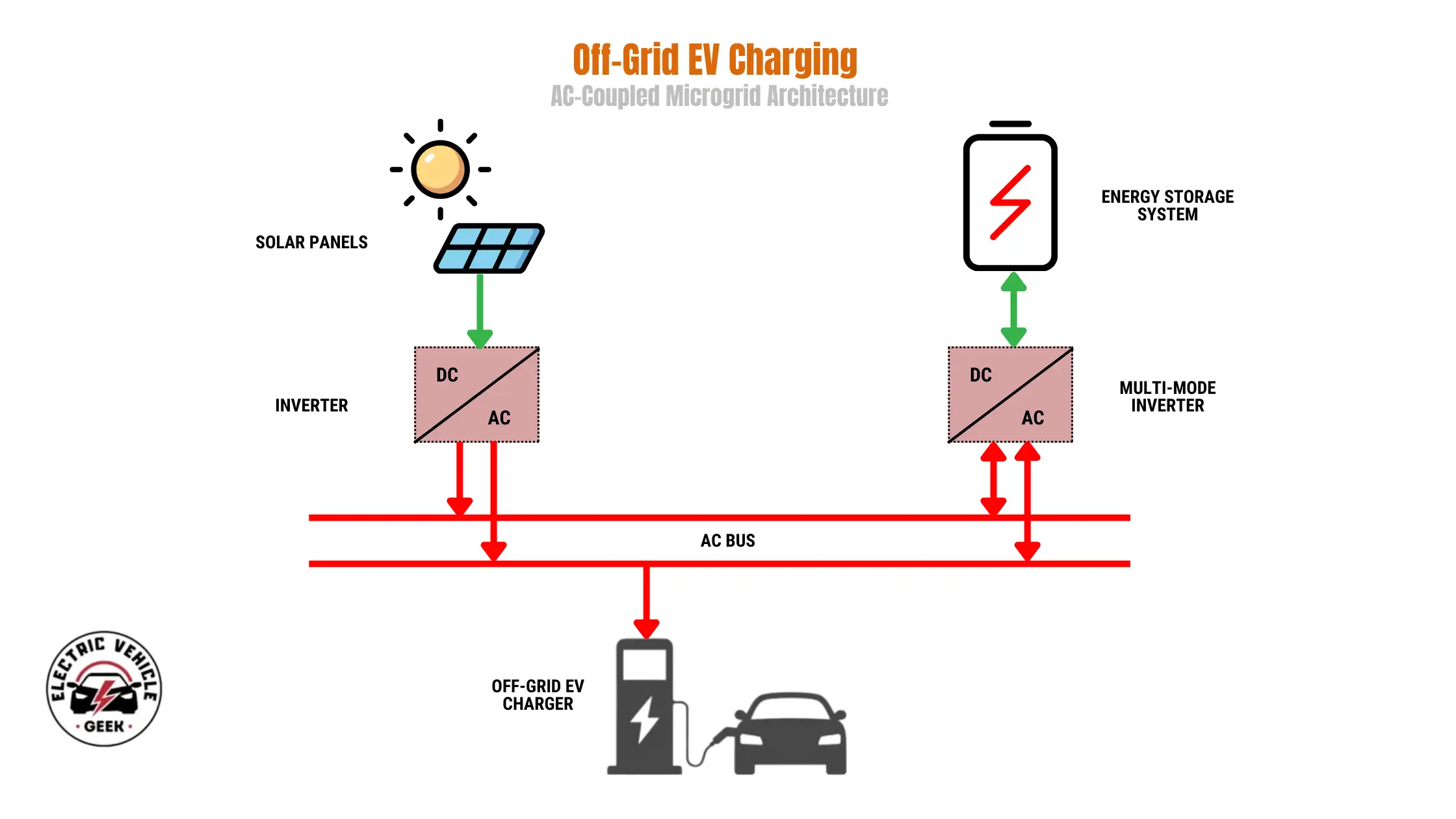
Our selected off-grid solar EV chargers feature smart controls and robust security features. To ensure reliability for homes running completely off-grid, manufacturers provide an integrated energy management ecosystem that fits seamlessly into standard AC-coupled microgrid architectures.
Our regular home solar EV charger list is a comprehensive collection that includes models suitable for both grid-tied and off-grid solar systems, as well as smaller home solar setups, and may lack the specialized features and robust capabilities required for reliable performance in fully off-grid environments.
Table of Contents
- Quick Summary
- What Is the Best Off-Grid Solar EV Charger for Homes
- Best Off-Grid Solar EV Chargers for Homes
- Off-Grid Solar EV Chargers Buyer’s Guide
- Expert Insight
Quick Summary

Tesla Universal Wall Connector Review Best Overall
Autel MaxiCharger 80A EV Charger Review Best Smart Features
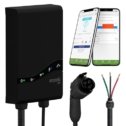
Emporia Pro EV Charger Review

Tesla Gen 3 Wall Connector Review
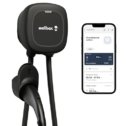
Wallbox Pulsar Plus 40-Amp EV Charger Review
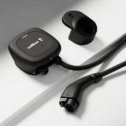
Wallbox Pulsar Plus 48-Amp EV Charger Review
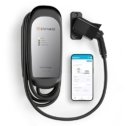
Enphase IQ 50 EV Charger Review
What Is the Best Off-Grid Solar EV Charger for Homes
After reviewing dozens of home EV chargers, we’ve named the Tesla Universal Wall Connector as the best overall off-grid EV charger for 2026, with the Autel MaxiCharger 80A EV Charger coming in second.
Tesla Universal Wall Connector earns the top spot for its advanced solar EV charging capabilities, including bi-directional EV integration, premium construction, seamless NACS and J1772 compatibility, and tight integration with pure sine wave inverter systems like the Tesla Powerwall. When deployed within a properly engineered microgrid, it delivers stable load control, secure energy management, and long-term reliability that few competitors match.
The Autel MaxiCharger 80A Charger ranks second due to its powerful 80-amp capacity, AI-integrated smart scheduling, and advanced Energy Management System that seamlessly integrates with various off-grid solar setups. With the ability to increase solar self-consumption from 45% to 65% and reduce peak loads by 31.5%, it offers exceptional performance for non-Tesla owners seeking comprehensive cloud-based monitoring and intelligent load balancing at a competitive price point.
Home EV charging trends show that homeowners are choosing off-grid solar EV chargers to future-proof their energy independence with smart features and easy integration into their solar systems. As solar and battery tech improve, off-grid setups are becoming more reliable and self-sufficient.
In 2026, picking the right off-grid EV charger means looking at EV charger smart features, security, and how well it works with your solar and energy systems. We reviewed the top models to help you find the best fit. Since this is a big investment, take time to check all options – even those not on our list.
Best Off-Grid Solar EV Chargers for Homes
Tesla Universal Wall Connector
The Tesla Universal Wall Connector is a unique “hybrid” in the EV charging landscape.
Tesla Universal Wall Connector Review Best Overall
Primarily marketed as a premium home charger, it can be effectively used in off-grid solar EV setups, but only as the AC charging dispenser, not as a standalone off-grid solution. It requires integration with a powerful off-grid inverter (such as Victron, EG4, or Tesla Powerwall 3) that provides a stable pure sine wave AC supply, effectively creating a microgrid for it to operate.
Security Systems
The Wall Connector features robust physical security with an IP55-rated enclosure and a vandal-resistant design suitable for rugged, remote installations. It has internal accelerometers to detect tampering, triggering alarms, and sending immediate alerts through cellular or satellite if integrated with the right network. Cable theft protection includes a built-in locking adapter compatible with Tesla’s NACS and J1772 standards, ensuring cables remain secure without loose, easy-to-lose adapters.
On the cybersecurity front, it supports OCPP 1.6 with TLS encryption and ISO 15118 Plug & Charge digital handshake, enabling secure, seamless communication and authentication between vehicle and charger. However, remote management features require a reliable 2.4 GHz Wi-Fi connection, which can be a limitation in truly isolated off-grid environments lacking Starlink or cellular hotspots.
Smart Energy Management
The Tesla Wall Connector supports Group Power Management, allowing up to six units to communicate and share available current dynamically, preventing overloading of the off-grid inverter’s breaker. When paired with a Tesla Powerwall, it leverages native solar integration, enabling “Charge on Solar” to prioritize using excess solar power and avoid depleting house batteries after dark.
Its adaptive load balancing intelligently modulates charging speeds based on real-time power availability, and bi-directional V2X capability allows energy flow back to support critical loads, although this requires compatible inverter setups.

Compatibility & Modularity
The Wall Connector’s “Magic Dock” adapter system supports Tesla’s NACS and universal J1772 plugs, providing seamless compatibility with mixed EV fleets, ideal for off-grid sites hosting various vehicle types. It is modularly designed to support accessory power hubs and expandable battery storage via its underlying off-grid inverter system, though these features depend on the inverter ecosystem rather than the charger alone.
Limitations
As an AC charger, it requires the solar DC power to convert to AC via an inverter before charging the EV, introducing about 10–15% energy loss. The unit is not a direct DC-to-DC solar charger, so it is not a standalone off-grid solar EV charger but rather a critical component of a broader microgrid home EV charging solution.
Warranty considerations also apply: Tesla’s hardware warranty may be voided if the unit is powered by modified sine wave inverters or non-certified setups.
Autel MaxiCharger 80A EV Charger
The Autel MaxiCharger 80A stands out as the top choice for off-grid electric vehicle charging thanks to its smart energy features, powerful charging ability, and easy-to-use management tools.
Autel MaxiCharger 80A EV Charger Review Best Smart Features
Unlike other chargers that need extra equipment to work well off the grid, the Autel system is built from the ground up to handle solar power and battery storage smoothly.
Powerful Charging Performance
The MaxiCharger 80A delivers serious charging power with its 80-amp capacity, making it one of the fastest AC off-grid EV chargers available today. This high amperage means faster charging times, which is super important when you’re running on limited solar power and want to charge your vehicle during peak sunlight hours.
The charger can push up to 19.2 kW of power, letting most EVs charge fully in just a few hours instead of overnight. What makes it even better for off-grid use is the adjustable amperage feature that lets you dial down the power from 80 amps to match your solar system’s capability.
This flexibility means you can charge at full speed when your batteries are topped up, and the sun is shining bright or slow things down during cloudy weather to protect your battery reserves. You’re always in control of how much power goes to your vehicle.
Smart Solar Integration
What really makes the Autel MaxiCharger shine for off-grid use is its built-in solar power compatibility. The Autel Energy Management System works directly with solar panels, logic controllers, and battery storage, automatically using excess solar energy to charge your car first before drawing from your battery backup.
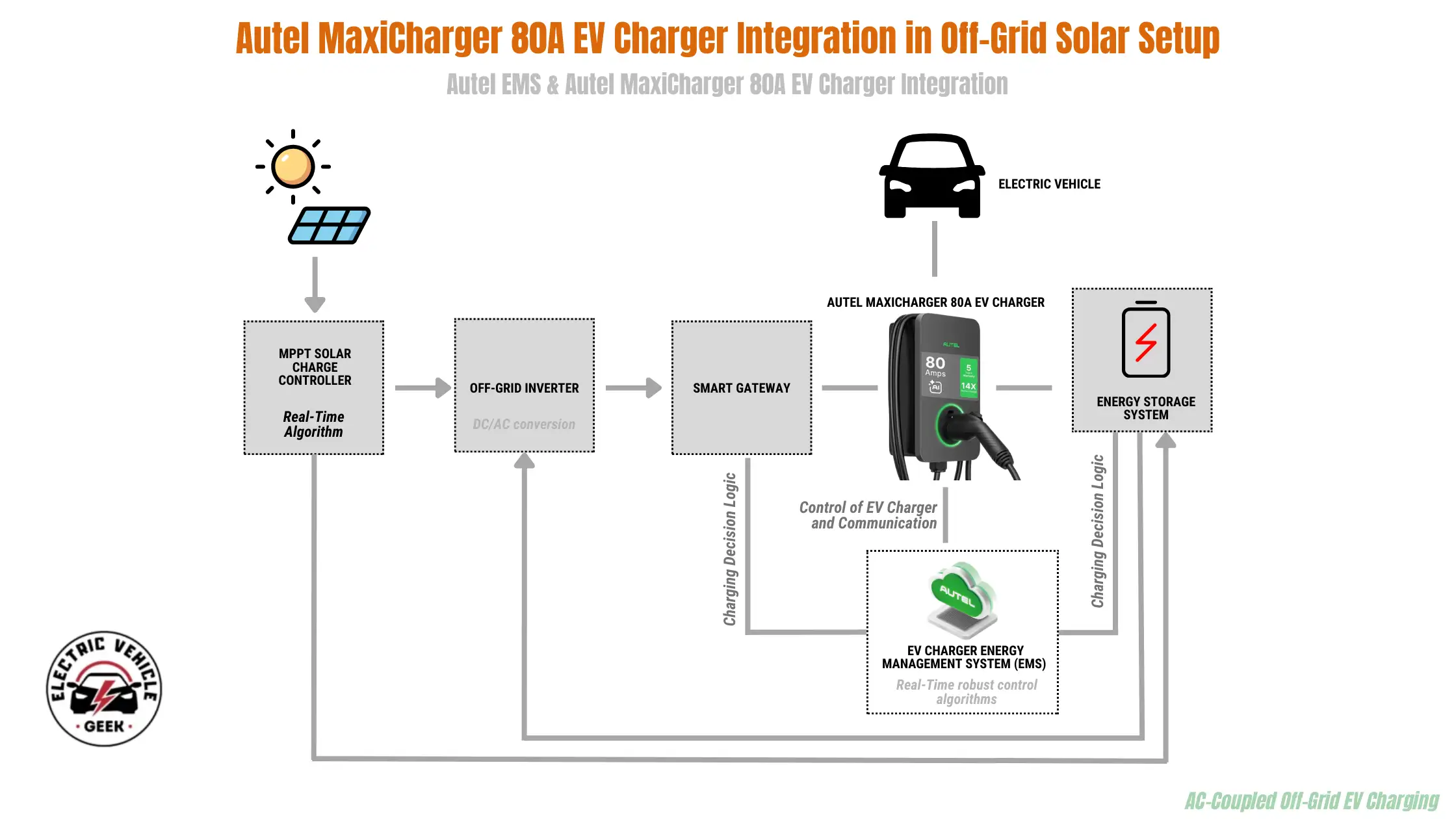
This “solar-first” charging approach means you’re maximizing free energy from the sun and keeping your home batteries full for nighttime use. The system knows the difference between solar power and stored battery power, making smart choices about which to use.
AI-Powered Smart Scheduling
Autel’s AI-integrated smart app takes off-grid charging to the next level with intelligent scheduling features that deliver real, measurable results. The app learns your solar production patterns over time and can predict when you’ll have the most excess energy available for charging.
Autel’s AI-driven charging frameworks can boost solar self-consumption from 45% to 65% by dynamically matching your EV’s charging to your solar panel output. This means you’re using significantly more of the free energy your panels produce instead of letting it go to waste.
You can set up automatic charging schedules that align perfectly with your peak sunlight hours, usually between 10 AM and 2 PM when solar panels produce the most power. This means your EV charges when energy is most abundant and cheapest (free from the sun).
The intelligent scheduling has proven to reduce peak power loads by approximately 31.5%, which is huge for off-grid powered homes where every watt counts. This keeps your inverter and Solar PV battery system from being overworked and potentially damaged.
The AI also considers weather forecasts to adjust charging plans. If the app sees cloudy days ahead, it might suggest charging your vehicle sooner while the sun is still out. This forward-thinking approach prevents you from getting caught with a dead EV battery during several cloudy days in a row.
Autel’s AI-driven charging algorithms can cut overall charging power demand by up to 40% without making charging take any longer. The system just spreads the power draw more efficiently across available resources.
For off-grid setups, the scheduled charging feature helps you avoid accidentally draining your home batteries overnight. You can program the charger to only operate during specific daytime hours, ensuring your house has enough stored power for evening use.
By using peak shaving and load shifting strategies, the Autel system can reduce your energy costs by over 30% compared to unmanaged charging. For off-grid users, this translates to less reliance on backup generators and longer battery life, both of which save serious money over time.
Advanced Energy Management System
The Autel EMS (Energy Management System) acts like a smart brain for your entire off-grid setup. It constantly monitors how much power your solar panels are making, how much your home is using, and how much your battery has stored.
Then it makes smart decisions about when and how fast to charge your EV. If clouds roll in and solar production drops, the system automatically slows down charging to protect your battery reserves.
This automatic adjustment happens in real-time without you having to do anything, making off-grid charging truly hands-free.
Cloud-Based Monitoring and Control
With the Autel Charge Cloud platform, you can check on your charging station from anywhere using your phone or computer. This remote monitoring is especially helpful for off-grid locations where you might not always be home.
You can see real-time charging status, get alerts if something goes wrong, and even schedule charging times to match your best solar production hours. The system keeps detailed records of energy use, helping you understand your charging patterns and optimize your solar setup.
The app sends push notifications when charging starts, stops, or if any issues come up. This instant communication means you always know what’s happening with your EV, even from miles away.
Load Balancing Technology
The MaxiCharger’s intelligent load-balancing feature prevents power overloads that could damage your off-grid inverter or drain your batteries too quickly. It automatically adjusts charging speed based on what else is using power in your home.
If you turn on the air conditioner or start cooking dinner, the charger backs off a bit to make sure your essential appliances have the electricity they need. This smart power sharing is critical when working with limited off-grid capacity.
Reliable Performance
Autel’s charging system has proven itself with impressive reliability numbers, 99.9% compatibility with different EV models, and a 99.5% charging success rate. When you’re off the grid and can’t just call a repair person easily, this reliability matters a lot.
The system rarely fails or has connection problems, meaning you can count on it day after day. This dependability gives you peace of mind that your EV will be ready to go when you need it.
Flexible Setup Options
With its adjustable amperage from 6A to 80A (configurable via mobile app or dip switch at 16A, 24A, 32A, 40A, 48A, 50A, 64A, 72A, or 80A), you can perfectly match the charger’s power output to your specific solar system size. This flexibility makes it ideal for both small off-grid solar setups and large home solar configurations.
The MaxiCharger works with various backend systems and supports open communication protocols, making it easy to integrate into existing off-grid solar setups. Whether you have a Victron, EG4, or other brand inverter system, the Autel charger can communicate and coordinate properly.
The Edge Gateway component provides on-site communication even when the internet connection is spotty or unavailable, which is common in remote off-grid locations.
Cost Savings Through Efficiency
By maximizing solar charging and minimizing battery drain, the Autel system helps you avoid the biggest off-grid challenge: running out of stored power. The detailed energy reports show exactly how much money you’re saving compared to grid charging or generator use.
Over time, these savings add up significantly, helping offset the initial investment in your off-grid charging setup. The smart app’s scheduling features help squeeze every drop of value from your solar panels by preventing wasted excess solar energy.
Future-Proof Technology
The Autel MaxiCharger supports the latest charging standards and gets regular software updates through its cloud connection. This means your charger won’t become outdated as EV technology advances.
New features and improvements can be added remotely without buying new hardware. The AI continues to get smarter with each update, learning better ways to optimize your charging based on real-world data.
Emporia Pro EV Charger
The Emporia Pro EV Charger is a highly affordable and data-rich Level 2 AC charger designed for home and solar-integrated use. While it is not a standalone off-grid solar EV charger, it performs well within off-grid systems when paired with a quality pure sine wave inverter and battery storage.
Emporia Pro EV Charger Review
Energy Management System (EMS)
Emporia’s strength lies in its modular approach; the “brain” controlling solar and load management is the Emporia Vue (Gen 3) energy monitor, installed in your electrical panel.
The Vue uses CT clamps to continuously monitor your home’s solar production and overall energy usage in real time. This setup allows the charger to only activate when there is excess solar generation, preventing unnecessary drain on backup batteries or the grid. The system dynamically throttles charging amperage in response to changing solar conditions, such as cloud cover, ensuring optimal energy use.
Smart Features
The Emporia Pro supports auto-throttling to prevent tripping your inverter or main breaker when other heavy loads like well pumps or air conditioners start. Its scheduling feature can also integrate with utility rate data to optimize charging times if you’re partially grid-connected. The Emporia app is highly detailed, providing second-by-second energy flow graphs and enabling remote locking of the charger to prevent unauthorized use.
Security & Build
The charger’s NEMA 4 enclosure rating makes it highly weather-resistant, better than many competitors, capable of handling rain, snow, and outdoor exposure. It is available in both J1772 and NACS (Tesla) connector versions, enhancing compatibility with mixed EV fleets.
Compatibility & Accessories
Beyond the EV charger, the Emporia ecosystem includes smart plugs controllable by the Vue monitor, allowing you to run additional devices (like space heaters or pool pumps) only when excess solar power is available. Emporia also offers its own home battery system, enabling a fully integrated solar-battery-charger loop managed via the Vue platform.
Off-Grid Suitability
As an AC charger, the Emporia Pro requires a pure sine wave inverter and battery-backed solar system to provide a clean 240 V AC supply. It cannot directly convert DC solar power to EV charge. The modular EMS approach gives it granular solar logic and excellent dynamic load management, making it ideal for off-grid homeowners who want detailed energy data and flexible control. However, the system’s reliance on 2.4 GHz Wi-Fi means full smart functionality requires internet access, and without it, the charger operates in a basic fixed-power mode.
Tesla Gen 3 Wall Connector
The Tesla Gen 3 Wall Connector is a solid home EV charging dispenser that can be incorporated into an off‑grid solar system, provided it is paired with a proper microgrid inverter or battery backup (e.g., Tesla Powerwall or a high‑quality pure sine wave off‑grid inverter).
Tesla Gen 3 Wall Connector Review
It’s not a standalone solar‑to‑EV charger; it simply provides a controlled AC output that your inverter must supply.
Security & Build Quality
The Gen 3 enclosure is rated IP55 for dust and water resistance, making it robust enough for outdoor or semi‑exposed locations often found on off‑grid properties. It integrates safety hardware, including Type A plus DC 6 mA residual current detection, reducing the need for separate protective devices in the branch circuit.
Smart / Connectivity Features
It comes with built‑in 2.4 GHz Wi‑Fi, enabling over‑the‑air firmware updates, remote diagnostics, and management through the Tesla app. Through the app, you can monitor charging status, schedule charging, and view usage history. Although this is designed primarily for Tesla vehicles, the connectivity gives a level of intelligence useful in any managed power environment.
Power Management
The Gen 3 supports power sharing (Group Power Management) across multiple units, up to six can communicate and dynamically balance available current from a single feed, helping avoid overload of the limited off‑grid inverter output. This is particularly advantageous when charging multiple vehicles or managing constrained solar/inverter power.
Energy & Charger Behavior
Tesla’s app and scheduling enable timed charging, which can be used in an off‑grid setup to align charging with peak solar production or battery state. However, real “solar‑aware” charging features (like preventing charge during low battery) are largely tied to Tesla Powerwall configurations and Tesla vehicles; generic solar EV logic isn’t natively embedded.
Compatibility
The Gen 3 uses Tesla’s connector standard (Type 2 in many regions or NACS in North America with adapters), and while it is primarily Tesla‑centric, non‑Tesla EVs can be accommodated with the Universal Wall Connector variant or adapters. The basic Gen 3 focuses on AC side delivery and relies on your inverter to provide clean, stable power.
Limitations in Off‑Grid Use
Because it’s an AC charger, energy still must be converted from solar DC to AC via the inverter and then back to DC in the vehicle, with typical energy loss compared to DC‑coupled charging.
It also depends on local Wi‑Fi for full smart functionality; in a truly remote off‑grid site without Wi‑Fi or cellular, it will function only as a basic charger.
Many Tesla app features that interact with solar and Powerwall are Tesla‑specific and may not fully apply in generic off‑grid systems.
Wallbox Pulsar Plus
The Wallbox Pulsar Plus is widely regarded as one of the most compact and aesthetically refined chargers on the market, but it also delivers heavy-duty engineering that makes it a top choice for off-grid and hybrid solar EV charging systems.
Wallbox Pulsar Plus 40-Amp EV Charger Review
Wallbox Pulsar Plus 48-Amp EV Charger Review
However, solar EV charging with Wallbox is not just about the charger itself; it depends on a specific hardware stack that enables the unit to “see” and react intelligently to your solar production. This hardware ecosystem is essential to enable Wallbox’s Eco-Smart solar charging technology.
Energy Meter (Mandatory Accessory)
The Pulsar Plus cannot detect solar production on its own. You must install a Wallbox-compatible energy meter in your main electrical panel, such as the Wallbox Power Meter.

Wallbox Power Meter Review
The Wallbox Power Meter is an essential accessory for the Pulsar Plus, enabling advanced energy-aware charging that’s perfect for off-grid solar setups.
While the Wallbox Power Meter is not a fuzzy logic controller itself, it delivers real-time data on your off-grid system energy use and solar production, allowing the charger’s intelligent firmware to optimize charging. It prioritizes surplus solar power, manages load to prevent panel overloads, and works closely with the Wallbox app to dynamically adjust charging based on actual conditions. This smart control ensures efficient, reliable charging in off-grid environments.
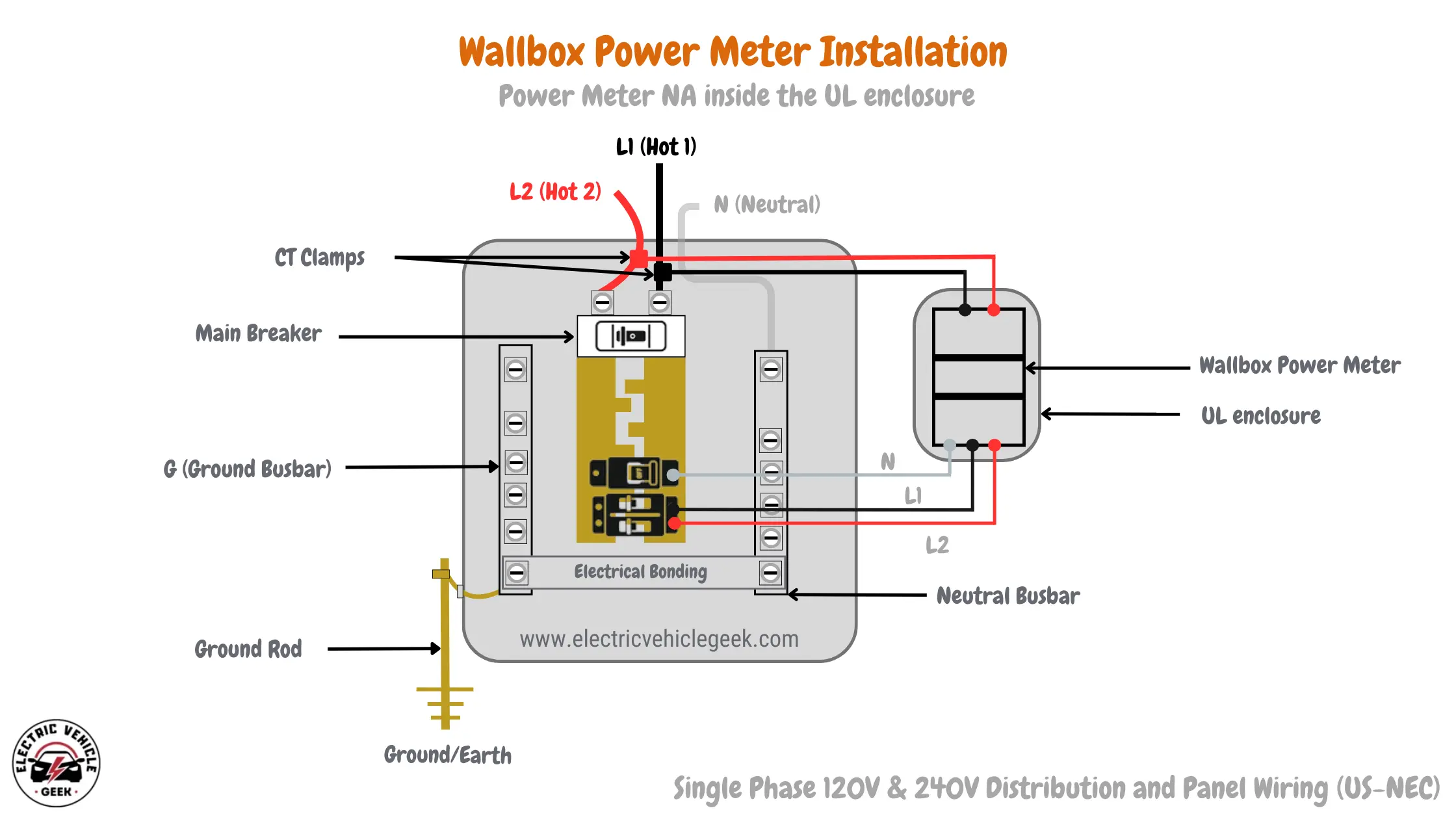
Wallbox EV chargers also support other energy meters, such as the EM530 or Inepro meters, which communicate via a modified Modbus protocol tailored for their solar logic. However, these meters may require additional configuration to work with your charger or energy management system, while the Wallbox Power Meter comes pre-configured to seamlessly integrate with Wallbox chargers out of the box.
Thermal and Weather Protection
Off-grid or solar-powered chargers often face direct sun exposure, which causes derating as the unit slows charging to stay cool. Wallbox offers a Sun Cover accessory that clips over the Pulsar Plus or Pulsar Max, reducing solar heat gain by up to 15°C to maintain peak charging performance. For pedestal-mounted units, the Eiffel Rain Cover protects the top of the charger from vertical rain and snow, preserving its IP55 weatherproof rating.
Mounting Infrastructure
Solar arrays often aren’t near garage walls, so Wallbox provides sleek aluminum mounting solutions, the Eiffel and Eiffel Basic Pedestals, which also support back-to-back dual charger setups sharing the same solar-fed circuit.
Wallbox Pedestal for EV Charger Review
The more rugged Eiffel Pro pedestal adds integrated space for fuse boxes and breakers, keeping off-grid electrical safety equipment neat and protected within the mounting post.
Connectivity Accessories
Reliable data connectivity is crucial for smart solar charging. If your off-grid site lacks Wi-Fi, the optional 4G/LTE Connectivity Kit plugs into the charger, providing a constant cellular connection for remote management. For shared or community solar installations, RFID cards enable secure access, preventing unauthorized use of limited solar energy.
Bi-Directional Hardware (Quasar 2 Only)
For off-grid systems that leverage vehicle-to-home (V2H) capabilities, the Quasar 2 DC bi-directional charger requires specialized hardware like the Wallbox Disconnect Switch. This switch isolates your home from the grid during outages, allowing your EV to safely power critical loads with its stored solar energy.
Enphase IQ 50 EV Charger
The Enphase IQ 50 EV Charger is a strong choice for off‑grid solar EV charging when integrated with an Enphase microgrid (solar + battery + AC inverter) that provides reliable AC power and accurate solar telemetry.
Enphase IQ 50 EV Charger Review
Like the Tesla Universal Wall Connector, it is not a standalone off-grid solution. It must be powered by a stable pure sine wave 240V inverter or an Enphase microgrid configuration built around IQ microinverters and IQ Batteries. In an off-grid environment, it functions as the AC charging dispenser while the inverter system creates the usable microgrid.
Security Systems
The IQ 50 is housed in a NEMA 4–rated enclosure, making it suitable for outdoor environments exposed to rain, dust, and temperature fluctuations. The sealed electronics and reinforced cable design reflect Enphase’s solar-industry durability standards.
While it is not IK10-rated for high-vandalism public environments, it is well-suited for residential and controlled off-grid installations. The included connector holster and cable cradle keep the plug protected from moisture and debris, preserving long-term reliability in solar-exposed setups.
Smart Energy Management
The intelligence of the IQ 50 does not reside solely inside the charger. It depends on a required accessory stack to function as a true solar-aware unit. The IQ Gateway (Metered) acts as the system brain, connecting solar production, battery storage, and the EV charger. Consumption CTs (Current Transformers) installed in the main electrical panel allow the system to measure real-time household loads and calculate available excess solar energy.
Once configured, the charger dynamically adjusts amperage based on surplus production. If solar output drops due to cloud cover or increased home demand, the system automatically throttles charging to prevent drawing down critical battery reserves. This makes it viable in hybrid or islanded microgrid environments where energy supply is limited.
For serious off-grid systems, the IQ Load Controller is essential. It can automatically shed the EV charger load if the battery state-of-charge falls below a defined threshold. In blackout or fully islanded operation, this prevents the vehicle from unintentionally draining backup storage needed for essential loads.
Compatibility & Modularity
The IQ 50 is available in J1772 or NACS configurations, supporting mixed-vehicle environments with adapter options. For installations beyond a garage wall, Enphase offers Single-Mount and ProMountDuo pedestals designed for driveway or solar-field deployment. At the system level, components like the IQ Combiner 5/5C and Enphase trunk cabling create a clean, modular solar architecture feeding the charger’s inverter source.
Limitations
The IQ 50 is strictly an AC charger. Solar DC must convert to AC through an inverter before charging the vehicle, introducing normal multi-stage conversion losses. It cannot operate directly from a DC battery bank and relies heavily on proper CT placement and Gateway commissioning to deliver accurate solar-biased charging.
It is also one of the most expensive chargers in this list, typically priced higher than Tesla, Emporia, and Wallbox options. Much of that cost reflects its deep integration within the Enphase ecosystem rather than standalone hardware capability. For homeowners already invested in Enphase solar and battery systems, the price can be justified. For others, the premium may be difficult to defend compared to more cost-effective alternatives.
Off-Grid Solar EV Chargers Buyer’s Guide
Charging an EV in a true off-grid home solar system is very different from charging in a grid-tied home. In an off-grid setup, your solar array, battery bank, inverter, and EV charger must work together as one system.
An EV charger is not just a plug. It becomes one of the largest loads in your entire off-grid-power system. If it is not properly integrated, it can overload your inverter or drain your batteries too quickly.
Here’s what to look for.
PV-Ready and Inverter Communication
In most off-grid home systems, AC EV chargers do not connect directly to solar panels. Solar panels produce DC power. The inverter converts that power into AC. The EV charger connects to the inverter’s AC output.
For true solar optimization, the charger must communicate with the inverter or a compatible energy meter, which is why on our recommended off-grid EV charger list, all EV charger manufacturers offer accessories for integrating their EV chargers with AC solar systems.
To optimize energy distribution, the charger should integrate directly with an energy management system (EMS). This communication link enables real-time monitoring of solar generation and building load. While you can use standard interfaces like Modbus and SunSpec, we recommend using your chosen EV charger energy management system (proprietary manufacturer-specific protocols) to ensure seamless integration, faster response times, and full feature compatibility.
Besides the strong power of industrial inverters, an Energy Management System (EMS) is connected using communication methods like Modbus or CAN bus. This EMS acts like the “brain,” balancing the load by watching real-time solar power and battery charge levels. It adjusts the EV charger’s signal so the car only uses extra solar energy and slows down during busy industrial times to avoid overheating the inverter or draining the battery too much.
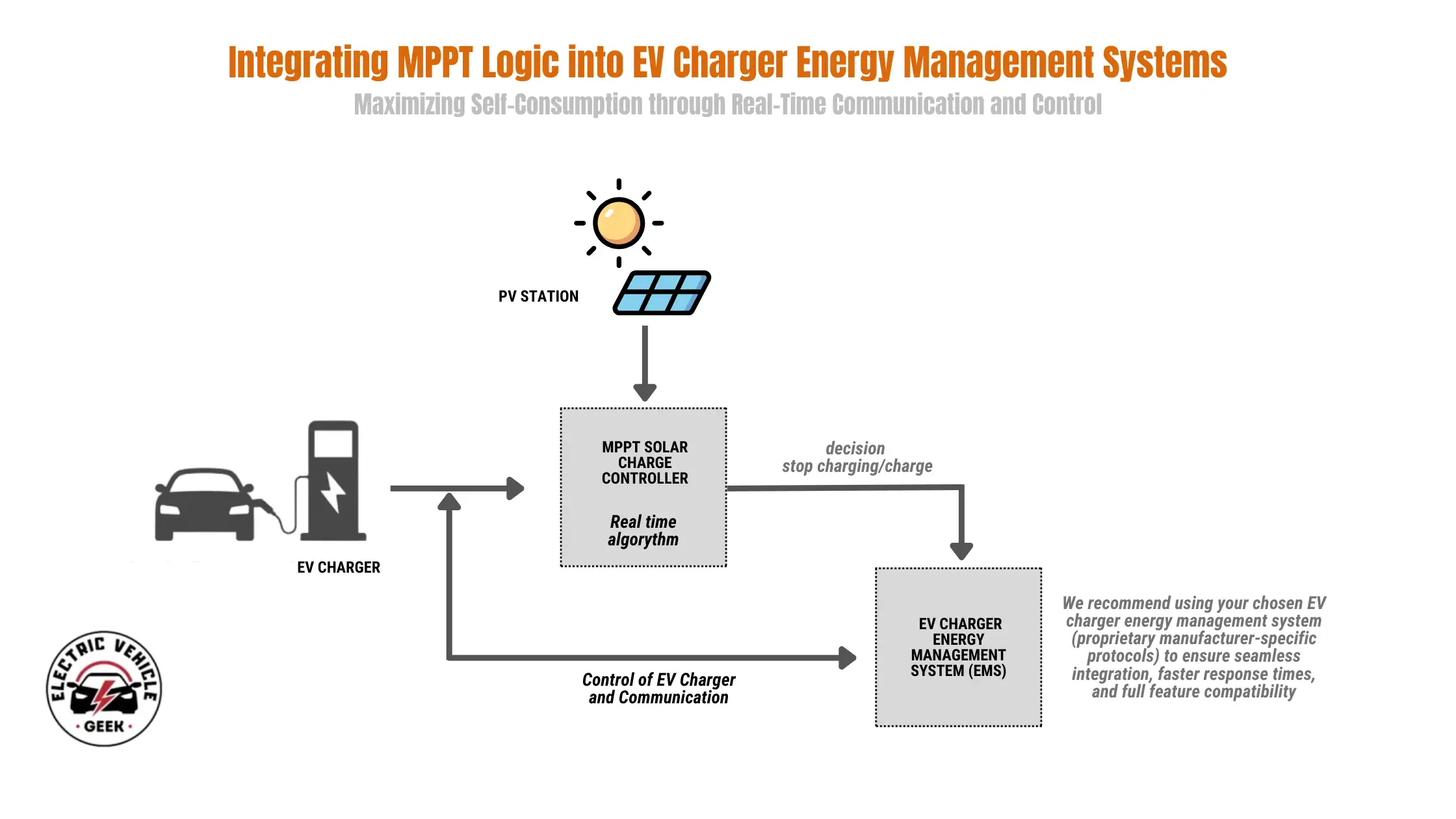
When an EV charger management system is used alongside an MPPT solar charger control, you can maximize self-consumption through real-time communication and control, a feature very useful, especially when you want to use two or more EV chargers in your off-grid system.
We have recommended the Emporia Pro, which can work with the Emporia Vue energy monitoring system in an off-grid solar system. This setup measures real-time solar production and total load. When paired with a solar inverter, the charger uses that data to prioritize solar energy first.
That means your EV draws power mainly from your panels instead of batteries or backup sources, improving energy efficiency in your off-grid setup.
Dynamic Load Control
Solar production changes throughout the day. Clouds, temperature, and shading all affect output.
A quality off-grid EV charger must support dynamic load control. This means it can automatically adjust charging current based on available power.
If solar production drops, the charger should reduce output. If production increases, it should ramp up charging.
This prevents inverter overload and protects your battery bank from deep discharge. In a real off-grid system, this feature is not optional. It is essential.
The Wallbox Pulsar Plus is a perfect example of a perfect EV charger for off-grid homes with solar systems. It supports dynamic load management through its Wallbox app and optional smart home integration. It can automatically reduce charging power when other loads increase or when solar production drops. This keeps your inverter within safe limits and prevents sudden power spikes that could otherwise stress your off-grid system.
Battery Storage Integration
Battery storage is the backbone of any off-grid solar system.
Your EV charger must work with your battery energy storage system, not against it. Charging an EV can draw 7 kW to 11 kW on a typical Level 2 setup. That is a heavy load for many off-grid inverters and battery banks.
The charger should allow you to limit charging power to match your inverter capacity. It should also allow charging only when the battery state of charge is above a safe level.
Without proper integration, repeated deep discharges will shorten battery life and increase long-term costs.
The Enphase IQ 50 is designed to integrate closely with Enphase solar + battery systems. It communicates with the microinverters and Enphase Encharge battery storage. This allows the IQ 50 to respect the battery bank’s state of charge.
For example, it can delay or throttle charging until the battery has enough energy, preserving storage health and extending run time.
Energy Monitoring and Forecasting
Advanced systems use energy monitoring and forecasting to improve efficiency.
The charger or energy management system can analyze solar production patterns, battery levels, and vehicle charging needs.
In practical terms, this allows the system to prioritize charging during peak sunlight hours instead of draining batteries early in the day.
Some systems use weather forecast data and historical production trends to optimize charging windows. While not mandatory, this feature improves long-term system stability.
For homes with Tesla Powerwall batteries, the Wall Connector can be paired with Powerwall’s energy insights to recommend or schedule charging when solar output is highest, lowering reliance on stored energy or backups.
Hybrid and Backup Power Balancing
Some off-grid systems include a backup generator. Others use hybrid inverters that can accept grid input when available.
In these setups, the EV charger should support automatic source balancing.
If solar production drops and batteries reach a low threshold, the system may switch to generator power. This transition must be controlled and stable.
The balancing logic should consider solar output, battery state of charge, inverter limits, and EV charging demand in real time.
Poor balancing can cause system shutdowns or inverter faults.
When paired with Tesla Powerwall and Gateway, the Gen 3 Wall Connector supports automatic source switching. The Powerwall system can shift between solar, battery, and generator power. For example, if your solar output drops under cloud cover and the batteries are low, the system can smoothly switch to generator support while keeping EV charging running at an adjusted rate.
Inverter and System Sizing
This is often overlooked.
Your inverter must be sized to handle both household loads and EV charging at the same time. If your inverter is rated at 8 kW and your home already uses 3 kW during the day, a 7 kW EV charger will exceed system capacity.
In off-grid design, EV charging must be treated as a managed load, not a continuous full-power demand.
Choosing a charger with adjustable amperage is critical. It allows you to match charging power to system capacity.
Certifications
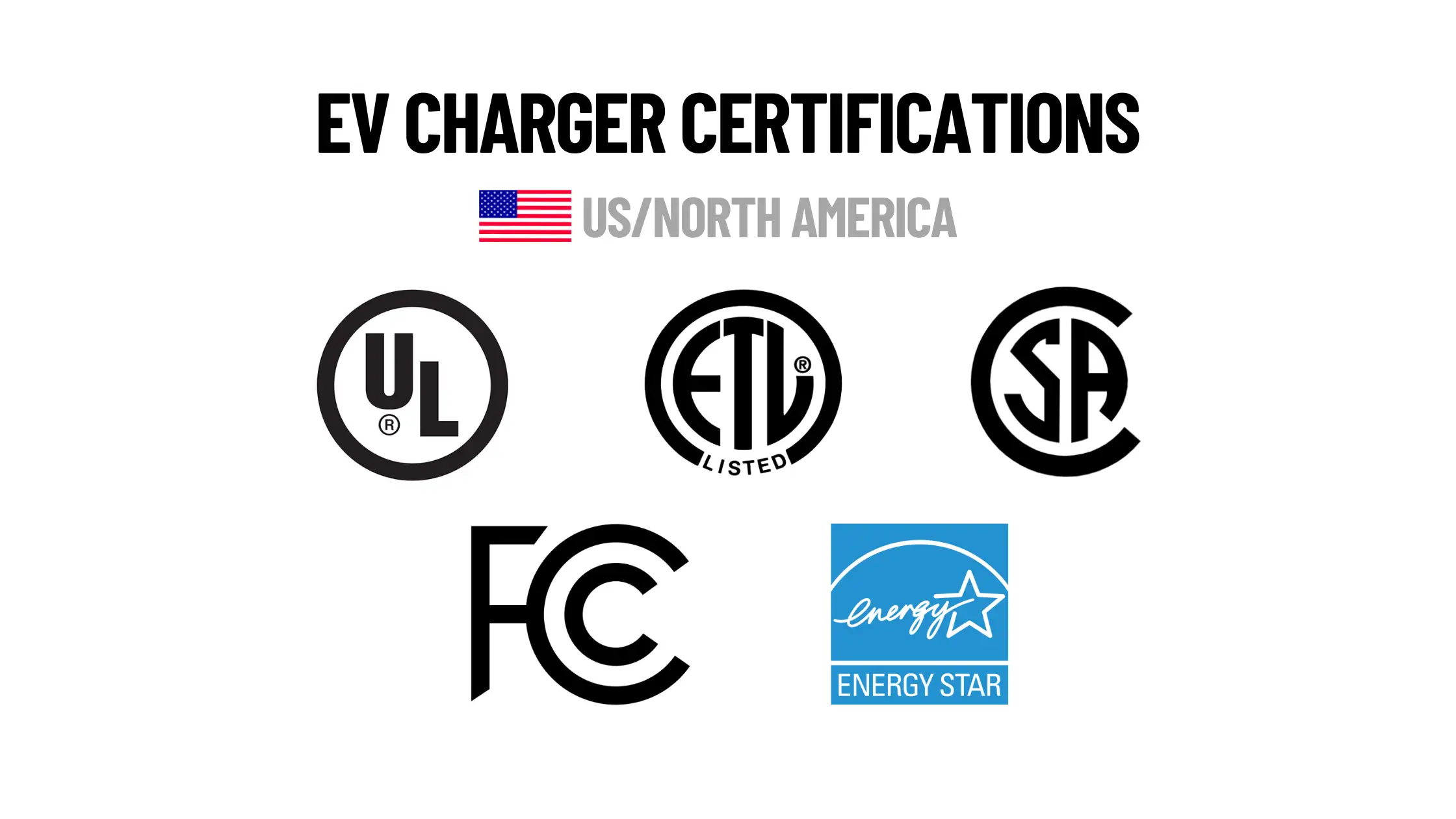
When buying an off-grid EV charger, safety comes first. Look for chargers certified to UL 2594 (for Level 2 chargers) or UL 2202 (for DC fast chargers). Other important standards include UL 2231 for ground-fault protection, and international standards like IEC 61851, IEC 62752, and IEC 62955 for overall charger safety.
Third-party testing lab certifications from ETL, CSA, or TÜV confirm the charger has been independently verified for safety and quality. FCC certification ensures the charger won’t interfere with your electronics, which is especially important for smart chargers with wireless connectivity.
Energy Star certification is particularly important for off-grid EV chargers and home solar EV chargers. Off-grid systems have limited power availability, so every watt of wasted energy directly impacts your battery bank or reduces charging speed. Energy Star certified chargers minimize standby power consumption and maximize charging efficiency, meaning more of your solar energy goes into your vehicle instead of being lost as heat.
For off-grid setups, an efficient charger can be the difference between fully charging overnight or falling short. While Energy Star is a performance rating rather than a safety certification, it’s one of the most valuable features to look for when your power supply is limited. The small efficiency gains add up significantly over time, extending your battery bank’s lifespan and reducing the solar array size you need.
Even the safest charger can be dangerous if installed incorrectly. Off-grid installations must follow NEC Article 625, which covers specific requirements for EV charging equipment including proper wiring, circuit breakers, grounding, and overcurrent protection.
For off-grid systems, professional installation is even more critical since you’re working with battery banks, inverters, and solar arrays in addition to the charger itself. Hire an electrician certified through EVITP (Electric Vehicle Infrastructure Training Program) who understands both EV charging and off-grid power systems. This ensures your entire system is properly integrated and protected
Expert Insight
Off-grid solar EV charging works best when the charger is part of a complete energy management system.
Look for:
- Communication with the inverter or the energy meter
- Dynamic load control
- Battery-aware charging limits
- Adjustable output power
- Hybrid source balancing
Without these features, you risk system instability, battery damage, and inverter overload.
In an off-grid environment, integration is more important than raw charging speed.

James Ndungu is a certified EV charger installer with over five years of experience in EVSE selection, permitting, and installation. He holds advanced credentials, including certification from the Electric Vehicle Infrastructure Training Program (EVITP) and specialized training in EV charging equipment and installation, as well as diplomas in EV Technology and Engineering Fundamentals of EVs. Since 2021, James has tested dozens of EV chargers and accessories, sharing expert insights into the latest EV charging technologies.