Electric vehicle charging has evolved far beyond simply plugging in and waiting. Today’s smart EV chargers pack sophisticated features that can cut your electricity bills, protect your home’s electrical system, integrate with solar panels, and even provide backup power during outages.
This guide breaks down every major smart charging feature in plain language. More importantly, we show you exactly how smart EV chargers we have reviewed implement these capabilities.
But first lets start defining some key terminologies used in this field.
Table of Contents
- What Are Smart EV Chargers?
- What Is Smart EV Charging?
- Smart EV Charging Features
- Remote App Control
- Scheduled Charging
- Dynamic Load Balancing
- Real-Time Energy Monitoring
- Solar EV Charging Integration
- Bidirectional Charging (V2H/V2G)
- Firmware Updates Over-the-Air (OTA)
- Smart Scheduling Based on Grid Demand
- Integration with Home Energy Management Systems (HEMS)
- User Authentication and Security
What Are Smart EV Chargers?
Smart EV chargers are Level 2 charging stations with internet connectivity (Wi-Fi, Bluetooth, or cellular) that enable remote control, monitoring, and automation through a smartphone or web app.
Unlike basic dumb EV chargers that simply deliver power when plugged in, smart chargers can adjust charging rates, schedule sessions, respond to grid conditions, and provide detailed energy data.
What Is Smart EV Charging?
Smart EV charging uses connected technology and automation to optimize when, how, and at what rate your vehicle charges based on electricity rates, home power consumption, solar production, and grid demand.
The goal is to save money by charging during off-peak hours, reduce strain on your electrical system, and maximize renewable energy use, all while ensuring your vehicle is ready when you need it.
Smart EV Charging Features
Smart EV charging features are the specific capabilities and functions that connected chargers offer beyond basic power delivery.
These features leverage internet connectivity, sensors, and software to provide control, automation, and optimization that standard chargers can’t match.
Common smart features include remote app control, scheduled charging based on electricity rates, real-time energy monitoring, dynamic load balancing to prevent circuit overloads, solar integration, bidirectional power flow, automatic firmware updates, grid demand response, home energy system integration, and user authentication for security.
Each feature serves a specific purpose, whether it’s saving money, enhancing convenience, improving safety, supporting renewable energy, or future-proofing your investment. The best smart chargers combine multiple features to create a comprehensive charging ecosystem tailored to your needs.
Remote App Control
Allows users to start, stop, and monitor charging sessions remotely via smartphone or other connected devices. This feature offers unmatched convenience, enabling users to manage charging from anywhere, whether at work, on vacation, or simply across the house.
Beyond basic control, many apps provide real-time notifications about charging status, fault alerts, and historical session data.
The DEWALT 40 Amp EV Charger uses both Wi-Fi and Bluetooth connectivity through its dedicated app, allowing users to start or stop charging sessions from anywhere. The dual-connectivity approach means you can use Bluetooth for local control if your garage Wi-Fi is weak, then switch to Wi-Fi when you’re away from home.
The ChargePoint Home Flex app sends push notifications when charging completes or if there’s a fault, and maintains a detailed history of every charging session with energy consumption data.
The Wallbox Pulsar Plus takes this further by integrating with voice assistants like Alexa and Google Assistant, letting you check charging status hands-free.
Scheduled Charging
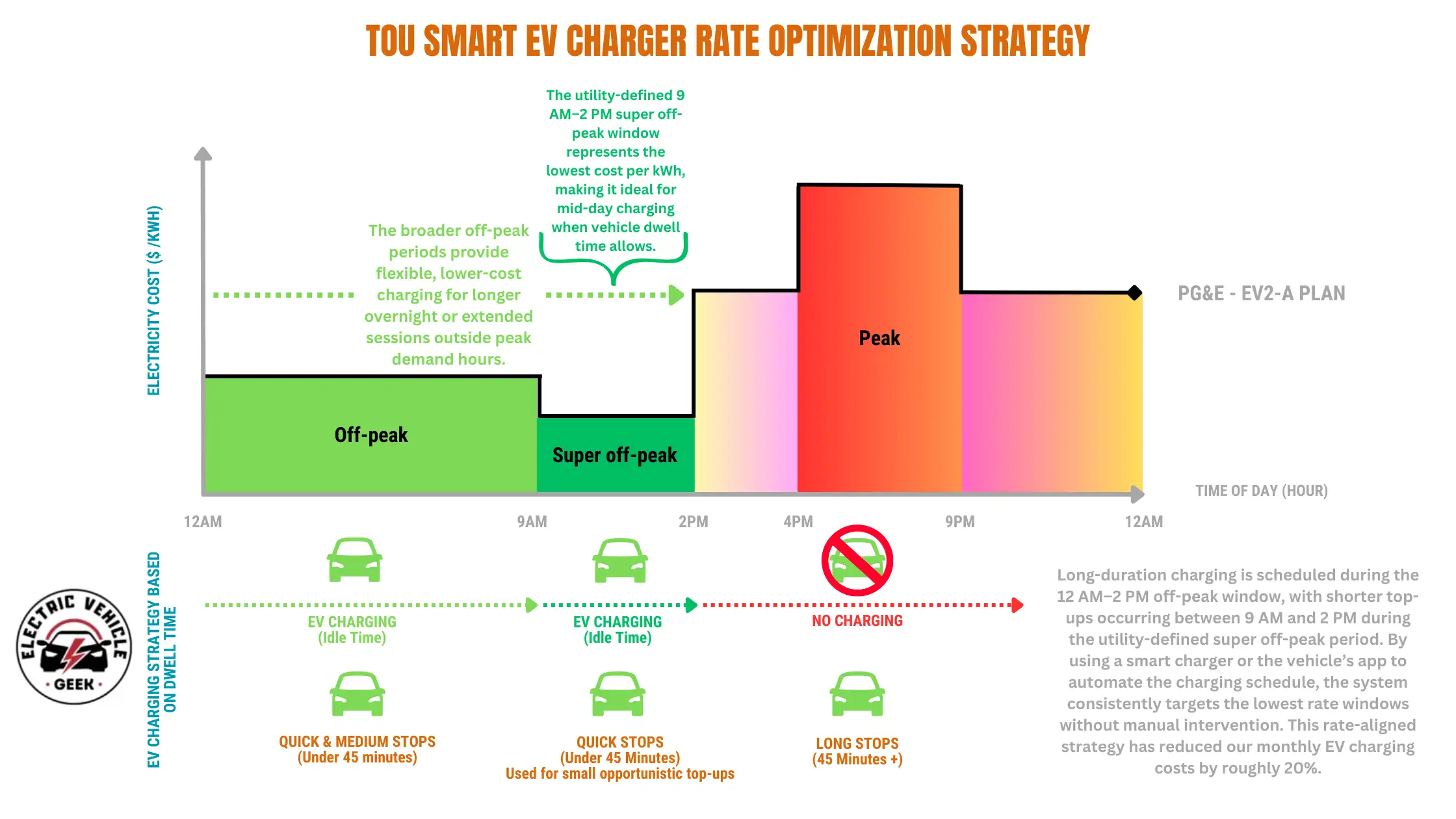
Let’s users program specific charging times to take advantage of lower electricity rates during off-peak hours.

By shifting charging to times when demand on the grid is lower, often at night, this feature significantly reduces energy costs and helps utilities manage peak load periods.
Advanced scheduling can integrate user preferences and driving patterns, automatically adapting schedules for convenience and cost efficiency.
The Autel MaxiCharger 80 Amp Fast Charging EV Charger comes with Autel’s AI-powered app that lets you set up charging times based on when electricity costs less, which cuts down your power bill each month and makes better use of
The JuiceBox 40 goes a step further with “Smart Schedules” that learn your driving patterns and automatically adjust charging times. For instance, if you typically leave for work at 7 AM, it’ll ensure your vehicle is fully charged by 6:30 AM while still prioritizing the cheapest electricity hours.
The Grizzl-E Smart offers day-specific scheduling, allowing you to set different charging windows for weekdays versus weekends to align with variable time-of-use EV charging strategies.
Dynamic Load Balancing
Automatically manages the power draw of the charger to prevent overloading your home’s electrical system when multiple high-power devices or EV chargers are in use simultaneously.
Instead of tripping breakers or reducing performance, the charger intelligently allocates available power across all loads, dynamically adjusting charging current in real time.
The Wallbox Pulsar Plus features dynamic load management through its Power Boost technology, which monitors your home’s total electrical consumption in real time. If you turn on your dryer, electric oven, and water heater while charging, the EV charger automatically reduces its amperage to prevent overloading your main panel.
The ChargePoint Home Flex can be networked with a second Home Flex unit, allowing two EVs to share available power intelligently. If your electrical service provides 80 amps total, it might give 40 amps to each charger, or 60/20 if one vehicle needs priority charging.
The Tesla Wall Connector can load-balance across up to four units, making it ideal for households with multiple Teslas or for small business installations.
Real-Time Energy Monitoring
Provides live tracking of electricity consumption during charging sessions, delivering detailed insights into how much energy is used, when, and at what cost.
This data helps users understand their charging habits, identify opportunities to reduce energy waste, and evaluate the impact of different charging strategies.
The DEWALT 48 Amp tracks charging history and energy usage through its app, showing you exactly how many kilowatt-hours each session consumes.
The Emporia Pro EV Charger takes monitoring to the next level by integrating with the Emporia Home Energy Monitor, providing a complete view of how EV charging fits into your total household energy consumption. You can see real-time cost estimates based on your utility rates and compare your EV charging costs month-over-month.
The Grizzl-E Smart offers one of the most detailed energy dashboards, breaking down consumption by day, week, or month, and even calculating your “cost per mile” to help you understand the true economics of EV ownership versus gasoline.
Solar EV Charging Integration
Enables solar EV charging directly from home solar power systems, maximizing the use of clean, renewable energy and minimizing reliance on the grid.
This feature often involves coordination between the solar inverter, battery storage (if present), and the EV charger to optimize energy flow.
The Wallbox Pulsar Plus with Eco-Smart mode can detect when your solar panels are producing excess energy and automatically adjust charging to use solar power first, only pulling from the grid when solar production is insufficient.
The Zappi V2 charger by MyEnergi is specifically designed for solar integration. It has three modes: Fast (charges at maximum regardless of solar), Eco (uses a mix of solar and grid), and Eco+ (charges only from surplus solar). It monitors your solar inverter’s output in real time and can even divert power from charging back to your home if a high-demand appliance kicks on.
The Enphase EV Charger integrates seamlessly with Enphase solar and battery systems, creating a unified energy ecosystem that prioritizes solar charging during daylight hours and can automatically schedule grid charging for overnight when solar isn’t available.
Bidirectional Charging (V2H/V2G)
Allows energy stored in your EV’s battery to flow back to your home (Vehicle-to-Home, V2H) or to the electrical grid (Vehicle-to-Grid, V2G).
This capability provides backup power during outages, reduces peak electricity demand, and can generate revenue or credits by feeding energy to the grid during high-demand periods.
The Tesla Universal Wall Connector supports bidirectional charging for compatible Tesla vehicles with Powershare capability, like the Cybertruck. During a power outage, your vehicle can power your entire home through the Wall Connector, providing days of backup electricity for critical loads like refrigerators, heating, and internet connectivity.
The Wallbox Quasar is one of the first widely available bidirectional chargers, allowing compatible EVs like the Nissan Leaf to discharge stored battery energy back to your home during power outages or peak rate periods.
The Ford Charge Station Pro enables V2H capabilities specifically for the Ford F-150 Lightning, delivering up to 9.6 kW of backup power, enough to run an entire home for days during an outage when paired with the Ford Home Integration System.
The Fermata Energy FE-15 focuses on V2G functionality for commercial applications, allowing businesses with EV fleets to sell stored energy back to the grid during peak demand periods, generating revenue while supporting grid stability.
Note that bidirectional charging requires both a compatible charger AND a compatible vehicle; currently, limited models like the Tesla Cybertruck, Nissan Leaf, Ford F-150 Lightning, and certain Hyundai/Kia EVs support this technology.
Firmware Updates Over-the-Air (OTA)
Keeps your charger’s software automatically updated with the latest features, performance improvements, and security patches.
OTA updates eliminate the need for manual interventions or service calls, ensuring your charger stays compatible with evolving EV technologies and maintains robust cybersecurity defenses.
The ChargePoint Home Flex regularly receives OTA updates that have added features like improved scheduling algorithms, enhanced app connectivity, and better fault diagnostics, all without the user doing anything. When ChargePoint identified a minor connectivity bug in 2023, they pushed an automatic update to all units overnight.
The Tesla Wall Connector similarly receives Tesla Wall Connector firmware updates automatically when connected to Wi-Fi, ensuring compatibility with new Tesla vehicle models and features as they’re released.
The Wallbox Pulsar Plus demonstrates OTA’s value by having added solar integration capabilities and improved load balancing features through software updates to units that were already installed, essentially giving existing customers new features for free.
This future-proofing means a charger purchased today can gain capabilities that weren’t available at purchase time.
Smart Scheduling Based on Grid Demand
Advanced chargers dynamically adjust their charging behavior in response to real-time grid conditions or utility signals.
This demand response capability helps balance electricity supply and demand by reducing or shifting charging load during peak periods or emergencies. Utilities may incentivize participation with lower rates or rebates.
The ChargePoint Home Flex participates in utility demand response programs like PG&E’s SmartRate or ConEd’s SmartCharge New York. When the grid is stressed during a heat wave, the utility sends a signal to reduce charging, and the ChargePoint automatically throttles power or pauses charging temporarily. Users receive bill credits in return.
The JuiceBox 40 integrates with Enel X’s JuiceNet platform, which aggregates thousands of chargers to provide grid services. During peak demand events, JuiceNet might delay charging by 30 minutes across its network, and participants earn rewards. One user reported earning $50-100 annually just by allowing flexible charging times.
The Fermata Energy system for commercial fleets goes further, automatically discharging vehicle batteries back to the grid during extreme peak events, with the fleet owner receiving premium compensation.
These programs create a win-win: users save money or earn credits while helping prevent blackouts and reducing the need for expensive grid infrastructure upgrades.
Integration with Home Energy Management Systems (HEMS)
Works seamlessly with smart home platforms and energy management systems to optimize overall household energy usage.
This integration allows the charger to coordinate with other major loads, like HVAC, water heaters, or battery storage, to minimize peak demand and maximize renewable energy utilization.
The Emporia EV Charger integrates with the Emporia Vue Home Energy Monitor to provide a complete picture of household energy flow. If it detects your home is approaching its peak capacity limit (which might trigger expensive demand charges), it automatically reduces EV charging current to keep you below the threshold.
The Span Smart Panel works with various EV chargers to create intelligent load prioritization. During an outage running on battery backup, it might pause EV charging to ensure your refrigerator, medical equipment, and internet stay powered.
The Enphase EV Charger coordinates with Enphase solar panels and IQ Batteries to create a fully integrated system: it charges from solar during the day, uses battery storage at sunset, and only pulls from the grid as a last resort.
The Lumin Smart Panel can automatically shed lower-priority loads when EV charging begins, preventing circuit overloads without requiring expensive electrical panel upgrades. It might temporarily reduce your water heater’s power by 50% while the EV charges, then restore it afterward.
User Authentication and Security
Ensures only authorized users can operate the charger through methods such as RFID cards, mobile app authentication, or PIN codes.
This prevents unauthorized use or tampering, safeguarding both the charger hardware and the owner’s electricity account. Security features often include encrypted communications, access logs, and remote disablement capabilities.
The ChargePoint Home Flex requires app authentication before starting a charging session, preventing neighbors or unauthorized visitors from using your charger. For shared living situations like apartment buildings or multi-family homes, this ensures your electricity bill only reflects your usage.
The Autel AC Lite supports RFID card authentication; you can issue different cards to family members or tenants, and the app logs who charged when and how much energy they used, making cost-sharing transparent.
The Grizzl-E Smart includes encrypted Wi-Fi communications and remote lock/unlock capabilities, so if your charger is in a semi-public location like a driveway, you can disable it remotely if you notice suspicious activity.
The Tesla Wall Connector integrates with your Tesla account authentication, automatically recognizing your vehicle and tracking charging sessions separately for each car if you own multiple Teslas, while preventing non-Tesla vehicles from accessing power without authorization (when using proprietary Tesla connectors).

James Ndungu is a certified EV charger installer with over five years of experience in EVSE selection, permitting, and installation. He holds advanced credentials, including certification from the Electric Vehicle Infrastructure Training Program (EVITP) and specialized training in EV charging equipment and installation, as well as diplomas in EV Technology and Engineering Fundamentals of EVs. Since 2021, James has tested dozens of EV chargers and accessories, sharing expert insights into the latest EV charging technologies.