Explore our home EV charger trends in 2026 with smarter tech, improved security, and evolving consumer needs driving efficient, reliable home EV charging.
The home EV charging landscape has evolved dramatically over the past year, driven by advances in technology, increasing grid integration needs, and shifting consumer expectations.
As someone who’s been closely tracking this space, and as many of you know, I review EV chargers for Electric Vehicle Geek. I’ve received countless inquiries, analyzed sales data, and consulted with EV charger manufacturers and industry experts.
From this, I’m seeing several clear trends that are fundamentally reshaping what consumers want from home EV chargers in 2026.
Table of Contents
- Smart EV Chargers are Table Stakes
- The Hardwired Primary Plus Portable Secondary Strategy
- Charging Speed Meets Household Electrical Reality
- Multi-Vehicle Households Drive Load Management Innovation
- The Ecosystem Era
- The Death of EV Charger Adapter Culture
- The Multi-Family Dwelling Challenge
- Design Gets Serious Attention
- Security
- Looking Ahead
Smart EV Chargers are Table Stakes
The shift to smart EV chargers marks a move away from basic, “dumb” plug-and-play units toward internet-connected devices that optimize charging for cost savings, sustainability, and grid stability (smart EV charging). Using Wi-Fi or cellular connectivity, these smart EV chargers sync with dynamic energy rates and user habits to automate off-peak charging, reducing energy bills without any hassle.
Beyond simple charging, smart chargers offer remote control via mobile apps and integrate smoothly with home solar systems and battery storage for solar EV charging. This intelligent orchestration not only saves money but also supports a cleaner, more resilient energy grid, making smart chargers the clear choice for today’s EV owners.
A good example is the big jump in demand for the Grizzl-E Smart compared to the older Grizzl-E Classic.
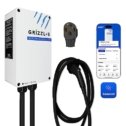
Grizzl-E Smart EV Charger Review Best Budget
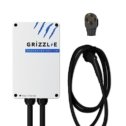
Grizzl-E Classic EV Charger Review
The Classic, one of the Grizzl-E brand’s top sellers, was known as a tough, reliable charger for years, but in the last two years, many people have switched to the Smart models.
The Grizzl-E smart remains at the top of our best-selling EV chargers, not only because it’s a smart charger with advanced features but also because it’s one of the most budget-friendly options on the market. This shift shows that consumers want the strong, weatherproof build of the Classic paired with modern digital capabilities at an affordable price.
In 2026, connectivity is a must-have. Almost all top chargers come with Wi-Fi and Bluetooth, so users can control and monitor charging from their phones.
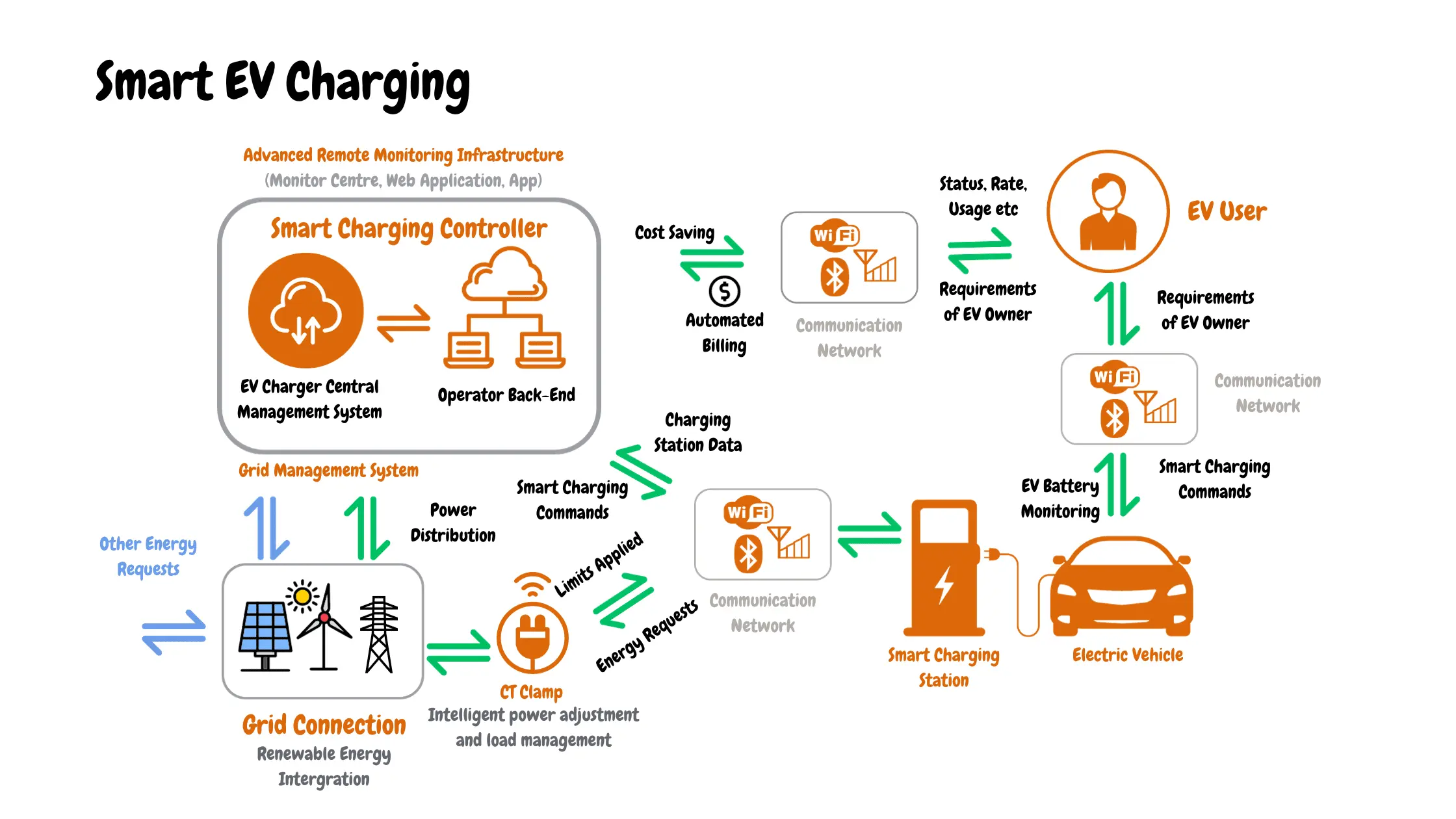
Saving money is the main reason people choose smart chargers. They like ones that work with utility Time-of-Use (ToU) rates to charge when electricity is cheapest.

But there’s a problem: about 30% of users still have trouble with app and cloud connections. So, many want chargers that keep working on their smart schedules even if the Wi-Fi goes out.
Today’s chargers do a lot more than just turn on and off. They work with solar panels, home batteries, and big appliances to manage the whole home’s energy. This helps cut carbon emissions and protects homeowners from high energy prices.
In 2026, advanced smart home EV chargers like Tesla Universal Wall Connector, Wallbox Quasar 2, Emporia V2X, and Enphase Bidirectional Charger are pushing the boundaries of smart energy use. These chargers enable bidirectional EV charging, letting EV batteries both draw power from the grid and send energy back when needed.
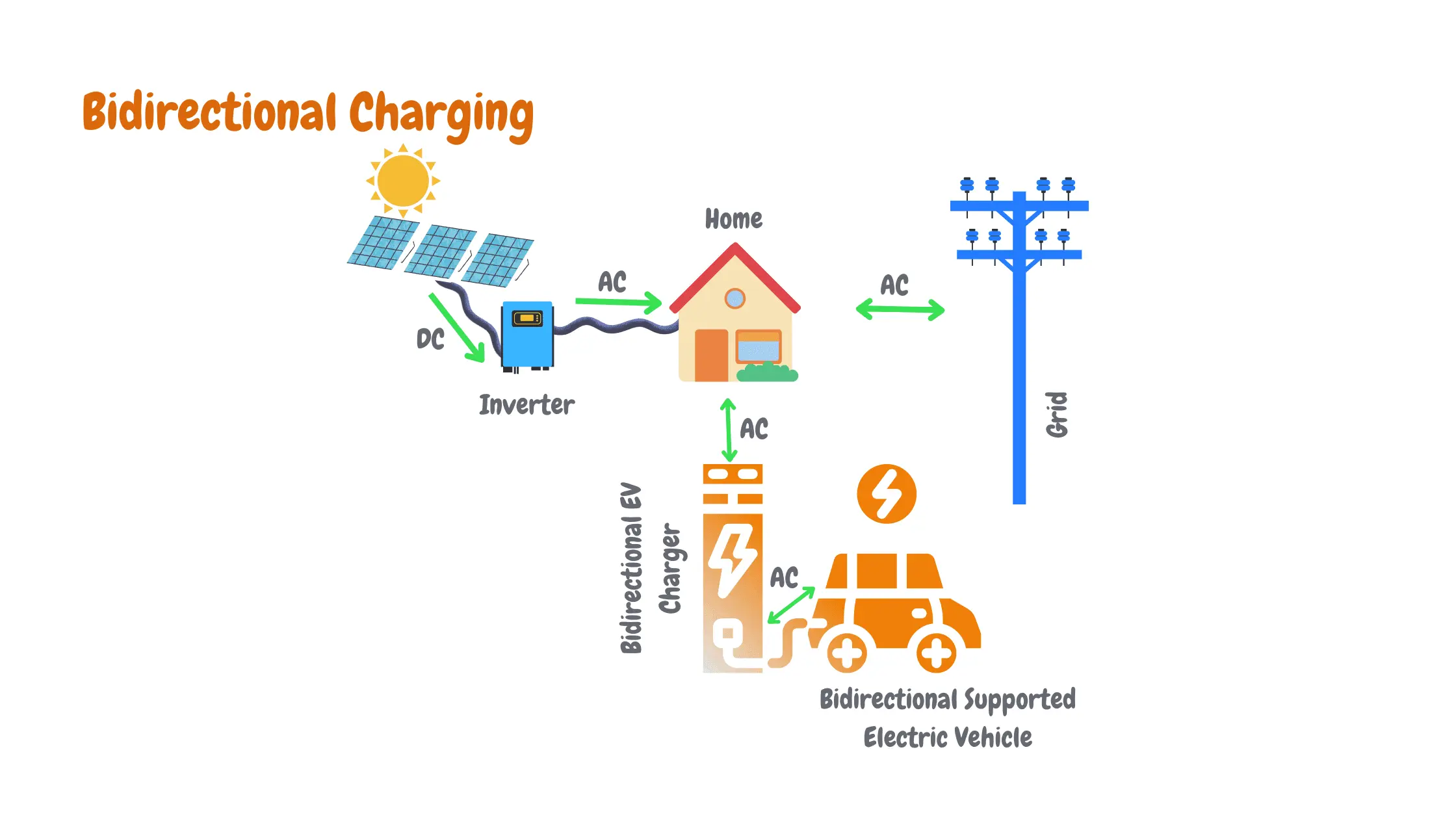
This technology is transforming how fleets and commercial sites manage energy and create new revenue streams. Operators can monetize stored energy by providing services such as demand response and frequency regulation. By turning EVs into energy assets, Vehicle to Grid (V2G) charging helps solve the challenge of making home EV charging profitable.

Notable EVs driving the demand for bidirectional EV chargers in 2026 include the Tesla Cybertruck, Nissan Leaf, Ford F-150 Lightning, GM Ultium series, and Kia EV9.
The Hardwired Primary Plus Portable Secondary Strategy
What we’re seeing in 2026 is a clear behavioral shift rather than just a technical one. Most homeowners installing a primary home EV charger are choosing hardwired EV charger setups because they want fast EV charging, fewer thermal failure points, and long-term electrical stability.
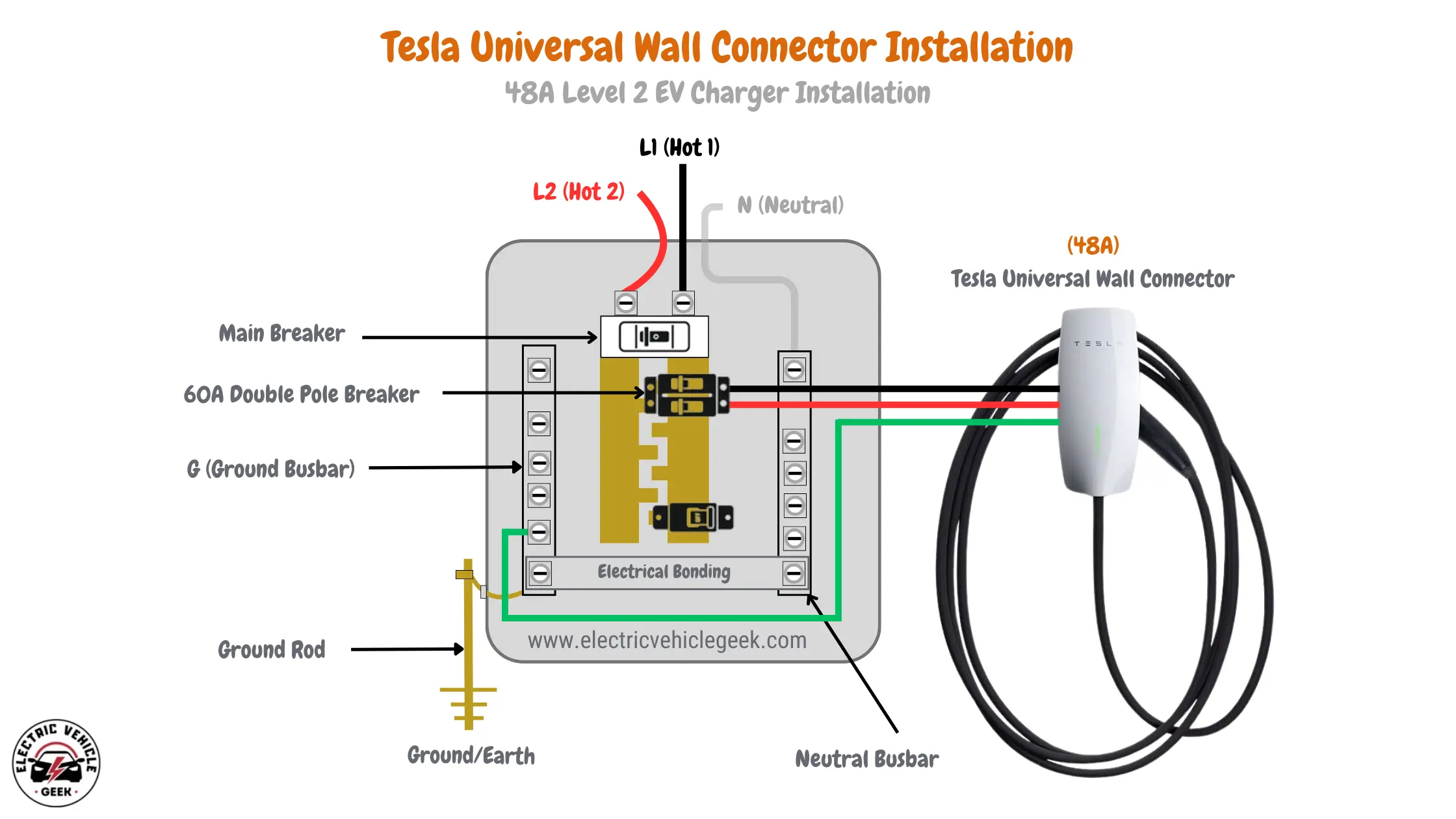
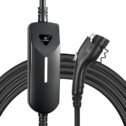
At the same time, EV owners are increasingly pairing that hardwired unit with a high-performance portable charger for flexibility, so they get the best of both worlds.
As portable technology has improved, with better temperature monitoring, automatic amperage adjustment, and app control, these units are no longer viewed as “backup only,” but as strategic secondary chargers. Brands like J+ (J+ Booster 2 Portable EV Charger), Lectron (Lectron Level 1/2 EV charger), and Tesla (Mobile Connector) are popular with renters and frequent travelers who need versatile charging solutions.
Lectron Level 1 / Level 2 EV Charger Review
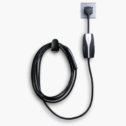
Tesla Mobile Connector Review
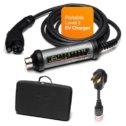
J+ Booster 2 Portable EV Charger Review
For those who want flexibility without full hardwiring, a plug-in Level 2 charger using a NEMA 14-50 outlet is the preferred choice. This approach offers the convenience of a dedicated 240V circuit with higher charging speeds while maintaining the ability to unplug and relocate the charger if needed. The trend isn’t hardwired versus portable anymore; it’s permanent primary infrastructure supported by a mobile, adaptable charging solution.
By 2026, strong partnerships between EV charger manufacturers and certified installers have played a key role in reducing installation costs. Prefabricated wall units with integrated cable management, combined with simplified permitting processes often automated through utility coordination, have helped bring typical installation costs down from $2,000–3,000 to $1,200–1,800 for standard EV charger setups.
These collaborations also ensure that installers are well-trained on the latest products and compliance standards, improving installation quality and customer experience. Increased competition among partnered installers further drives competitive pricing. As a result, home EV charging has become more affordable and accessible, expanding adoption to a wider demographic of EV owners.
Charging Speed Meets Household Electrical Reality
Most households in 2026 are opting for Level 2 chargers delivering between 3.7 kW and 22 kW, with the sweet spot around 7–11 kW for typical installations. While speed remains top-of-mind, users are increasingly concerned with EV charging load management and its impact on their home’s electrical system.
Dynamic Load Balancing has become an absolute must-have feature. This technology prevents the house from tripping its main circuit breaker when the car, oven, and air conditioning are running simultaneously. For homes with existing 200-amp service, this eliminates the need for costly panel upgrades that could add thousands to the installation price.
Increasingly, these load-balancing systems are being enhanced with AI-driven energy management. Rather than simply reacting to overload conditions, AI-enabled chargers analyze real-time household demand, historical usage patterns, and time-of-use utility rates to optimize when and how power is delivered. This allows the system to reduce peak demand spikes, mitigate high electricity costs, and intelligently distribute available capacity across the home.
A good example is the Autel MaxiCharger 80A Level 2 EV Charger, which offers up to 80 amps of fast charging and integrates with Autel’s AI-powered smart app. This app schedules charging around time-of-use utility rates to help lower your monthly bill while boosting station utilization. Users can remotely start or stop sessions, adjust the current from low to high amps to match their home’s capacity, view real-time energy data, and receive alerts if anything looks off, making smart, efficient charging a practical reality.
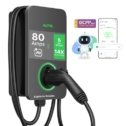
Autel MaxiCharger 80A EV Charger Review Best Smart Features
Consumer expectations have also shifted regarding charge times. Industry reports show that homeowners now prefer solutions capable of providing a meaningful top-up, enough for daily commuting, in under 30 minutes when needed. This has driven demand toward the higher end of the 7–22 kW range, balanced carefully against household capacity constraints.
However, the practical reality remains that most drivers charge overnight, making intelligent power management and cost optimization more valuable in the long term than ultra-fast charging alone.
Multi-Vehicle Households Drive Load Management Innovation
With EV adoption accelerating, many households now have two or more electric vehicles. This has created strong demand for intelligent load management systems that can charge multiple vehicles without requiring massive panel upgrades.
In 2026, Tesla, Wallbox, and Emporia have solidified their positions as the “Big Three” for multi-vehicle load management. While they all solve the same problem, preventing your house from tripping a breaker, they use very different approaches.
Tesla
Tesla offers two primary chargers: the Universal Wall Connector (supporting both NACS and J1772 plugs) and the Standard Wall Connector (NACS only). Both support their Group Power Management (GPM) technology, which allows up to six Wall Connectors to share a single power source. The system designates one charger as the Leader and others as Followers, communicating wirelessly over a local 2.4 GHz mesh network without requiring data wiring between units.
The logic is elegant: if you have a 60A circuit and two cars, the system delivers the full 48A to one vehicle. When a second car plugs in, the Leader instructs both chargers to drop to 24A each. Once one car finishes, the remaining vehicle automatically ramps back up to 48A. You can mix and match units too, pairing a Universal Wall Connector for non-Tesla vehicles or guests with a Standard Wall Connector for your Tesla in the same Power Sharing group.
Tesla is the only brand offering a native, built-in solution without needing extra energy meters unless you want whole-home monitoring via the optional Gateway 3. A significant innovation for 2026 is daisy-chaining support in the Universal Wall Connector, allowing electricians to run one heavy-duty wire to the first charger and then jump to the second, dramatically reducing installation costs.
Emporia
Emporia’s lineup includes the Emporia Pro and Emporia Classic Level 2 chargers, both available with J1772 connectors and NACS adapters.
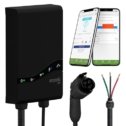
Emporia Pro EV Charger Review

Emporia Level 2 Charger with NACS Review
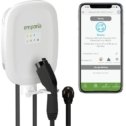
EMPORIA Level 2 EV Charger Review
They’ve become the leader in value-driven dynamic load management, often priced at half the cost of Tesla or Wallbox while offering more detailed energy data. Their approach centers on the Vue Energy Monitor, which sits in your electrical panel with clamp-on sensors acting as the system’s brain.
Emporia uses cloud-based DLM through its PowerSmart technology. The Vue monitor sees real-time load across your entire house, AC, water heater, everything. If home consumption spikes, the Vue sends a signal through the cloud to throttle down the chargers instantly. Their Intelligent Load Sharing works at both circuit level (sharing one breaker between two chargers) and panel level (managing based on whole-home limits).
Wallbox
Wallbox’s flagship products are the Pulsar Max and Pulsar Pro, offered with both NACS and J1772 connector options.
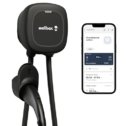
Wallbox Pulsar Plus 40-Amp EV Charger Review
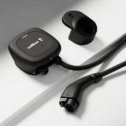
Wallbox Pulsar Plus 48-Amp EV Charger Review
Wallbox Energy Management Solutions are already built into your Pulsar Plus charger and only require the installation of a power meter to activate. Adding the Wallbox Power Meter unlocks enhanced savings and cleaner energy use at home by enabling advanced features like solar charging and dynamic load balancing.
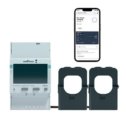
Wallbox Power Meter Review
With the Power Meter installed, you gain access to smart capabilities like solar EV charging through Eco-Smart and dynamic load balancing via Power Boost. These features optimize when and how your vehicle charges, helping you reduce energy costs and maximize the use of clean, renewable power from your home solar system.
This approach combines ease of use with powerful energy management, letting you get the most out of your home charging setup without complex configurations.
The Ecosystem Era
The most significant trend in the 2026 home charging market is the shift from stand-alone chargers to complete EV charging and energy ecosystems. Users are no longer just buying a device; they are investing in a Home Energy Management System (HEMS) that integrates EV charging with solar, storage, and the home’s electrical panel.
EV charger brands like Tesla, Wallbox, Enphase, and Emporia lead the market specifically because they offer all-in-one ecosystems that solve the interoperability nightmare of the past. Previously, users had to juggle separate apps and hardware for their solar panels, home battery, and EV charger, which often didn’t communicate with each other. The unified approach has proven transformative.
The primary driver is financial efficiency through what the industry calls “Zero-Cost Charging.” By using real-time data, integrated systems ensure the car only pulls from the solar array’s excess energy rather than sending it back to the grid for minimal credit. Enphase’s systems, for example, adjust in 1-amp increments based on cloud cover, maximizing solar utilization with remarkable precision.
Another critical benefit is avoiding panel upgrades. Ecosystem brands provide proprietary current transformers and smart meters that allow the charger to see the total home load and dial itself down when the dryer or oven is running. This capability saves users $2,000–$5,000 in electrical panel upgrade costs. Tesla’s built-in GPM, Emporia’s Vue Monitor, and Wallbox’s EM330 each accomplish this differently, but all eliminate the need for expensive electrical work.
The unified support model also eliminates finger-pointing between vendors when software updates cause integration issues. Having a single brand accountable for the entire system, from solar inverter to charger communication, has proven invaluable.
Financing has evolved to support this integrated approach. We’re seeing 15 and 20-year loans specifically structured for whole-home electrification projects that bundle solar, batteries, heat pumps, and EV charging. Some utilities are even offering on-bill financing programs, making it easier for homeowners to manage the upfront investment.
The Leading Ecosystem Players
Tesla
Despite a higher price tag, the Tesla Universal Wall Connector has become a best-seller even among non-Tesla owners in 2026. Its integrated Magic Dock provides native support for both NACS and J1772 connectors, eliminating the need for adapters and making it the ultimate future-proof choice for multi-EV households navigating the ongoing connector transition.
The big draw is Powershare, Tesla’s bidirectional capability. When paired with the Tesla Gateway 3, vehicles like the Cybertruck and newer NACS-enabled EVs can power the home during outages. In multi-vehicle households, this creates a powerful energy hub; the Cybertruck can act as a Powerwall, feeding energy back to power the lights and even charge the other EV during a blackout.

For multi-vehicle setups, Tesla’s Group Power Management supports up to six Wall Connectors sharing a single circuit with wireless communication. The Universal Wall Connector’s support for daisy chaining reduces installation costs dramatically, while the Tesla One App provides unified control over all vehicles and chargers with features like Priority Charging.
This seamless integration and sleekest app experience is why many households choose dual Tesla chargers over mixing brands. Tesla is currently winning the “accessory ecosystem” race as the only unit natively supporting V2H as an integrated standard rather than an add-on.
Emporia
Emporia has carved out a strong position as the value leader, offering dynamic load management at roughly half the cost of Tesla or Wallbox while providing exceptionally detailed energy data. Their Pro and Classic Level 2 chargers pair with the Vue Energy Monitor to create a comprehensive whole-home energy management system.
The Vue monitor provides unprecedented visibility into home energy consumption, tracking everything from your AC to your water heater in real-time. This data-rich approach appeals to homeowners who want granular control and insights into their energy usage. Emporia’s cloud-based PowerSmart technology offers free Intelligent Load Sharing at both circuit and panel levels, making it the most cost-effective entry into smart charging ecosystems.
Enphase
Enphase has become the choice for users who prioritize modular growth and solar maximization. Their IQ EV Charger 2, available with both NACS and J1772 options, is part of the same software stack as their microinverters, allowing the Green Charging mode to achieve remarkable precision.
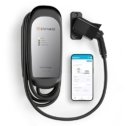
Enphase IQ 50 EV Charger Review
When used for Solar EV charging, users are able to optimize the system adjustments in 1-amp increments based on real-time solar production and cloud cover patterns.
Enphase’s 2026 bidirectional units utilize Gallium Nitride (GaN) technology, making them smaller and more efficient at converting the car’s DC power back into AC for home use. For solar-first households, Enphase delivers the best-in-class integration available today.
Wallbox maintains its market dominance in 2026 by prioritizing cyber-physical reliability over purely cloud-reliant features. The Pulsar Max and Pulsar Pro series have become the “installer’s standard” because they move beyond the limitations of Wi-Fi; by utilizing a hardwired RS485 (Modbus) connection to the Wallbox Power Meter, Wallbox delivers local, millisecond-level response times for its Power Boost and Eco-Smart algorithms, ensuring energy management continues even if the home network goes offline.
For installations where a garage wall isn’t the primary charging point, the Wallbox pedestal ecosystem (including the Eiffel and Onyx models) offers an architectural solution that matches this technical resilience.
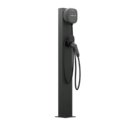
Wallbox Pedestal for EV Charger Review
These pedestals feature an IK10 impact rating and integrated space for electrical protection, allowing for sturdy, weatherproof, free-standing setups. This versatility is particularly valuable for the rising 2026 trend of multi-EV households, as these stands support dual-mounting to charge two vehicles from a single pillar without compromising on aesthetics or safety.
In 3-phase environments, Wallbox excels with its Active Phase Management, which intelligently rotates and balances loads to prevent panel overloads while maximizing charging speeds. While their bidirectional flagship, the Quasar 2, is currently scaling through high-profile V2H pilots with partners like Kia, Wallbox’s reputation remains rooted in predictable precision.
For the 2026 consumer, Wallbox isn’t just a charger; it’s a high-speed energy gatekeeper that guarantees uptime regardless of connectivity or mounting constraints.
The Death of EV Charger Adapter Culture
In 2026, the market has shifted decisively away from EV charger adapters. As the industry consolidates around NACS (North American Charging Standard), users are rejecting the inconvenience and safety risks of carrying separate dongles.
Current data shows that “Integrated Interoperability” is the primary driver for high-end home charger sales. Users would rather pay a $100–$200 premium for a charger that “just works” than deal with an external EV charger adapter that can be lost, stolen, or overheat.
Why Adapter Culture Died
In 2024 and 2025, many non-Tesla owners used NACS-to-J1772 adapters to access Superchargers or home Wall Connectors. However, by 2026, several factors have killed demand for these EV charging accessories.
EV charger adapters are bulky and put extra physical strain on the car’s charging port. High-amperage home charging (48A+) through a third-party adapter has become a common point of failure, and owners of expensive EVs are prioritizing native cable connections to protect their vehicle’s battery and port.
Users now demand a charging experience where they can grab the handle and plug it in with one hand, which the industry calls the “One-Hand Rule.” Fiddling with a locking adapter in the rain or dark is no longer acceptable.
Tesla’s Universal Wall Connector Strategy
Tesla realized early that people hate adapters. The Tesla Universal Wall Connector leads the 2026 market specifically because it hides the adapter. If you have a Tesla, you pull the handle, and it’s a NACS plug. If you have a J1772 car like a 2024 Ford Mach-E, you press a button and the handle pulls out the Magic Dock adapter already attached. Because the adapter stays locked into the charger, users feel like they’re using a native cable rather than a dongle. This has made it the top choice for multi-EV households where one car is a Tesla and the other isn’t.
Competitor Responses
To compete with Tesla and satisfy the no-adapter trend, other major brands have moved away from selling adapters toward selling modular cable units or dual-version products. Wallbox’s Pulsar Pro now offers user-replaceable cables. If a household swaps their Chevy Bolt for a NACS-enabled Rivian, they don’t buy an adapter; they buy a native NACS cable assembly that clicks into the charger body.
Emporia has transitioned from being a J1772-focused company to offering a dedicated Pro NACS version of their charger. Their data shows users are choosing the native NACS version at a 4-to-1 ratio over the J1772 version with an adapter kit. ChargePoint’s Home Flex features a “Dual-Hanger” system, allowing owners to have both a J1772 and an NACS cable attached to the same power unit, serving both types of cars natively without any swapping.
The trend is clear: Native is the new standard. Chargers that require users to carry or attach a separate adapter are seeing significant drops in resale value as the market demands integrated solutions.
The Multi-Family Dwelling Challenge
For the millions living in apartments and condos, the charger requirements are distinctly different from those in single-family homes. In 2026, shared residential charging has become a major focus area with specific technical demands.
User authentication has become essential to prevent power theft in shared garages. RFID cards or app-based access controls are now standard features for apartment installations. More critically, individual billing capabilities are mandatory. Apartment dwellers demand chargers that can automatically report and bill the electricity used to their specific unit or credit card, eliminating disputes over shared electricity costs.
Autel EV chargers stand out in this area by offering robust user authentication systems paired with precise energy metering and billing features. Their solutions support both RFID access and app-based controls, making them well-suited for multi-unit residential settings where secure, fair energy use tracking is a must.
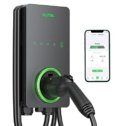
Autel Home Smart Electric Vehicle (EV) Charger Review
Autel MaxiCharger 80A EV Charger Review Best Smart Features
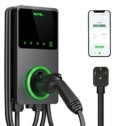
Autel AC Elite In-Body Holster EV Charger Review
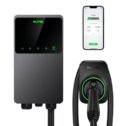
Autel AC Elite Separate Holster EV Charger Review
Load management takes on added complexity in multi-unit buildings, where multiple residents may be charging simultaneously. Building managers are increasingly requiring systems that can allocate available capacity fairly across multiple charging points without overloading the building’s electrical infrastructure.
Some systems now employ queue management, where vehicles are charged sequentially based on reservation times or battery state of charge, ensuring everyone gets their needed charge without expensive infrastructure upgrades.
For example, Wallbox’s myWallbox app lets users set a “Priority” charger when multiple vehicles are plugged in. The prioritized car receives full charging power first, while the other waits in a paused queue. This feature is perfect for households where one driver needs a full charge before heading out early.
Design Gets Serious Attention
By 2026, consumers have clearly moved away from plain, industrial-looking EV chargers toward sleek, lifestyle-focused designs that fit better with modern homes. People want chargers that look good, are easy to use, and stand up to daily wear and weather.
We’ve seen consumers prefer fingerprint-resistant matte finishes and architectural textures like stone or brushed metal instead of glossy plastics. Hidden, motion-activated status lights keep chargers looking clean and minimalist until you approach them. Slimmer chargers, often less than four inches thick, are favored because they fit easily into tight garage spaces without getting in the way.
Durability remains a top concern. Chargers with NEMA 4-rated enclosures, such as the Grizzl-E smart EV charger, are popular because they offer full weatherproofing and dust protection, making them reliable for outdoor use without sacrificing style. While many home EV chargers carry a NEMA 3R rating (resistant to rain and snow), NEMA 4 units are completely dust-tight and can withstand direct hose-down pressure, making them the superior choice for coastal or high-sediment areas.
Cable management is another big factor. Consumers increasingly choose chargers like Autel’s MaxiCharger lineup, which includes built-in docks or holsters to neatly store the 25-foot cables when not in use. This helps keep garages and driveways tidy and reduces tripping hazards. Magnetic one-handed docking and LED-lit connector handles for nighttime use are also highly appreciated features. The braided, high-flex cables that stay soft in cold weather have become a customer favorite.
Sustainability has grown in importance. More buyers prefer chargers made with recycled ocean plastics and bio-resins. Personalization options like modular faceplates that can be swapped to match home colors or personal tastes have also become sought-after features, turning chargers into stylish home accessories rather than just functional devices.
In 2026, consumers increasingly prefer home EV chargers that come with their own dedicated mobile applications rather than relying on third-party OCPP-based apps. While OCPP (Open Charge Point Protocol) promotes interoperability, many users experience connectivity problems, confusing interfaces, and delayed updates with these generic apps.
For example, after EvoCharge transferred users from their original EvoCharge app to the Epic Charging software, customers reported issues including unstable Wi-Fi connections, app crashes, confusing navigation, and difficulties accessing charger settings via the OCPP protocol. These challenges have fueled a growing preference for chargers with proprietary software, which delivers more reliable performance, clearer controls, and smoother integration tailored specifically to the hardware.
Security
In 2026, home EV chargers have evolved into sophisticated bi-directional energy hubs that do much more than just charge vehicles. They now communicate, store, and exchange critical telemetry and billing data with Home Energy Management Systems (HEMS) and utility networks. This expanded role has elevated chargers to key cyber-physical nodes within the decentralized energy ecosystem.
Security concerns have accordingly shifted from simple physical locks to comprehensive defenses against high-stakes EV charger cyber-physical attacks. A breach could enable unauthorized EV charger access, vehicle access, expose sensitive EV charging data, personally identifiable information (PII), or even facilitate orchestrated load attacks designed to destabilize local grids.
To counter these threats, modern charging infrastructure adheres to a Zero Trust architecture framework. Mandatory protocols like ISO 15118-20 enforce encrypted “Plug & Charge” handshakes, while hardware-enforced Secure Boot protects firmware integrity. Additionally, AI-powered anomaly detection provides real-time threat mitigation. These layered protections ensure that EV chargers remain resilient and secure as critical components of the home’s energy and data networks.
Authentication and Access Control
High-end chargers now use the ISO 15118 standard for encrypted, certificate-based authentication. The car and charger perform a secure “handshake,” eliminating the need for apps or cards. Premium charger apps from Tesla and Wallbox integrate FaceID and Fingerprint 2FA (Two-Factor Authentication) to prevent unauthorized remote activation of the charger.
For shared driveways and multi-unit dwellings, RFID and NFC access control have become standardized. Users employ encrypted RFID key fobs or Apple/Google Wallet NFC passes to unlock the cable. Electromechanical cable locks inside the charger head permanently grip the cable until the owner authenticates, preventing unplugging by neighbors or thieves.
Cybersecurity Measures
EV charger security is critical because your equipment, energy supply, and sensitive data are vulnerable without proper protection. In the U.S., EV chargers and cables have increasingly become targets of theft, vandalism, and cyber intrusions. In 2026, savvy consumers demand home chargers equipped with robust security features, including Wi-Fi connectivity, intuitive app controls, smart scheduling, and compliance with stringent certifications such as UL 2594, ETL, and FCC.
High-end chargers now incorporate AI-driven anomaly detection that continuously monitors for irregular power consumption or unauthorized network activity, automatically isolating the charger if a cyber threat is suspected. Coupled with secure Over-the-Air (OTA) firmware updates featuring mandatory digital signatures, these measures prevent firmware tampering, protect against bricking attacks, and safeguard the charger’s role as a secure node within the home network.
In 2026, Tesla leads in proactive security by delivering frequent silent Tesla Wall Connector firmware updates that quickly patch vulnerabilities, even those revealed at events like Pwn2Own. While not a full network firewall, its signed firmware and anti-downgrade protections keep the charger a hardened, evolving endpoint. This digital resilience sets Tesla apart from most “dumb” chargers.
Physical Security and Privacy
The rise of cut-resistant sleeves for tethered cables and impact-rated (IK10) casings addresses theft of copper and physical tampering. Anti-vandalism hardware has become standard for outdoor installations.
Increased demand exists for home EV chargers that can verify users via local RFID or Bluetooth, even when home internet is down, ensuring owners aren’t locked out of their own power. There’s also a shift toward privacy-first data logging, with local data storage on the device rather than cloud-based systems, keeping homeowners’ charging patterns private from third-party data brokers.
Offline authentication capabilities ensure that even during internet outages, legitimate users maintain access to their charging infrastructure, a critical feature as chargers become essential home energy assets.
Looking Ahead
The home EV charging industry is clearly in the midst of a major transformation. As smart chargers become the standard, consumers demand devices that do more than just deliver power; they want integrated, secure, and intelligent systems that optimize costs, support sustainability, and fit seamlessly into modern lifestyles.
At the same time, evolving household needs, from multi-vehicle setups to load management and grid interaction, are pushing innovation across hardware, software, and ecosystem integration. Security and privacy have also risen to the forefront, requiring robust protections against both physical tampering and cyber threats.
Looking ahead, 2026 presents exciting opportunities and challenges for manufacturers, utilities, and end users alike. Success will hinge on smart deployment, interoperability, and strategic innovation that can adapt to fast-moving market shifts and complex energy landscapes. Those who can combine rugged durability with cutting-edge digital capabilities will lead the way in this rapidly evolving space.

James Ndungu is a certified EV charger installer with over five years of experience in EVSE selection, permitting, and installation. He holds advanced credentials, including certification from the Electric Vehicle Infrastructure Training Program (EVITP) and specialized training in EV charging equipment and installation, as well as diplomas in EV Technology and Engineering Fundamentals of EVs. Since 2021, James has tested dozens of EV chargers and accessories, sharing expert insights into the latest EV charging technologies.