Tesla Gen 3 Mobile Connector Review

The Tesla Gen 3 Mobile Connector is the latest Tesla mobile charger, delivering up to 7.6 kW (32 amps at 240V) via a NEMA 14-50 or 6-50 adapter, which is roughly 30 miles of range per hour. It also works with standard 120V outlets at 1.3 kW. Offers PowerShare support on compatible vehicles like the Cybertruck and Model Y Performance, enabling basic bi-directional charging, including Vehicle-to-Load (V2L) and Vehicle-to-Vehicle (V2V), making it the most capable portable Tesla charger yet.

The Tesla Gen 3 Mobile Connector is Tesla’s latest NACS portable charging solution, and it’s a notable upgrade over the Tesla Gen 1 and Gen 2 Mobile Connectors. Included with select new Tesla vehicles (including our 2026 Tesla Model Y Juniper), it can also be purchased separately from the Tesla Shop. And is it a cost-effective choice compared to the more robust Tesla Wall Connector or the Universal Wall Connector?
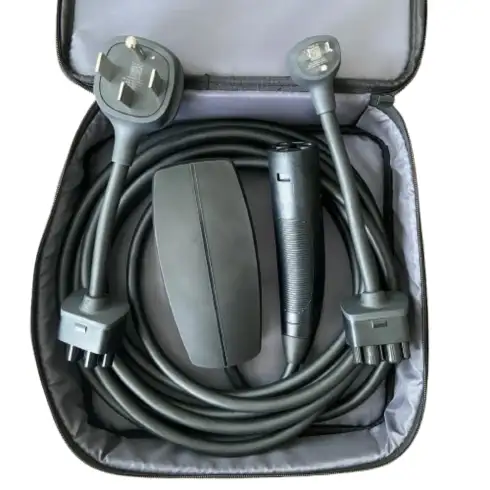
The Tesla Gen 3 Mobile Connector retains the slim, minimalist design of the previous generation of Tesla Mobile Connectors but introduces subtle refinements that give it a more modern, polished appearance. The unit remains compact and highly portable, making it easy to store in a vehicle trunk or carry between charging locations.
One of the most noticeable design updates is the redesigned North American Charging Standard (NACS) connector plug, which now features a cleaner, more integrated look, similar to that of destination chargers.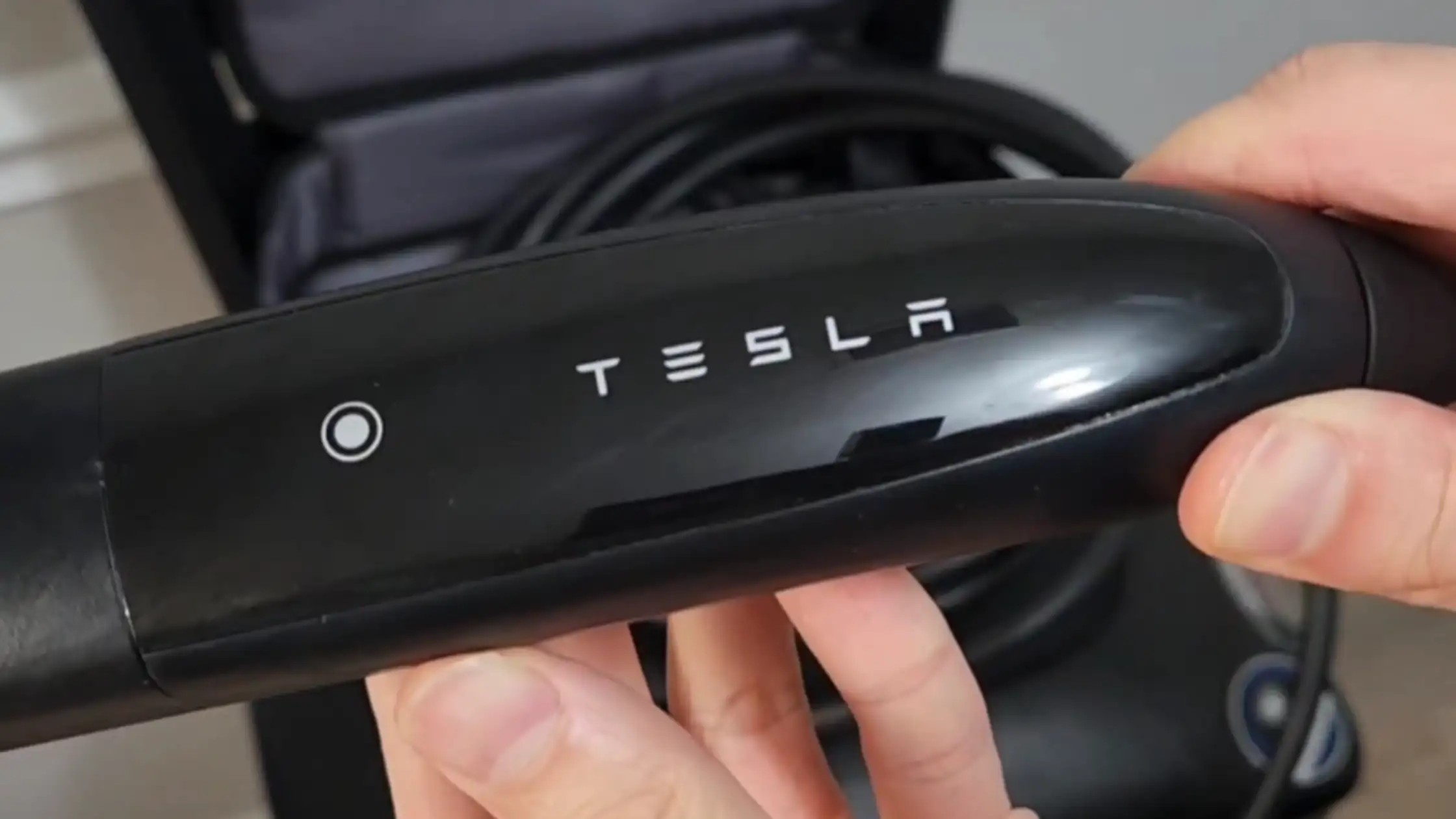
The Tesla Gen 3 Mobile Connector housing has also been updated with a sculpted center groove running along the body, incorporating an LED status light that provides clear visual charging feedback at a glance. This small but thoughtful change improves usability, particularly in low-light environments where charging status needs to be confirmed quickly.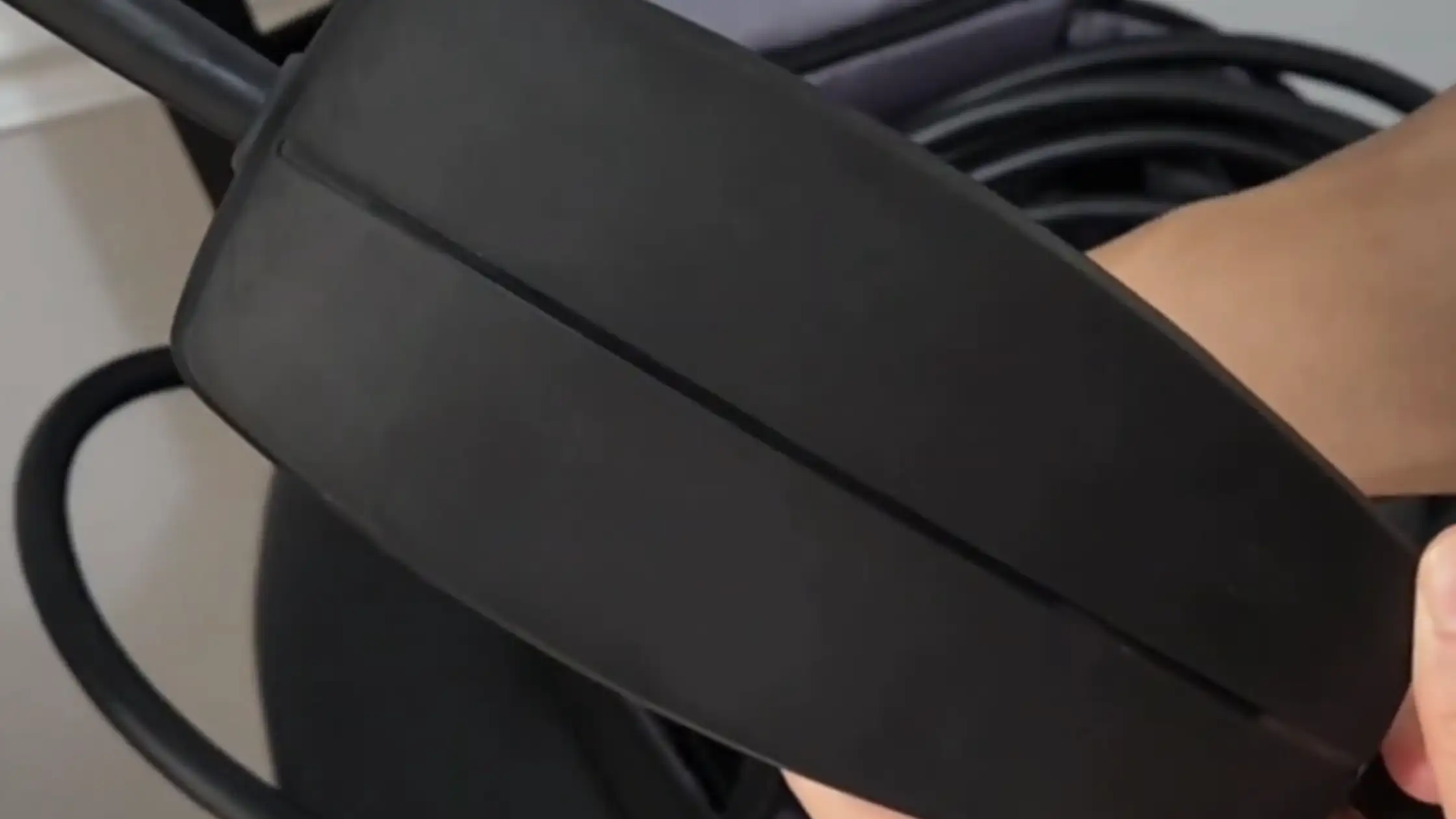
While the overall form factor remains familiar, these refinements help the Gen 3 model feel more contemporary and better aligned with Tesla’s brand charging ecosystem. The key question, however, is how well it performs as a daily charging solution, and whether it can realistically serve as a practical alternative to the Tesla Wall Connector for home charging.
What’s in the Box
The standard bundle includes everything you need to get started:
- Mobile Connector Controller with 20 ft cable
- NEMA 5-15 Adapter (standard 120V household outlet)
- NEMA 14-50 Adapter (240V industrial-grade outlet)
- Storage Bag for transport
The 20-foot cable length is generous enough for most garage setups, and the included storage bag keeps everything organized when you’re on the road.
Charging Performance
The Tesla Mobile Connector Gen 3 supports both Level 1 and Level 2 charging, automatically adjusting current output based on the attached adapter:
- NEMA 5-15 (120V / 12A): Delivers approximately 1.7 kW, adding around 3 miles of range per hour. Best suited for overnight top-ups when daily mileage is low.
- NEMA 14-50 (240V / 32A): Delivers up to 7.7 kW, adding approximately 30 miles of range per hour for Model 3 and Model Y owners. This is the sweet spot for most daily drivers.
While 7.7 kW is a respectable output for a portable charger, it delivers roughly two-thirds the charging power of the Tesla Wall Connector, which can supply up to 11.5 kW at 48 amps on a properly sized circuit. In real-world use, that difference becomes noticeable for drivers with higher daily mileage or larger-capacity EV battery packs, where the additional charging headroom can significantly reduce overnight charging times and improve overall replenishment efficiency.
Powershare: Vehicle-to-Load (V2L) or Vehicle-to-Vehicle (V2V) Capability
One of the biggest upgrades in the Tesla Mobile Connector Gen 3 is built-in PowerShare support, including Vehicle-to-Load (V2L) and Vehicle-to-Vehicle (V2V) capability.
When paired with a compatible vehicle like the Cybertruck or Model Y Performance, along with a special Tesla Outlet Adapter, the Gen 3 can draw up to 9.6 kW from your vehicle’s battery to run 120V devices Vehicle-to-Load (V2L). That covers everything from power tools on a job site to appliances during a power outage, up to 20A or 2.4 kW.
With V2L support, the Tesla Gen 3 Mobile Charger can turn your V2L-compatible EV into a portable power source. This is useful for camping, road trips, power outages, outdoor events, and job sites, where you may need to run tools or equipment. Instead of relying on a loud fuel generator, drivers can use stored energy from their V2L-compatible vehicle more cleanly and quietly.
If Vehicle-to-Load (V2L) matters to you but you’re not ready for a permanent Tesla Universal Wall Connector setup, the Gen 3 Mobile Charger is the smart pick. It supports both V2L and V2V (Vehicle-to-Vehicle) charging, all in a portable, plug-and-play package that requires zero installation.

The Tesla Universal Wall Connector supports bidirectional charging and offers V2H (Vehicle-to-Home) capability, which can power your entire home during an outage. It also charges at higher amperages. But it requires professional hardwired installation and comes at a significantly higher total cost.
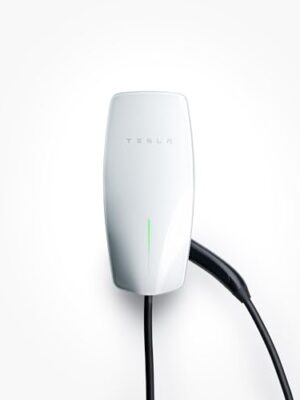
For Tesla owners who need basic bi-directional flexibility, such as Vehicle-to-Load (V2L) or Vehicle-to-Vehicle (V2V) capability, along with reliable portable charging for travel or emergency backup, the Tesla Mobile Connector Gen 3 earns a practical place in the charging lineup. Its compact design and mobile-first architecture make it a dependable solution for drivers who prioritize portability and essential power-sharing functionality over maximum charging output.
However, for drivers seeking faster Level 2 charging up to 11.5 kW and a broader range of advanced bi-directional energy features (including Vehicle-to-Load (V2L), Vehicle-to-Vehicle (V2V), Vehicle-to-Grid (V2G), and vehicle-to-home or vehicle-to-building energy support (V2H/V2B)), a dedicated wall unit is the more capable long-term solution. In that case, the Tesla Universal Wall Connector is the better recommendation, offering higher charging power, integrated load management, and a more robust platform for home energy integration and multi-vehicle charging environments.
We recommend using manufacturer-approved adapters and cables with the Tesla Gen 3 Mobile Connector. These accessories include built-in safety protections designed to work with Vehicle-to-Load (V2L) systems.
Using uncertified or makeshift third-party bi-directional adapters with the Tesla Gen 3 Mobile Connector for Vehicle-to-Load (V2L) can create serious safety risks. Some poorly designed third-party bi-directional adapters may bypass thermal sensors, lack proper electrical isolation, or cause grounding problems.
This can lead to dangerous backfeeding, device trip-outs, or damage to the vehicle’s onboard charger. It may also void the vehicle warranty or create insurance issues.
For safe operation, we recommend using branded accessories, such as Tesla outlet adapters or trusted brands that carry recognized national safety certifications. This helps protect the vehicle, connected devices, and the electrical system.
Build Quality and Durability
The Tesla Gen 3 Mobile Connector features the same NACS (J3400) handle as Tesla’s Wall Connector, with a premium tactile feel and a familiar charge-port release button. The slim redesign is noticeably more pocket-friendly than older versions, and the unit carries a NEMA 3R weather-resistant rating, making it suitable for both indoor and outdoor use.
It operates across a wide temperature range of -22°F to +122°F (-30°C to +50°C), so it won’t be sidelined by extreme weather.
That said, the Tesla Gen 3 Mobile Charger’s cable is thinner and more flexible than the Wall Connector’s heavy-duty cord, which reflects its design priority: portability over sustained daily high-amperage use. For occasional and travel charging, it’s more than adequate. As a sole home charger used multiple times daily, it may show wear sooner.
EV Charging Safety Features
Tesla has equipped the Tesla Mobile Connector Gen 3 with a comprehensive safety suite:
- Built-in GFCI (CCID): Ground fault circuit interrupter protection
- Overtemperature monitoring: Automatically reduces charging current if excessive heat is detected
- Overcurrent, overvoltage, and undervoltage protection
- Ground integrity monitoring
- LED indicator strip: Green for normal operation, red to signal fault codes
These protections are consistent with those offered by Tesla’s Wall Connector, which is reassuring for a portable unit that will frequently be plugged into a variety of outlets.
Smart Features
The Tesla Gen 3 Mobile Connector adds connectivity capabilities that previous generations lacked. Some configurations include Wi-Fi support for Tesla Connector firmware updates. However, most smart features, including time-of-use scheduling and solar integration, are managed through the Tesla vehicle app or the car’s interface rather than a dedicated charger app.
This approach keeps the hardware simple, but it does mean non-Tesla NACS vehicle owners will have a limited experience. Without a Tesla vehicle to push firmware updates, the Tesla Gen 3 Mobile Charger may not receive bug fixes or new features.
Non-Tesla owners should consider purpose-built NACS smart chargers (such as the Lectron Level 1/2 Tesla/NACS Charger (App Version)), which offer native app connectivity and broader compatibility.
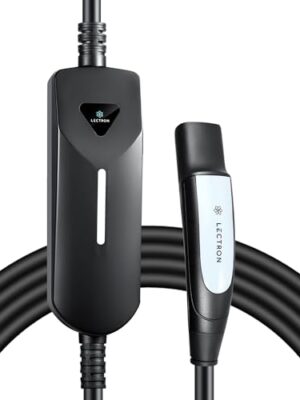
Tesla Gen 3 Mobile Connector Versus Other NACS Chargers
The following chart compares key specifications (charging power, weight, operating temperature range, cable length, and warranty) of the Tesla Gen 3 Mobile Connector with other EV chargers using the same NACS connector type (direct competitors).
Installation Considerations
The Tesla Mobile Connector Gen 3’s plug-and-play design is its biggest selling point for renters or those unwilling to commit to permanent electrical work. However, it’s worth being honest about real-world costs:
- If you don’t already have a NEMA 14-50 outlet, you’ll need an electrician to install one
- The cost of that installation is comparable to hardwiring a Tesla Wall Connector
- Once you’ve paid for a dedicated 240V circuit, the cost advantage of the Tesla Gen 3 Mobile Connector largely disappears
In short, if you’re already paying for electrical work, upgrading to the Wall Connector typically makes more financial sense.
Who Is the Tesla Gen 3 Mobile Connector Best For?
The Tesla Gen 3 Mobile Charger is a strong fit for:
- Tesla owners who need a portable charger for travel or secondary charging locations
- Renters who cannot install permanent EV charging infrastructure
- Low-mileage drivers who can comfortably recharge overnight on a 120V outlet
- Cybertruck, Model Y Juniper, and compatible vehicle owners who want to leverage Powershare for V2L applications
- Multi-EV households – Powershare enables a compatible Tesla to act as a mobile power source, meaning a second EV can be topped up directly from the vehicle without needing a second dedicated charger installed
- Backup/emergency charger scenarios in case a primary home charger fails
For heavy daily users or anyone driving more than 40–50 miles per day, the Wall Connector’s higher speeds and more durable cable make it the better long-term investment.
Alternatives: Better Options for Non-Tesla & Non-Powershare Users
Let’s be clear – for Tesla owners, the Tesla Gen 3 Mobile Connector is the best portable charging option, period. It’s purpose-built for Tesla vehicles, deeply integrated with the Tesla ecosystem, and the only portable charger that unlocks Powershare bi-directional capability on compatible models.
However, if you don’t own a Tesla, don’t need Powershare, or prioritize smart app-based charging controls, the Tesla Gen 3 Mobile Charger may leave you underwhelmed. Here’s why:
- App & Smart Feature Limitations: The Tesla Mobile Connector Gen 3 relies on the Tesla vehicle app for scheduling and controls. Non-Tesla NACS vehicle owners get little to no smart charging functionality out of the box.
- Firmware Update Dependency: Without a Tesla vehicle, the charger cannot receive over-the-air firmware updates, meaning bug fixes and new features are out of reach.
- Compatibility Issues: The Tesla NACS communication protocol can cause handshake delays or failures with some non-Tesla EVs, even those equipped with a NACS port.
If you have a NACS-equipped non-Tesla (or a J1772 vehicle using a Tesla-to-J1772 adapter) and are looking for a mobile charger with real smart features, you’re better off with a universal or native NACS smart charger. We recommend checking our in-depth NACS charger reviews for options that offer better compatibility, app integration, and long-term usability for non-Tesla vehicles.
Our top recommendation for non-Tesla NACS owners is the Lectron Portable NACS Charger (App Version), our number one-rated non-Tesla brand NACS mobile charger, purpose-built for the evolving post-Tesla NACS market. It supports both Level 1 and Level 2 charging and includes Bluetooth/Wi-Fi connectivity via the Lectron app, giving you full control to adjust amperage, monitor real-time charging data, and manage your sessions directly from your smartphone. That kind of native smart integration is simply not available with the Tesla Gen 3 Mobile Connector for non-Tesla owners.
Tesla Charger Comparison: Universal Wall Connector vs. Gen 3 Wall Connector vs. Gen 3 Mobile Connector
The Tesla Universal Wall Connector tops the lineup with a 9.3 rating. It delivers 48A Level 2 charging, advanced smart features, Wi-Fi and app control, OCPP support, and works with both J1772 and NACS connectors. This makes it ideal for households that may charge non-Tesla EVs.
The Tesla Gen 3 Wall Connector matches the 48A power and basic smart features but only supports NACS. It’s perfect for Tesla-only households and earns a slightly lower rating of 8.9. Both wall connectors offer a 24 ft cable, hardwired installation, and a 4-year warranty.
The Tesla Mobile Connector takes a different approach. Rated 8.9, it prioritizes portability over full performance. It supports Level 1 and Level 2 charging (12A–32A) with NEMA 5-15 and 14-50 adapters. It’s great for backup or travel charging, offers basic smart features including PowerShare, and has a 20ft cable length. It has a 1-year warranty, or 4 Years (with vehicle).
In summary, the Universal Wall Connector is the most versatile and top-rated, the Gen 3 Wall Connector is the clean Tesla-native choice, and the Mobile Connector is a portable fallback.
Here is a more detailed comparison of features and specifications
- Overview
- Review
- Charging Performance
- Electrical & Installation
- Communication & Smart Features
- Safety & Protection
- Durability & Environment
- Interface & Access
- Physical Specifications
- Compliance & Standards
- Warranty Information


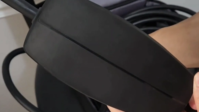 The Tesla Mobile Connector Gen 3 is our #1 rated NACS mobile charger here at Electric Vehicle Geek. It's a serious upgrade over its predecessor, bi-directional charging (Vehicle-to-Load (V2L), Vehicle-to-Vehicle (V2V), Vehicle-to-Grid (V2G), PowerShare support, and a higher charging capacity make it the most capable portable Tesla charger yet. It's the ideal pick for owners who want flexible, on-the-go charging without committing to a permanent wall installation.
- Bi-directional charging (V2L & V2V)
- PowerShare support
- Portable and plug-and-play
- Higher charging capacity than previous gen
- No installation required
- No V2H & V2G support
- Lower amperage than Universal Wall Connector
- Requires compatible vehicle for bi-directional features
Specification: Tesla Gen 3 Mobile Connector Review
| Charging Performance | ||||||||||||||||||||||
|---|---|---|---|---|---|---|---|---|---|---|---|---|---|---|---|---|---|---|---|---|---|---|
| ||||||||||||||||||||||
| Electrical & Installation | ||||||||||||||||||||||
| ||||||||||||||||||||||
| Communication & Smart Features | ||||||||||||||||||||||
| ||||||||||||||||||||||
| Safety & Protection | ||||||||||||||||||||||
| ||||||||||||||||||||||
| Durability & Environment | ||||||||||||||||||||||
| ||||||||||||||||||||||
| Interface & Access | ||||||||||||||||||||||
| ||||||||||||||||||||||
| Physical Specifications | ||||||||||||||||||||||
| ||||||||||||||||||||||
| Compliance & Standards | ||||||||||||||||||||||
| ||||||||||||||||||||||
| Warranty Information | ||||||||||||||||||||||
| ||||||||||||||||||||||
There are no reviews yet.