Supported by you via insider access, and when you purchase through links on our site, we may earn an affiliate commission. See our Affiliate Disclosure.
Buying a home EV charger is a big deal. You’re going to plug it in, leave it outside in the rain and cold, and expect it to work every single morning. So when something goes wrong, and sometimes it does, the warranty is what stands between you and an expensive repair bill.
Warranties vary wildly, from just one year on some budget models all the way up to five years on premium brands. That difference matters a lot more than most buyers realize.
This guide breaks down how EV charger warranties work, what to look for, and which brands we found to have the best coverage.
What Is an EV Charger Warranty, Anyway?
A warranty is a promise from the manufacturer. It says: “If this product breaks down due to a defect, we’ll fix it or replace it.” For EV chargers, that usually means coverage against electrical failures, hardware malfunctions, and defective parts.
Most EV charger warranties are called “limited warranties.” That word “limited” is important. It means the coverage has boundaries, certain things are included, and certain things are not. More on that in a moment.
Think of the warranty as your safety net. The longer and broader it is, the better protected your investment.
What Warranties Typically Cover
Manufacturing defects
Electrical component failures under normal use
Damaged or faulty cables (in most cases)
Smart features or Wi-Fi connectivity failures
What Warranties Typically Do NOT Cover
Physical damage from accidents or improper installation
Weather damage if the charger wasn’t rated for outdoor use
Normal wear and tear over time
Damage caused by power surges not covered by a surge protector
How Long Should an EV Charger Warranty Be?
The short answer: at least three years. A home EV charger is not a small purchase, most cost between $200 and $800. You want enough time to find out if there are any hidden problems.
Here’s a simple way to think about warranty length:
1 Year
Minimal coverage. You might see this on budget or entry-level chargers. It’s better than nothing, but it won’t protect you for long.
2 Years
Below average. Some solid brands offer two years, but we’d still recommend pushing for more.
3 Years
The industry standard. This is what most well-known brands offer, and it’s a solid baseline.
4 Years
Above average. Tesla stands out here, offering four years on their Wall Connectors.
5 Years
Best in class. A handful of brands offer five-year warranties, which signals real confidence in their product.
Pro Tip: If a brand won’t clearly publish its warranty length, that’s a red flag. Confident manufacturers don’t hide their coverage.
What We Found: Warranties Across Home EV Chargers
After reviewing 65+ Home EV chargers, here’s how the warranty landscape breaks down by brand.
5-Year Warranties: The Best of the Best
Only a handful of brands offer five-year warranty coverage, but they’re worth knowing about.
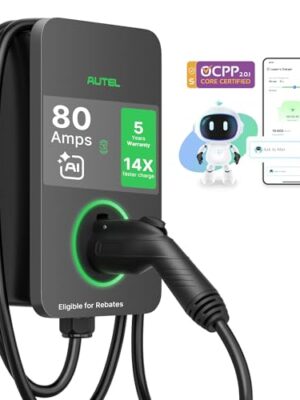
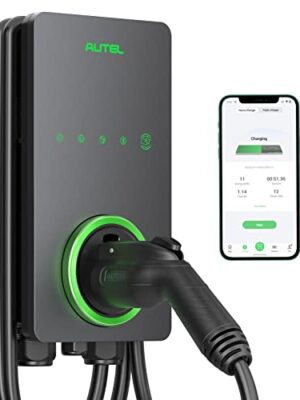
Autel MaxiCharger 80A EV charger delivers 19.2 kW smart EV charging for home, business, or commercial use with OCPP 2.0.1, Integrated Cloud with AI, and Wi-Fi/4G/Wi-SUN connectivity.
As an EV charger reviewer, I was impressed by the Autel MaxiCharger 80A’s power, smart EV charging capabilities for business, workplace and commercial installations, future-proof protocols, and rock-solid reliability. It delivers blazing-fast 19.2 kW charging, supports OCPP 2.0 and ISO 15118, and feels commercial-grade throughout.
Features
9.5
Real World Usage
9.5
Materials
9
Durability
9
Craftsmanship
9
Design
9
Monetary Value
9
Product Value
9
Brand Reputation
9
Expert Valuation
9
PROS:
80A / 19.2 kW ultra-fast Level 2 charging
OCPP 2.0 & ISO 15118 smart protocols
Rugged, pedestal/kiosk-ready design
Scalable for commercial or fleet use
Dynamic load management support
CONS:
More expensive than competing 80 Amp EV chargers like the Grizzl-E Ultimate 80 Amp EV charger.
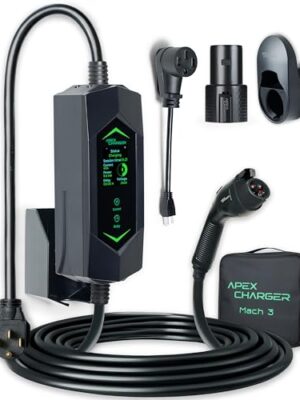
The ApexCharger MACH 3 EV Charger is a portable Level 1/2 dual-connector charger that supports both J1772 and NACS connectors. It features Wi-Fi app control, IP67 weather resistance, and pulsing LED indicators, making it a solid on-the-go and backup charging option.
The ApexCharger MACH 3 EV Charger is the best option for EV drivers who want portability without sacrificing speed or smart features. With up to 40 Amps, dual-voltage input, Tesla compatibility, and a rugged, IP67-rated build, it beats most portable chargers on the market - especially in power and feature depth.While the ApexCharger MACH 2 is still the brand’s top-tier home unit, and the MACH 1 is the budget-friendly wall charger, the MACH 3 fills a different and crucial role: on-the-go charging wherever you need it, without calling an electrician.If you need a travel-ready backup or your lifestyle includes frequent road trips, the ApexCharger MACH 3 is one of the smartest, most reliable portable EV chargers available today.
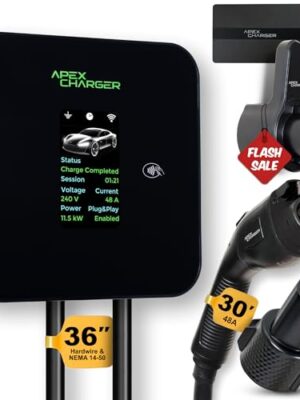
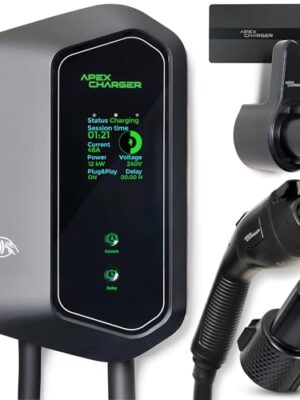
The ApexCharger MACH 2 EV Charger is a premium dual-connector 48A Level 2 charger featuring a 360° LED ring, a 5.7" smart display, Wi-Fi, app integration, and a rugged IP67-rated 30ft cable.
The ApexCharger MACH 2 blends fast 48A charging with sleek design and intuitive smart features. Its vivid display and LED ring elevate usability, though sunlight glare may affect visibility. Ideal for multi-EV households, it’s a solid pick, if you don’t need full Tesla app integration or a tight budget solution.
Features
8.7
Real World Usage
9
Materials
8.5
Durability
8.5
Craftsmanship
8.5
Design
8.5
Monetary Value
8.5
Product Value
8.7
Brand Reputation
8.5
Expert Valuation
8.5
PROS:
Fast 48A charging supports quicker EV top-ups.
Dual installation options: NEMA 14-50 plug or hardwired.
Bright 5" display and 360° LED ring enhance user feedback.
RFID access control adds security.
Compatible with both J1772 and Tesla (via adapter).
The ApexCharger MACH 1 EV Charger is a 48-amp Level 2 dual-connector charger supporting both J1772 and NACS EV charging. It features built-in Wi-Fi and Bluetooth, smart app control, and supports both NEMA 14-50 plug-in and hardwired installation.
The ApexCharger MACH 1 EV Charger is a high-performance 240V Level 2 EV charger that hits all the marks: fast charging, full EV compatibility, robust build quality, and intuitive smart features. Its dual-installation flexibility, built-in access control, and included Tesla adapter make it one of the most complete charging solutions on the market today.If you want a charger that’s built to grow with your EV ownership—whether for your first EV or your third—the MACH 1 delivers. For its price point and feature set, it’s one of the best 48 Amp EV chargers available in the market today.
Features
8.5
Real World Usage
9
Materials
8.5
Durability
8.5
Craftsmanship
8.5
Design
8.5
Monetary Value
8.5
Product Value
8.7
Brand Reputation
8.5
Expert Valuation
8.5
PROS:
Fast 48A Level 2 charging (11.52 kW)
Compatible with all EVs, including Tesla (NACS adapter included)
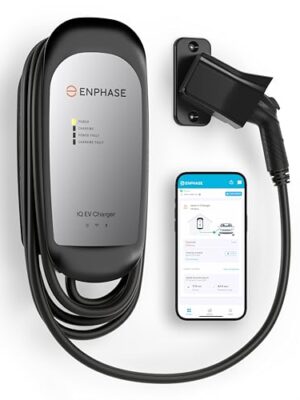
The Enphase IQ 50 40 Amp Smart EV Charger delivers 9.6kW of power at 240V with a hardwired installation and a 25ft cable. Featuring Wi-Fi connectivity, a ruggedized J1772 connector, and safety certifications, it ensures reliable, efficient charging. Backed by a 5-year warranty, it's ideal for home use and future-proofing.
The Enphase IQ 50 EV charger is our favourite premium home EV charger with an overall score of 8.3. With its impressive combination of power, smart features, and a DIY-friendly plug-in option, the Enphase IQ 50 earns its place as a top contender for the best home EV charger. If you're looking for a powerful, user-friendly charger with advanced smart capabilities and a simple installation process, the Enphase IQ 50 is perfect for your EV charging needs.
Features
9
Real World Usage
8.5
Materials
8.5
Durability
8.3
Craftsmanship
8.5
Design
8
Monetary Value
7.5
Product Value
9
Brand Reputation
8
Expert Valuation
8
PROS:
Its compact size saves space in your garage and complements your home aesthetics.
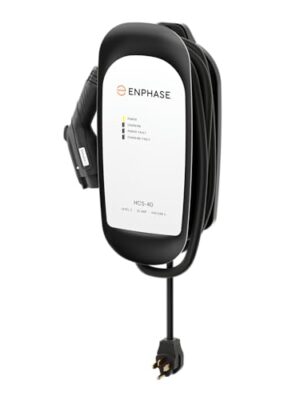
The Enphase 32 Amp Plug-in EV Charger (HCS-40) with NEMA 14-50 plug offers 7.7kW power for fast, reliable charging. Featuring a durable 25 ft cable and J1772 ruggedized connector, it ensures compatibility with all EVs. Backed by a 5-year warranty, this charger provides robust, long-term performance for home use.
The Enphase HCS-40 Level 2 EV Charger offers fast, safe charging with a durable design and easy installation. It works with all plug-in EVs and integrates with Enphase solar systems. While it’s pricier and has a tangling rubber cord, its reliability and performance make it a solid choice.
Features
8.5
Real World Usage
8.5
Materials
8
Durability
9
Craftsmanship
8
Design
9
Monetary Value
7.5
Product Value
8
Brand Reputation
8
Expert Valuation
9
PROS:
Fast charging up to 7.7 kW, seven times faster than Level 1 chargers.
ETL safety certified and ENERGY STAR rated for reliability.
Durable, weatherproof NEMA 4 enclosure.
Easy installation with NEMA 14-50R outlet and 40 Amp circuit.
Compatible with all plug-in EVs, ideal for models up to 7.7 kW.
Integrates with Enphase solar systems for eco-friendly charging.
Includes 5-year warranty and 24/7 support.
25-foot cable with storage options for convenience.
CONS:
Expensive compared to other chargers.
Rubberized cord can tangle and is hard to manage.
Bulkier than some alternatives.
4-Year Warranties: Tesla Sets the Bar
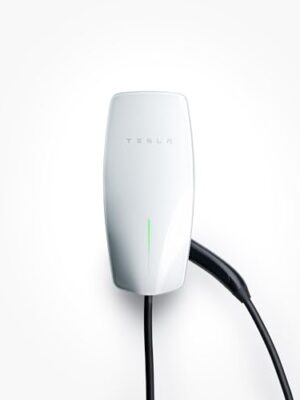
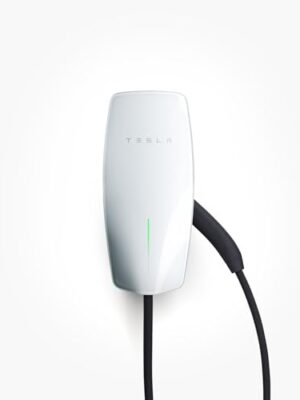
Tesla offers four-year coverage on both of their Wall Connectors, the Universal Wall Connector (our top-rated charger overall) and the Gen 3 Wall Connector. If you’re a Tesla driver, you’re in good hands.
Tesla Universal Wall Connector delivers 11.5 kW smart EV charging for both residential and commercial use. Unique features include bidirectional charging, Group Power Management (GPM), Magic Dock, and a wide range of add-on EV charging accessories.
The Tesla Universal Wall Connector is a robust, forward-thinking EV charger designed for mixed EV households. It offers advanced smart charging features, including bidirectional charging when paired with compatible vehicles like the Ford F-150 Lightning and the Tesla Cybertruck. When integrated with renewable energy systems, it becomes an even more powerful solution, enabling efficient energy management. However, due to its high electrical load and complex features, professional installation and careful handling are essential to ensure optimal performance and safety, making it a top-tier choice for future-proofed EV charging setups.
Features
9.7
Real World Usage
9.5
Materials
9.5
Durability
9
Craftsmanship
9
Design
9
Monetary Value
9
Product Value
9.5
Brand Reputation
9.5
Expert Valuation
9.5
PROS:
Versatile Charging (Supports Tesla and J1772-compatible electric vehicles)
Advanced smart features
Renewable energy integration
Features a modern and minimalist design that complements most homes
Integrates into the Tesla mobile app for remote monitoring.
Allows bi-directional EV charging
CONS:
Requires professional installation
The non-replaceable J1772 adapter may limit flexibility for some users
The latest Tesla Wall Connector adds smart features and now supports non-Tesla EVs. It offers fast, reliable charging, up to 44 miles of range per hour, with a 24-ft cable, app control, over-the-air updates, indoor/outdoor use, and a 4-year residential warranty. But is it worth it?
The Tesla Wall Connector offers fast, reliable charging with adjustable amperage and a 24-foot cord. It’s easy to install but requires professional installations. Pros include Wi-Fi connectivity and compatibility with Tesla electric vehicles compared to third party EV chargers. However, it lacks bi-directional charging for Cybertruck compatibility.
Features
9
Real World Usage
9
Materials
9
Durability
9.5
Craftsmanship
8.5
Design
9
Monetary Value
8.5
Product Value
8
Brand Reputation
9.5
Expert Valuation
8.5
PROS:
Fast, reliable charging (up to 44 miles per hour)
Adjustable amperage for flexible installation
24-foot cord for installation flexibility
Wi-Fi connectivity for over-the-air updates
Power-sharing for multiple chargers
CONS:
Requires professional installation
No bi-directional charging for Tesla Cybertruck powersharing compatibility
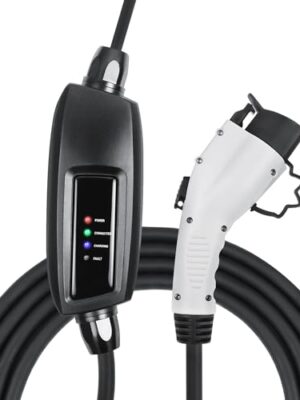
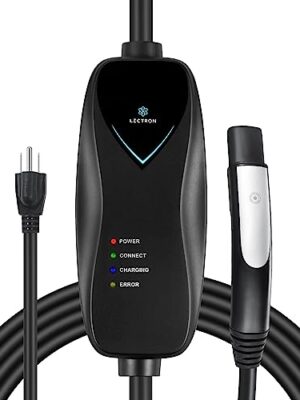
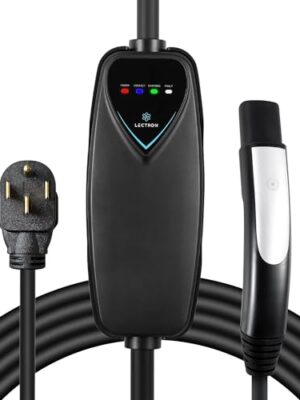
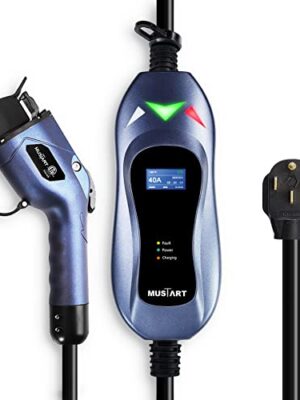
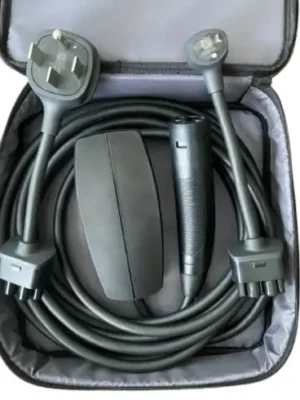
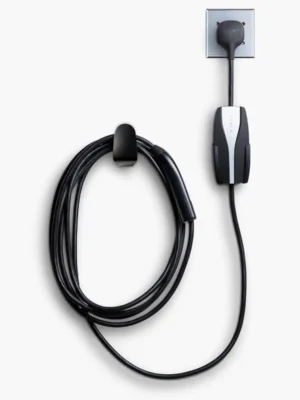
Note that the Tesla Mobile Connector (their portable unit) only comes with a one-year warranty. That’s a significant drop, so keep it in mind if you’re considering the portable option.
3-Year Warranties: The Reliable Majority
Three years is the sweet spot that most trusted brands have landed on. In our review, these brands all offer solid three-year coverage:
That’s a long list, and it’s actually reassuring. The three-year standard shows that the industry as a whole takes product reliability seriously.
2-Year Warranties: Decent but Not Great
Several brands we reviewed land in the two-year range. These are generally still good EV chargers; they just offer less peace of mind on the warranty side.
Many modern EV chargers come with smart EV charging features, Wi-Fi connectivity, smartphone apps, scheduling, energy tracking, and even load management. These features are great, but they add complexity.
Does EV charger warranty cover smart features and app connectivity?
In most cases, if the smart feature is built into the hardware, it should be covered under the standard warranty. But if a third-party app or cloud service goes down, that’s usually not covered.
Always check whether smart features are covered before you rely on them for something important, like charging during off-peak hours to save money.
Indoor vs. Outdoor Installation: Does It Affect Your Warranty?
Yes, it can. Many EV chargers are rated for both indoor and outdoor installation, but some are only rated for indoor use. If you install an indoor-only charger outside and it gets damaged by moisture or extreme temperatures, your warranty claim may be denied.
Always check the IP (Ingress Protection) rating of your charger before installing it outdoors. A rating of IP65 or higher means the unit is protected against water jets and heavy rain.
If you’re unsure about your charger’s outdoor rating, check the product specifications before mounting it on an exterior wall.
How to Actually Use Your Warranty
Knowing you have a warranty is one thing. Knowing how to use it is another. Here’s a simple process to follow if your EV charger stops working.
Step 1: Read the Warranty Document
Before you call anyone, read the warranty documentation that came with your charger. Know what’s covered, what’s excluded, and how long you’re within the coverage period.
Step 2: Keep Your Receipt and Registration
Most warranties require proof of purchase. Some brands also require you to register your product within 30 or 90 days of purchase to activate the warranty. If you skipped that step, do it now.
Step 3: Document the Problem
Take photos or a video of the issue. Note when the problem started and what error messages or symptoms you’ve observed. Good documentation speeds up the claims process.
Step 4: Contact Customer Support
Reach out to the manufacturer’s customer support team. Most brands have an email or online form for warranty claims. Some, like ChargePoint and Wallbox, have dedicated support lines.
Step 5: Follow the Return or Repair Process
The manufacturer will either send a replacement unit, ask you to ship the defective unit back, or dispatch a technician. Follow their instructions carefully to avoid voiding the warranty.
Important:Never attempt to open or repair your charger yourself. Doing so will almost certainly void your warranty.
Extended Warranties: Are They Worth It?
Some retailers and credit card companies offer extended warranty programs for electronics and appliances. An EV charger may qualify.
Is it worth paying for? It depends. If your charger already comes with a three or five-year warranty, an extended warranty may be overkill. But if you’re buying a charger with only a one or two-year warranty, extending that coverage could save you money in the long run.
Some credit cards (like certain Visa Signature and Mastercard products) automatically double the manufacturer’s warranty on eligible purchases. Check your card benefits before paying for a separate extended warranty.
Our Top Picks by Warranty Length
Here’s a quick summary of our standout choices based on warranty coverage, pulled from our full 65-charger review.
Solid Level 2 performance & top smart EV charging features in a Level 2 home charger, expert rating of 9.1, and the longest warranty in its class. A strong choice for buyers who want maximum peace of mind.
Autel MaxiCharger 80A EV charger delivers 19.2 kW smart EV charging for home, business, or commercial use with OCPP 2.0.1, Integrated Cloud with AI, and Wi-Fi/4G/Wi-SUN connectivity.
As an EV charger reviewer, I was impressed by the Autel MaxiCharger 80A’s power, smart EV charging capabilities for business, workplace and commercial installations, future-proof protocols, and rock-solid reliability. It delivers blazing-fast 19.2 kW charging, supports OCPP 2.0 and ISO 15118, and feels commercial-grade throughout.
Features
9.5
Real World Usage
9.5
Materials
9
Durability
9
Craftsmanship
9
Design
9
Monetary Value
9
Product Value
9
Brand Reputation
9
Expert Valuation
9
PROS:
80A / 19.2 kW ultra-fast Level 2 charging
OCPP 2.0 & ISO 15118 smart protocols
Rugged, pedestal/kiosk-ready design
Scalable for commercial or fleet use
Dynamic load management support
CONS:
More expensive than competing 80 Amp EV chargers like the Grizzl-E Ultimate 80 Amp EV charger.
Tesla Universal Wall Connector delivers 11.5 kW smart EV charging for both residential and commercial use. Unique features include bidirectional charging, Group Power Management (GPM), Magic Dock, and a wide range of add-on EV charging accessories.
The Tesla Universal Wall Connector is a robust, forward-thinking EV charger designed for mixed EV households. It offers advanced smart charging features, including bidirectional charging when paired with compatible vehicles like the Ford F-150 Lightning and the Tesla Cybertruck. When integrated with renewable energy systems, it becomes an even more powerful solution, enabling efficient energy management. However, due to its high electrical load and complex features, professional installation and careful handling are essential to ensure optimal performance and safety, making it a top-tier choice for future-proofed EV charging setups.
Features
9.7
Real World Usage
9.5
Materials
9.5
Durability
9
Craftsmanship
9
Design
9
Monetary Value
9
Product Value
9.5
Brand Reputation
9.5
Expert Valuation
9.5
PROS:
Versatile Charging (Supports Tesla and J1772-compatible electric vehicles)
Advanced smart features
Renewable energy integration
Features a modern and minimalist design that complements most homes
Integrates into the Tesla mobile app for remote monitoring.
Allows bi-directional EV charging
CONS:
Requires professional installation
The non-replaceable J1772 adapter may limit flexibility for some users
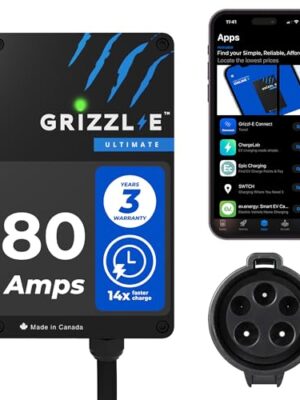
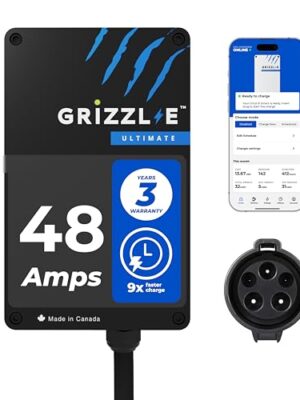
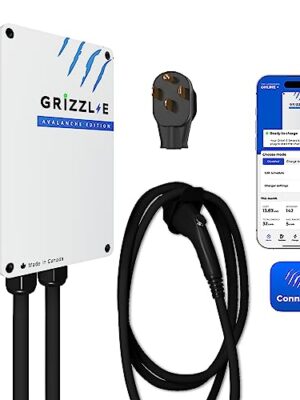
The Grizzl-E Smart Level 2 EV Charger (240V, 40A) is a budget-friendly smart EV charger with a rugged aluminum build, J1772 compatibility, UL-listed, Energy Star certified, and NEMA 14-50/6-50 plug support.
After months of testing, the Grizzl-E Smart cut my monthly charging costs through smart scheduling, saved me a $3,200 panel upgrade with load balancing, and as a solar owner, puts an extra $730 yearly back in my pocket. Add in $100 from utility Demand Response credits, and this charger pays for itself while the OCPP standard lets me switch apps anytime for better deals without replacing hardware.
Features
9
Real World Usage
9
Materials
9
Durability
9
Craftsmanship
9
Design
9
Monetary Value
9
Product Value
9
Brand Reputation
9
Expert Valuation
9
PROS:
The Grizzl-E Smart EV Charger is built to last, both indoors and outdoors.
Its minimalist design appeals to homeowners seeking a clean and modern aesthetic.
The Grizzl-E team is committed to enhancing the charger's features through regular updates and the Grizzl-E Connect app.
CONS:
Some users have reported concerns about the durability of the charging cable and connector.
The included wall mount may not be ideal for long-term use, potentially requiring additional support or accessories.
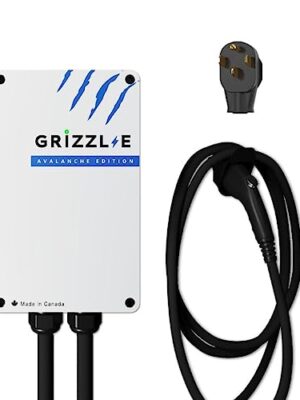
Grizzl-E Classic EV Charger Level 2 EV charger with 24-ft cable, UL, FCC, Energy Star, NEMA 14-50/6-50 plug, and NEMA 4X enclosure for indoor/outdoor use.
The Grizzl-E Classic excels as a durable, efficient, and cost-effective Level 2 charger. Its lack of smart features is seen as a benefit by many, reducing potential issues. It’s an ideal choice for users seeking a reliable, no-frills charging solution.
Features
7.5
Real World Usage
8.5
Materials
9
Durability
9
Craftsmanship
8.5
Design
8.5
Monetary Value
9
Product Value
9
Brand Reputation
9
Expert Valuation
9
PROS:
Simple installation with NEMA 14-50 plug.
Durable metal enclosure, weatherproof and UL-certified.
Relies on EV’s onboard scheduling for off-peak charging.
Outdoor setups need separate NEMA outlet covers.
Basic design lacks smart home integration.
Final Thoughts
Warranties might not be the most exciting part of buying an EV charger, but they’re one of the most important. A charger that fails after two years with no warranty coverage is an expensive problem.
The good news? Most of the top-rated chargers in our review offer three to five years of coverage. Brands like ApexCharger, Enphase, and Autel stand out with five-year warranties, while Tesla delivers strong four-year coverage on their Wall Connectors.
Our advice: don’t let price alone drive your decision. A slightly more expensive charger with a five-year warranty may cost you far less over time than a budget option with only one year of coverage.
Charge smart. Buy smart. And always read the warranty before you sign off on your purchase.
Related: Compare EV chargers, including specs, ratings, and warranty data, using our EV charger comparison tool.
James Ndungu is a certified EV charger installer with over five years of experience in EVSE selection, permitting, and installation. He holds advanced credentials, including certification from the Electric Vehicle Infrastructure Training Program (EVITP) and specialized training in EV charging equipment and installation, as well as diplomas in EV Technology and Engineering Fundamentals of EVs. Since 2021, James has tested dozens of EV chargers and accessories, sharing expert insights into the latest EV charging technologies.