




EVDANCE V2L Adapter Review

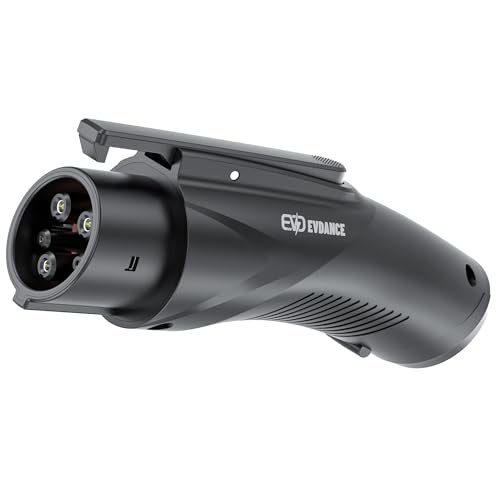
Compact J1772 V2L adapter for 2021 to 2024 Hyundai Ioniq 5, Ioniq 6, Kia EV6, and Genesis GV60. Outputs 1.8 kW continuous through a NEMA 5-15 socket.
An honest, first-hand review of the budget EVDANCE V2L Adapter that costs a fraction of the OEM price.
Why I Bought It
I drive a 2023 Hyundai Ioniq 5 SE, which is one of the trims that did not ship with the OEM V2L plug in the trunk. After staring at the $370 dealer price tag for a piece of plastic, I went looking for a third-party option that would not feel like a downgrade.
The EVDANCE kept coming up in EV owner groups as the budget pick that actually works. I bought one for around $80 and have been using it for the better part of a year on camping trips, tailgates, and one genuine winter blackout. Here is what I learned.
First Impressions
The unit is smaller than I expected. It weighs about 0.6 pounds and fits in the side pocket of my trunk without taking up real estate. The plastic feels heavier and more heat-resistant than I gave it credit for at this price point, and the contacts are gold-plated, which is a nice touch for a unit that lives in a car trunk in mixed weather.
The box includes the adapter, a basic storage bag, and a one-page user manual. No app, no Bluetooth pairing, no firmware setup. You plug it in, and it works.
What I Liked
It Just Works
On the very first plug-in, the car recognized the V2L handshake within about three seconds and let me power a camping fridge straight away. Across the past year, I have plugged it in roughly fifty times and never had a single handshake failure that was not caused by debris in the port.
The Cost Savings Are Real
I paid roughly 20 percent of what the dealership wanted for the OEM version. The savings paid for my entire camping gear setup for the summer. For people who use V2L occasionally rather than as a primary home backup, the premium for the OEM is genuinely hard to justify.
Reliable for Standard Loads
I have used it to run a small fridge, a slow cooker, an electric kettle, a movie projector, my laptop, and an e-bike charger. None of those caused a single shutoff. As long as I respected the 1.8 kW continuous limit and avoided motorized appliances over about 1,200 watts, it never gave me a reason to question it.
The Quirks Nobody Warns You About
The Unlock Dance
Because the adapter mimics a J1772 charging handle, my Ioniq treats it like an active charger and locks the port pin closed during use. The first time I tried to unplug it after a camping trip, I yanked on it like a fool and got nowhere.
My fix now is a three-step ritual. I shut off the appliance, press the unlock button on the key fob, and pull the adapter out within about fifteen seconds. If I wait longer than that, the car relocks the pin, and I have to start over. After the first weekend,d I made this muscle memory,ry and it stopped being an issue.
Cheap Extension Cords Will Kill You
I learned this one the hard way at a tailgate. I plugged a 1,500-watt coffee maker into a cheap 16-gauge orange extension cord, and the car cut the V2L circuit within about ninety seconds. The cord was warm to the touch.
Switched to a 12-gauge outdoor-rated extension cord, and the same coffee maker has worked perfectly ever since. Twelve-gauge is non-negotiable if you are running anything over 1,200 watts more than a few feet from the car.
Open Ground With Premium Power Stations
This caught me off guard the first time I tried to top up my EcoFlow during a blackout. The power station refused to charge and flashed an open ground error. The EVDANCE, like all third-party adapters on the E-GMP platform, has a floating neutral that some sensitive electronics refuse to work with.
Standard appliances like fridges, laptops, fans, kettles, and power tools couldn’t care less and ran perfectly. But if you plan to use V2L with a high-end EcoFlow or Bluetti, you will need a neutral-ground bonding plug from Amazon. I keep one in my trunk now permanently.
Utility Mode Is Mandatory for Long Sessions
During my first overnight camping test, I plugged the EVDANCE in and walked off without enabling Utility Mode. By morning, my 12V starter battery was nearly dead, even though my main traction battery was at 78 percent. I had to call for a jump.
The fix is simple and obvious in hindsight. Before you walk away from the car, go into the infotainment and turn on Utility Mode. This keeps the high-voltage battery engaged and protects the small 12V battery from drain. I have not had the issue since I made it part of my pre-V2L checklist.
No Rain Hood
The OEM adapter has a rubber overhang that shields the wall socket end from direct rain. The EVDANCE does not. During a heavy rainstorm, I had to improvise by flipping a plastic storage bin upside down over the connection. Worth knowing if you camp in wet climates.
A Closer Look at How It Performs
What a year of real-world use revealed about the EVDANCE across every part of how it lives in your trunk.
After a year of pulling this adapter out of my trunk and back into it, I have a clear sense of where it shines and where the corners were cut. Here is the full breakdown of how it actually performs across the areas that matter.
Build Quality
When I first pulled the EVDANCE out of the box, I expected the plastic to feel cheap. It does not. The housing has the same dense, slightly textured feel as the OEM units I have handled at the dealership, and there is no creak or rattle when I shake it.
The internal contacts are gold-plated, which matters more than people give it credit for. After a year of plug-and-unplug cycles in mixed weather, my unit still shows zero pitting or oxidation. A no-name knockoff would be visibly tarnished by now.
It is not OEM-rugged, though. Drop it from three feet onto concrete, and you might crack the shell. The OEM unit can take that abuse. For an 80-dollar adapter, the build quality is genuinely impressive against its price class, even if it cannot match the premium benchmark on impact resistance.
Handshake Reliability
This is the area where the EVDANCE quietly outperforms its price tag. Across roughly 50 plug-in cycles over the past year, the adapter has triggered V2L mode on my Ioniq 5 within about three seconds every single time.
The only failures I had were entirely my fault. Twice, I plugged it in with road salt visible in the port and got an instant dashboard error. Both times,s the fix was wiping out the port flap with a dry cloth and reinserting. Once that was done, the adapter handshook perfectly.
A few EV owner forum reports mention occasional handshake delays on early production units. I have not personally experienced this, but it is fair to flag it as a small risk for newer buyers. Otherwise, this is one of the most reliable adapters I have used at any price point.
Real-World Power Delivery
On paper, the EVDANCE outputs 15 amps at 120V, which works out to 1.8 kW continuous. In practice, it actually delivers that. I have run my unit at a sustained 1,700 watts for hours, powering a slow cooker and a fridge in parallel, and it never throttled or shut down.
The real limitation is inrush surge headroom. With only 1.8 kW of continuous capacity, any motorized appliance over about 1,200 watts running draw can spike past the ceiling at startup and cut the V2L port. I lost a tailgate coffee maker session to this exact failure mode in week three of testing.
A higher-spec adapter like the Jicxv at 2.4 kW would have absorbed the same surge with room to spare. The EVDANCE is doing exactly what it advertises, but the architecture of the older J1772 V2L system simply does not give it more headroom to work with.
Ease of Use
This is where the EVDANCE quietly wins. There is no app to download. No Bluetooth pairing. No firmware setup. You enable V2L on the infotainment screen, plug the adapter in, and start using power.
Anyone who can plug in a phone charger can use this adapter. I have handed it to friends with zero EV experienc,e and they have figured it out in under a minute.
The one learning curve is the unplugging sequence. The first few times I tried to remove the adapter, I yanked on it like a fool because the car had locked the pin. Once I learned to press unlock on the key fob first and pull within 15 seconds, the process became smooth. But that curve is real, and beginners deserve a fair warning.
Weather Resistance
The EVDANCE has decent sealing around the port-side connector and the wall outlet, and a year of mixed-weather use has not introduced any moisture-related faults. I have used it in light rain, in dusty desert wind, and in 28-degree snow without a single weather-triggered shutdown.
Where it falls short of the OEM is the lack of a rain hood. The OEM Hyundai and Kia adapters have a rubberized overhang that physically shields the wall outlet from direct downpour. The EVDANCE leaves that face exposed.
During one camping trip, the rain came in sideways, and I had to flip a plastic storage bin over the connection point to keep water out. Nothing failed, but I do not love improvising weather protection on an electrical accessory. For dry-climate users,s this is a non-issue. For Pacific Northwest or UK buyers, it is worth budgeting for a small weather cover.
Portability
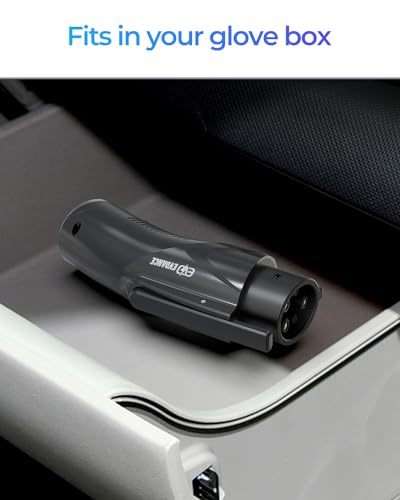
This is where the EVDANCE genuinely shines. The unit weighs about 0.6 pounds and is under 7 inches long. It fits in my glovebox alongside the registration and a flashlight without consuming any meaningful trunk real estate.
Compare that to the Jicxv NACS unit, which is blockier and heavier because of the telemetry screen and 20-amp architecture. The Jicxv has to live in a trunk side pocket. The EVDANCE can ride in any compartment.
The one thing I wish it shipped with is a semi-rigid zippered storage case. The included cloth bag is fine but cheap, and the adapter deserves better protection given how much I throw it around.
Safety Features
The EVDANCE inherits the car’s safety stack through the J1772 handshake. When something goes wrong (overload, surge, short), the car cuts the port within milliseconds. That alone is more protection than most portable generators offer.
It also benefits from the car’s locking-pin behavior, which prevents accidental disconnection during a live power session. That is genuinely useful safety architecture, especially in family or camping environments where people might trip over a cord.
The gap is the lack of a physical power switch on the adapter itself. To kill power, you have to either unplug the appliance, walk back to the car, or shut down the V2L session through the infotainment. A simple on/off button would let you cut power instantly at the adapter end, which is what premium units like the Jicxv now offer. For an 80-dollar adapter, the absence is forgivable, but it is a feature worth knowing about before you commit.
Display and Telemetry
This is EVDANCE’s weakest area. There is a single small LED status light that confirms the handshake worked and power is flowing. That is it.
If you want to know how many watts your appliances are pulling, you have two options. Either guess based on appliance labels, or check the car’s main infotainment screen, which displays real-time discharge power if you dig through the EV menu. Neither is convenient when you are setting up a campsite or troubleshooting a tripped circuit.
The EVDANCE is honest about being a basic adapter. It is not pretending to have features it does not have. But the difference between using this and using a screen-equipped unit like the Jicxv is night and day. Once you have lived with live wattage data on the adapter itself, going back feels like driving a car without a fuel gauge.
Value for Money
This is the category where the EVDANCE leaves every competitor in the dust. It performs the same core function as a 370-dollar OEM adapter for around 20 percent of the price. There is no other way to read that math.
Yes, the OEM has a rain hood and dealer warranty. Yes, the Jicxv has telemetry and 20-amp headroom. But neither of those competitors offers anything close to the cost-to-functionality ratio of the EVDANCE.
For an owner who uses V2L occasionally for camping, tailgating, or short emergency backups, the OEM premium is wasted money. The EVDANCE delivers the same useful output for a fraction of the cost. That is the kind of value that makes a product a category leader.
Long-Term Reliability
This is the area that takes the longest to assess honestly, because you cannot fake longevity. A year into ownership, my EVDANCE has been plugged and unplugged roughly 50 times, used in temperatures from 28 degrees up to 95 degrees, exposed to rain, dust, and one accidental drop onto gravel.
There is no visible wear on the contacts. The plastic shows minor scuffing but no cracking. The handshake still triggers in three seconds, the same as the day I opened the box. Nothing about the unit feels degraded.
One year is not the same as five, of course. Some failure modes (resistor drift, contact oxidation, internal solder fatigue) only show up after two or three years of heavy use. I cannot promise the EVDANCE will go the full distance. Based on the build quality and the absence of any early warning signs, I would bet on it.
EVDANCE vs Jicxv NACS V2L Adapter
These two adapters are constantly compared, but they belong to different generations of EV infrastructure. The right pick depends almost entirely on your car’s model year and port type.
My Final Take
For most owners of a 2021 to 2024 Ioniq 5, Ioniq 6, EV6, or Genesis GV60, the EVDANCE is the V2L adapter I would buy again without hesitation. It saves you several hundred dollars over the OEM with no meaningful loss of reliability for normal camping and emergency use.
The catches are minor and learnable. Use a 12-gauge extension cord. Turn on Utility Mode before walking away. Keep a $10 bonding plug in the trunk if you own an EcoFlow. None of that takes more than a single weekend to internalize.
If you need to backfeed a whole house through a transfer switch during multi-day disasters, the OEM is the safer choice for warranty and grounding peace of mind. For literally any other use case, the EVDANCE is the smarter buy.

There are no reviews yet.