Supported by you via insider access, and when you purchase through links on our site, we may earn an affiliate commission. See our Affiliate Disclosure.
A 9.6 kW EV charger runs on a 240V circuit drawing 40 amps continuous, fed by a 50A two-pole breaker under the NEC 80 percent rule. You get about 30 to 36 miles of range per hour, enough to fully refill any modern BEV in a typical overnight window with hours to spare.
This is the tier where Level 2 charging stops being a tight fit. Every value is sitting comfortably below its NEC limit, the conductor has thermal margin, and the breaker is not running near its rating. If you are installing a charger that you want to forget about for the next decade, 9.6 kW is the engineering sweet spot.
Every charger below has been tested under a continuous 40 amp load on real 50A circuits to confirm clean operation, accurate ground-fault detection at this current level, and reliable thermal performance during 12-hour stress cycles.
How We Tested This kW Tier
9.6 kW chargers are tested on a dedicated 240V/50A circuit with NEMA 14-50 receptacles using 6 AWG copper conductors. We measure continuous current with a calibrated clamp meter during 12-hour stress cycles to verify that the unit holds 40 amps without thermal derating. The receptacle temperature is logged every 30 minutes to catch creeping thermal failures that only appear after extended runtime. We verify the J1772 control pilot signal stays stable as the contactor switches under load, and run 1000 plug cycles on the NEMA 14-50 plug to test long-term blade integrity.
9.6 kW Technical Spec Snapshot
Before you scroll, here is what 9.6 kW means in real world electrical terms. Use this snapshot to confirm a 9.6 kW charger matches both your vehicle and your home wiring.
Specification
Value
Continuous Current
40 A
NEC-Required Circuit Ampacity
50 A Two-Pole
Required Breaker Size
50 A Two-Pole
Receptacle Type
NEMA 14-50 (or Hardwired)
Conductor (Copper)
6 AWG
Voltage
240 V
Phase
Single-Phase
Range Added Per Hour
30 to 36 miles
Charging Time (75 kWh Battery)
~8.7 hours
NEC Code References
210.20(A), 625.41, 625.42, 110.14(C)(1)
Want to calculate the exact charging time for your specific EV battery? Use our EV Charging Calculator to plug in your battery size and get a precise estimate at 9.6 kW.
9.6 kW EV Chargers We Recommend
Each charger below was scored 1–10 on performance, materials, durability, design, value, and brand reputation. Click any title to read the full hands-on review.
Use the “Compare” button on each product to select multiple chargers, then click the ⚖️ scale icon to see a full side-by-side comparison.
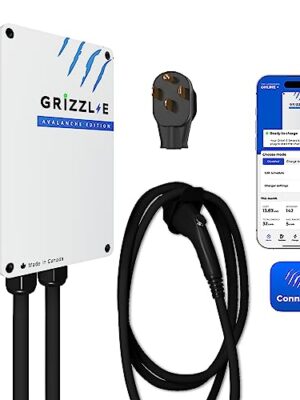
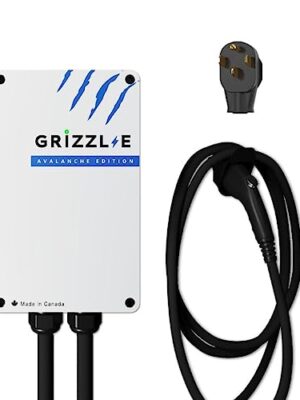
The Grizzl-E Smart Level 2 EV Charger (240V, 40A) is a budget-friendly smart EV charger with a rugged aluminum build, J1772 compatibility, UL-listed, Energy Star certified, and NEMA 14-50/6-50 plug support.
After months of testing, the Grizzl-E Smart cut my monthly charging costs through smart scheduling, saved me a $3,200 panel upgrade with load balancing, and as a solar owner, puts an extra $730 yearly back in my pocket. Add in $100 from utility Demand Response credits, and this charger pays for itself while the OCPP standard lets me switch apps anytime for better deals without replacing hardware.
Features
9
Real World Usage
9
Materials
9
Durability
9
Craftsmanship
9
Design
9
Monetary Value
9
Product Value
9
Brand Reputation
9
Expert Valuation
9
PROS:
The Grizzl-E Smart EV Charger is built to last, both indoors and outdoors.
Its minimalist design appeals to homeowners seeking a clean and modern aesthetic.
The Grizzl-E team is committed to enhancing the charger's features through regular updates and the Grizzl-E Connect app.
CONS:
Some users have reported concerns about the durability of the charging cable and connector.
The included wall mount may not be ideal for long-term use, potentially requiring additional support or accessories.
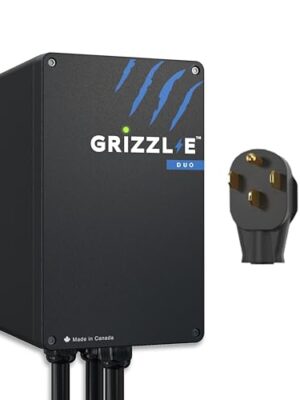
The Grizzl-E Duo Level 2 EV Charger delivers up to 40 Amps of power with two 24-foot premium cables and a NEMA 14-50 plug. Designed for dual vehicle charging, it provides fast, efficient power for two electric vehicles simultaneously. Ideal for home use, offering reliable, high-performance charging.
The Grizzl-E Duo is a reliable dual-port EV charger. It offers fast, 240V Level 2 charging with up to 40A. Durable, weather-resistant, and easy to install. It’s ideal for charging two cars simultaneously. A great space-saver and cost-efficient solution for home EV charging.
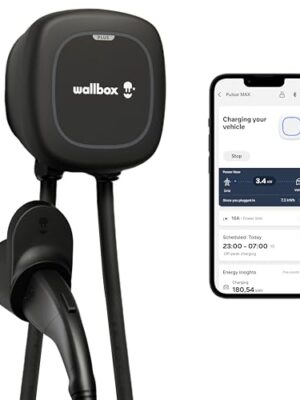
The Wallbox Pulsar Plus 40 Amp Level 2 EV Charger is an ultra-compact, smart charging solution with WiFi, Bluetooth, and voice control via Alexa/Google Home. Featuring a 25ft cable, it’s UL-certified for safety and suitable for both indoor and outdoor use. Assembled in the USA for reliable performance.
The Wallbox Pulsar Plus 40-Amp EV Charger offers fast, flexible charging with a compact design. It features smart app control, energy optimization, and solar integration. Its 25-foot cord ensures convenience, while power sharing supports multiple units. However, the plug holster’s stability and Bluetooth setup may need improvement.
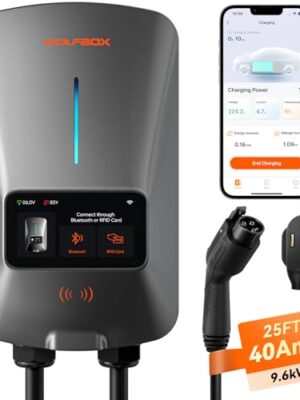
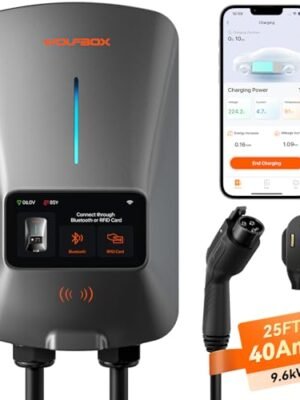
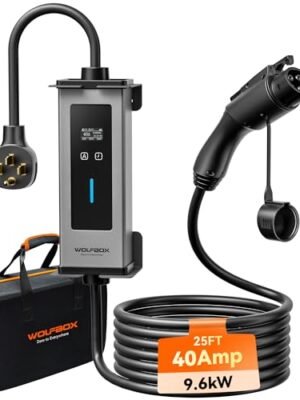
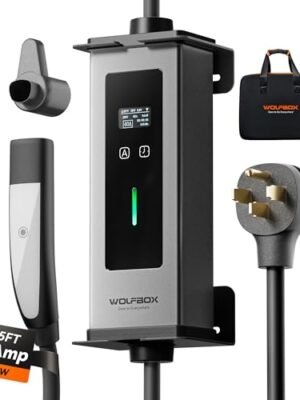
The WOLFBOX Level 2 EV Charger is a home Level 2 EV chargerthat offers fast, reliable charging with a sleek, weatherproof design. Featuring a 25ft cable, smart app integration, and compatibility with all J1772 EVs, it’s perfect for both home and public use. Choose between plug-in or hardwired models for convenient, future-proof charging at any location.
The WOLFBOX WE-40, WE-48, and WE-50 Smart Level 2 EV Chargers deliver dependable, high-power performance with durable construction, WiFi control, and excellent safety features. Each model suits different installation needs while maintaining consistent reliability and value. The WE-40 rates 8.7, the WE-48 scores 8.8, and the WE-50 leads at 8.9, averaging 8.8/10 overall.
Grizzl-E Classic EV Charger Level 2 EV charger with 24-ft cable, UL, FCC, Energy Star, NEMA 14-50/6-50 plug, and NEMA 4X enclosure for indoor/outdoor use.
The Grizzl-E Classic excels as a durable, efficient, and cost-effective Level 2 charger. Its lack of smart features is seen as a benefit by many, reducing potential issues. It’s an ideal choice for users seeking a reliable, no-frills charging solution.
Features
7.5
Real World Usage
8.5
Materials
9
Durability
9
Craftsmanship
8.5
Design
8.5
Monetary Value
9
Product Value
9
Brand Reputation
9
Expert Valuation
9
PROS:
Simple installation with NEMA 14-50 plug.
Durable metal enclosure, weatherproof and UL-certified.
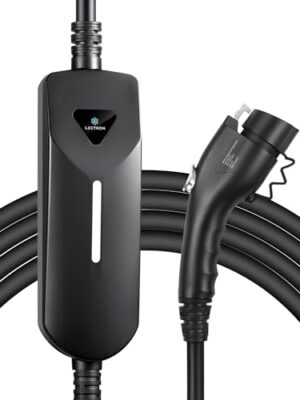
The Lectron Level 1 / Level 2 EV Charger is a practical, versatile, and affordable option for most EV drivers. It covers both charging speeds, works with virtually every J1772 vehicle, and goes wherever you go. The lack of smart features keeps the experience simple, and for many drivers, that's exactly what they want.It won't win any awards for cutting-edge technology, but it doesn't need to. What it does, it does well. If you're looking for a dependable portable charger that handles everyday needs without any hassle, the Lectron is a solid pick.
Features
9
Real World Usage
8
Materials
8.5
Durability
9
Craftsmanship
9
Design
9
Monetary Value
8.5
Product Value
8
Brand Reputation
9
Expert Valuation
8.5
PROS:
Dual plug compatibility (NEMA 5-15 & 14-50)
Supports both Level 1 and Level 2 charging
Portable and travel-friendly with carrying case
Safety features: overvoltage, overcurrent, short circuit protection
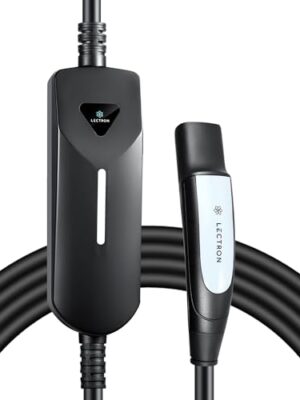
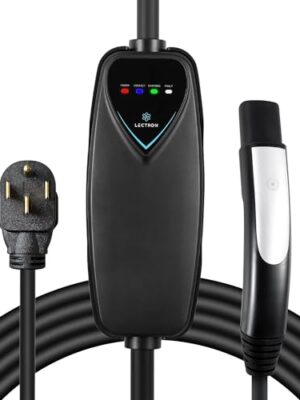
The Lectron Level 1/2 Tesla/NACS Charger offers portable, flexible charging with interchangeable 120V and 240V plugs. It supports Tesla Models 3, Y, S, X, and other NACS EVs, delivering up to 9.6 kW for reliable home or travel charging.
The Lectron Level 1/2 is a versatile dual-mode charger with solid in-built safety features and dependable performance at both 12A and 40A. It’s a smart pick if you want one unit that covers both slow overnight charging and faster Level 2 sessions.You might want to look at Tesla’s chargers, such as the Tesla Wall Connector or the Tesla Universal Wall Connector, if seamless integration with your Tesla and the Tesla app is a priority. Tesla’s native units offer smart charging features and real-time monitoring directly through the app. By contrast, the Lectron Level 1/2 keeps things simple: a reliable plug-and-charge unit without connectivity.Should you upgrade if you own the Lectron Level 1 Portable Charger? Yes, if you’re ready for faster 240V charging. Otherwise, stick with your Level 1 unless you hate its slow charging speeds.
Features
9
Real World Usage
8
Materials
8.5
Durability
9
Craftsmanship
9
Design
9
Monetary Value
8.5
Product Value
8
Brand Reputation
9
Expert Valuation
8.5
PROS:
Dual-level charging (12A Level 1 & 40A Level 2)
Compatible with Tesla and other NACS EVs
Interchangeable NEMA 5-15 and 14-50 plugs
Portable and travel-friendly
ETL certified with built-in safety protections
Real-time LED charging status indicators
CONS:
Level 2 charging requires NEMA 14-50 outlet installation
Not hardwired, less durable than wall chargers
Limited maximum amperage compared to some hardwired chargers
The WOLFBOX WE-40 is a powerful outdoor/indoor Level 2 EV charger with a NEMA 14-50 plug, delivering 40 amps and up to 9.6 kW charging power. Ideal for home charging with J1772 connector compatibility, it’s perfect for most electric vehicles seeking fast, reliable, and safe charging.
The WOLFBOX Level 2 40 Amp EV Charger delivers reliable, fast charging with smart features and a durable design. Its long cable and clear display add convenience, while excellent customer support ensures ongoing improvements. Minor display and heat issues appear in direct sunlight but can be managed with proper installation.
Features
8.8
Real World Usage
8.5
Materials
8.8
Durability
8.7
Craftsmanship
8.6
Design
8.7
Monetary Value
8.7
Product Value
8.8
Brand Reputation
8.8
Expert Valuation
8.7
PROS:
Fast and efficient 40 Amp charging
Durable, weather-resistant construction
Long 25-foot charging cable for easy reach
Clear, easy-to-read LCD display
Smart home compatibility and remote control via app
Built-in safety features including ground-fault protection
Responsive customer service with frequent firmware updates
Supports scheduled charging to save on energy costs
CONS:
Display can be hard to see when idle or in bright sunlight
Charger and cable can get hot if installed in direct sunlight
Some users may find the app features complex at first
Requires mounting location consideration to avoid overheating
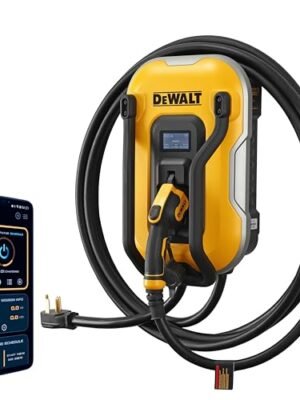
The DEWALT 40 Amp delivers reliable charging with jobsite-tough durability. Its 25-foot cable reaches easily but feels rigid in cold weather. Smart app features work well, though the ultra-short power cord limits mounting flexibility. Built for outdoor use with excellent weather resistance, it's a solid choice for homeowners prioritizing rugged construction and dependable daily EV charging.
PERSONALIZED EDITOR TAKE, 50 WORDS9:53 PMI've been using the DEWALT 40 Amp for three months, and it's been rock-solid through rain and cold. That cable's stiff, sure, but the rugged build and dead-simple app scheduling make my daily routine effortless. The short power cord was annoying during install, but overall? It just works, night after night.
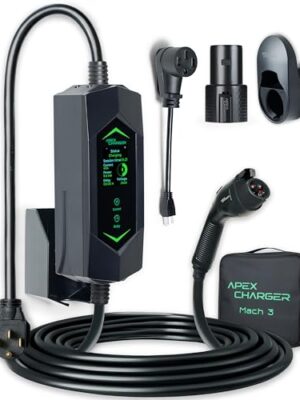
The ApexCharger MACH 3 EV Charger is a portable Level 1/2 dual-connector charger that supports both J1772 and NACS connectors. It features Wi-Fi app control, IP67 weather resistance, and pulsing LED indicators, making it a solid on-the-go and backup charging option.
Charging Speed:9.6 kW
Max Amperage:40 Amps
Charging Level:Level 1, Level 2
Connector Type:J1772, NACS
Cable Length:25 Feet
Connectivity:Bluetooth, Wi-Fi
Installation Type:NEMA 14-50, NEMA 5-15, NEMA 5-20
The ApexCharger MACH 3 EV Charger is the best option for EV drivers who want portability without sacrificing speed or smart features. With up to 40 Amps, dual-voltage input, Tesla compatibility, and a rugged, IP67-rated build, it beats most portable chargers on the market - especially in power and feature depth.While the ApexCharger MACH 2 is still the brand’s top-tier home unit, and the MACH 1 is the budget-friendly wall charger, the MACH 3 fills a different and crucial role: on-the-go charging wherever you need it, without calling an electrician.If you need a travel-ready backup or your lifestyle includes frequent road trips, the ApexCharger MACH 3 is one of the smartest, most reliable portable EV chargers available today.
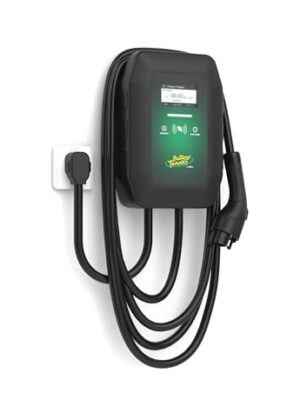
The Battery Tender eCharge 40 AMP EV Charger is a high-performance Level 2 electric vehicle charger, designed for 240V power to deliver fast and efficient charging. Compatible with NEMA 14-50P or hardwired setups, this robust charger is perfect for both home and public use, offering reliable, high-speed charging for your EV.
The eCharge 40 AMP delivers fast 40A output, flexible hardwired or NEMA 14-50P installation, and robust construction for indoor/outdoor use, offering professional-grade performance and durability, its higher cost is justified by its efficiency, making it a top choice for serious EV owners seeking speed and reliability.
The WOLFBOX PE40 is a portable Level 2 charger delivering 40 amps and up to 9.6 kW with a J1772 connector. Its sleek design and 25-foot cable make it perfect for flexible, powerful charging at home or on the go for most electric vehicles.
The WOLFBOX PE40T provides portable, fast charging for Tesla owners with 40 amps, 9.6 kW output, and a built-in NACS connector. Compact and lightweight, it’s designed for easy use at home or on the road, ensuring Tesla compatibility without adapters.
The Lectron Level 2 Tesla Portable Charger is a solid, affordable option for Tesla owners looking for a reliable, portable charging solution. While it lacks smart features and advanced functionality compared to Tesla's Wall Connector, it excels in delivering fast, safe, and convenient charging, making it an excellent choice for those seeking an efficient and cost-effective charger for their Tesla Models X/Y/3/S and the Tesla Cybertruck.
The Lectron Level 2 Tesla Portable Charger provides fast, reliable charging with a 16-foot cable and NEMA 14-50 outlet compatibility. It delivers up to 36 miles of range per hour, offering great performance for home or on-the-go use. The charger is safe, durable, and affordable, making it an excellent value.
Features
8.5
Real World Usage
7.5
Materials
8.5
Durability
7.8
Craftsmanship
9.2
Design
8.5
Monetary Value
8.5
Product Value
7.8
Brand Reputation
9.2
Expert Valuation
8.1
PROS:
Fast charging with up to 36 miles of range per hour.
Compatible with all Tesla models and NACS EVs.
Portable and lightweight design.
16-foot cable for flexibility.
Safe with overvoltage, overcurrent, and short circuit protection.
Affordable compared to Tesla-branded chargers.
Durable with IP65-rated control box and IP55-rated handle.
CONS:
Basic compared to Tesla’s more advanced Wall Connector and the Tesla Wall Connector
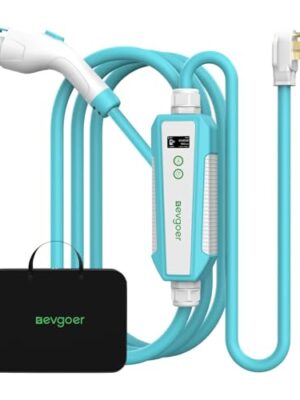
Evgoer J1772 40A Level 2 EV Charger delivers fast, safe charging with an adjustable 8A-40A current. The 20ft cable ensures flexibility. IP66's waterproof design supports indoor and outdoor use. Compatible with all J1772 electric vehicles.
The Evgoer J1772 40A EV Charger is a reliable Level 2 charging solution with dual voltage support (120V/240V), fast speeds, and adjustable current settings. It’s UL-certified, weather-resistant, and compatible with all J1772 EVs, including Tesla (adapter required). Easy installation, robust safety features, and versatile charging make it a top choice.
Features
9
Real World Usage
8.5
Materials
8
Durability
8.5
Craftsmanship
8
Design
8.5
Monetary Value
9
Product Value
8.5
Brand Reputation
8
Expert Valuation
8
PROS:
Fast charging speeds (up to 7x faster than Level 1)
Adjustable current settings for power optimization
Advanced safety features (short circuit, overcurrent, overheating protection)
IP66 waterproof rating for outdoor use
Portable design with a carrying case
Compatible with all J1772 EVs
Supports Level 1 and Level 2 charging
1-year warranty and lifetime support
Proven reliability in real-world conditions
Strong customer support experience
CONS:
NEMA 5-15P to 14-50R adapter sold separately
Increased risk of loose connections and voltage drop by using the NEMA 5-15P to a 14-50R adapter
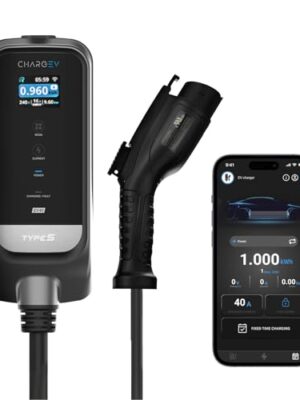
Fast, smart, and portable - the Type S 40A Level 2 EV Charger delivers up to 37 miles per hour with app control, adjustable amps, and a rugged build for safe indoor/outdoor charging.
The Type S 40A Level 2 EV Charger delivers fast, reliable home charging with smart app control, adjustable amps, and advanced safety features. It’s well-built, easy to install, and ideal for EV owners needing speed, flexibility, and remote monitoring—all in a sleek, portable design that works indoors or outdoors.
Features
7.5
Real World Usage
8
Materials
8.5
Durability
9
Craftsmanship
8.5
Design
9
Monetary Value
8
Product Value
8.5
Brand Reputation
8.5
Expert Valuation
8.5
PROS:
Premium looks
Adjustable amperage
Best rugged design In portable Portable EV chargers
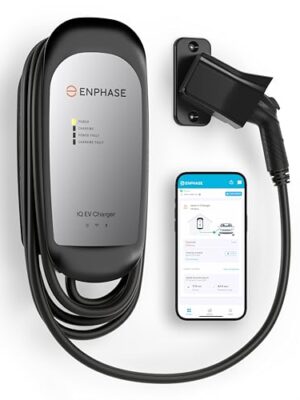
The Enphase IQ 50 40 Amp Smart EV Charger delivers 9.6kW of power at 240V with a hardwired installation and a 25ft cable. Featuring Wi-Fi connectivity, a ruggedized J1772 connector, and safety certifications, it ensures reliable, efficient charging. Backed by a 5-year warranty, it's ideal for home use and future-proofing.
Charging Speed:9.6 kW
Max Amperage:40 Amps
Charging Level:Level 2
Connector Type:J1772, NACS
Cable Length:25 Feet
Connectivity:Bluetooth, Wi-Fi
Installation Type:Hardwired, NEMA 14-50, NEMA 6-50
The Enphase IQ 50 EV charger is our favourite premium home EV charger with an overall score of 8.3. With its impressive combination of power, smart features, and a DIY-friendly plug-in option, the Enphase IQ 50 earns its place as a top contender for the best home EV charger. If you're looking for a powerful, user-friendly charger with advanced smart capabilities and a simple installation process, the Enphase IQ 50 is perfect for your EV charging needs.
Features
9
Real World Usage
8.5
Materials
8.5
Durability
8.3
Craftsmanship
8.5
Design
8
Monetary Value
7.5
Product Value
9
Brand Reputation
8
Expert Valuation
8
PROS:
Its compact size saves space in your garage and complements your home aesthetics.
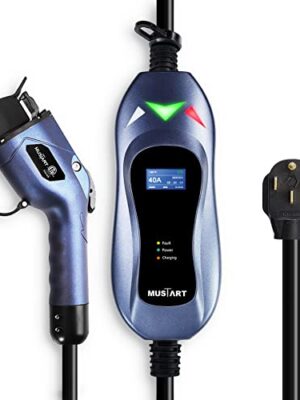
The Mustart 40 Amp EV Charger delivers fast 240V charging with a 25-foot cable and NEMA 14-50P plug for easy installation. ETL-certified for safety, this portable plug-in station is ideal for home use, providing reliable, high-speed charging for all-electric vehicles with convenience and efficiency.
The Mustart 40 Amp EV Charger provides fast charging, broad compatibility, and robust safety features. Its easy installation and reliable performance make it a solid option for EV owners.
Features
8.5
Real World Usage
8
Materials
8.5
Durability
8
Craftsmanship
8.5
Design
9
Monetary Value
8
Product Value
8
Brand Reputation
8
Expert Valuation
8.5
PROS:
Charged the 2025 Kia EV6 from 20-80% in 5 hours at 32A without issues.
Fits well in small electric vehicles storage compartment with additional accessories.
Works well with NEMA 14-50 outlets and the included adapters make it versatile for travel.
Priced lower than many other portable chargers, offering a good value for the features.
Cons:
CONS:
A few users report potential issues with the J-plug or charging port.
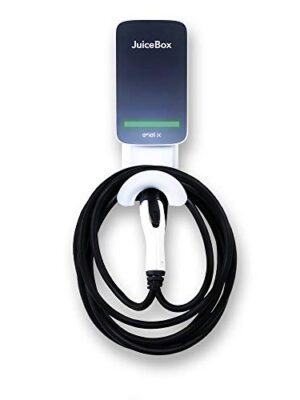
The JuiceBox 40 Smart EV Charging Station delivers 40 amps of Level 2 charging with a 25-foot cable and NEMA 14-50 plug. UL and Energy Star certified, it provides efficient, safe charging for both indoor and outdoor use. WiFi connectivity enables smart features for optimized performance and energy management.
The JuiceBox 40 used to be one of the best smart EV chargers you could buy. The hardware is still excellent, tough, powerful, and reliable. However, without company support and with the smart features failing, several scores have dropped. Features, real-world usage, product and monetary value, brand reputation, and expert valuation have all been negatively affected. Current owners can continue using their chargers without worry, but new buyers should consider other options that will receive support and updates for years to come.
Features
7.5
Real World Usage
8
Materials
9
Durability
8.5
Craftsmanship
8
Design
9
Monetary Value
8
Product Value
8
Brand Reputation
8
Expert Valuation
8
PROS:
Rugged build with excellent IP66 and NEMA 4X ratings for outdoor use
25-foot cable (longer than standard 18-20 feet)
40 amps and 9.6 kW output add about 30 miles of range per hour
Easy plug-in installation with NEMA 14-50 outlet
CONS:
The app has become buggy or non-functional since the company's exit
No customer support or warranty coverage available
Stiff, thick cable that's hard to coil in cold weather
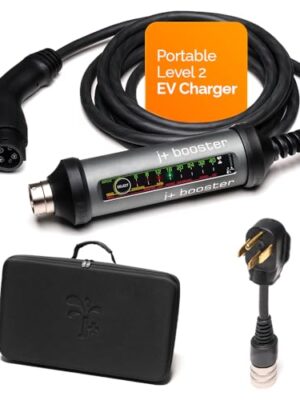
The J+ Booster 2 Portable EV Charger offers fast Level 2 charging (9.6 kW, 240V) for all-electric vehicles. With a 21ft cable, NEMA 14-50 plug, and ETL certification, it provides reliable power both indoors and outdoors. The included carrying case ensures easy storage and portability for convenient home charging.
The Shell 40A Level 2 EV Charger provides fast, efficient charging for all J1772-compatible EVs. Adjustable 12–40A output, 24-ft cable, plug-in NEMA 14-50P, ETL certified, Energy Star rated, with smart scheduling. Perfect for home or garage use, delivering reliable and safe Level 2 charging.
The Shell 40A Level 2 EV Charger delivers reliable, high-speed charging with adjustable amperage from 12A to 40A. ETL certified and Energy Star rated, it features a 25-foot cable, universal J1772 connector, and smart scheduling options. Ideal for home use, it balances safety, efficiency, and convenience in one compact unit.
Features
7.5
Real World Usage
7.5
Materials
8.5
Durability
8
Craftsmanship
7.5
Design
7.9
Monetary Value
7.5
Product Value
8
Brand Reputation
8
Expert Valuation
7.5
PROS:
Adjustable amperage: 12A–40A
Smart scheduling for energy management
24-foot cable offers flexible reach
ETL certified and Energy Star rated
Compatible with all J1772 EVs
Plug-in NEMA 14-50P for easy installation
CONS:
Requires 240V outlet for full Level 2 charging
Slightly larger footprint than some compact chargers
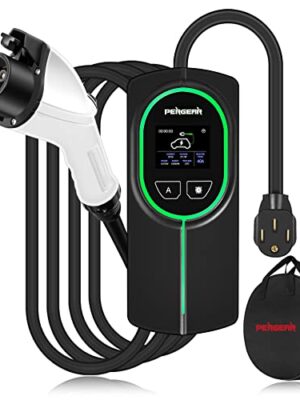
The Pergear P2 Level 2 EV Charger offers adjustable charging (40/32/24/16/10 Amp) with a 25 ft cable and 9.6 kW power for Tesla and other EVs. Features include scheduled charging, WiFi connectivity, a cable organizer, and versatility for both portable and wall-mounted use, making it an efficient and convenient charging solution.
We can't recommend the Pergear P2. It lacks UL, CSA, and ETL certifications, only the wire is certified, not the control box. Independent testing revealed failed waterproofing and cold-weather problems. When dealing with 240 volts at home, proper safety certification isn't optional. Choose certified alternatives instead.
Features
7.5
Real World Usage
7.5
Materials
7.5
Durability
7.5
Craftsmanship
7.5
Design
8
Monetary Value
7.5
Product Value
7.5
Brand Reputation
7.5
Expert Valuation
7.5
PROS:
Affordable price point
Color touchscreen display with real-time data
WiFi monitoring and scheduled charging
25-foot cable length
Adjustable power (10-40 amps)
FCC certified
CONS:
No UL, CSA, or ETL certification (only wire certified)
Failed waterproofing test despite IP67 claim
Cable stiffens in freezing temperatures
Control box lacks safety lab testing
Not suitable for outdoor or cold-climate use
Show next
Important Key Specs Table Legend:Level 1 = Level 1 only (120V). Level 1/Level 2 = dual-voltage portable (120V or 240V).
What is a 9.6 kW EV Charger?
A 9.6 kW EV charger is a Level 2 unit on 240V, drawing 40A continuous. It delivers 30–35 miles of range per hour. Minimum branch circuit ampacity = 50A, installed on a 50A breaker. Perfect for homeowners seeking faster charging.
9.6 kW EV Charger Buyer's Guide
Choosing a 9.6 kW charger is about identifying which combination of features, smart capability, and build quality justifies the small premium over a 7.68 kW unit. The electrical install is barely different, but the charger itself has more headroom for vehicles with higher onboard charger ratings.
The 40 Amp Sweet Spot Explained
40 amps continuous is the highest current that fits cleanly on a NEMA 14-50 outlet without violating any NEC rule. The 50A breaker can run 40 amps continuous all day under NEC 210.20(A), the 6 AWG copper conductor has thermal margin under NEC 110.14(C)(1), and the receptacle itself is rated for the load with room to spare. Going one tier higher (to 48A) forces a hardwired installation and a 60A breaker, which is a much more invasive electrical upgrade. 9.6 kW is the last plug-in tier before the install gets serious.
Why Headroom Matters for 10 Year Ownership
EV charging is a continuous load that runs at near-rated current for hours every night, year after year. Components that operate near their limits fail sooner than components that operate well below them. A 50A circuit running at 32 amps (7.68 kW) sees more thermal cycling stress on the breaker, conductor, and receptacle than the same circuit running at 40 amps (9.6 kW). Slightly counterintuitively, the higher kW tier on the same circuit is sometimes more reliable long term because the components were already oversized for the lower load. The 9.6 kW tier uses the available headroom rather than wasting it.
When the Car's Onboard Charger Is the Real Bottleneck
A 9.6 kW wall unit only delivers 9.6 kW to your car if the car’s onboard charger can accept 40 amps. Many popular EVs cap at 32 amps on J1772 (Tesla Model 3, Ford Mach-E, Chevy Bolt EUV), which means they will only pull 7.68 kW even from a 9.6 kW wall unit. Vehicles that actually use the full 9.6 kW include the Rivian R1T and R1S (48A onboard), Hyundai Ioniq 6 (48A on some trims), Ford F-150 Lightning (80A onboard), Porsche Taycan (48A on some trims), and Lucid Air (80A). Buy 9.6 kW when your current or future vehicle can actually use the extra capacity.
Plug In vs Hardwired at 9.6 kW
At 40 amps continuous, plug-in via a NEMA 14-50 receptacle is still permitted under NEC 625.41, provided a GFCI protects it. Hardwired is the more reliable option for long-term reliability because the plug and receptacle are eliminated as failure points, and the GFCI requirement is often exempted under NEC 210.8(F) for hardwired EVSE. The cost difference between a plug-in and a hardwired install is roughly 100 to 200 dollars in labor, but the long-term reliability gain is real. If you do not expect to move the charger, hardwire it.
EVs and PHEVs That Match 9.6 kW
9.6 kW unlocks faster charging for vehicles with 40+ amp onboard chargers, which is a smaller but growing segment of the U.S. EV market.
Best matches at 9.6 kW include the Rivian R1T 135 kWh (15.6 hours from empty to full), Rivian R1S 135 kWh (15.6 hours), Hyundai Ioniq 6 Long Range with 48A onboard (10.4 hours), Porsche Taycan 4S Performance Plus (10.4 hours), and most 2024+ Audi e-tron variants (11.5 hours on 9.6 kW). Tesla Model 3 and Model Y owners technically benefit if their car has the optional 48A onboard charger upgrade. The vehicles that do not benefit are those with 32A onboard chargers (the majority of pre-2024 BEVs), which cap their AC charging at 7.68 kW regardless of how much the wall unit can deliver.
Real World Charging Math at 9.6 kW
Charging time depends on three factors: battery size, charger output, and AC-to-DC conversion losses in your car’s onboard charger. Real-world efficiency is 90 percent due to heat losses during AC-to-DC conversion. The formula:
A 135 kWh Rivian R1T battery: 135 ÷ (9.6 × 0.90) = 15.6 hours from empty to full, two overnight cycles. A 75 kWh Tesla Model Y with the 48A onboard upgrade: 75 ÷ (9.6 × 0.90) = 8.7 hours, comfortably within one overnight window. The same Model Y with a stock 32A onboard charger pulls only 7.68 kW from a 9.6 kW wall unit, taking 10.9 hours to charge. The wall unit’s 9.6 kW rating is the ceiling; the car’s onboard rating sets the actual rate.
Want to calculate the exact charging time for your specific EV battery? Use our EV Charging Calculator to plug in your battery size and get a precise estimate at 9.6 kW.
Installation and Grid Infrastructure for 9.6 kW
9.6 kW installation uses the same physical circuit as 7.68 kW (NEMA 14-50 on a 50A breaker), so the install cost and complexity are nearly identical. The difference lies in the charger itself, which has a higher amperage rating.
The required circuit is a dedicated 50A two pole branch circuit with 6 AWG copper conductors (or 4 AWG for runs over 100 feet to control voltage drop), a 50A double-pole breaker (NEC 210.20(A)), and either a NEMA 14-50 receptacle or hardwired termination. GFCI protection is required for plug-in installs under NEC 625.41 (universal under the 2023 NEC). Panel space requirement is two adjacent breaker slots.
For most 200A residential panels, the cost to install a 9.6 kW EV charger today ranges from 700 to 1300 dollars, including permit, conductor, breaker, and labor. The cost premium over a 7.68 kW install is minimal because the breaker size is the same, and the conductor differs by only one gauge in most run lengths.
For the deeper breakdown of breaker sizing, conductor selection, and NEC compliance specifically for this current draw, see our 40 Amp EV Charger archive.
Expert Help Picking Your 9.6 kW Charger
Stronger performance without rewiring your home. Our team ensures your 9.6 kW charger is compatible and efficient while helping you reduce total project costs through smarter sourcing.
Is the Difference Between 7.68 kW and 9.6 kW Worth the Extra Cost?
If your car can actually use 40 amps on AC, the 9.6 kW unit costs 50 to 150 more than a comparable 7.68 kW unit, and the installation cost is nearly identical. If your EV has a 32 amp onboard charger (Tesla Model 3, Ford Mach-E, Chevy Bolt EUV, most 2018 to 2023 BEVs), you will get the same 7.68 kW from either wall unit. If your EV has a 40- or 48-amp onboard charger (Rivian, Lightning, Ioniq 6 Long Range), you will see the full-speed bump, and the premium pays back in saved charging time.
Why Does a 9.6 kW Charger Need a 50 Amp Breaker Instead of a 40 Amp Breaker?
Because of the NEC 80 percent continuous load rule (NEC 210.20(A)). EV charging is a continuous load (runs more than three hours), so the breaker rating must be at least 125 percent of the continuous load. For 40 amps continuous, that math is 40 ÷ 0.80 = 50 amps minimum breaker. Some installers try to use a 40A breaker on a 9.6 kW charger as a cost-saving move, but this violates code, and the breaker will trip under sustained load. Always use the breaker sizes specified by the charger manufacturers.
Can I Run a 9.6 kW Charger on My Existing NEMA 14-50 Outlet?
Yes, if the outlet was installed for 50 amp service with 6 AWG conductors on a 50A two-pole breaker. This is a common scenario in homes with electric range circuits that were never used, or in RV-ready garages. Confirm three things before plugging in: the breaker is genuinely 50A two-pole (not 40A), the conductors are 6 AWG copper (not 8 AWG aluminum), and the outlet is a commercial-grade Hubbell or Bryant unit (not a $ 6 contractor-pack receptacle). Cheap NEMA 14-50 receptacles are a known failure point at 40 amps continuous.
What Happens If I Plug a 9.6 kW Charger Into a 30 Amp Circuit?
The breaker trips after a few minutes of charging. The charger does not know what circuit it is plugged into, so it tries to draw its rated 40 amps. The 30A breaker sees 40 amps for a few minutes, heats up, and opens. Persistent trying to do this will damage the breaker. If your circuit is 30 amps, you need a charger rated 5.76 kW or less (24 amps continuous max). Some 9.6 kW chargers have a manually configurable amperage setting that lets you derate them to 24 amps, but this is brand-specific and not universal.
Will a 9.6 kW Charger Push My Home Panel Over Capacity?
Depends on your panel size and existing loads. For a 200A panel with typical residential loads (electric range, electric water heater, central AC, dryer), adding a 50A circuit for a 9.6 kW charger usually fits within the panel's calculated capacity under NEC 220.83 demand factor calculations. For 100A or 125A panels, the load calculation often fails, and either a panel upgrade or a load management system (Wallbox PowerSharing, Emporia, DCC) is required. Get a load calculation done by a licensed electrician before assuming your panel can handle it.
Does a 9.6 kW Charger Charge Faster in Cold Weather Than a 7.68 kW Charger?
The wall unit delivers the same power regardless of the weather. What changes are made by the car's onboard charger and battery management system? In cold weather (below 40 degrees Fahrenheit), the car may throttle AC charging to protect the battery, especially in the first 20 to 30 minutes while the battery thermal management system warms the pack. A 9.6 kW wall unit gives the car more headroom to ramp up once the battery is preconditioned, but the cold-weather throttling itself is set by the car, not by the wall unit.
Is a 9.6 kW Charger Compatible With Tesla Vehicles?
Yes, with either a NACS plug (if the charger is native NACS) or a J1772-to-NACS adapter (if the charger is J1772). Tesla vehicles with stock 32A onboard chargers will only draw 7.68 kW from any wall unit. Tesla vehicles with the optional 48A onboard upgrade (available on some Model 3 and Model Y configurations) will use the full 9.6 kW. The Cybertruck draws up to 11.5 kW, so a 9.6 kW unit becomes the bottleneck, not the car.
How Long Does a 9.6 kW Charger Last?
Well-built 9.6 kW units from reputable brands (Grizzl-E, Wallbox, Autel, Tesla, ChargePoint) typically last 10 to 15 years of nightly use. The first failure point is usually the cable itself, which sees daily flexing and UV exposure. Replaceable cable designs extend the practical lifespan by allowing you to swap the cable rather than replace the whole unit. Internal electronics generally outlast the cable by several years. The NEMA 14-50 plug and receptacle, if used, becomes the second failure point at 40 amps and may need replacement at the -5 to7-yearr mark.
Should I Buy a Smart 9.6 kW Charger or a Basic Model?
Smart, with caveats. At this kW tier, the cost difference between smart and basic units is 50 to 150 dollars, and the smart features that pay back include scheduled charging aligned with time-of-use rates, OCPP compatibility for utility-managed charging programs, and load balancing if you might add a second EV. Wi-Fi for its own sake is not worth the premium. Buy smart if you have time-of-use rates, you are considering a second EV, or your utility offers a managed charging incentive. Otherwise, a basic unit like the Grizzl-E Classic delivers identical charging for less money and fewer parts to fail.
Looking for chargers with a different power output? Our EV Charger kW Ratings hub lays out every tier from 1.44 kW to 19.2 kW and links to each dedicated archive.