Supported by you via insider access, and when you purchase through links on our site, we may earn an affiliate commission. See our Affiliate Disclosure.
1.44 kW EV Charger Reviews: Best Level 1 Chargers for Any U.S. Home Outlet
A 1.44 kW EV charger is the entry tier of Level 1 home charging. It runs on a standard 120V household outlet, drawing 12 amps continuous, the maximum a 15A circuit can safely handle under the NEC 80 percent rule. You get about 3 to 5 miles of range per hour, and you can plug it into virtually any wall outlet in any U.S. home without a single electrician visit.
This is the right tier for plug-in hybrid owners, second-vehicle EVs that drive under 40 miles per day, and renters who cannot install a 240V circuit. It is the slowest, cheapest, and most universally compatible home charging option in the U.S.
Every charger reviewed below has been bench-tested under continuous 12A load and verified for GFCI compatibility, thermal performance, and cable durability at this specific power tier.
How we tested this kW tier
We test 1.44 kW chargers on a dedicated 120V/15A circuit with both GFCI and non-GFCI receptacles to verify compatibility. Continuous current draw is measured with a calibrated clamp meter over a 4-hour load test, thermal imaging confirms the connector body stays below 60°C, and we run 500 plug-cycle stress tests on the NEMA 5-15 plug to verify long-term reliability. Voltage drop across the supplied cable is measured at full load.
1.44 kW Technical Spec Snapshot
Before you scroll, here is what 1.44 kW means in real-world electrical terms. Use this snapshot to confirm a 1.44 kW charger matches both your vehicle and your home wiring.
Specification
Value
Continuous Current
12 A
NEC-Required Circuit Ampacity
15 A
Required Breaker Size
15 A Single-Pole
Receptacle Type
NEMA 5-15
Conductor (Copper)
14 AWG
Voltage
120 V
Phase
Single-Phase
Range Added Per Hour
3 to 5 miles
Charging Time (75 kWh Battery)
~57.9 hours
NEC Code References
210.20(A), 210.8(A)(2), 210.19(A)(1)
Want to calculate the exact charging time for your specific EV battery? Use our EV Charging Calculator to plug in your battery size and get a precise estimate at 1.44 kW.
1.44 kW EV Chargers We Recommend
Each charger below was scored 1–10 on performance, materials, durability, design, value, and brand reputation. Click any title to read the full hands-on review.
Use the “Compare” button on each product to select multiple chargers, then click the ⚖️ scale icon to see a full side-by-side comparison.
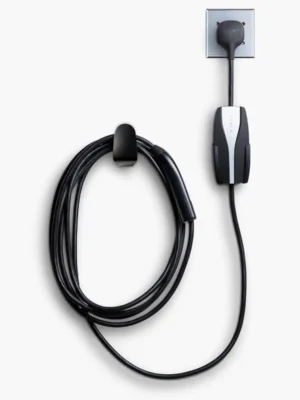
The Tesla Gen 3 Mobile Connector is the latest Tesla mobile charger, delivering up to 7.6 kW (32 amps at 240V) via a NEMA 14-50 or 6-50 adapter, which is roughly 30 miles of range per hour. It also works with standard 120V outlets at 1.3 kW. Offers PowerShare support on compatible vehicles like the Cybertruck and Model Y Performance, enabling basic bi-directional charging, including Vehicle-to-Load (V2L) and Vehicle-to-Vehicle (V2V), making it the most capable portable Tesla charger yet.
Charging Speed:7.68 kW
Max Amperage:32 Amps
Charging Level:Level 1, Level 2
Connector Type:NACS
Cable Length:20 Feet
Connectivity:Wi-Fi
Installation Type:NEMA 14-50, NEMA 5-15, NEMA 6-50
The Tesla Mobile Connector Gen 3 is our #1 rated NACS mobile charger here at Electric Vehicle Geek. It's a serious upgrade over its predecessor, bi-directional charging (Vehicle-to-Load (V2L), Vehicle-to-Vehicle (V2V), Vehicle-to-Grid (V2G), PowerShare support, and a higher charging capacity make it the most capable portable Tesla charger yet. It's the ideal pick for owners who want flexible, on-the-go charging without committing to a permanent wall installation.
Features
9
Real World Usage
8.5
Materials
8.5
Durability
9
Craftsmanship
8.5
Design
9
Monetary Value
9
Product Value
8.5
Brand Reputation
9.5
Expert Valuation
9
PROS:
Bi-directional charging (V2L & V2V)
PowerShare support
Portable and plug-and-play
Higher charging capacity than previous gen
No installation required
CONS:
No V2H & V2G support
Lower amperage than Universal Wall Connector
Requires compatible vehicle for bi-directional features
The Lectron Level 1 / Level 2 EV Charger is a practical, versatile, and affordable option for most EV drivers. It covers both charging speeds, works with virtually every J1772 vehicle, and goes wherever you go. The lack of smart features keeps the experience simple, and for many drivers, that's exactly what they want.It won't win any awards for cutting-edge technology, but it doesn't need to. What it does, it does well. If you're looking for a dependable portable charger that handles everyday needs without any hassle, the Lectron is a solid pick.
Features
9
Real World Usage
8
Materials
8.5
Durability
9
Craftsmanship
9
Design
9
Monetary Value
8.5
Product Value
8
Brand Reputation
9
Expert Valuation
8.5
PROS:
Dual plug compatibility (NEMA 5-15 & 14-50)
Supports both Level 1 and Level 2 charging
Portable and travel-friendly with carrying case
Safety features: overvoltage, overcurrent, short circuit protection
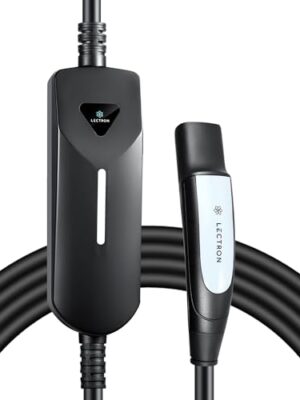
The Lectron Level 1/2 Tesla/NACS Charger offers portable, flexible charging with interchangeable 120V and 240V plugs. It supports Tesla Models 3, Y, S, X, and other NACS EVs, delivering up to 9.6 kW for reliable home or travel charging.
The Lectron Level 1/2 is a versatile dual-mode charger with solid in-built safety features and dependable performance at both 12A and 40A. It’s a smart pick if you want one unit that covers both slow overnight charging and faster Level 2 sessions.You might want to look at Tesla’s chargers, such as the Tesla Wall Connector or the Tesla Universal Wall Connector, if seamless integration with your Tesla and the Tesla app is a priority. Tesla’s native units offer smart charging features and real-time monitoring directly through the app. By contrast, the Lectron Level 1/2 keeps things simple: a reliable plug-and-charge unit without connectivity.Should you upgrade if you own the Lectron Level 1 Portable Charger? Yes, if you’re ready for faster 240V charging. Otherwise, stick with your Level 1 unless you hate its slow charging speeds.
Features
9
Real World Usage
8
Materials
8.5
Durability
9
Craftsmanship
9
Design
9
Monetary Value
8.5
Product Value
8
Brand Reputation
9
Expert Valuation
8.5
PROS:
Dual-level charging (12A Level 1 & 40A Level 2)
Compatible with Tesla and other NACS EVs
Interchangeable NEMA 5-15 and 14-50 plugs
Portable and travel-friendly
ETL certified with built-in safety protections
Real-time LED charging status indicators
CONS:
Level 2 charging requires NEMA 14-50 outlet installation
Not hardwired, less durable than wall chargers
Limited maximum amperage compared to some hardwired chargers
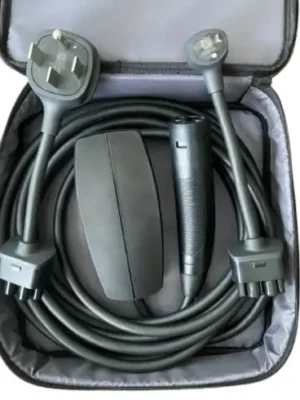
The Tesla Mobile Connector is a portable charger compatible with standard 120V and 240V outlets using interchangeable adapters. It delivers up to 7.6 kW of power, providing flexible, reliable charging for Tesla Models 3, Y, S, and X at home or on the go with a simple setup.
The Tesla Mobile Connector offers portability and ease of use, ideal for occasional charging or travel. However, it falls short as a daily home charger due to slower speeds, a lack of smart features, and update limitations, especially for non-Tesla owners. Best suited as a backup or secondary charger.
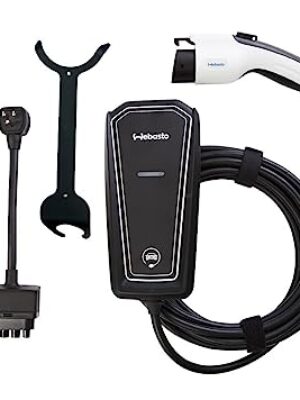
The Webasto Go Dual Voltage Portable EV Charger offers Level 1 and Level 2 charging (120V & 240V), ideal for home or on-the-go use. UL and IP67 rated for safety and durability, it delivers up to 7.7kW of power, charging up to 30 miles per hour. Compatible with all J1772-equipped EVs, including Tesla with an adapter.
The Webasto Go is a reliable, easy-to-use charger ideal for everyday use. It’s safe, efficient, and built with the needs of EV owners in mind, though potential buyers should consider its waterproof shortcomings.
Features
8
Real World Usage
8.5
Materials
9
Durability
9
Craftsmanship
8.5
Design
8.5
Monetary Value
9
Product Value
8.7
Brand Reputation
9
Expert Valuation
8
PROS:
Dual voltage (120V and 240V) for flexible charging
Advanced safety features with UL and cUL certifications
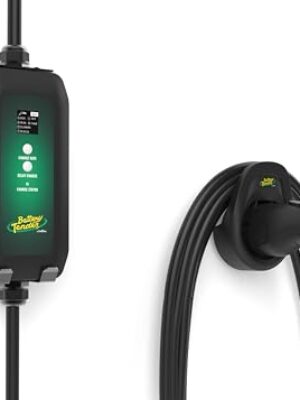
The Battery Tender eCharge 32 AMP EV Charger is a versatile Level 1+2 electric vehicle charger, compatible with 120V or 240V power sources. Offering 16A or 32A output, this portable EV charger is perfect for indoor and outdoor use, featuring multiple plug options like 5-15p, 5-20p, and NEMA 14-50R for flexible charging. Ideal for fast, reliable EV charging at home or on the go.
The Battery Tender eCharge 32 Amp is one of the more capable portable EV chargers on the market. It handles extreme temperatures, provides real-time data, adapts to your available power source, and doesn't require an app to function. If you want one charger for home and travel without compromise, this one earns its place in your trunk.
Features
9
Real World Usage
9
Materials
8
Durability
8.5
Craftsmanship
8.5
Design
8.5
Monetary Value
7.5
Product Value
8.5
Brand Reputation
9
Expert Valuation
9
PROS:
Can be used with both 120V and 240V power inputs, offering flexibility for different charging setups.
With options for 16A or 32A output, it provides fast charging times.
Suitable for both indoor and outdoor use, ensuring reliability in various conditions.
Comes with different plug types (5-15p, 5-20p, NEMA 14-50R) to fit various outlets.
CONS:
It’s on the higher end of the price spectrum, but the features justify the cost.
The variety of options might be overwhelming for some users.
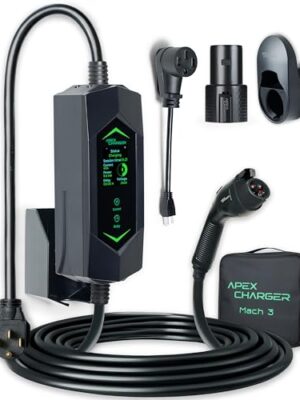
The ApexCharger MACH 3 EV Charger is a portable Level 1/2 dual-connector charger that supports both J1772 and NACS connectors. It features Wi-Fi app control, IP67 weather resistance, and pulsing LED indicators, making it a solid on-the-go and backup charging option.
Charging Speed:9.6 kW
Max Amperage:40 Amps
Charging Level:Level 1, Level 2
Connector Type:J1772, NACS
Cable Length:25 Feet
Connectivity:Bluetooth, Wi-Fi
Installation Type:NEMA 14-50, NEMA 5-15, NEMA 5-20
The ApexCharger MACH 3 EV Charger is the best option for EV drivers who want portability without sacrificing speed or smart features. With up to 40 Amps, dual-voltage input, Tesla compatibility, and a rugged, IP67-rated build, it beats most portable chargers on the market - especially in power and feature depth.While the ApexCharger MACH 2 is still the brand’s top-tier home unit, and the MACH 1 is the budget-friendly wall charger, the MACH 3 fills a different and crucial role: on-the-go charging wherever you need it, without calling an electrician.If you need a travel-ready backup or your lifestyle includes frequent road trips, the ApexCharger MACH 3 is one of the smartest, most reliable portable EV chargers available today.
Schumacher 12 Amp EV Charger is a Level 1 portable EV charger. It delivers 12 Amps at 120V with a 20-foot cable. Featuring a standard NEMA 5-15P plug and J1772 connector, it's a simple, reliable solution for home and travel, with ETL and Energy Star certifications.
The Schumacher SEV1670 is a straightforward, budget-friendly Level 1 charger. With a 20-foot cable and universal J1772 connector, it offers reliable charging for most EVs. Its IP65 rating ensures durability, though it's limited to 12 amps and lacks smart features.
Features
8
Real World Usage
8.5
Materials
8.5
Durability
9
Craftsmanship
8.5
Design
8.3
Monetary Value
8
Product Value
8.5
Brand Reputation
9
Expert Valuation
8.5
PROS:
20-foot cable provides ample reach for most parking setups.
Universal J1772 connector ensures compatibility with all major EV brands.
IP65 weather-resistant rating allows for indoor and outdoor use.
Plug-and-play design requires no installation.
LED indicators for clear charging status updates.
CONS:
Limited to 12 amps, resulting in slower charging speeds.
No smart features like Wi-Fi connectivity or app control.
Basic design lacks advanced user interface or customization options.
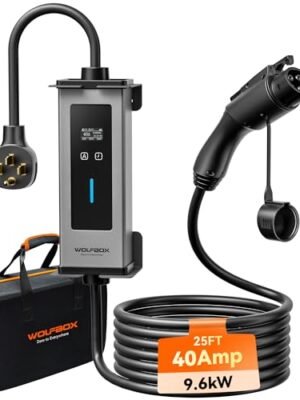
The WOLFBOX PE40 is a portable Level 2 charger delivering 40 amps and up to 9.6 kW with a J1772 connector. Its sleek design and 25-foot cable make it perfect for flexible, powerful charging at home or on the go for most electric vehicles.
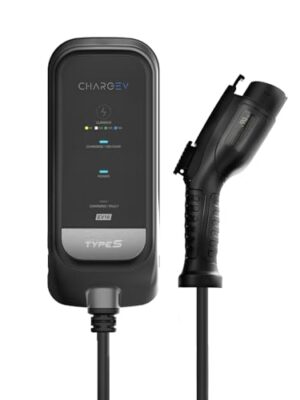
The Type S 16A Level 1 EV Charger supports 120V and 240V EV charging via NEMA 5-15, 6-20, and 10-30 outlets. Compact, weather-resistant, and adjustable, it's perfect for home, travel, or emergencies.
The Type S 16A Level 1 EV Charger is a premium-feeling, dependable Level 1 charger that does exactly what it promises: simple, safe, and reliable charging from any standard outlet. It’s not flashy, it’s not fast, but it’s highly practical and well built. If you’re okay with slower charging speeds and want a no-hassle EV charger for everyday or backup use, this is a solid choice.If you already have a Level 2 charger or want faster charging, consider stepping up to the Type S 40 Amp or other Level 2 options. Otherwise, give this a try—you won’t be disappointed.
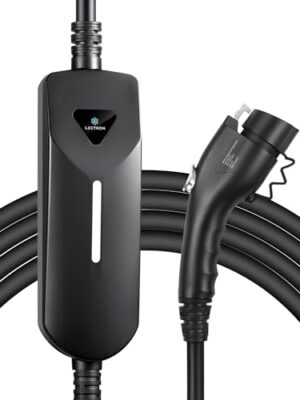
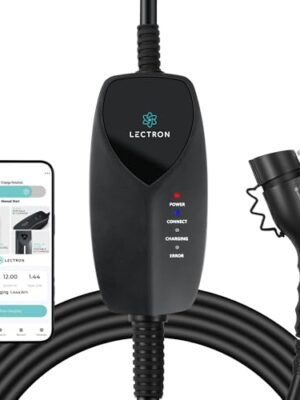
Compact and WiFi-enabled, the Lectron 12 Amp EV Charger delivers 120V, 12 Amp charging with app control. Includes a 16 ft cord and NEMA 5-15 plug. Compatible with all J1772 EVs.
The Lectron 12 Amp Level 1 charger does what it says - and then some more through smart EV charging features not common in Level 1 EV chargers. You won’t be amazed by its charging speed or 16ft cable, but the smart EV charging features, Lectron app, portable design, and strong safety features make it one of the better 12 Amps Level 1 options on the market.
Features
8.5
Real World Usage
7.5
Materials
8.5
Durability Over Time
8
Craftsmanship
9
Design
8.7
Monetary Value
8.5
Product Value
8
Brand Reputation
9
Expert Valuation
8
PROS:
Works with all J1772 EVs.
App control via WiFi and Bluetooth.
Supports scheduled charging and usage tracking.
Lightweight and travel-friendly.
IP65-rated for outdoor use.
Compatible with solar generators and 120V outlets.
Ideal for 15A circuits and small panels.
Reliable overnight charging (4–5 miles/hour).
Includes durable carrying case.
Easy to set up and use.
CONS:
Slow charging speed (Level 1 only).
Limited to NEMA 5-15 outlets.
16-ft cord may be too short for some setups.
App requires stable WiFi for full functionality.
Not dual-voltage - supports only Level 1 (120V) charging, with no Level 2 (240V) option.
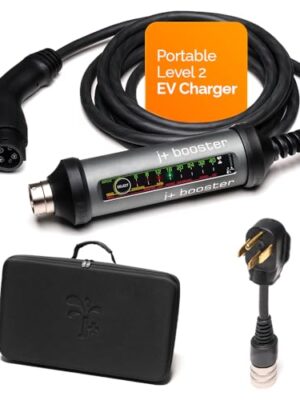
The J+ Booster 2 Portable EV Charger offers fast Level 2 charging (9.6 kW, 240V) for all-electric vehicles. With a 21ft cable, NEMA 14-50 plug, and ETL certification, it provides reliable power both indoors and outdoors. The included carrying case ensures easy storage and portability for convenient home charging.
Important Key Specs Table Legend:Level 1 = Level 1 only (120V). Level 1/Level 2 = dual-voltage portable (120V or 240V).
What is a 1.44 kW EV Charger?
A 1.44 kW EV charger is the standard entry point for home EV charging, commonly known as Level 1 charging. It operates on a 120V household circuit and delivers a continuous load of 12 amps, providing about 3–5 miles of range per hour of charging. Ideal for PHEVs or small EV batteries, it requires no special installation.
A 1.44 kW EV charger (Level 1 EV Charger) is a simple and cost-effective way to charge an electric vehicle, using a standard residential outlet while keeping device purchase and installation costs low compared to Level 2 chargers. It provides reliable overnight or low-mileage charging without requiring a major electrical upgrade, making it ideal for most American homes’ electrical systems.
1.44 kW EV Charger Buyer's Guide
At 1.44 kW, you are working with the most forgiving electrical scenario in the EV charging world. The buying decision is less about your home and more about your vehicle and how far you drive.
Why 1.44 kW is enough for most plug-in hybrids
A plug-in hybrid like the Toyota Prius Prime (13.6 kWh) or Ford Escape PHEV (14.4 kWh) fully recharges in about 10 to 11 hours at 1.44 kW. That fits a single overnight cycle. Going to a higher kW tier costs more for the charger, may need a panel upgrade, and gives you charge headroom you will never use. For a PHEV, 1.44 kW is the engineering match, not a compromise.
The NEMA 5-15 plug means no electrician required
A 1.44 kW charger plugs into any 120V outlet through a NEMA 5-15 plug, the standard outlet in every U.S. garage, kitchen, and bedroom. No new circuit, no permit, no inspection. The only requirement under NEC 210.8(A)(2) is that garage and outdoor outlets be GFCI-protected, which most modern homes already have. If your outlet is older than 1996, get it GFCI-replaced for around $30 before you start charging.
The 12-amp ceiling and why you cannot push it higher
1.44 kW is the absolute ceiling of a standard 15A household circuit under the NEC 80per centt continuous-load rule (NEC 210.20(A)). A 15A breaker can deliver 15 amps for short bursts but only 12 amps continuously for loads expected to run more than 3 hours. EV charging runs for 8 to 12 hours, well past that threshold. This is why you will never see a Level 1 charger above 1.44 kW on a 15A circuit. To get more, you need a 20A circuit or a 240V circuit.
When to skip 1.44 kW and go higher
If you drive a battery EV with a 75+ kWh pack and commute more than 40 miles daily, 1.44 kW will not keep up. A Tesla Model Y at 75 kWh from empty takes about 52 hours at 1.44 kW. You will arrive home some evenings with the car already low and not enough overnight hours to refill it. If that describes your driving, jump straight to a Level 2 charger at 7.68 kW or higher.
EVs and PHEVs That Match 1.44 kW
1.44 kW matches the onboard charging architecture of plug-in hybrids and small-battery EVs almost exactly; it undermatches mid-size and full-size EVs.
Best matches at 1.44 kW include the Toyota Prius Prime, Ford Escape PHEV, Kia Niro PHEV, Hyundai Tucson PHEV, Mitsubishi Outlander PHEV, BMW 330e, Volvo XC60 Recharge, Lincoln Corsair Grand Touring, and Chrysler Pacifica Hybrid. All carry batteries between 12 and 18 kWh that recharge fully overnight at 1.44 kW. Vehicles that will technically charge but will not keep up with daily driving include the Tesla Model 3 Standard, Chevy Bolt EUV, Nissan Leaf 40 kWh, and Hyundai Ioniq 5 SE, where 1.44 kW becomes an emergency backup rather than a primary charger.
Real-World Charging Math at 1.44 kW
Charging time depends on three things: battery size, charger output, and AC-to-DC conversion losses in your car’s onboard charger. Real-world efficiency runs roughly 90 per cent because of heat losses during AC-to-DC conversion. The formula:
A 13.6 kWh Prius Prime battery: 13.6 ÷ (1.44 × 0.90) = 10.5 hours from empty to full. A 75 kWh Tesla Model Y battery: 75 ÷ (1.44 × 0.90) = 57.9 hours from empty to full. The Prime is overnight. The Tesla is 2.4 days, which is why 1.44 kW is wrong for that car. Daily driving math matters more than full-charge math. A 40-mile commute uses about 12 kWh, which 1.44 kW replenishes in 9.3 hours of overnight charging. That works for most BEVs as long as you do not arrive home empty.
How to Install a 1.44 kW EV Charger
1.44 kW is the only kW tier in the U.S. where ‘no installation’ is a real answer. You plug into an existing 120V outlet, and you are done.
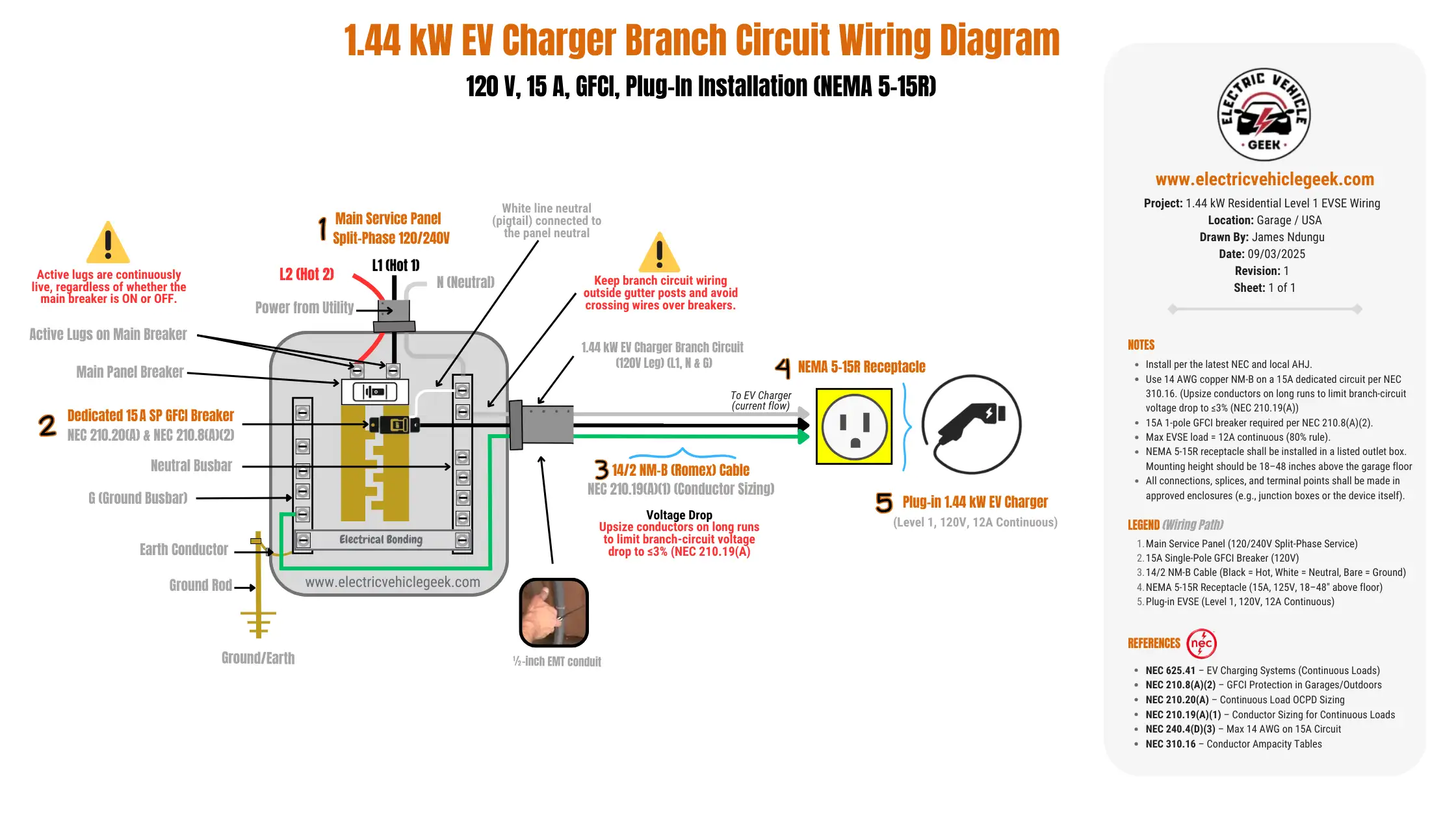
The branch circuit must be 14 AWG copper minimum, protected by a 15A single-pole breaker, with the receptacle GFCI-protected per NEC 210.8(A)(2) for garage and outdoor locations. If you have an older home with shared circuits, confirm that no other major load (chest freezer, space heater) shares the outlet. Continuous EV charging will trip the breaker if the circuit is also feeding a 5A load somewhere else. Voltage drop becomes a concern only past 50 feet of run; under that, 14 AWG handles 12 amps at 120V with less than 2 percent drop.
For the deeper breakdown of breaker sizing, conductor selection, and NEC compliance specifically for this current draw, see our 12 Amp EV Charger archive.
For safe operation, the branch circuit must be protected by a dedicated 15A single-pole GFCI breaker, in accordance with NEC 210.20(A), which requires overcurrent devices to be rated for continuous loads. GFCI protection is also required by NEC 210.8(A)(2) in garages and outdoor locations. This breaker configuration ensures both safety and code compliance for a 1.44 kW Level 1 EV charger installation.
The correct conductor size for this installation is 14 AWG solid copper, as specified in NEC 210.19(A)(1). For concealed indoor runs, 14/2 NM-B (Romex) cable is suitable. Where wiring is exposed, the preferred method is THHN copper conductors in ½-inch EMT conduit, which offers superior mechanical protection and long-term durability.
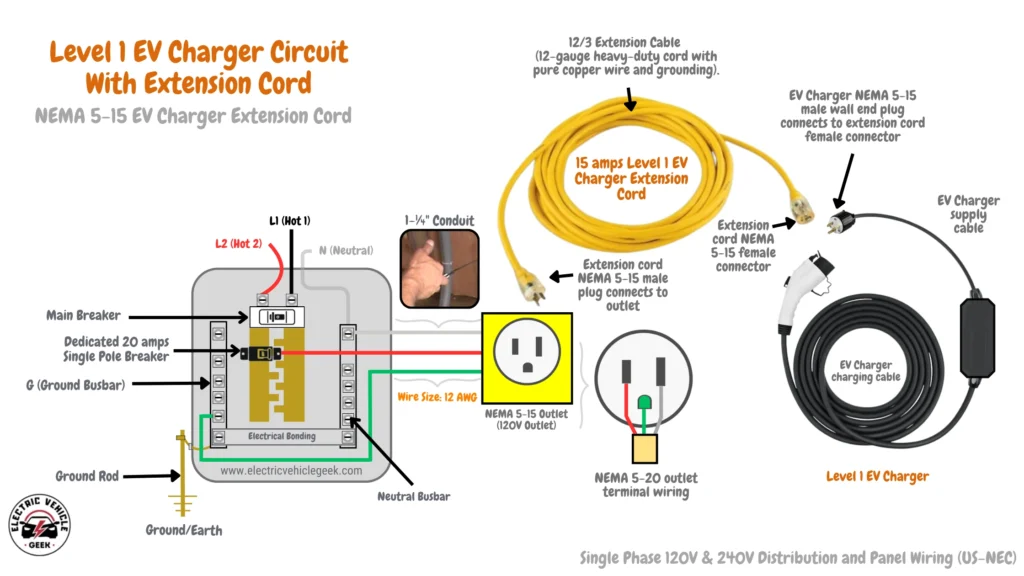
The length and gauge of EV charger installation conductors directly affect charging performance, especially when using a Level 1 EV charger extension cord to extend the reach of your 1.44 kW Level 1 EV charger. Excessive distance increases voltage drop, which reduces efficiency and can increase the risk of overheating. The NEC recommends limiting voltage drop to 3% on branch circuits.
For a 1.44 kW Level 1 EV charger extension, we recommend the EP Level 1 EV Charger Extension Cord, a heavy-duty cord designed to safely extend your charger’s reach while maintaining efficient power delivery.
This heavy-duty extension cord is built with 12-gauge pure copper wiring, safely handling 15 amps at 125 volts (1875 watts). Its thicker gauge prevents overheating and ensures reliable, efficient charging, making it the perfect choice for your 1.44 kW Level 1 EV charger extension.
Voltage drop occurs when cords are too long or too thin, reducing the power delivered to the charger and slowing the charging process. Poor connections can also contribute. The EP extension cord, featuring 12-gauge wire and secure connectors, minimizes voltage drop, ensuring reliable and efficient charging even when your 1.44 kW Level 1 EV charger is relocated.
Our recommendations are as follows: at 50 feet, 14 AWG copper results in about a 2.5% drop, which is acceptable. At 100 feet, 14 AWG causes a nearly 5% drop, which is too high for EV charging. To maintain efficiency and safety, we recommend upsizing to 10 AWG copper for any run approaching 100 feet, as this keeps voltage drop closer to 2% and ensures reliable charging performance.
Most 1.44 kW Level 1 EV chargers are also called NEMA 5-15 Level 1 chargers because they plug into a standard home NEMA 5-15 outlet. For garages and outdoor areas, a GFCI-protected NEMA 5-15 outlet is required by NEC 210.8(A)(2). Using the correct outlet ensures safe and reliable charging every time.
For the best results, we recommend the top-rated NEMA 5-15 outlets we’ve reviewed. These outlets feature durable construction, reliable GFCI protection, and long-lasting performance, giving you peace of mind while charging your EV. Pairing your charger with a high-quality outlet helps prevent electrical hazards, ensures consistent power delivery, and keeps your home charging setup safe and efficient.
1.44 kW Level 1 EV charger outlet placement is critical for usability and safety. The outlet should be:
Placed within convenient reach of the vehicle’s charging port for reliable use, reducing strain on the cable and ensuring safe, consistent connections every time
Positioned close to the electrical service panel to reduce wire distance, minimize voltage drop, and ensure safe, efficient power delivery
Mounted 18 to 48 inches above the garage floor, which balances accessibility, protection from moisture, and user convenience
We recommend labeling the outlet “For Electric Vehicle Charging Only”. This practice prevents accidental misuse of the receptacle, ensures clarity for inspectors, and reinforces that the circuit is dedicated to continuous EV charging.
Permits and Code Compliance
Most jurisdictions require a permit and inspection for EV charger installation, and this step should never be skipped. Always confirm requirements with your Authority Having Jurisdiction (AHJ) before starting work.
This guide follows the principles of the National Electrical Code (NEC), but local amendments may add further requirements. Compliance with both NEC and local codes is mandatory for a safe and approved installation.
Expert Help Selecting Your 1.44 kW Charger
Perfect for low-mileage EVs, a 1.44 kW charger keeps overnight charging simple and safe. Our experts guide you to the most compatible models while helping you save up to 20% on the charger and reduce overall project costs.
Can a 1.44 kW charger fully charge my EV overnight?
For plug-in hybrids and small-battery EVs (under 30 kWh), yes. The Prius Prime, Escape PHEV, and Pacifica Hybrid all reach full charge in 8 to 11 hours, which fits a standard overnight window. For mid-size and full-size BEVs like the Tesla Model 3 or Hyundai Ioniq 5, 1.44 kW will not fully refill an empty battery overnight, but it does cover average daily driving of 30 to 40 miles.
Do I need a permit to install a 1.44 kW charger?
No, because there is no installation. The charger plugs into an existing 120V NEMA 5-15 outlet. The only inspectable work is if you need to replace an old non-GFCI outlet with a GFCI-protected one, which is a $30 part and may or may not require a permit depending on local code. Always confirm with your Authority Having Jurisdiction.
What happens if I plug a 1.44 kW charger into a 20A circuit?
Nothing different. The charger will still draw 12 amps because that limit is set by the charger's internal current sensor, not the breaker. The 20A circuit just provides more headroom, which is fine, but does not give you faster charging. To get faster charging from a 20A circuit, you need a 1.92 kW or 2.0 kW charger that actually draws the higher current.
Why does the same charger sometimes list as 1.4 kW, 1.44 kW, or 1.5 kW?
Marketing rounding. 1.44 kW is the precise value of 120V × 12A. Brands round down to 1.4 kW for simpler marketing or up to 1.5 kW for nicer optics. The actual current draw of 12 amps does not change, so the charge speed does not change. Look at the amperage, not the kW label, when comparing units.
Can I use a 1.44 kW charger outside in the rain?
Most 1.44 kW chargers are rated IP65 or IP67 on the EVSE body, meaning rain and splashes are fine. The weak point is the NEMA 5-15 outlet itself, which needs an in-use weatherproof cover (NEC 406.9(B)) for outdoor installations. Without the cover, water can enter the outlet body even when something is plugged in.
Will a 1.44 kW charger work during a power outage?
No. Like every grid-tied EV charger, 1.44 kW units shut down when grid power drops. You can backfeed a 1.44 kW charger from a battery storage system or portable power station rated above 1.8 kW continuous output, which is one of the few scenarios where this kW tier becomes interesting for off-grid or backup setups.
Is 1.44 kW the same as 110V charging?
Essentially yes. U.S. household outlets are nominally 120V but can sag to 110V under load or in older infrastructure. At 110V, a 12A charger draws 1.32 kW. At 120V, 1.44 kW. At 125V (the upper end of nominal U.S. voltage), 1.5 kW. All three values describe the same physical charger; the kW you actually get depends on your home's measured voltage at the outlet under load.
Looking for chargers with different power outputs? Check out these common options, ranging from entry-level 1.44 kW Level 1 chargers to high-output 19.2 kW Level 2 EV chargers.
Tip: Use this table to quickly see how charging speed, type, and usage vary across kW ratings. Browse EV chargers by kW to explore how charging speed, type, and usage vary – Access all reviews from 1.44 kW to 19.2 kW on our EV Charger kW Ratings & Reviews hub page.