


Jicxv NACS V2L Adapter Review

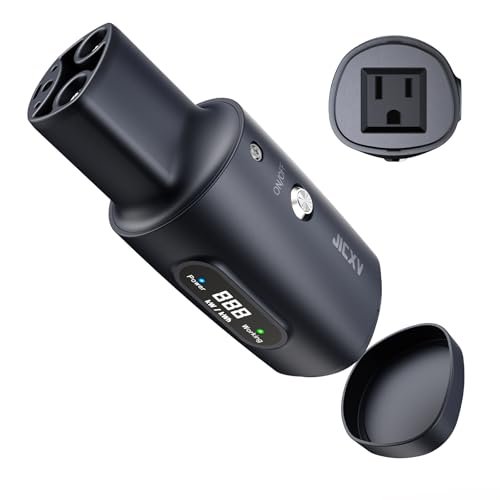
NACS V2L adapter for 2025+ Hyundai Ioniq 5/6/9, 2026+ Kia EV3/5/6/9, and 2025+ Genesis. Outputs 2.4 kW through a NEMA 5-20 socket with live LED telemetry.
An honest, first-hand review of the NACS-native V2L adapter built for the newest generation of EVs.
Why I Bought It
After Hyundai and Kia moved to native NACS ports on their 2025 and 2026 model years, my older J1772 adapters became useless. I borrowed a 2025 Ioniq 5 long-term tester from a friend and needed a V2L adapter that fit the new port shape.
The Jicxv was one of the first NACS-native V2L adapters to hit the market with real specs and a clean compatibility list. I spent about three months using it across camping trips, a tailgate, and one impromptu backup test for my home office during a storm warning. Here is the honest report.
First Impressions
The Jicxv feels like a generation ahead of the EVDANCE. The housing is bigger, with a flame-retardant UL94V-0 shell and a small LED screen on the front. It is heavier and blockier, but the build feels purpose-engineered for the next decade of EV infrastructure rather than the last one.
The NEMA 5-20 outlet on the output side is the giveaway that this is a 20-amp unit rather than a basic 15-amp one. The screen lights up the moment power begins to flow, and a satisfying motorized click confirms the anti-theft latch is engaged. It is the first V2L adapter I have used that genuinely feels like a piece of modern hardware rather than a glorified plug.
What I Liked
The Live Telemetry Screen Is a Game Changer
This is the feature that justifies the price premium. The LED screen shows live kilowatt draw and cumulative kilowatt-hours used during the session. When I plugged in a portable induction cooktop for the first time, the screen showed exactly how close I was to the 2.4 kW ceiling in real time.
With my older EVDANCE, I had to guess. Either I underused the adapter to stay safely under the limit, or I triggered a surprise shutoff when an appliance surged past the cap. With the Jicxv, the guesswork is gone. I run my gear right up to about 2.2 kW and never get a shutdown.
The 20-Amp Ceiling Is Real Power.
The jump from 1.8 kW (EVDANCE) to 2.4 kW (Jicxv) sounds small on paper. In practice, it is the difference between running one appliance comfortably and running two together. I have powered a 1,200W induction cooker and a 700W mini-fridge on the same circuit without a hiccup. Try that on a 15-amp adapter,r and the car cuts the power within minutes.
Motorized Anti-Theft Lock
This was my favorite small detail at the campground. The car physically locks the adapter into the NACS port using a motorized pin once V2L is engaged. Nobody can walk up and yank an $80 adapter out of your trunk while you are off filling up the cooler. The OEM units have this, but most cheap adapters do not.
Future-Proof for the NACS Era
Hyundai, Kia, Genesis, GM, Ford, and most other US manufacturers have committed to NACS by 2026. Any J1772 adapter you own today is heading for obsolescence. The Jicxv is one of the few NACS-native V2L adapters in the market right now, which means it is going to stay useful for the entire lifetime of your next EV purchase.
The Quirks Nobody Warns You About
The Screen Will Throw You Into a Wattage Panic
The first time I plugged in an electric kettle, the screen jumped from a green 0.2 kW to a flashing red 2.6 kW within a single second. The car immediately cut the circuit. I thought the adapter was broken.
It was working perfectly. Electric kettles have a massive cold-start surge that exceeds 2.4 kW for the first few seconds. The Jicxv reports this honestly, unlike a dumb adapter that just dies silently. Once I knew what I was looking at, the screen became my best friend. Now I check appliance labels like a hawk before plugging anything new into the Jicxv.
The 60-Second Handshake Window
The Jicxv communicates dynamically with the newer NACS digital framework, which means it has a strict initialization sequence. You must enable V2L on the infotainment screen first, open the charge port, and insert the adapter within 60 seconds. If you miss that window, the port goes into power-save mode, and the adapter just sits there dead.
This caught me twice in the first week. Now I treat it like a software boot sequence. Enable V2L, walk to the back of the car, plug in within a minute. After that, it is rock solid.
The Unplugging Sequence Is Strict
The motorized lock that protects your adapter from theft also locks it during normal use. If you pull on the Jicxv while power is flowing, the car interprets that as a theft attempt and clamps down harder. The first time I tried this, I broke a nail and got nowhere.
The correct sequence is to turn off your appliance first, hit unlock on the key fob, and pull the adapter out within 15 seconds. Wait too long and the carrelocks. It sounds fussy, but after the first weekend, it becomes muscle memory.
Same Floating Ground as Every Other V2L
Like every third-party V2L adapter on the E-GMP platform, the Jicxv has a floating neutral. Standard appliances do not care, but sensitive gear (EcoFlow, Bluetti, certain medical devices, some emergency home backup panels) will throw an open ground error and refuse to operate.
The fix is the same $10 neutral-ground bonding plug I use with my EVDANCE. Drop it into a power strip alongside the sensitive device, and the floating neutral becomes invisible to the gear.
It Puts Leverage on the Charge Port
The Jicxv is heavier and blockier than the EVDANCE, and it sticks straight out from the car body. Any thick extension cord plugged into the back of it puts noticeable downward leverage on the NACS port over a long camping weekend.
My solution is a small velcro strap that anchors the extension cord to a wheel well or tire. Five seconds to set up, and it completely removes the strain on the port itself. The OEM Hyundai adapter has a similar issue, so this is not unique to the Jicxv.
A Closer Look at How It Performs
What three months of real-world use revealed about the Jicxv across every part of how it lives in your trunk.
After three months of running this adapter through camping trips, tailgates, and one impromptu home backup test, I have a clear sense of where the Jicxv earns its premium and where the design choices show their seams. Here is the full breakdown of how it actually performs across the areas that matter.
Build Quality
The Jicxv feels like a generation ahead of the budget adapters I have tested. The UL94V-0 flame-retardant shell is dense, with a tight weave to the seams that suggests the unit was engineered to a real safety standard rather than rushed to market.
The motorized locking pin clicks with a satisfying precision when the car engages it. Nothing rattles, nothing flexes, and the LED screen housing is set flush against the body without any of the gaps you sometimes see on screen-equipped accessories. Three months in, my unit still looks like it just came out of the box.
The only build complaint I have is the weight. The blockier housing required to accommodate the screen and the 20-amp architecture means this adapter sits heavier in the port than the slim J1772 alternatives. That weight is honest, not poorly distributed, but it is something you feel.
Handshake Reliability
Once you respect the rules, the Jicxv handshakes flawlessly. Across roughly 40 plug-in cycles, I have not had a single random failure. When V2L was enabled and the adapter was inserted within the 60-second window, the unit triggered every time.
The catch is that 60-second initialization window. Twice in my first week I missed it because I was setting up a tent or troubleshooting a different piece of gear, and the adapter just sat there blank. The fix is a power-cycle of the V2L menu and a restart of the sequence, which is annoying but consistent.
Compared to older J1772 adapters that you could plug in and ignore, the Jicxv asks for a little more discipline. Once you build the habit, the handshake is rock solid. If you treat it like a dumb wall outlet, you will fight with it for the first weekend.
Real-World Power Delivery
This is where the Jicxv earns its price tag. The 2.4 kW continuous ceiling is not a marketing figure. I have run it at a sustained 2,200 watts for over an hour powering a portable induction cooker and a small fridge in parallel, and the screen held steady the entire time.
The headroom genuinely changes how you use V2L. With a 1.8 kW adapter, I had to choose between an espresso machine OR a fridge. With the Jicxv, I can run both. That single extra appliance is the difference between a useful camping setup and a frustrating one.
Where the ceiling still bites is high-surge appliances. Electric kettles and large vacuum motors can spike past 2.4 kW for a fraction of a second at startup, which trips the cutoff. The screen is honest about this, which I appreciate, but the limitation is real. For continuous loads, the Jicxv overdelivers. For surge loads, you still have to be careful.
Ease of Use
The Jicxv is straightforward once you accept that it is a piece of digital hardware, not a dumb plug. Enable V2L in the car, insert the adapter within 60 seconds, plug in your appliance, and watch the screen confirm power flow.
Daily use is genuinely simple. The screen tells you exactly what is happening, the motorized lock confirms when the unit is secure, and the unlock sequence becomes second nature after a few cycles.
The learning curve is in the disconnection ritual. The car physically locks the adapter to the port during V2L sessions to prevent theft, which means yanking it out by force is not an option. You have to shut off appliances, press unlock on the key fob, and remove the adapter within 15 seconds before the lock re-engages. New users will fight this for the first day or two. Veterans will not give it a second thought.
Weather Resistance
The sealing on the Jicxv is genuinely good. The NACS port-side connector is gasketed cleanly, and the screen housing is sealed against splash and dust ingress. Three months of mixed-weather use, including one heavy thunderstorm at a campground, have not produced a single weather-related fault.
Where it falls short of the OEM Hyundai accessory is the lack of a built-in rain hood over the NEMA 5-20 output socket. The OEM has a small rubberized overhang. The Jicxv does not.
In practice this matters less than the marketing makes it sound. The screen-side of the adapter sits flush against the car body, which provides natural shielding. The wall outlet faces downward when plugged in, so direct rain on the socket is rare. For most use cases the sealing is more than adequate. For Pacific Northwest or UK buyers running it in heavy weather, a simple weather cover bought separately will close the gap.
Portability
This is the area where the Jicxv pays the price for its premium features. The unit is noticeably bigger and heavier than older J1772 adapters because it has to accommodate the LED screen, the 20-amp NEMA 5-20 architecture, and the motorized locking mechanism.
It will not fit in a glovebox. It lives in a trunk side pocket or a dedicated zippered case if you want to keep it from rattling around. That is a real downgrade from the slim J1772 adapters that disappear into any small compartment.
The shape is also blockier rather than curved, which means it puts more leverage on the charge port when you plug a thick extension cord into the back. I use a small velcro strap to anchor the cord to a wheel well during long sessions, which removes the strain completely. It is a workaround I would not have needed with a lighter adapter.
Safety Features
Safety is where the Jicxv really separates itself from budget adapters. The motorized anti-theft locking pin means nobody can walk up to your car at a campground and steal an 80-dollar adapter while you are off filling up the cooler. Older adapters rely only on the basic port latch, which an experienced opportunist can bypass.
The surge cutoff is also sharper than what I have seen on other adapters. When an appliance spikes past 2.4 kW, the Jicxv kills the circuit before the car even processes the overload. That happens fast enough that I have never seen a downstream device take damage from a surge event.
The screen also serves as a safety feature in its own right. The flashing red warning when wattage approaches the ceiling gives you a real-time signal that no LED-only adapter can provide. I have caught two potential overloads in three months just by watching the screen turn yellow before they got red.
Display and Telemetry
The screen is the headline feature of this adapter, and it lives up to the marketing. The live kilowatt readout and the cumulative kilowatt-hour tracker change how I use V2L day to day.
With an LED-only adapter, I was guessing. Was I close to the limit? Was the fridge actually drawing what it claimed? Was the slow cooker idle or active? With the Jicxv screen, all of that is answered in real time. I can run my gear right up to about 2.2 kW and know exactly when I am about to trip something.
The kilowatt-hour counter is useful in a different way. Over a weekend camping trip, I can see exactly how much energy I have pulled from the car and translate that back into miles of driving range using the simple 3-to-4-miles-per-kWh rule. That tells me when I need to top up before the drive home. No other adapter category gives you that kind of confidence.
Value for Money
Pricing the Jicxv against its competitors is more nuanced than it looks. It is significantly more expensive than budget J1772 adapters like the EVDANCE, but it is also significantly cheaper than the OEM Hyundai or Kia accessories for the new NACS port.
What you get for the price difference over the budget tier is real: a true 2.4 kW ceiling, a live telemetry screen, a motorized anti-theft lock, and a NACS plug that actually fits the cars built from 2025 onward. Those are not vanity features. Each one earns its keep in regular use.
What you save over the OEM is also real: roughly two-thirds of the price for an adapter that delivers comparable function and arguably better information. The OEM still wins on warranty backing and rain hood design, but the Jicxv covers the practical bases for a fraction of the cost. For most owners of a NACS-equipped E-GMP car, this is the smart middle path.
Long-Term Reliability
Three months is not enough time to make confident claims about long-term durability, but the early signs are excellent. My unit shows zero visible wear on the contacts, no degradation in the screen brightness, and no slack in the motorized lock mechanism.
The flame-retardant shell still looks new. The seal around the screen housing is tight. The handshake still triggers within the same window every time, which is the best leading indicator that the internal resistor and signaling pins have not drifted.
The real test will come at the one-year and two-year marks, when sealed electronics tend to expose their failure modes. Based on the build quality I am seeing today, I would bet on the Jicxv aging well. But I cannot promise that yet, and any honest review has to leave that asterisk in place.
Jicxv vs EVDANCE V2L Adapter
If you are reading this review, you have also looked at the EVDANCE V2L adapter. Here is the direct side-by-side comparison.
My Final Take
For owners of 2025+ Hyundai Ioniq, 2026+ Kia EV models, or 2025+ Genesis with NACS ports, the Jicxv is the best third-party V2L adapter I have used. The combination of true 20-amp headroom, live telemetry, and motorized anti-theft locking puts it in a different category from the older J1772 budget plugs.
The catches are software-related, not hardware-related. Respect the 60-second handshake window. Use the correct disconnect ritual. Keep a bonding plug in the trunk for sensitive gear. Once those become a habit, the Jicxv is the most reliable V2L adapter I have tested on the new platform.
If your car has a J1772 port (2024 or older), the Jicxv will not fit. Buy the EVDANCE instead. If your car has NACS, the Jicxv is the smart upgrade over both OEM and budget options.

There are no reviews yet.