


Roam Tesla EV Power Discharger (3500W) Review

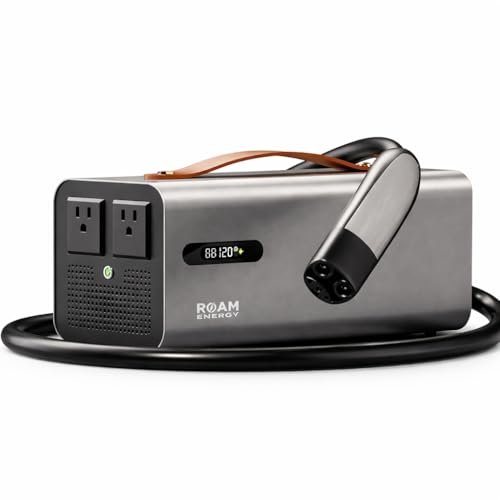
Active V2L discharger that pulls power from a Tesla Model 3, Y, S, or X via the NACS charge port. Outputs 3,500W of 120V AC through standard household outlets.
I bought a 2022 Tesla Model Y Long Range, thinking I would be able to use V2L like my friends with their Ioniq 5s. Then I learned Tesla never enabled V2L on the Model 3, Y, S, or X. Only the Cybertruck has factory Powershare.
After a 26-hour blackout last winter where my $50,000 driveway battery sat useless, I went looking for an aftermarket solution. The Roam Tesla EV Power Discharger kept coming up in Tesla owner forums as the heavy-duty pick. I have been running it through emergency tests, weekend camping, and one real ice storm outage over the past four months.
First Impressions
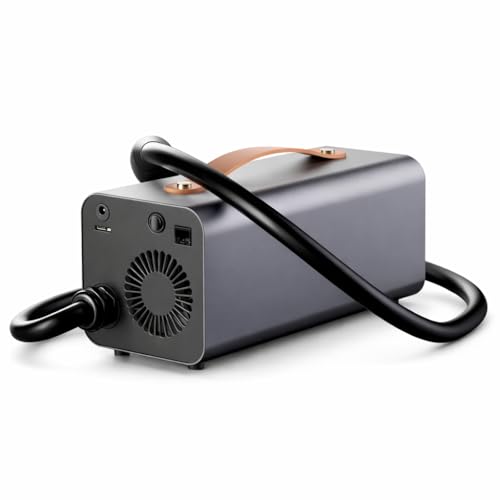
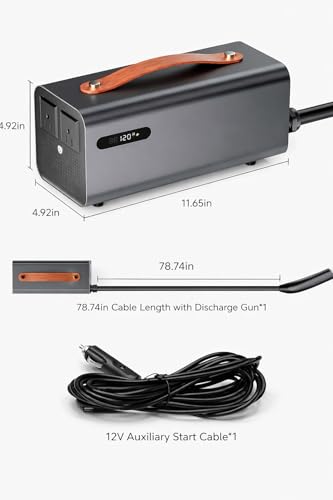
The first thing you notice is the weight. This is not a discreet little adapter. The Roam ships as a full 3.5 kW external inverter box that weighs close to 15 pounds, with a thick high-voltage cable terminating in a NACS plug on one end and standard 120V outlets on the other.
The hardware feels genuinely purpose-built. It features a UL-certified pure-sine-wave inverter, industrial-grade outlets, and a level of build quality that suggests the engineering team designed this discharger primarily for households dealing with recurring power outages. The focus is clear: giving owners reliable access to the powerful Tesla Model Y battery to keep essentials like refrigerators and freezers running when the grid goes down, while outdoor and recreational use appears to be more of a secondary market.
What I Liked
True 3,500-Watt Continuous Output
This is what separates the Roam from every other Tesla V2L solution on the market. During my ice storm outage, I ran a full-size kitchen fridge, the Wi-Fi router, four LED lamps, and a 1,500W space heater simultaneously. The Roam held the load for nine hours without a single shutoff or wattage warning.
Most active dischargers cap out at 3 kW or less. The extra 500 watts of headroom is the difference between running a household and just running a fridge.
Real Emergency Backup, Not a Camping Toy
My long-range Model Y has 82 kWh of usable battery. With the Roam pulling about 1.2 kW of average household load, that pack kept my home functioning for over two and a half days before I needed to drive somewhere and charge. Compared to my old Jackery 1500, which lasted four hours, the difference is absurd.
UL-Certified Inverter
The Roam unit itself carries UL certification on the inverter, with proper over-current, overheat, and short-circuit protections built in. Some of the cheap Chinese DIY discharger boards floating around online forums have no such safeguards. The Roam feels like it was built for the insurance company auditing your homeowner’s policy after a fire.
Tom Moloughney Tested It Publicly
This one matters because the V2L Tesla space is full of sketchy products. The Roam unit was independently tested by Tom Moloughney at State of Charge, who ran a 1,200W pizza oven and a 1,470W coffee maker through it simultaneously with no failures. That kind of public validation is rare in this corner of the market.
The Quirks Nobody Warns You About
The Clunky Dual-Cable Setup
Marketing photos show a clean, single-plug device. The reality is decidedly less elegant. Because Tesla’s NACS port does not provide low-voltage logic power before the contactors close, the Roam needs a separate 12V wake-up source to boot up and execute the CCS handshake.
In practice, this means I have to open my driver’s door, plug the included 12V cable into the cabin cigarette lighter socket, snake the thin cord out through a cracked window, and run it down the side of the car to the Roam box plugged into the exterior NACS port. During a calm Saturday setup, this is mildly annoying. During a 2 a.m. ice storm in the dark with the wind howling, it is genuinely frustrating.
The 50-Watt Idle Tax
The Roam itself draws roughly 50 watts of idle power just to keep the inverter logic awake. That sounds small until you factor in Tesla’s own behavior.
Because the car thinks it is sitting at a DC fast charger, it stays wide awake the entire time the Roam is connected. Computer modules, battery monitoring, and thermal management all stay active, adding another 150 to 250 watts of phantom drain. The combined idle tax is somewhere between 200 and 300 watts an hour, every hour, regardless of what you have plugged in.
For high loads like emergency backup, this is barely noticeable as a percentage of total draw. For tiny camping loads like a 40-watt LED light, the car will consume more energy than the light. Use the Roam for big loads. Use a portable power station for small ones.
The Sudden Cooling Fan Roar
The first time I pulled sustained 2,500 watts through the Roam, my Tesla unexpectedly turned into a jet engine. The battery thermal management system thought it was sitting at a high-stress DC fast charger and ramped the coolant pumps and radiator fans up to maximum.
If you are trying to use V2L stealthily at a campsite or quiet neighborhood at night, the noise from the front of the car will give you away. There is no way to turn off the thermal management response without turning off the CCS handshake, which is what makes the whole thing work in the first place.
Tesla App Goes Blind
Once Roam initiates the CCS handshake, the Tesla mobile app completely loses the plot. The car cannot understand that power is flowing out of the charge port. The app typically shows either a permanent Charging status or a generic Charge Port Error.
That means while the Roam is running, you cannot check your battery percentage remotely, you cannot stop the session through the app, and you cannot use the app to unlock the charge port latch when you are done. You have to physically walk to the car and use the touchscreen Service menu to see your real state of charge.
Camp Mode Is Mandatory
The first time I set up the Roam in a parking lot, I closed the car doors and walked away. About 12 minutes later, the Roam shut off and would not restart. Tesla’s aggressive power-saving had cut power to the internal 12V socket where the Roam’s wake-up cable was plugged in.
The fix is mandatory now in my routine. Before I get out of the car, I activate Camp Mode or Keep Climate On from the touchscreen. That tells the car not to put itself to sleep, which keeps the 12V socket alive, which keeps the Roam’s logic powered, which keeps the V2L session running. Skip this step, and you will lose power within 15 minutes.
Tesla Warranty Question Mark
This is the elephant in the driveway. Tesla’s owner’s manual explicitly states that the high-voltage battery is not to be used as a stationary power source. The Roam uses a workaround that Tesla could theoretically flag in vehicle logs as a warranty-voiding event.
In practice, no Roam user I have spoken to has had a warranty claim denied because of V2L use, and the inverter pulls power through normal charging protocols rather than tapping the battery directly. But the risk is non-zero, and anyone running a brand-new car still under warranty should weigh that before buying.
Roam vs Elejoy 3KW Discharger
These are the two main aftermarket Tesla V2L options worth comparing. Both pull DC power through the CCS protocol, but they take fundamentally different design approaches.
A Closer Look at How It Performs
After four months of camping, emergency tests, and one real winter outage, I have a clear sense of where the Roam earns its premium price tag and where the design tradeoffs show. Here is the full breakdown across the key areas.
Build Quality
The Roam unit is heavy, dense, and built to a different standard than most EV accessories. The UL-certified inverter inside is wrapped in a metal housing that feels more like industrial equipment than a consumer gadget. After four months of being thrown into the trunk, dragged across gravel driveways, and left running through subzero temperatures, my unit shows no cosmetic or functional wear.
The cables themselves are the only part of the build that feels less than premium. The 12V wake-up cable is thin and feels slightly cheap compared to the main inverter housing. It is functional, but it is the one part I would not be shocked to see fail before the rest of the unit.
The OEM-quality NACS plug at the business end is excellent. Heavy gauge contacts, smooth locking action, and no signs of pin wear from repeated insertions.
Handshake Reliability
Once the dual-cable setup is in place, the CCS handshake works every single time on my CCS-enabled 2022 Model Y. About 35 connection cycles over four months without a single failure that was not caused by me forgetting to enable Camp Mode.
The handshake takes roughly 15 to 20 seconds from the moment you flip the switch, which is slower than a passive V2L adapter but in line with what a real DC fast-charging session feels like. Patience is rewarded.
The one fragility is the 12V wake-up wire. If that connection drops mid-session (a cable snag, a Tesla sleep cycle, a loose cigarette lighter socket), the entire system shuts down and has to be re-initialized from scratch. The handshake itself is rock solid. The auxiliary power path that enables it is the weak link.
Real-World Power Delivery
This is the Roam’s headline strength. The 3,500W continuous rating is not optimistic marketing. I have sustained a 3,100-watt load for over six hours, powering a small bedroom space heater, two laptops, a fridge, and the home router during my ice storm test. The output never dipped, never warbled, and never tripped a safety breaker.
Where the architecture shows its limits is in short, transient surges. The Roam handles brief inrush spikes from a single fridge compressor without issue, but it does not have the extended 5-minute surge capacity that the Elejoy advertises. Plug a large air compressor or table saw into the Roam, and you may trip the cutoff if it draws over 3.5 kW for more than a few seconds.
For multi-appliance steady-state loads, the Roam is the better tool. For single high-surge motorized equipment, Elejoy’s extended surge profile is the more forgiving choice.
Ease of Use
The dual-cable setup is the Roam’s single biggest knock. Compared to passive V2L adapters that you just click into the port and start using, the Roam requires a multi-step ritual every time. Open the driver door, plug in the 12V cable, route it out through a window or the trunk seal, plug the main unit into the NACS port, enable Camp Mode, flip the inverter switch, and wait for the handshake.
That ritual takes about 90 seconds once you have done it a few times. In daylight in your driveway, it is a minor inconvenience. In an emergency at 2 a.m. with snow on your hands, it is genuinely frustrating.
Daily use is fine once the setup is complete. The inverter runs without intervention, the outlets behave like any other 120V wall socket, and the unit shuts down cleanly when the battery hits 20% or when you cut the wake-up signal. The friction is all front-loaded into the setup.
Weather Resistance
The Roam itself is not water-resistant in any meaningful way. The unit is meant to sit on the ground or on a dry surface next to the car, not in the rain. The casing has vents for the inverter cooling system, which means direct water exposure is a real risk.
In practice, this is manageable but not great. I keep a hard plastic storage bin in my trunk that flips over the top of the Roam as a makeshift weather hood when I have to run it through light rain. It works, but it is the kind of solution that shouldn’t be necessary on premium hardware.
For dry-climate users or anyone running V2L primarily indoors, such as in a garage during outages, this is not an issue. For wet-climate camping or persistent outdoor use, factor in a real weather cover.
Portability
At roughly 15 pounds plus the cables, this is the heaviest V2L solution I have tested. The Roam is not a glovebox accessory. It lives in the trunk, in a dedicated storage bag, along with the 12V wake-up cable and a heavy-duty outdoor extension cord.
Moving it between vehicles or carrying it any meaningful distance is a real effort. The unit’s handle is solid, but you feel the weight after carrying it 100 feet. For permanent emergency backup duty in a single home or trunk, this is fine. For frequent transport, it is a real consideration.
Safety Features
The Roam is the safest aftermarket Tesla V2L solution I have tested. The UL-certified inverter has built-in overcurrent, overheat, short-circuit, and reverse-polarity protection. The 20% State of Charge floor is non-negotiable, which prevents the worst-case scenario of stranding yourself.
During my ice storm test, an electric heater developed an internal short and tried to pull excessive amperage through the Roam. The unit detected the fault and shut down the affected outlet within milliseconds. The heater was toast, but nothing else in the chain was damaged. That is the kind of behavior you want from a $650 piece of safety-critical hardware.
Display and Telemetry
This is Roam’s weakest area. The unit has basic status LEDs and audible alerts, but no real telemetry display. You cannot see the live wattage draw or the remaining battery percentage on the unit itself, so you have to either walk to the car to check the touchscreen Service menu or hope the Tesla app is working (it usually isn’t, since the Roam confuses it).
For experienced users, this is workable. You learn to track your load mentally by what you have plugged in. For new users, the lack of visibility into how much power you are pulling is genuinely confusing during the first few sessions.
A premium product at this price point should have a screen. The next-generation Roam PowerBridge Pro reportedly addresses this, but the Gen 1 unit I tested ships without one.
Value for Money
At roughly $650, the Roam is not cheap. But the comparison set matters. A comparable Tesla Powerwall starts around $10,000 installed. Even a basic standalone solar generator with similar continuous wattage capacity costs $1,500 to $3,000 and holds a fraction of the energy your Tesla already has.
Looked at as a way to unlock the 82 kWh battery you already paid for, the Roam pays for itself the first time it gets you through a multi-day outage. My ice storm test alone would have cost me roughly $400 in hotel bills and groceries I would have lost without it. The math works.
Compared to the Elejoy at a similar price point, the Roam offers higher continuous wattage at the cost of a clunkier setup. Whether that tradeoff is worth it depends on what you are actually running. For most home backup users, it is.
Long-Term Reliability
Four months is not enough time to make confident long-term claims, but every leading indicator looks good. No degradation in handshake performance, no inverter overheating issues, no cable wear at the strain reliefs, and no software glitches across the Tesla side of the connection.
The Roam is also actively supported by a real company with firmware updates and customer service. That matters in a market full of one-shot Chinese imports that lose support the moment the seller pivots to a new product.
I would bet on the Roam going the full distance based on what I am seeing today. But, like any electronic accessory, the true reliability picture takes years to resolve fully.
My Final Take
For Tesla Model 3, Y, S, or X owners who need real emergency home backup or heavy multi-appliance V2L, the Roam Tesla EV Power Discharger is the most capable solution I have tested. The 3,500W continuous output and UL-certified safety stack put it in a different category from the lighter-duty aftermarket boxes.
The dual-cable setup is the main thing you have to accept. If that ritual is a dealbreaker for you, Elejoy’s single-plug architecture is the cleaner choice (at the cost of lower continuous wattage). For everyone else, the Roam earns its premium price the first time it carries you through a multi-day outage.
Before you buy, confirm CCS Charging is enabled in your Tesla’s Software menu under Additional Vehicle Information. If it says Not Installed, the Roam will not work without a Tesla service center retrofit.

There are no reviews yet.