EV charger weight is one of those specs that gets skipped over. Most buyers zero in on other EV charger specifications such as amps, smart features, and price, and weight ends up near the bottom of the list.
But the weight of an EV charger affects more than people expect. It influences how hard the charger is to install, how long the mount holds up, how well the unit handles heat, and whether the charger can move with you if your situation changes.
This guide covers it all, with real numbers from the EV chargers we’ve reviewed.
Table of Contents
- What Is the Weight of a Home EV Charger?
- Why Charger Weight Matters
- What the Typical Weight Range Looks Like
- How Power Output Affects Weight
- Materials and Build Quality
- Durability and Structural Strength
- Portability and Lighter Charger Options
- How Portable Charger Weight Affects Your EV’s Range
- Installation Considerations
- Wall Surface and Mounting Hardware Capacity
- EV Charger Lockboxes and Security Enclosures
- EV Charger Pedestals
- Cable Weight and Combined Mounting Load
- Cost Implications
- Choosing Based on Your Use Case
- Frequently Asked Questions
- EV Charger Weight Reference Table
- Final Thoughts
- Notes & References
What Is the Weight of a Home EV Charger?
Home EV chargers typically weigh 4 to 25 lbs. Most fall between 10 and 20 lbs. The average across our reviewed data set is 14.1 lbs. Portable units start around 4 lbs. Heavy wall-mount units reach 24+ lbs.
The weight of an EV charger includes the main enclosure (which houses the internal EV charger components), the casing material (metal or plastic), the charging cable, and any mounting hardware. Heavier chargers need stronger wall supports and can affect portability.
Understanding an EV charger’s weight and its impacts helps ensure safe installation and long-term durability.
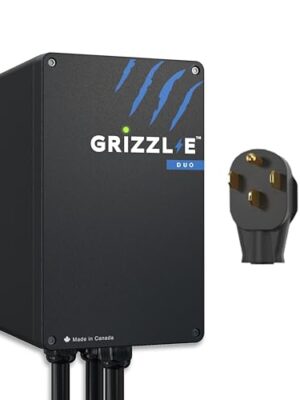
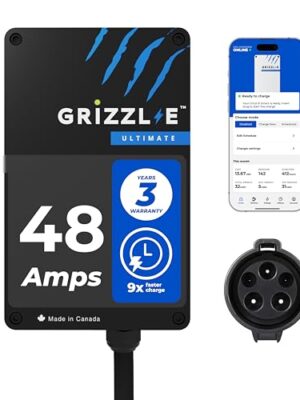
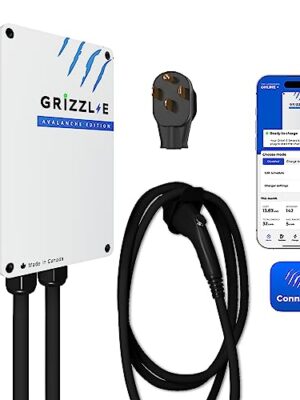
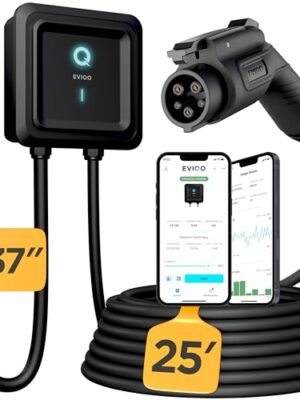
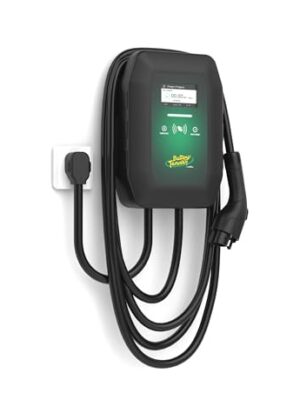
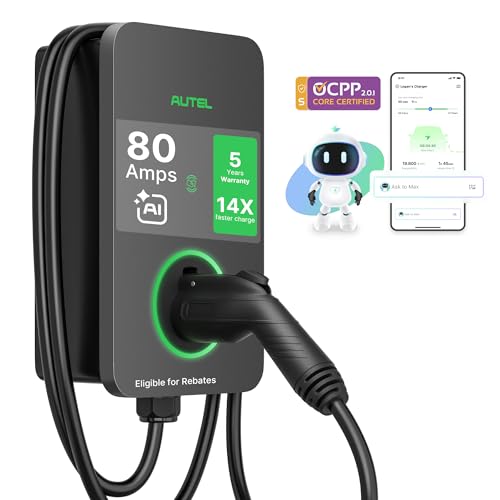
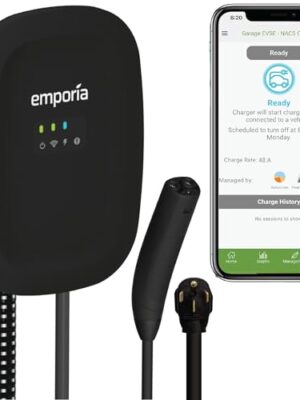
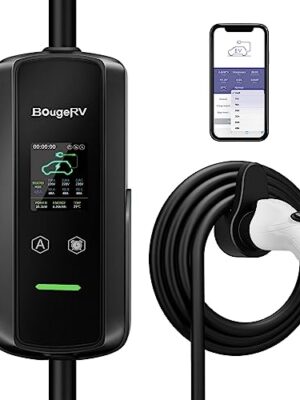
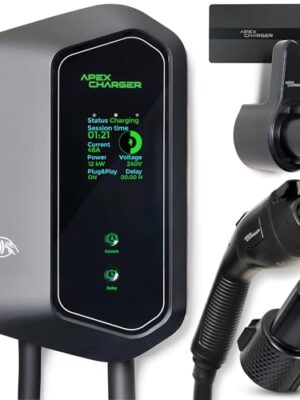
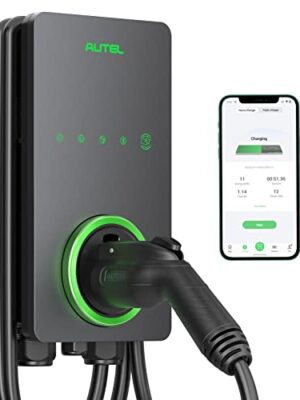
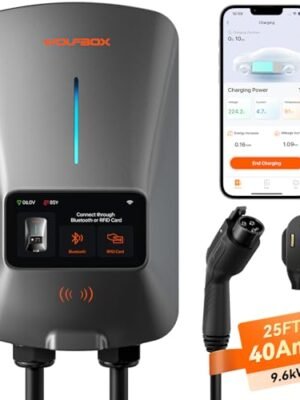
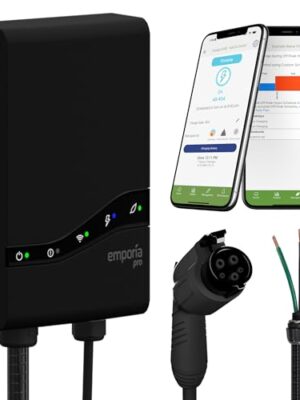
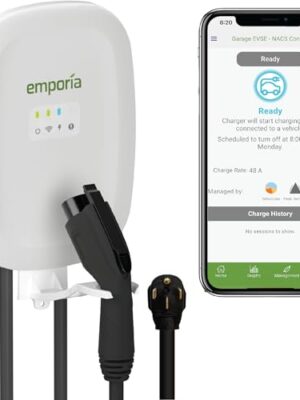
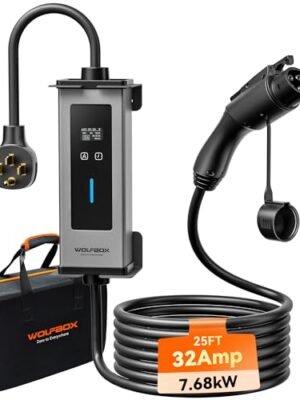
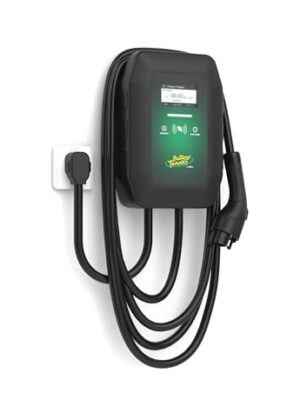
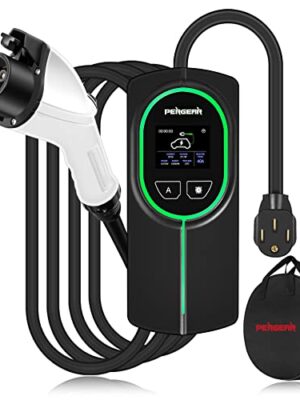
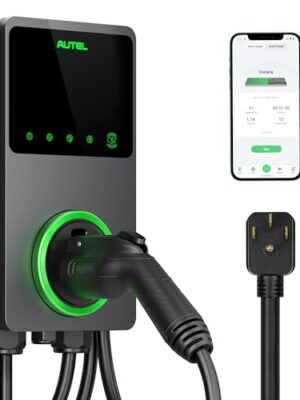
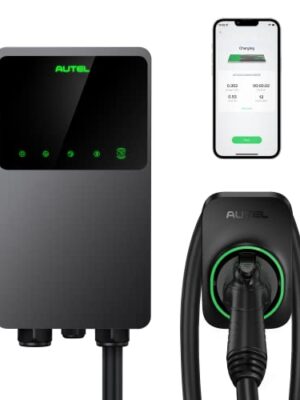
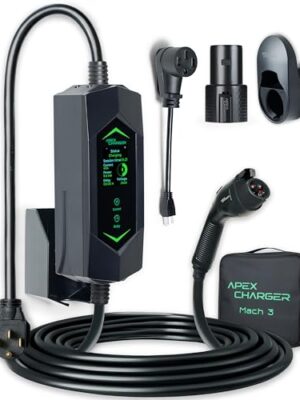
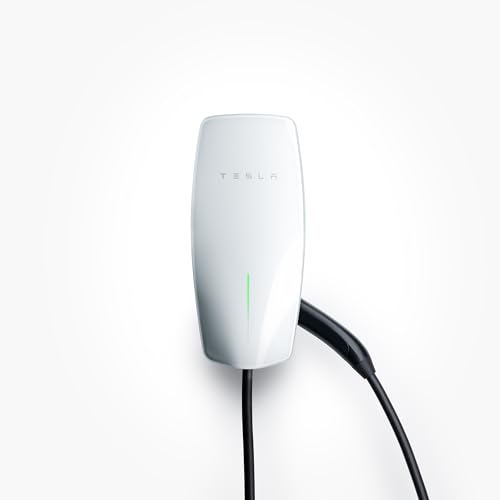
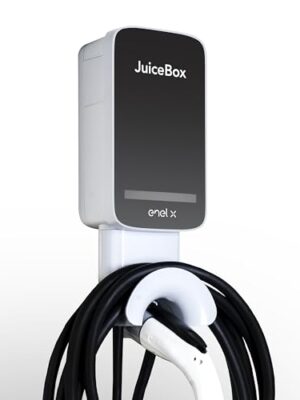
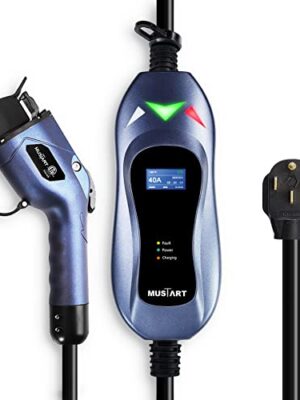
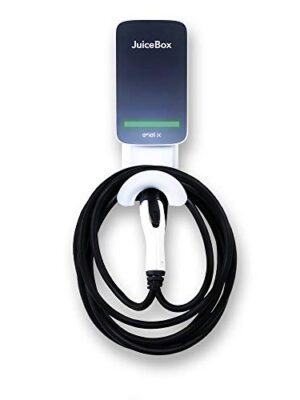
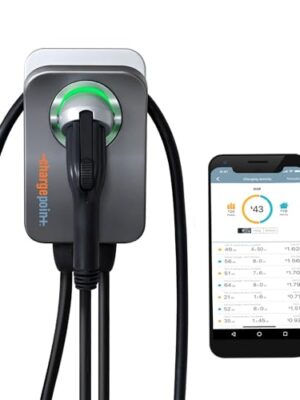
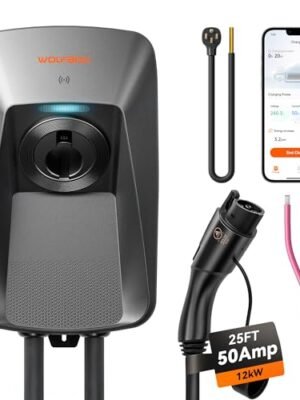
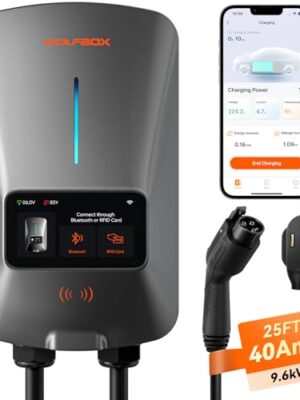
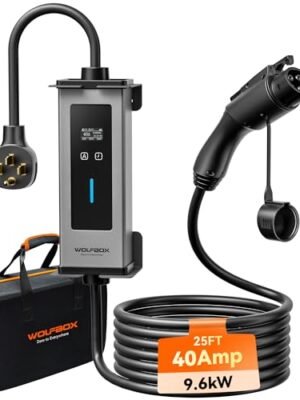
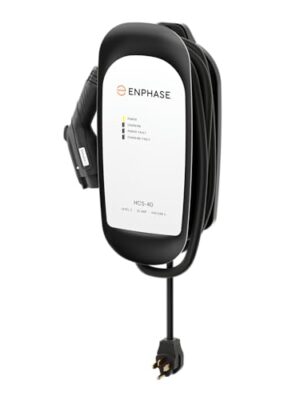
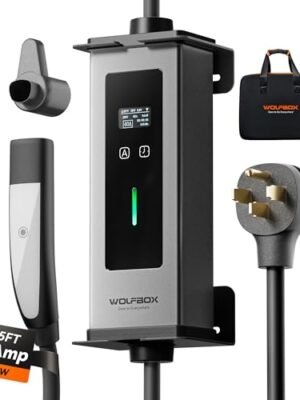
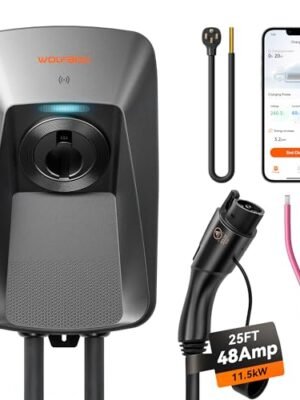
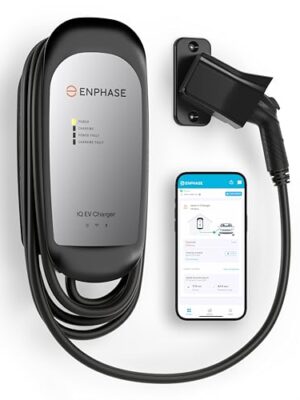
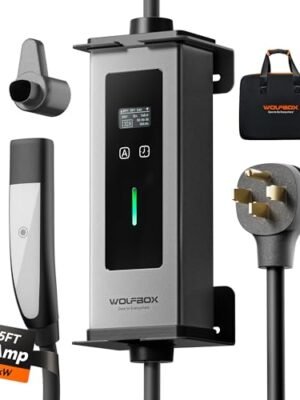
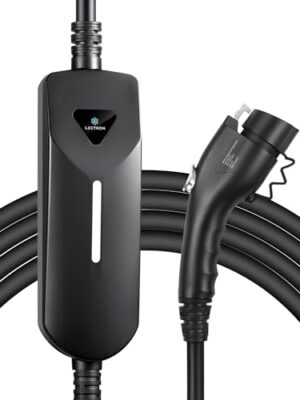
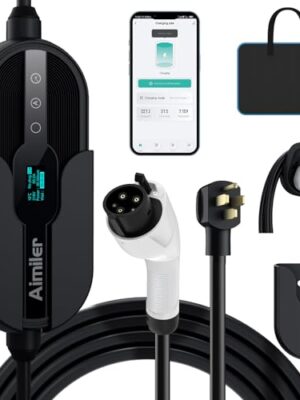
The table below ranks all home EV chargers we've reviewed by weight, from heaviest to lightest. For each charger, it shows the actual weight in pounds and the minimum recommended mounting hardware load capacity, calculated at 4 times the charger's weight, the industry standard safety margin that accounts for cable tension, vibration, and daily plug-and-unplug stress. Use this table to gauge installation complexity before you buy and to size your wall anchors correctly.








Why Charger Weight Matters
An EV charger’s weight affects three practical aspects: installation difficulty, build quality, and portability. A heavier charger usually means heavier internal components inside, thicker aluminum housings, reinforced steel mounting plates, and larger heat sinks.
Quality EV charger materials improve durability and heat management, especially for chargers used outdoors or in high-demand settings.
That said, weight is not a direct measure of quality. Some chargers are heavy because of oversized or inefficient housing designs, not because the components inside are better. Use an EV charger’s weight as one data point to consider before purchasing an EV charger alongside other key EV charger specifications, such as enclosure ratings, warranty length, EV charger cable length, and amp output, not as a stand-alone quality indicator.
What the Typical Weight Range Looks Like
Most wall-mounted Level 2 EV chargers fall between 3 and 10 kg, or roughly 6 to 22 lbs. Lighter EV chargers in the lower half of that range are easier to install on standard drywall with proper studs. Heavier units need direct stud mounting, concrete anchors, or a metal backplate, especially outdoors, where vibration and temperature changes can work the mount loose over time.
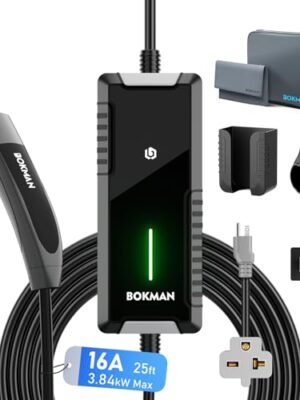
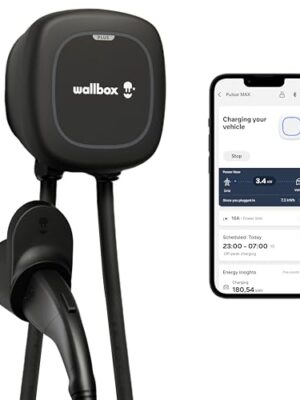
On the lighter end of our reviewed data set, the Wallbox Pulsar Plus 40A weighs 4.4 lbs, and the Bokman 16A Portable Tesla weighs 4.41 lbs. These are compact units that a single person can put up without much trouble. In the mid-range, the ChargePoint Home Flex weighs 13.8 lbs and the Grizzl-E Classic weighs 19.84 lbs, typical for quality chargers with solid metal enclosures.
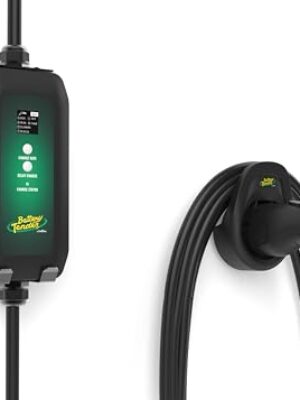
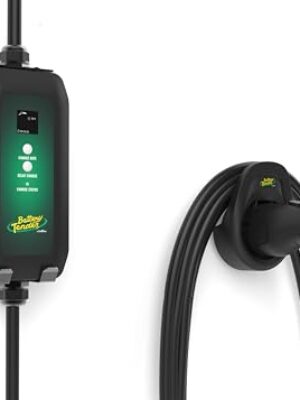
At the heavy end, the DEWALT 48 Amp Level 2 and Schumacher 50 Amp are our heaviest single-port wall units at 24.4 lbs each, with the Grizzl-E 48A Ultimate (24.25 lbs) and Grizzl-E Smart (22.05 lbs) close behind. The EVIQO 48 Amp (21.3 lbs), Battery Tender eCharge 48A (21.0 lbs), and Autel MaxiCharger 80A (20.3 lbs) round out the heavy end of the range. All of these make stud placement and anchor selection a real part of the planning process. The Grizzl-E Duo is in a different category at 39.68 lbs, a dual-station charger that installs more like a small electrical panel than a standard home charger. A two-person installation is essential, and a licensed electrician should handle the job.
The effort required for EV charger installation scales linearly with the charger’s weight. If an EV charger weighs less than 12 lbs, most people can hold the unit against the wall with one hand and drive the first screw with the other; above 12–15 lbs, that no longer works. You need a second person to hold the charger steady while the other handles hardware and wiring, which adds time and cost to a residential install.
How Power Output Affects Weight
Higher-amperage EV chargers tend to weigh more. More power means bigger internal components, thicker wiring, larger contactors, and more substantial thermal management systems. All of that adds up.
You can see it in our data charts below. The Autel MaxiCharger 80A weighs more than most Autel 40A and 48A chargers. The Grizzl-E Ultimate 80A (19.84 lbs) and Grizzl-E 48A Ultimate (24.25 lbs) differ in weight despite sharing a similar form factor, showing how output and component sizing track together within a product line.
Amperage isn’t the only driver, though. The Emporia Pro and Emporia Level 2 EV chargers both deliver 48A, and each weighs around 16.5 lbs, landing mid-range for their power class. Build philosophy and materials matter just as much as power output in determining final weight.
Materials and Build Quality
The biggest difference in weight between chargers comes down to the enclosure material. Aluminum alloy housings weigh more than plastic (PC/ABS) cases, but they handle weather, impacts, and temperature extremes much better. Plastic housings are lighter and cheaper, but more vulnerable to UV damage and cracking over time, a real concern for any charger installed outdoors year-round.
Heat dissipation is where metal enclosures have a clear advantage. During a high-power charging session, the EV charger’s internal components generate heat that must be dissipated. A thick aluminum housing conducts and spreads that heat more effectively than plastic. For chargers that see heavy daily use, this difference can affect whether the unit holds its rated output without throttling back.
Weather protection ratings also drive weight. Chargers with NEMA 4, NEMA 4X, or IP67 ratings need heavier, more robust enclosures to keep out rain, dust, and water. That’s why outdoor-rated chargers are almost always heavier than comparable indoor units.
The Grizzl-E Classic and Grizzl-E Smart illustrate this well; both carry an IP67/NEMA 4 rating and weigh 19.84 lbs and 22.05 lbs, respectively. The WOLFBOX PE-series chargers (PE32, PE32T, PE40, PE40T) take a different approach, weighing 13.17 to 13.5 lbs and offering an IP65 rating, providing solid outdoor protection at a lighter weight, with some trade-off in physical impact resistance.
Durability and Structural Strength
Heavier chargers with metal enclosures generally hold up better to physical stress over time. That matters in garages where vehicles park close to the wall, in outdoor installs exposed to temperature swings, and in any setting where the charger is likely to take the occasional bump or knock.
The DEWALT 40 Amp Level 2 (17.64 lbs) and DEWALT 48 Amp Level 2 (24.4 lbs) both carry NEMA 4 ratings. The brand is built around job-site durability, and these chargers reflect that, with heavy builds designed for environments that aren’t gentle. The Grizzl-E Duo at 39.68 lbs is similarly built for permanence, made for two-vehicle households that want a fixed, high-capacity setup that stays put.
Portable EV chargers sit at the other end of this trade-off. Lighter plastic-cased units are easier to carry but more prone to internal damage from drops. Heavier portable units with metal housings and high IK impact ratings are built to handle more abuse, a meaningful difference for a charger that lives in a trunk and gets tossed around daily.
Portability and Lighter Charger Options
For renters, contractors, and anyone who moves often, portability becomes a primary consideration. A charger that goes in a bag or lives in the car needs to be light enough to carry without having to think about it.
Portable EV chargers typically weigh 2–4 kg (4–9 lbs), light enough to carry easily while still including the necessary safety features and electronics. Fixed wallbox chargers usually weigh 4.5–14 kg (10–30 lbs), with heavier units reflecting higher power output and more robust internal components.
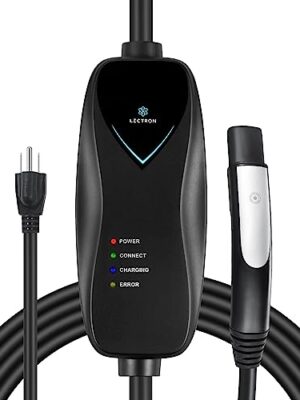
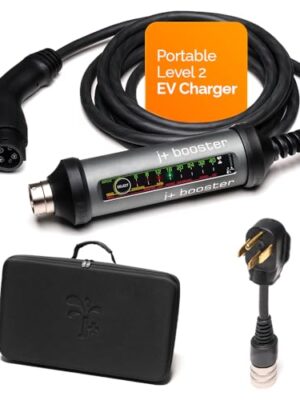
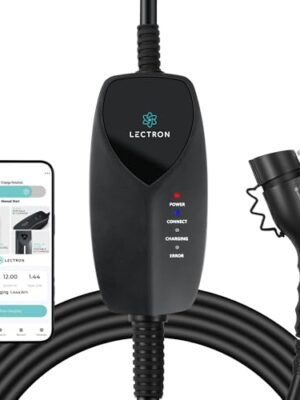
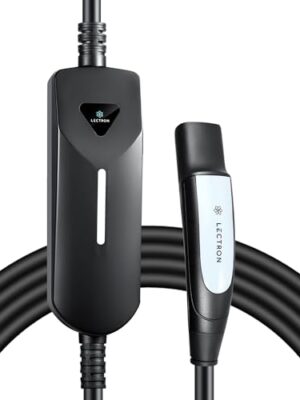
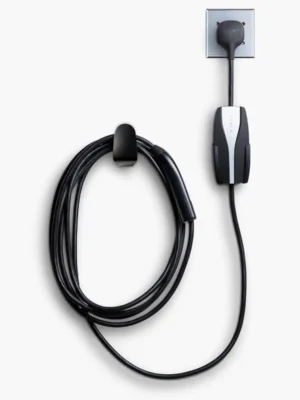
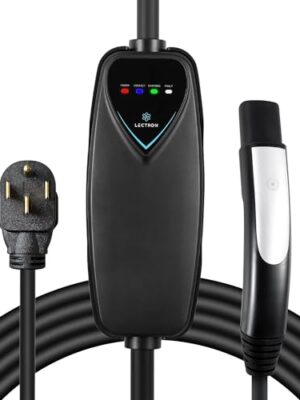
At the lighter end of our data set, the Tesla Mobile Connector and Tesla Gen 3 Mobile Connector each weigh 5.2 lbs. Both are designed to live in a bag full-time. The J+ Booster 2 Portable weighs 7.0 lbs, a little heavier but still portable, with an IP66 rating for outdoor use. The Lectron Level 2 Tesla Portable weighs 4.6 lbs with an IP54 rating.
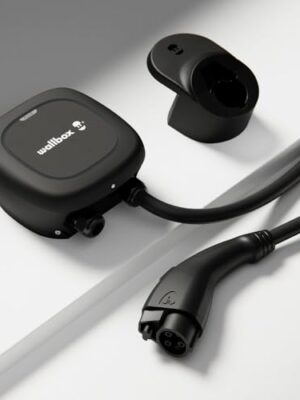
For people who want a wall-mounted charger they can take with them when they move, the Wallbox Pulsar Plus 40A is worth considering at 4.4 lbs. Removing and reinstalling it at a new location is manageable, unlike a 20-lb unit, which turns relocation into a real project.
How Portable Charger Weight Affects Your EV’s Range
When a portable EV charger stays in the car, its weight becomes part of the vehicle’s load, which affects driving range. The general rule is that every 100 lbs of added weight reduces range by about 1% (The 1% rule).
A lightweight portable charger weighing 2–4 kg has a negligible effect on range, similar to carrying a laptop bag. Heavier units (8–15 kg) have a slightly larger impact, around 0.5% when combined with other cargo, which is still minor for most drivers.
Weight also affects payload. Every kilogram kept in the car reduces the net payload relative to the vehicle’s gross weight. In large EVs, this effect is minimal, but in smaller city EVs, choosing a lighter charger can reduce long-term wear on suspension and improve handling over the years of daily use.
Cable length factors in, too. The cable often weighs more than the charger box itself. A 7-meter cable is noticeably heavier than a 5-meter one. If you don’t regularly need the extra reach, a shorter cable reduces in-car load and is easier to store. When comparing portable chargers, look at the combined weight of the unit and cable, not just the charger weight listed.
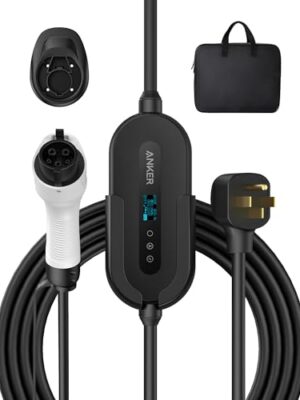
For most commuters, a mid-weight portable charger in the 3–5 kg range strikes the right balance. It’s heavy enough to include quality components and safety features, but light enough that carrying it daily has no meaningful effect on efficiency. Portable EV chargers like the J+ Booster 2 Portable (7.0 lbs) and the Anker 7.6kW Portable EV charger (10.05 lbs) fall within that range.
Installation Considerations
The wall has to support the charger, the cable, and the forces of daily use. For chargers in the 8- to 15-lb range, mounting into wood studs is typically straightforward. For heavier units, the planning matters more.
A 20-lb charger like the Autel MaxiCharger 80A EV charger should go into studs, not just drywall anchors. Concrete or masonry walls need the right hardware, sleeve anchors, or concrete screws sized for the charger’s mounting pattern. The wall itself is rarely the problem; undersized mounting hardware is.
For anything above 15 lbs, a second person makes installation significantly safer. One person holds the unit against the wall, the other drives the screws and handles wiring. This is especially important for hardwired units where electrical connections are part of the same job. The Grizzl-E Duo at 39.68 lbs goes beyond that; it requires a professional installer to assess the wall structure before mounting.
Wall Surface and Mounting Hardware Capacity
Different wall surfaces have different load limits, and the correct hardware depends on the surface. Drywall alone cannot support most hardwired Level 2 chargers without anchors, and even good anchors have limits. When studs are available, mount directly into them; this is the most reliable method for chargers weighing 12–20 lb. If studs aren’t in the right spot, properly rated toggle bolts can work, but always check the load rating on the packaging.
Concrete and masonry walls are strong but require the right fasteners. Sleeve anchors or concrete screws that match the charger’s mounting holes are standard. For outdoor installations with heavier chargers, metal backplates help distribute the weight and prevent the mount from loosening as the wall expands or contracts with temperature changes.
Older garage walls can surprise you. The lumber may be softer or thinner than expected. For a heavier unit like the DEWALT 48 Amp (24.4 lbs) or the Autel MaxiCharger 80A (20.3 lbs), it’s worth probing the stud to confirm it’s solid before committing to the mount location.
The standard safety margin for EV charger mounting hardware is 4 times the total load. A 15-lb charger needs anchors rated for at least 60 lbs. That margin exists because the forces on the mount far exceed the static weight. Cable tension, vibration, and cable pulls all add to the real-world load, and none of them show up in the charger’s weight spec.
The 4× standard reflects how quality chargers are built. Manufacturers design the charger and its mounting bracket to handle four times the device’s weight. For example, a 5 kg charger requires a mounting system rated for at least 20 kg. This safety margin accounts for cable-pull forces, wind on outdoor units, minor wall imperfections, and the repeated stress of daily plug-and-unplug cycles. The charger can handle all of this, but the wall hardware must be equally strong.
Cable pull stress is especially important. Daily plugging and unplugging apply repeated lateral and downward forces to the anchors. Over a 10-year period, this amounts to thousands of stress cycles. Properly secured studs, correctly rated hardware, and wider anchor spacing help prevent fasteners from loosening over time.
EV Charger Lockboxes and Security Enclosures
An EV charger lockbox or security enclosure protects the charger from theft and vandalism, which is important for any outdoor installation. Weight factors in two ways: the enclosure adds to the total wall load, and its internal hardware must be rated to support the charger it houses.
A Typical Steel Lockbox Weighs 5 to 15 lbs.
Enclosing a charger like the ChargePoint Home Flex (13.8 lbs) or the Grizzl-E Classic (19.84 lbs) means the wall hardware must support the combined weight. That often pushes a mid-weight install into territory where stud mounting is essential rather than optional.
The Enclosure’s Internal Bracket Is a Separate Concern
Many lockboxes use a back plate or bracket that the charger attaches to inside the box. If that bracket isn’t rated for the charger’s weight, or was designed for a lighter unit, it can flex or crack over time. Always verify the lockbox’s rated capacity against the actual weight of the charger going inside it.
Apply the 4× Safety Margin.
A charger and lockbox weighing 25 lbs require wall anchors rated for at least 100 lbs. This accounts for both the static weight and the extra forces from daily use.
Those forces add up. The charging cable pulls downward on the mount, and opening or closing the lockbox door transfers stress to the hinges and the frame. Daily cable pulls create lateral bursts of force that go straight to the anchors. Over time, these repeated loads (not the charger sitting still) are what loosen the mount.
Anchor Spacing Matters
Mounting points spaced farther apart spread the load across the wall, reducing stress on any single fastener. Closely spaced anchors concentrate force in one area, which can cause drywall to crumble or a stud anchor to loosen prematurely.
Vandal Resistance Is Linked to Mounting
A lockbox that can be pried off before the lock is broken defeats its purpose. Heavy-gauge steel enclosures resist deformation but place a greater demand on the anchors. Similarly, thick steel doors opened repeatedly, especially in cold weather, put stress on hinge welds and frame corners.
Check Dimensions Before Buying
Chargers with larger footprints, such as the Autel Home Smart EV Charger at 13.2 x 7.4 x 3.4 inches, require a correspondingly larger enclosure. A box that fits too tightly can stress the charger’s housing and restrict airflow, which affects heat dissipation during charging.
EV Charger Pedestals
An EV charger pedestal is a freestanding post that the charger mounts to instead of a wall. It’s the right solution when the garage wall is too far from the parking spot, when charging happens in a driveway, or when no suitable wall is available. Like lockboxes, pedestals raise two weight questions: what do they add to the installation load, and are they rated to hold the charger mounted on them?
Most residential pedestals weigh between 20 and 50 lbs, depending on whether they’re hollow or concrete-filled. The combined weight of the pedestal and charger determines which ground anchor or footing is needed. A lighter charger, such as the WOLFBOX WE-50 (13.5 lbs) or the Emporia Pro (16.52 lbs), on a standard pedestal may work with a surface-mount base plate on a paved driveway. For heavier chargers, especially anything above 15 lbs, a concrete footing is more reliable and is often required by local electrical code.
Always check the pedestal’s rated load capacity before buying. That spec is often in the installation guide rather than the product listing. A pedestal rated for 25 lbs may be fine for an Emporia Pro or ChargePoint Home Flex, but confirm the capacity covers the charger weight with a real margin to spare when pairing with heavier units like the Autel MaxiCharger 80A at 20.3 lbs.
First-time installers are often surprised that a pedestal mount is rarely stressed by the charger’s static weight. The main forces come from lateral cable pulls when a vehicle drives away and from sustained wind pressure. These forces put more stress on the base than the charger’s weight alone, making the footing and anchor bolts the most important factors.
With proper anchoring to a solid concrete pad, a well-installed pedestal can support 15–25 kg (33–55 lbs) of equipment without issue. The limiting factor is usually the base plate and concrete quality, not the pole itself. A pedestal bolted into a solid pad with correctly sized anchors will perform better than one set in shallow or cracked concrete. When planning an installation, focus on the footing specifications.
Cable Weight and Combined Mounting Load
An EV charger cable adds to the mounting load and is often overlooked during planning. A typical Level 2 cable weighs 3–5 kg (6–11 lbs). For example, a 13.8-lb charger like the ChargePoint Home Flex with a 23-foot cable can exert 18–20 lbs of downward force on the wall bracket when both the cable weight and resting tension are included.
The total load the mount must support is the charger plus the cable, including any tension from the cable resting on the ground or being pulled. When choosing hardware, use this combined load (not just the charger’s weight) and apply the 4× safety margin. Mount into solid studs or concrete and space the anchors to distribute the force for a durable, long-lasting installation.
Cost Implications
Heavier chargers usually cost more because metal enclosures are more expensive than plastic. Larger internal components, thicker busbars, and better thermal management also add to the price. These materials improve durability and long-term performance.
The Autel MaxiCharger 80A is one of the pricier units in our data set, and its 20.3-lb weight reflects a premium build. The Grizzl-E Ultimate 80A, at 19.84 lbs, uses a high-quality IP67/NEMA 4 enclosure, which also adds to the cost. In both cases, the weight tracks with what you’re getting.
Weight doesn’t always determine price. Some chargers are heavier due to materials or design, while others offer comparable durability at a lower cost. Use weight as an indicator of build quality, but focus on the features and value you actually get.
Choosing Based on Your Use Case
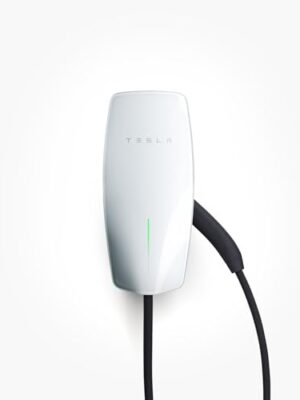
For a permanent home installation, weight is mainly a one-time concern during mounting. Once it’s on the wall, you want a unit built to last. Chargers like the Tesla Gen 3 Wall Connector (10.0 lbs), Autel Home Smart EV Charger (17.56 lbs), and Grizzl-E Smart (22.05 lbs) fit that description, with solid construction, good weather ratings, and are designed for years of daily use.
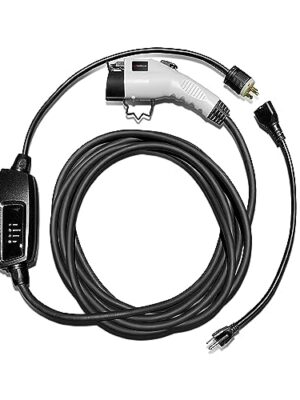
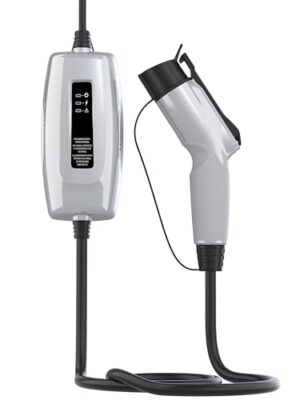
For renters or anyone who may need to move the charger, a lighter is better. The Wallbox Pulsar Plus 40A, at 4.4 lbs, is one of the easiest hardwired chargers to unmount and reinstall. If wall mounting isn’t an option, portable units like the Tesla Mobile Connector (5.2 lbs) and J+ Booster 2 Portable (7.0 lbs) provide Level 1 and Level 2 charging from standard outlets without installation.
For high-demand setups, two EVs, small business EV chargers, or heavy daily charging, heavier units deliver the build quality and power output to match. The Autel MaxiCharger 80A (20.3 lbs) and Grizzl-E Duo (39.68 lbs) are built for exactly this. The added weight indicates high-quality, heavy internal components that enable them to sustain high-power operation over a long service life.
Frequently Asked Questions
Does the weight of a long charging cable place too much strain on a standard drywall-mounted EV charger?
Yes, it can, especially if the charger is anchored only to drywall, not to studs. A Level 2 cable can weigh 6 to 11 lbs on its own, adding to the downward pull on the mount every day. Combined with the charger’s weight, that load can work drywall anchors loose over time. For any charger with a tethered cable, mounting directly into studs and applying a 4× safety margin on your hardware rating is the right approach.
Is a heavier metal enclosure worth the extra weight for EV chargers installed in harsh outdoor climates?
Yes, in most cases. Aluminum alloy and steel housings handle UV exposure, temperature swings, and physical impacts far better than plastic (PC/ABS) cases. Plastic housings are more prone to cracking and UV degradation over time. For an outdoor charger in a hot, cold, or coastal environment, the added weight of a metal enclosure is a worthwhile trade-off for longer service life and better weather protection.
Can a heavy plug-in EV charger eventually loosen or damage a 240-volt outlet if it isn’t properly secured to a stud or wall mount?
Yes. A charger that hangs unsupported from a NEMA 14-50 or NEMA 6-50 outlet puts constant mechanical stress on the outlet’s terminals and the wiring connections behind it. Over time, that can loosen the outlet, damage the contacts, or create a fire hazard. Any plug-in charger heavier than a few pounds should be mounted to the wall independently so the outlet carries no structural load.
Does carrying a portable EV charger and a heavy charging cable in a vehicle significantly affect driving range due to added weight?
For most drivers, the impact is minimal. The general rule is that every 100 lbs of added vehicle weight reduces range by about 1%. A lightweight portable charger with a cable typically adds 5 to 15 lbs total, well under 0.1% range loss for most EVs. The effect becomes more noticeable when combined with other cargo, or for drivers of smaller EVs, where every kilogram has a greater relative effect on efficiency.
Are lightweight EV chargers with plastic housings more prone to overheating during high-amperage charging sessions?
Yes, Plastic housings don’t dissipate heat as well as metal ones. Aluminum enclosures move heat away from internal components and across the housing surface. Plastic can trap heat, causing the charger to reduce output. For 40A or higher charging, a metal enclosure helps maintain consistent performance.
Are most EV chargers light enough to be installed on pedestal mounts rather than on walls?
Most single-port Level 2 chargers are light enough to mount on a pedestal. A pedestal anchored into solid concrete can safely hold 15–25 kg (33–55 lbs). The biggest concern isn’t the charger’s weight, but side-to-side forces from cable pulls and wind. Always check the pedestal’s weight rating and make sure the footing is strong.
Does a heavier EV charger usually indicate thicker internal components or more durable construction?
Often yes, but not always. Heavier chargers frequently use thicker aluminum housings, reinforced mounting plates, larger heat sinks, and more robust wiring, all of which contribute to durability. However, some chargers are simply bulkier by design without a corresponding improvement in internal quality. Use weight alongside enclosure ratings, amperage, and warranty length to get a full picture of build quality.
What mounting surface is safest for installing a heavier EV charger at home?
Concrete or solid masonry is the strongest option, using sleeve anchors or concrete screws sized for the charger’s mounting pattern. For wood-framed walls, mounting directly into studs is the next best option. The key is to use anchors rated for at least 4 times the combined weight of the charger and cable, and to confirm the stud or concrete is solid before committing to the mount location.
Is there a recommended weight limit for portable EV chargers used frequently at campsites or RV parks?
There’s no universal standard, but most frequent travelers prefer portable chargers weighing 2 to 4 kg (4 to 9 lbs). Lightweight portable EV chargers keep the combined weight of the charger and cable manageable for carrying and storing. Units such as the Tesla Gen 3 Mobile Connector (5.2 lbs) and the J+ Booster 2 (7.0 lbs) are popular for this use case. If you’re charging from a NEMA 14-50 outlet at an RV park, a mid-range portable weighing 5 to 8 lb offers better build quality without becoming inconvenient to transport.
Do charging connector handles vary in weight between entry-level and premium EV charger brands?
Yes, noticeably. Premium chargers tend to use heavier connector handles, thicker cable jackets, metal strain-relief components, and more robust latch mechanisms. Entry-level connectors are typically lighter and made of plastic, which makes them easier to handle but less durable over thousands of plug cycles. For daily home use, the difference matters less than for a charger that gets moved or shared frequently.
EV Charger Weight Reference Table
The chart below lists all EV chargers from our reviewed dataset, sorted from heaviest to lightest. This makes it easier to compare models when considering wall mounting strength, bracket load capacity, or portability needs.
Final Thoughts
EV charger weight is easy to overlook and hard to ignore once you’re actually installing. It tells you something real about how a charger is built, how safe and straightforward the installation will be, and whether it can go with you if your situation changes.
The lightest chargers in our data set are the portable Level 1/Level 2 EV chargers, great for flexibility but limited in power. The heaviest wall-mount units are built for permanence and high-power delivery. Most homeowners will land somewhere in between, with a 10- to 15-lb charger that balances solid construction with manageable installation.
When you’re sizing up an installation, don’t think about charger weight in isolation. The combined load of the charger, cable, and mounting hardware is what the wall must support. Plan for that total load, apply a 4× safety margin, and the weight spec goes from an afterthought to a genuinely useful planning tool.
Notes & References
Specification updates, like weight, are tracked here on our EV Charger Data Updates Page.

James Ndungu is a certified EV charger installer with over five years of experience in EVSE selection, permitting, and installation. He holds advanced credentials, including certification from the Electric Vehicle Infrastructure Training Program (EVITP) and specialized training in EV charging equipment and installation, as well as diplomas in EV Technology and Engineering Fundamentals of EVs. Since 2021, James has tested dozens of EV chargers and accessories, sharing expert insights into the latest EV charging technologies.