Supported by you via insider access, and when you purchase through links on our site, we may earn an affiliate commission. See our Affiliate Disclosure.
Home Safety When EV Charging: A Homeowner's Guide
-
 Guide By
James Ndungu
Guide By
James Ndungu
- last updated June 5, 2026
Charging an EV at home is safe when the equipment and wiring are right. The risks come from cheap, uncertified chargers, overloaded circuits, and poor installation, all of which are avoidable. This guide shows you how to charge safely at home
It covers the electrical basics, fire prevention, what a safe install looks like, and the warning signs that something is wrong. It is written for homeowners who park in a garage, carport, or driveway.
The Three Real Home Charging Risks
Most home charging problems trace back to three causes. Understanding them makes the safety steps obvious.
Uncertified Equipment
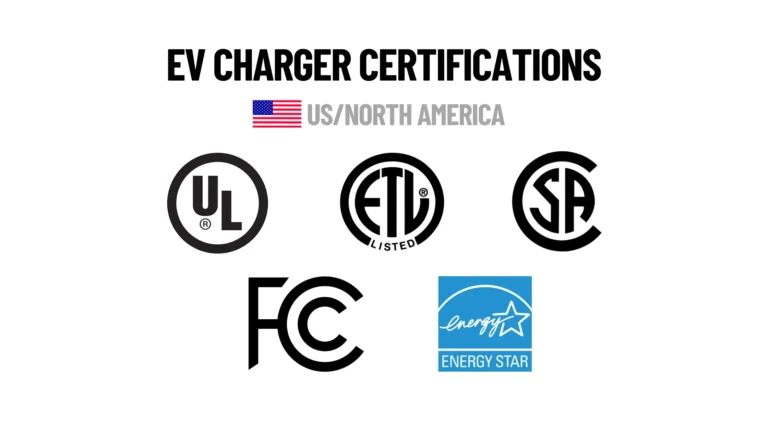
Cheap chargers without UL, ETL, or CSA marks may omit safety systems that prevent overheating and electrical faults. A certified charger has been tested for exactly these risks. The certification is the cheapest insurance you can buy. Home EV Charger Certifications
Overloaded or Undersized Circuits
EV charging is a continuous load that runs for hours. A circuit or breaker that is too small for the charger will overheat. This is why the breaker and wire size must match the charger amperage under the NEC 80 percent rule.
Poor Installation
Loose connections, undersized wire, and missing ground fault protection are installation failures, not equipment failures. A licensed electrician who pulls a permit and follows code prevents all three.
How to Charge Safely at Home
Use a Certified Charger
Choose a charger with a UL, ETL, or CSA mark. See our certified charger guide to understand the marks and how to verify them.
Match the Circuit to the Charger
The breaker and wire must be sized for the charger’s continuous current. A 32-amp charger needs a 40-amp breaker, a 48-amp charger needs a 60-amp breaker, and so on. Our amperage guides cover the exact circuit specs for each tier.
Never Use an Extension Cord or Power Strip
EV charging runs a continuous load for hours. Extension cords and power strips are not rated for this and will overheat. Plug a Level 1 charger directly into the wall outlet, and have Level 2 chargers properly installed on a dedicated circuit.
Add GFCI Protection Outdoors
Garage and outdoor outlets require ground-fault protection under NEC 210.8. Outdoor outlets also need an in-use weatherproof cover. These protect against shock in wet conditions.
Warning Signs to Watch For
Stop charging and call an electrician if you notice any of these. They mean something in the circuit is failing.
Warning signs include a warm or hot outlet or plug, discoloration or brown marks around the outlet, a burning or plastic smell during charging, a breaker that trips repeatedly, or a charger connector that feels hot to the touch. None of these is normal. A properly working setup runs bat is only warm. temperatures
Why Professional Installation Matters
A licensed electrician sizes the circuit correctly, torques the connections to spec, installs the required ground-fault protection, and pulls a permit so the work is inspected. Most home charging incidents trace back to skipped steps that a professional install would have caught.
Professional installation also protects your insurance coverage. Some policies will not cover damage from uncertified equipment or unpermitted electrical work. The installation cost is small compared to the risk.
More Home Safety Related Guides


Home Safety When EV Charging FAQs
Can an EV Charger Start a House Fire?
It is very rare with a certified EV charger and a proper installation. The fire risk comes from uncertified chargers, overloaded circuits, and loose connections, all of which are avoidable. Use a UL-, ETL-, or CSA-certified charger, size the circuit correctly, and have a licensed electrician do the installation. A properly working charger runs only slightly warm.
Is It Safe to Charge My EV Overnight While I Sleep?
Yes, with a certified charger on a properly sized circuit. EV chargers and cars both have systems that stop charging when the battery is full and cut power if they sense a fault. Overnight charging is the normal pattern for most owners. Safety depends on the equipment and installation, not the time of day.
Can I Plug My EV Charger Into a Regular Outlet?
A Level 1 charger plugs directly into a standard 120V outlet, which is safe on a dedicated or lightly loaded circuit. Never use an extension cord or power strip. A Level 2 charger needs a 240V circuit installed by an electrician. Match the charger to the right outlet and circuit.
Why Does My EV Charger Plug Feel Warm?
Slightly warm is normal because the current generates a little heat. Hot to the touch is not normal and signals a loose connection, an undersized circuit, or a worn outlet. Stop charging and have an electrician check it. A hot plug is the most common early warning sign of a failing connection.
Do I Need a Permit to Install a Home EV Charger?
For a Level 2 charger on a new 240V circuit, the answer is almost always yes. The permit ensures the work is inspected for safe wire and breaker sizes, and for proper grounding. Level 1 chargers that plug into an existing outlet usually need no permit. Always confirm with your local authority.
What Happens if I Overload the Circuit While Charging?
The breaker trips and cuts power, which is the safety system working. Repeated trips mean the circuit is too small for the charger or is shared with other loads. Do not replace the breaker with a bigger one as a fix; that removes the protection. Have an electrician size the circuit correctly.
Is GFCI Protection Required for Home EV Charging?
Yes, for garage and outdoor outlets under NEC 210.8, and for plug-in EV chargers under NEC 625.41. GFCI protection cuts power if it senses current leaking to ground, helping prevent shock. Many chargers include an internal GFCI, but the installation still must meet local code requirements.
How Do I Know if My Home Wiring Can Handle an EV Charger?
A licensed electrician performs a load calculation on your panel to confirm there is capacity for the new circuit. Older homes with 100-amp panels may need a load management device or a panel upgrade. Never assume; get the calculation done before buying a high-amperage charger.
Are Smart Chargers Safer Than Basic Ones?
Both are safe when certified. Smart chargers add monitoring that can alert you to issues and let you schedule charging, but the core safety comes from the certification and the installation, not the smart features. A certified basic charger on a proper circuit is perfectly safe.