Complete CCS Combo 2 charger guide. Europe’s DC fast-charging standard, Ionity network speeds, 800-volt vehicles, NACS transition, and high-power use.
The CCS Combo 2 charger is the tall, stacked plug that pulls electric vehicles out of European highway charging stops in twenty minutes instead of overnight.
CCS Combo 2 is the DC fast-charging standard mandated across the European Union, the United Kingdom, Australia, New Zealand, and most of Africa, and it is what makes road tripping in a Volkswagen ID.4 from Berlin to Barcelona actually practical.
If you live in Europe, you use the CCS Combo 2 charger every time you take a road trip. If you live in North America and you have never been overseas, you might still encounter it in news about international EV launches or megawatt charging speeds.
This CCS Combo 2 charger guide covers what the standard does at high power, why 800-volt vehicles charge so much faster than 400-volt vehicles, even on the same cable.
CCS Combo 2 (CCS2) Physical and Electrical Specifications
- Connector Standard: CCS Combo 2 (CCS2)
- Primary Region: Europe and international markets
- Physical Port Strategy: Combo design integrating a Type 2 connector with two DC fast-charging pins below
- Max AC Delivery: Up to 22 kW (three-phase AC)
- Max DC Delivery: 350 kW+ DC fast charging
- Communication Protocol: PLC communication using DIN 70121 and ISO 15118
What the CCS Combo 2 Charger Is and How It Differs From Type 2
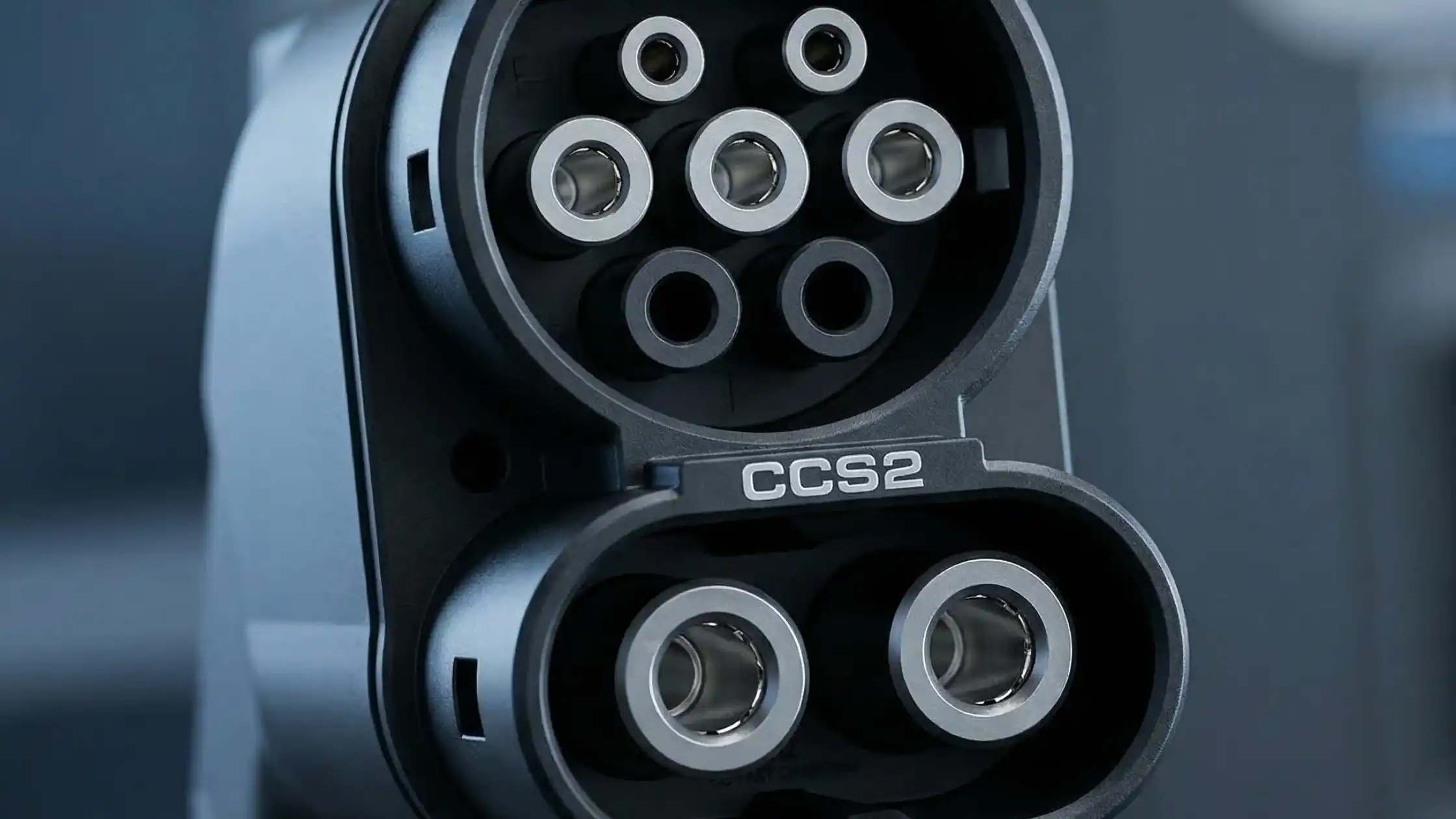
The CCS Combo 2 charger is formally defined by IEC 62196-3 Configuration FF, published as part of the broader Combined Charging System family in 2014. The standard uses the Type 2 AC connector that European cars already have and adds two large DC pins below it, creating a single physical port that supports both slow home charging and high-power fast charging.
This is the same logical approach that CCS Combo 1 uses in North America with the J1772 base. The difference is that CCS2 inherits Type 2’s three-phase AC capability, giving it a meaningful advantage over CCS1 in slow charging scenarios. A CCS2 vehicle can use a 22-kilowatt three-phase AC station, whereas a CCS1 vehicle is limited to 19.2 kilowatts at most on a single-phase AC station.
In practice, the AC side of CCS2 rarely matters for road trip planning because road trippers use the DC pins. The Type 2 portion at the top of the connector is for slow charging at home and in workplace parking lots, where the same single port keeps the car’s cabling simple.
How CCS2 Combines AC and DC in One Port
The CCS2 inlet on your car has nine pin positions arranged in a tall stack. The top seven positions form a standard Type 2 layout, identical to what your home wallbox plugs into. The bottom two positions are large, round DC pins that engage only during DC fast charging.
When you plug in a regular Type 2 cable, only the top seven pins engage. The car charges at AC speeds via the onboard converter, exactly as it would at any Type 2 station. When you plug in a CCS2 fast-charging cable, all 9 pins engage. The top seven handle the digital handshake and safety signaling; the bottom two carry the high-voltage DC directly to the battery, bypassing the onboard converter entirely.
This dual-purpose design is the whole reason CCS2 exists. One port on the car handles every charging scenario, from a 1.4-kilowatt trickle charge at home to a 350-kilowatt sprint at a highway station. The Type 2 plug fits a CCS2 port because the upper seven pins match exactly. The CCS2 plug does not fit a Type 2 only port because the DC pins have nowhere to go.
CCS Combo 2 Charger Pin Configuration and Design
The CCS Combo 2 charger has a nine-pin layout that cleanly splits into two functional zones. Understanding which pin does what helps you decode error messages and choose the right cable.
The Type 2 Section (Top Seven Pins)
These match the IEC 62196-2 Type 2 standard exactly. Three large pins carry L1, L2, and L3 phase lines for AC charging. One pin carries neutral. One handles protective earth ground. The two small pins at the bottom of this group are the proximity and control pilots for the digital handshake. None of these pins carries current during a DC fast charging session, but the control pilot remains active to manage the communication between the car and the station throughout.
The DC Power Pins (Bottom Two)
These are the big circles you see below the Type 2 portion. Each one can carry up to 500 amps of DC at up to 1,000 volts during a fast charging session. One is positive, the other is negative. They are dead during AC charging and only wake up when a CCS2 fast charging cable is connected, authentication is complete, and the safety isolation test passes.
Physical doors protect the DC pins on most modern stations. When you plug in, the doors retract just before the pins make contact, and the station performs an isolation resistance test to verify no current can leak before flipping on high voltage. If the test fails, the doors close, the session aborts, and you see an isolation fault on the station screen.
How 800 Volt Vehicles Change the Charging Math
This is the most important technical concept in modern DC fast charging, and it explains why different cars charge at radically different speeds on the same cable. The CCS2 standard supports voltages up to 1,000 volts and currents up to 500 amps. The total power available is voltage multiplied by current, which gives you the kilowatts the station can deliver.
Most EVs use a 400-volt battery architecture. To deliver 200 kilowatts to a 400-volt car, the station needs to push 500 amps through the cable. That much current generates significant heat, requires liquid cooling, and is the absolute upper limit of what the CCS2 hardware can handle.
An 800-volt vehicle like the Porsche Taycan, Audi e-tron GT, Hyundai Ioniq 5, Kia EV6, or Lucid Air can accept the same 200 kilowatts at only 250 amps. The lower current generates less heat, so that the same cable can push much more total power.
An 800-volt car can pull 270 to 320 kilowatts, whereas a 400-volt car peaks at 200 kilowatts. This is why two different EVs at the same Ionity charger can see wildly different charging speeds. The car with the higher voltage architecture is not magically faster. It just lets the cable work within its thermal limits at higher total power. The next generation of EVs is moving toward 800 volts specifically to take advantage of this physics.
Real World CCS Combo 2 Charger Speeds Across Europe
CCS2 stations come in a range of power tiers, and the gap between the station rating and the actual delivered power can be large. Here is what you can expect to see on the station screen.
At a 50-kilowatt CCS2 station, almost every modern EV will pull the full 50 kilowatts as long as the battery is between 20 and 60 percent state of charge, adding roughly 100-150 miles of range in 30 minutes. These older stations are still common on rural roads and at hotels.
At a 150-kilowatt CCS2 station, performance depends heavily on the car. A Volkswagen ID.4 peaks around 135 kilowatts. A Hyundai Ioniq 5 with the 800-volt architecture can deliver 220 kilowatts. A Tesla Model 3 European spec hits 170 kilowatts. The Ionity network has hundreds of these stations across major European highways.
At a 350-kilowatt CCS2 station, only 800-volt vehicles can take full advantage. A Porsche Taycan hits 270 kilowatts. A Lucid Air pulls 300 kilowatts. A Hyundai Ioniq 5 N can hit 320 kilowatts. Most 400-volt vehicles still peak around 200 kilowatts because their battery cannot accept more, no matter how much the station can deliver.
Brand new megawatt CCS2 stations are starting to appear, particularly for commercial trucks. These can deliver up to 700 kilowatts and, under the latest revision of the standard, theoretically up to one megawatt. Almost no consumer vehicles can yet use these speeds, but Mercedes-Benz and certain Volvo trucks are starting to.
Which Vehicles Use the CCS Combo 2 Charger
Every electric vehicle sold legally in the European Union since 2014 has been required to include either CCS2 or a clear roadmap to CCS2 compatibility.
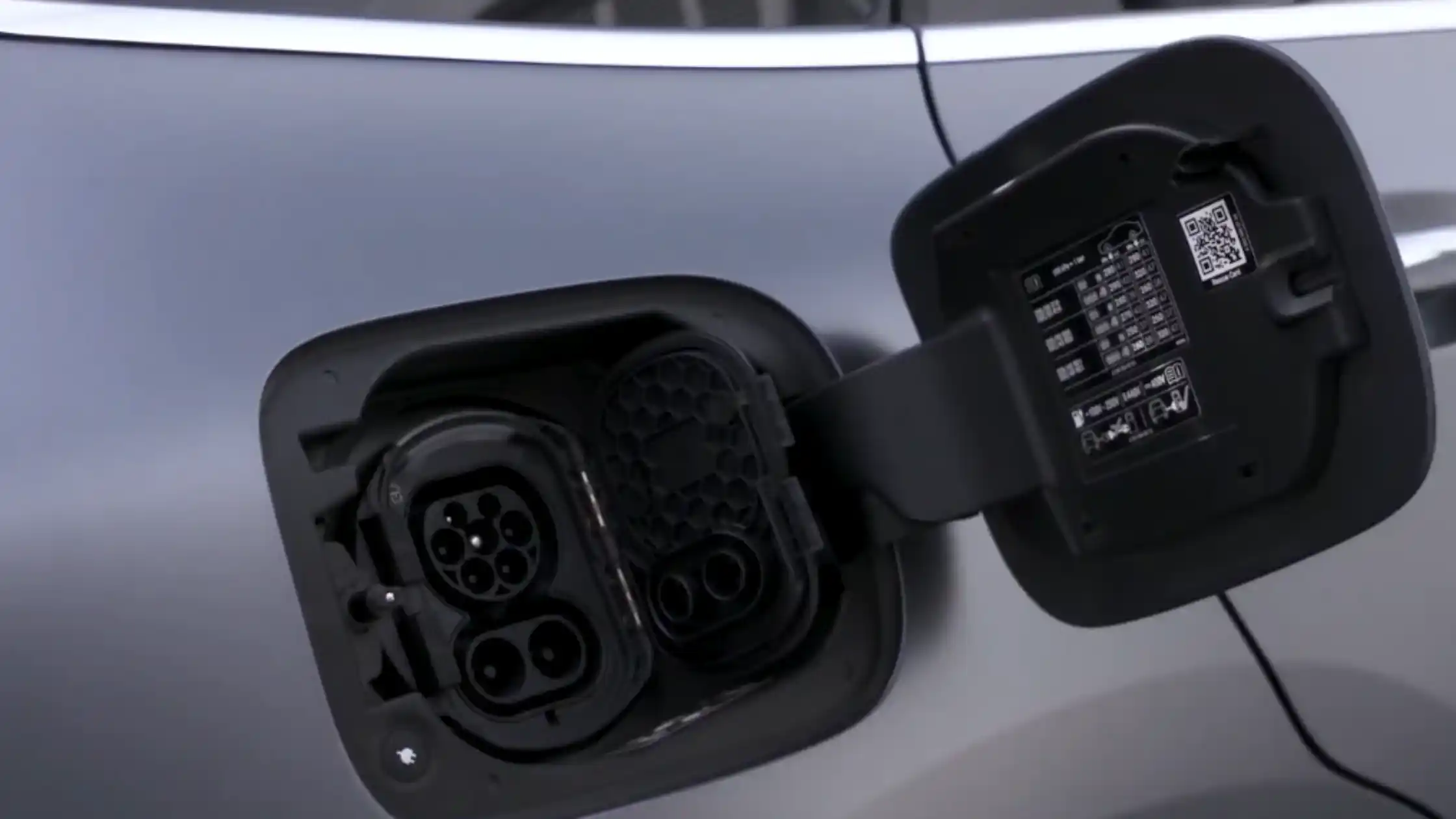
The same applies to the United Kingdom, Australia, New Zealand, and most of Africa. The list below covers the most common models with CCS2 fast charging capability.
| Brand | Notable Models (European Spec) | Peak DC Charging Rate |
| Tesla | Model S, 3, X, Y (European spec) | 150 kW to 250 kW |
| Porsche | Taycan, Macan EV | 270 kW (800 volt architecture) |
| Audi | e-tron GT, Q6 e-tron | 270 kW (800 volt architecture) |
| Lucid | Air (European spec) | 300 kW (900 volt architecture) |
| Hyundai | Ioniq 5, Ioniq 6 (European spec) | 240 kW (800 volt architecture) |
| Kia | EV6, EV9 (European spec) | 240 kW (800 volt architecture) |
| BMW | i4, i5, iX, i7 | 200 kW |
| Mercedes | EQS, EQE, EQB, EQA | 200 kW |
| Volkswagen | ID.3, ID.4, ID.7, ID. Buzz | 135 kW to 200 kW |
| Volvo | EX30, EX40, EX90 | 150 kW |
| Polestar | Polestar 2, 3, 4 | 155 kW to 250 kW |
| Renault | Megane E-Tech, Scenic E-Tech | 130 kW |
| Peugeot | e-3008, e-5008 | 160 kW |
| MG | MG4, MG ZS EV | 117 kW to 144 kW |
| BYD | Atto 3, Seal, Dolphin (European spec) | 80 kW to 150 kW |
| Nissan | Ariya (European spec) | 130 kW |
The Ionity Network and Other Major Operators
Ionity is the joint venture between BMW, Mercedes, Ford, Hyundai, Kia, and Volkswagen that built out the backbone of high-power CCS2 fast charging across Europe. Most Ionity stations are rated 150 to 350 kilowatts and located along major highway corridors. The network was specifically designed for long-distance EV travel, with stations spaced roughly 80 to 120 kilometers apart on continental motorways.
Other major operators include Allego, which operates a mix of 50- to 300-kilowatt stations across Western Europe, with particular strength in the Netherlands and Germany. Fastned operates yellow-canopied stations on Dutch and German highways, rated at 50 to 300 kilowatts. Tesla Superchargers have opened to non-Tesla CCS2 vehicles in most European countries, providing 150 to 250 kilowatt charging at competitive rates.
Roaming between networks works through partnership agreements and roaming apps. Plug Surfing, Shell Recharge, Maingau, and Chargemap each cover hundreds of operators across Europe. With one of these apps installed, you can usually charge at any station regardless of brand. Pricing varies across networks, sometimes significantly, so check rates before committing if you have a long stop.
Public payment by credit card is finally becoming common at newer CCS2 stations under the European Commission’s Alternative Fuels Infrastructure Regulation. Older stations sometimes still require an account or RFID card from one of the major operators.
Safety, Certifications, and Thermal Behavior
CCS2 hardware sold in Europe carries the CE marking plus compliance with IEC 61851 for the system and IEC 62196-3 for the connector. These cover everything from electrical safety to environmental sealing to the implementation of communication protocols. Stations must pass independent testing before deployment, and the certification regime is more rigorous than the current one for US DC fast charging.
Ingress protection ratings for the high-power CCS2 plugs are typically IP54 or IP55. At the same time, the underlying liquid-cooled cables are rated IP67 or higher because they handle so much current that any moisture infiltration could be catastrophic. The connector contains multiple thermal sensors that continuously report to the station, enabling real-time current adjustment if any part of the system overheats.
Liquid cooling in 350-kilowatt CCS2 cables uses a glycol water mixture circulated through small channels alongside the conductors. The cooling pump is part of the station, not the cable, which is why high-power CCS2 cables feel slightly damp or cool to the touch during a session. The pump failure rate is genuinely low, but when it happens, the station automatically derates to lower power until the cable temperature stabilizes.
How CCS2 Locks and What Happens When the Lock Fails
CCS2 uses vehicle-side electronic locking, identical in concept to Type 2 AC locking. The car’s charge port contains a small motor that physically clamps the plug in place at the start of a session. The clamp releases at session end or when you tap unlock on the car, the station, or the charging app.
This is genuinely better than the exposed plastic trigger latch on CCS1 plugs in North America. The CCS1 trigger routinely breaks at busy public stations, rendering entire cables unusable. CCS2 cables rarely have this problem because the lock is part of the car, not part of the plug handle.
If the car’s lock motor fails mid-session, the plug stays stuck in your port. Every CCS2-equipped vehicle includes a manual release pull cord, usually in the trunk or behind a small access panel inside the car. The exact location varies by manufacturer. Find yours in the owner’s manual before you actually need it, because nobody enjoys learning emergency release procedures while standing in the rain at a service station at midnight.
Cable Weight and the Liquid Cooled Trade Off
CCS2 high-power cables are heavy. A 350-kilowatt liquid-cooled cable can weigh 10 to 15 kilograms, which is meaningfully more than a typical 50-kilowatt CCS2 cable. The weight comes from the thick copper conductors needed to handle the current, plus the cooling channels, plus the multiple layers of insulation and shielding.
In freezing weather, liquid-cooled cables remain relatively flexible because the glycol coolant keeps them warm during use. Non-cooled, lower-power CCS2 cables can stiffen significantly in winter, making them awkward to maneuver into the carport. The difference is noticeable enough that drivers in Scandinavia often prefer liquid-cooled stations even when their car cannot use the full power output.
The NACS Question in Europe
Unlike North America, where almost every automaker has committed to switching from CCS1 to NACS by 2026, Europe has shown no interest in adopting NACS. CCS2 is already the standardized European DC fast-charging connector, the infrastructure is built out, and dropping a working standard just because Tesla won the American market is not politically attractive to the European Commission.
Tesla itself continues to use CCS2 in its European vehicles, even as the same company pushes NACS adoption in the United States. The European Tesla Model 3 looks identical to the American Model 3 in most ways except for the charge port, which is CCS2 in Europe and NACS in North America. New Tesla Superchargers in Europe ship with CCS2 cables and serve both Tesla and non-Tesla vehicles.
This means European drivers do not experience the anxiety over the standards transition that American drivers do. CCS2 is the standard; it will remain the standard, and the European charging network is being built out without the chaos of switching connector types mid-decade.
CCS Combo 2 Charger Adapters for North American Travelers
If you bring a Tesla from North America to Europe for an extended trip, Tesla sells an NACS-to-CCS2 adapter that supports DC fast charging at European Superchargers and many public CCS2 stations. The adapter is rated for the full station power but only works with Tesla vehicles, not with other NACS-equipped EVs
Ford, GM, Rivian, and other US NACS automakers have not released CCS2 adapters because their American vehicles are not designed for the European market, and their European spec models already use CCS2 natively. If you somehow imported a US NACS vehicle to Europe outside Tesla, you have limited fast charging options.
Going the other direction, if you import a European CCS2 vehicle to North America, the CCS2 protocol matches CCS1 because both use the same Power Line Communication standard. But the physical connectors do not match. A mechanical CCS2-to-CCS1 adapter would work in principle, and a few specialty vendors sell them at very high prices, but practical availability is limited, and the certification status is unclear.
Common CCS Combo 2 Charger Errors and Quick Fixes
Isolation Fault at Session Start
The station detected an electrical leak somewhere in the circuit and refused to deliver power. Causes include moisture inside the plug or port, a damaged cable, or a car-side fault. Wipe the plug face dry, check for visible debris, and try a different cable at the same station. If the error follows you from station to station, your car needs service.
Communication Error or Handshake Failure
The car and the station could not agree on charging parameters. Often resolved by unplugging completely, waiting 30 seconds, and trying again. Cold weather makes this worse because some older CCS2 hardware struggles to wake up below freezing. Newer stations have improved on this significantly.
Charging Stops at Lower Speed Than Expected
Almost always normal protective behavior. Battery temperature, state of charge, and ambient temperature all affect peak charging speed. If your battery is cold from highway driving in freezing weather, your car may need to warm the pack before accepting full power. Many EVs let you precondition the battery before arriving at a fast charger, which fixes this entirely.
Should You Worry About CCS2 in North America?
For most American drivers, no. CCS2 is absent from the North American charging landscape, and there are no realistic plans to introduce it. The continent is firmly on the CCS1-to-NACSS transition path. CCS2 only matters if you travel internationally with an EV or import a European spec vehicle.
The exception is industry watchers and engineers who want to understand where global charging infrastructure is headed. The megawatt charging speeds being deployed on CCS2 trucks today will likely arrive on NACS consumer vehicles within the next decade. Understanding how CCS2 handles the thermal challenges at those power levels is genuinely useful background knowledge.
How CCS Combo 2 Compares to Other EV Charger Plugs and Connectors
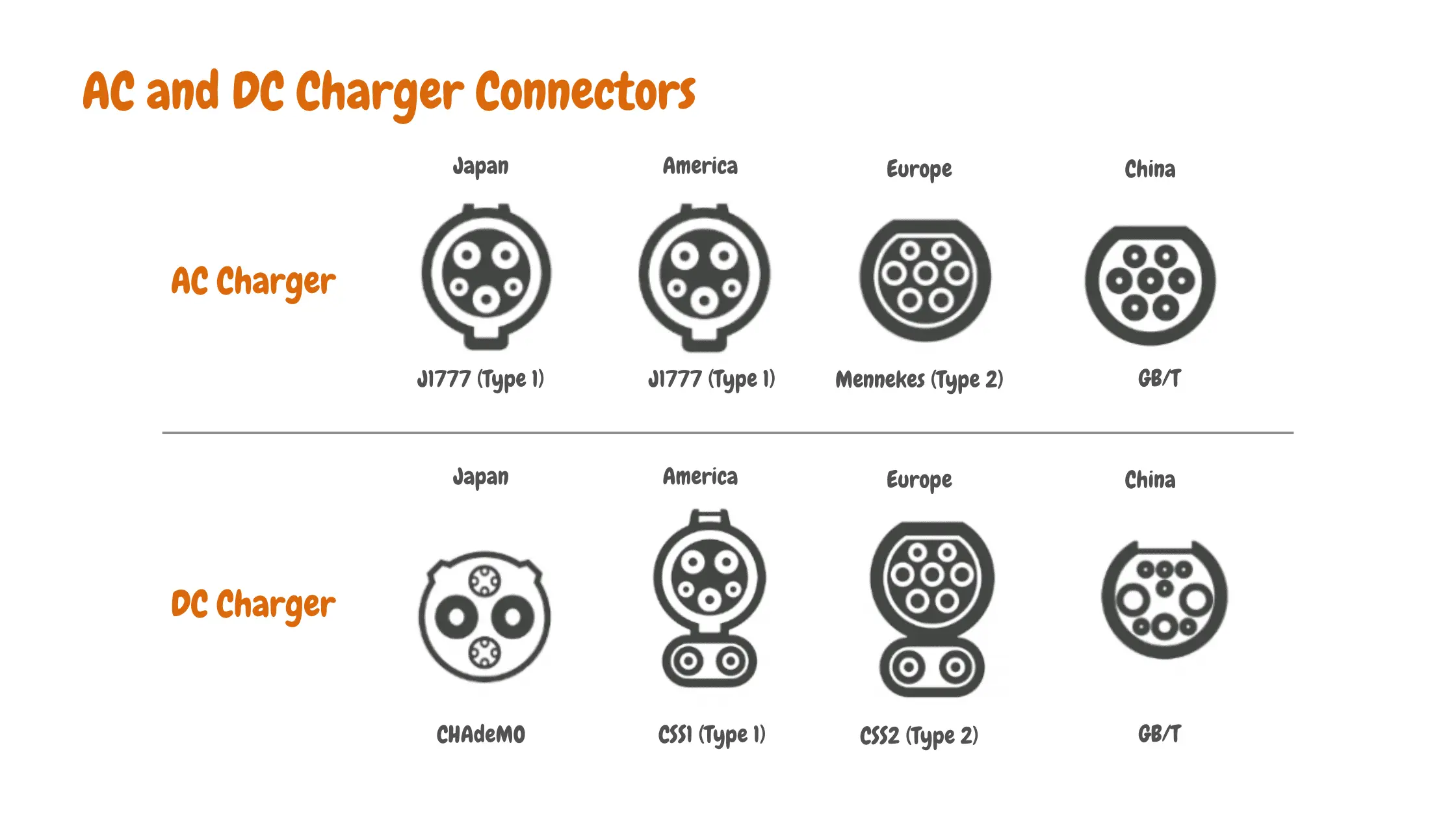
Here is how every major EV connector stacks up in terms of power, region, and use case. Use this table to see at a glance where this standard fits in the wider charging world.
| Connector | Region | Max AC Power | Max DC Power | Pin Count |
| NACS (J3400) | North America | 19.2 kW | 1,000 kW (theoretical) | 5 |
| CCS Combo 1 | North America | 19.2 kW | 360 kW | 7 |
| J1772 (Type 1) | North America, Japan | 19.2 kW | Not supported | 5 |
| Type 2 (Mennekes) | Europe, Oceania | 43 kW (3 phase) | Not supported | 7 |
| CCS Combo 2 | Europe, Oceania | 43 kW (via Type 2) | 360+ kW | 9 |
| CHAdeMO | Japan, legacy global | Not supported | 400 kW | 10 |
| GB/T | China | 27.7 kW | 237.5 kW (900 kW ChaoJi) | Dual port |
The Bottom Line on the CCS Combo 2 Charger
The CCS Combo 2 charger is the European answer to high-power DC fast charging, and it has performed well for over a decade. Vehicle-side locking is better than CCS1, the 800-volt architecture is well supported, and the Ionity network shows that fast-charging infrastructure can be built profitably and reliably when there is regulatory clarity and consistent demand.
For European drivers, the CCS Combo 2 charger is how road trips work. For American drivers, it is the standard that other continents have settled on and the model against which the NACS transition will be judged. Either way, the connector represents some of the best thinking in EV charging hardware and is worth understanding even if you never plug into one yourself.

James Ndungu is a certified EV charger installer with over five years of experience in EVSE selection, permitting, and installation. He holds advanced credentials, including certification from the Electric Vehicle Infrastructure Training Program (EVITP) and specialized training in EV charging equipment and installation, as well as diplomas in EV Technology and Engineering Fundamentals of EVs. Since 2021, James has tested dozens of EV chargers and accessories, sharing expert insights into the latest EV charging technologies.