CCS Combo 1 charger guide for US drivers. Covers compatibility, charging speeds, the NACS transition, adapters, and troubleshooting fast charging errors.
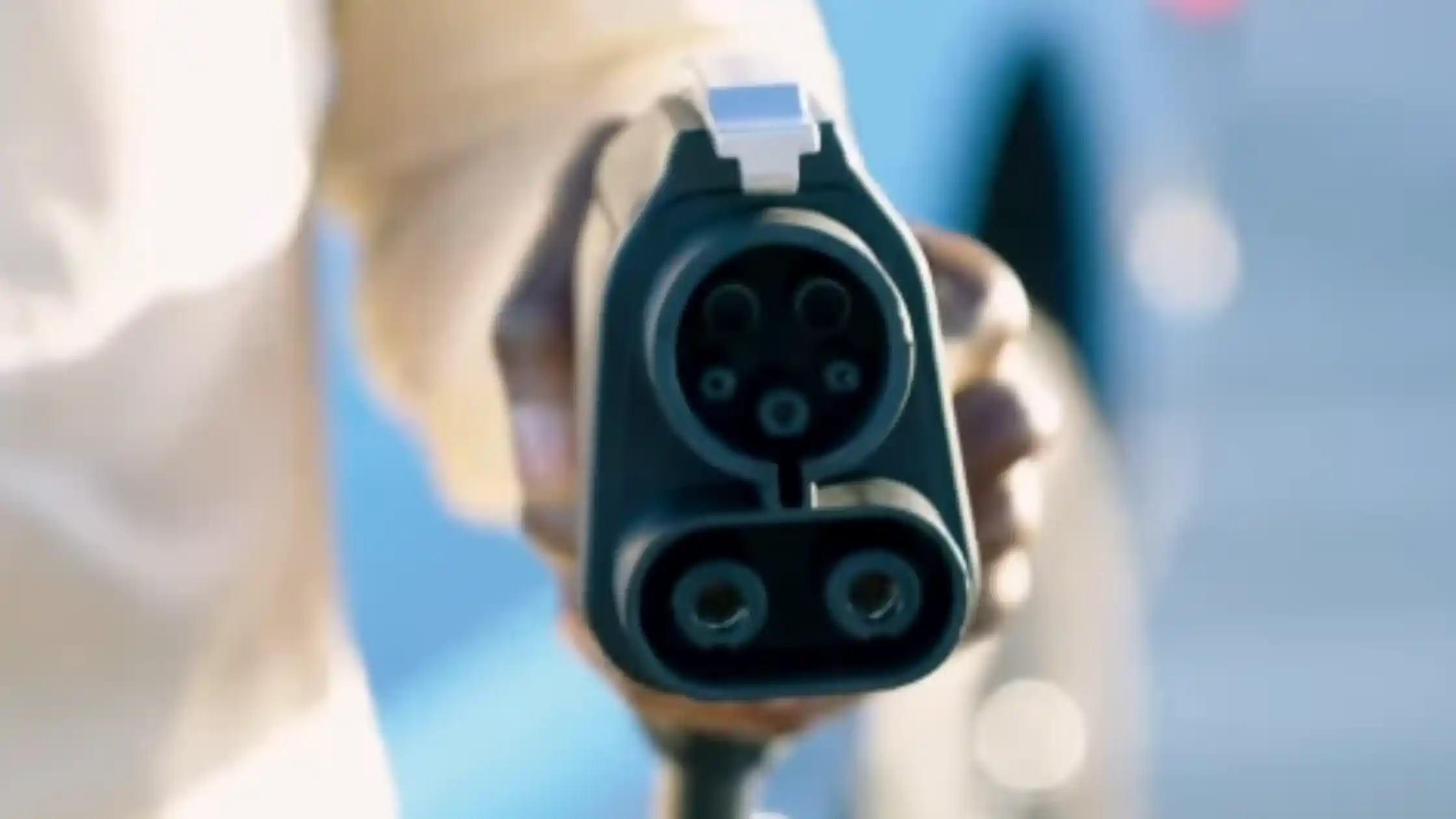
CCS Combo 1, also written as CCS1 or simply CCS in the US market, is the tall, stacked plug you have seen at every Electrify America, EVgo, and ChargePoint DC fast charging station since 2018. It looks bulky because it is bulky. The design takes a J1772 plug and bolts two large DC power pins underneath it, which is exactly how the standard got built and why it feels like wrestling a brick in cold weather.
This guide explains what CCS1 actually does, why NACS in North America is replacing it, whether your CCS1 car is about to become a paperweight, and how to keep fast charging smooth during the transition.
CCS Combo 1 (CCS1) Physical and Electrical Specifications
- Connector Standard: CCS Combo 1 (CCS1)
- Primary Region: North America
- Physical Port Strategy: Combo design combining a J1772 AC connector with two additional DC pins below
- Max AC Delivery: Up to 19.2 kW (single-phase AC)
- Max DC Delivery: Up to 350 kW DC fast charging
- Communication Protocol: PLC communication using DIN 70121 and ISO 15118
What CCS Combo 1 Is and How It Got Here
CCS stands for Combined Charging System. The Combo 1 version is the North American variant, built around the SAE J1772 AC plug, which is already standard here. A consortium of German and American automakers created the standard in 2011 as a direct response to the Japanese CHAdeMO standard, which had a head start in DC fast charging.
The design philosophy was straightforward. Every non-Tesla EV in the US already had a J1772 inlet for home charging. Rather than ask drivers to handle two completely separate ports, the CCS designers extended the existing port downward and added two large DC pins beneath the AC contacts. One physical port handles everything from a 1.4-kilowatt trickle charge to a 360-kilowatt fast charge.
That was the theory. In practice, CCS1 hardware grew heavier and stiffer year after year as automakers chased higher power numbers. By the time stations reached 350 kilowatts of output, the cables were so heavy that some smaller drivers struggled to lift them.
How CCS1 Combines AC and DC in One Port
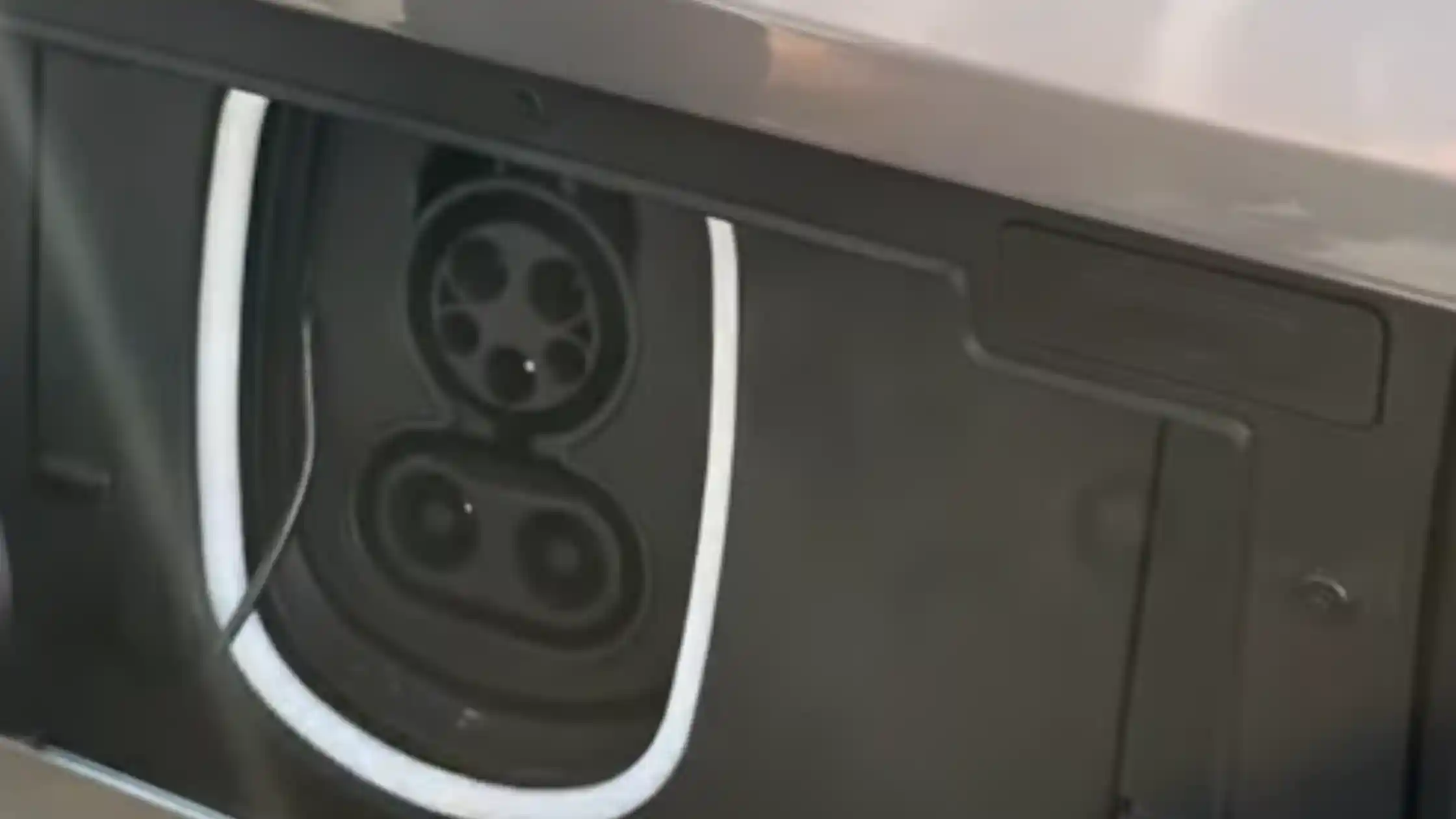
The CCS1 inlet on your car has seven pin positions arranged in a tall stack. The top five positions form a standard J1772 layout, identical to what your home charger plugs into. The bottom two positions are two large, round DC pins.
When you plug in a regular J1772 cable, only the top five pins engage. The car charges at AC speeds through the onboard converter, exactly as it would on any J1772 station. When you plug in a CCS1 cable, all seven pins engage. The top five handle the digital handshake and safety signaling; the bottom two carry the high-voltage DC directly to the battery.
This dual-purpose design is clever but creates one annoying limitation. The CCS1 plug is physically larger than the J1772 plug, so a J1772 home charger fits a CCS1 port, but a CCS1 fast-charging plug does not fit a J1772-only port. Compatibility runs one way.
Pin Configuration
Understanding the seven-pin layout helps you make sense of error codes and why certain adapters work while others do not.
The J1772 Section (Top Five Pins)
These match the J1772 standard exactly. Two large pins carry AC Line 1 and Line 2 or Neutral. One central pin handles the earth ground. The two small pins at the bottom of this group are the proximity pilot and control pilot, which manage the digital handshake between the car and the station.
The DC Power Pins (Bottom Two)
These are the big circles you see below the J1772 portion. Each one can carry up to 500 amps of DC at up to 1,000 volts. One is positive, the other is negative. They do absolutely nothing during AC charging and only wake up when a CCS1 fast charger is connected and authenticated.
Physical doors protect the pins on most modern stations. When you plug in, the doors retract just before contact, and the station performs an isolation test to make sure no current can leak before flipping on the high voltage.
Real World Charging Speeds
CCS1 stations come in a range of power levels, and most never deliver their full-rated output to most cars. Here is what you can actually expect to see on the station screen.
At a 50-kilowatt station, almost every CCS1 car will pull the full 50 kilowatts as long as the battery is between 20 and 60 percent state of charge. This adds roughly 100-150 miles of range in 30 minutes for most vehicles.
On a 150-kilowatt station, only certain cars with 400-volt architecture can pull the maximum. A Chevy Bolt caps at 55 kilowatts, no matter how much power the station offers, a Ford Mustang Mach-E peaks around 150 kilowatts under ideal conditions. A Hyundai Ioniq 5 or Kia EV6 with the 800-volt architecture can pull 220 kilowatts or more, but the station has to support that too.
At a 350-kilowatt station, you need a vehicle with an 800-volt battery architecture to take full advantage. Even then, most cars peak in the 235-270 kilowatt range. The numbers above 300 kilowatts mostly apply to commercial trucks and certain Porsche and Lucid models.
Which Vehicles Use CCS Combo 1
Every non-Tesla EV sold in North America between 2018 and 2024 came with a CCS1 port.
The list is long, but here are the most common models you will see.
| Brand | Models with CCS1 Port | Status |
| Ford | Mustang Mach-E, F-150 Lightning (2021 to 2024) | Switched to NACS in 2025 |
| GM | Chevy Bolt EV/EUV, Cadillac Lyriq, Blazer EV (2020 to 2024) | Switched to NACS in 2025 |
| Volkswagen | ID.4, ID.7, ID. Buzz (all years) | Still CCS1 through 2026 |
| Hyundai | Ioniq 5, Ioniq 6, Kona EV (2018 to 2024) | Switched to NACS |
| Kia | EV6, EV9, Niro EV (2019 to 2024) | Switched to NACS |
| Rivian | R1S, R1T (2022 to 2024) | Switched to NACS |
| BMW | i4, iX, i7 (2022 to 2025) | Switching to NACS |
| Mercedes | EQS, EQE, EQB (all years) | Switching to NACS |
| Audi | e-tron, Q4 e-tron, Q8 e-tron (all years) | Still CCS1 |
| Porsche | Taycan (all years) | Still CCS1 |
| Lucid | Air (all years) | Still CCS1 |
| Polestar | Polestar 2, 3 (2020 to 2024) | Switching to NACS |
| Volvo | XC40 Recharge, EX30 (2021 to 2024) | Switching to NACS |
Safety, Certification, and Thermal Behavior
CCS1 hardware sold in the US carries UL 2202 certification for the DC charging station and UL 2251 for the connector. The IEC 62196-3 standard covers the international specification. These markings indicate that the equipment has been tested to withstand the voltages and currents involved without arcing, overheating, or failing under load.
Stations are rated to IP55 or higher for outdoor use. The plug handle has thermal sensors that monitor temperature throughout the session. If the pins or cable get too hot, the station automatically reduces the current. This is normal protective behavior, not a fault, even though the lower charging speed can be frustrating.
The biggest real-world safety issue with CCS1 is not electrical. It is mechanical. The plastic latch on top of the handle takes a beating at busy public stations, and when it breaks, the cable becomes effectively unusable until a service tech replaces it. This is why you sometimes pull up to a fast charger and find one of the four cables marked out of service.
The NACS Transition and What It Means for CCS1 Drivers
In 2023, almost every major automaker announced that it would adopt NACS for its 2025 and newer models. This raises the obvious question for current CCS1 owners. Is your car about to become obsolete?
The honest answer is no, not for many years. Here is why. There are well over 2 million CCS1-equipped vehicles already on US roads. There are tens of thousands of CCS1 fast charging stations operated by Electrify America, EVgo, ChargePoint, EVCS, and others. Federal funding through the NEVI program continues to require CCS1 compatibility at any station receiving federal money.
What is happening is a slow handoff. New stations are being built to dual-standard specifications, with both CCS1 and NACS cables. Existing CCS1 stations are getting NACS retrofit cables added. Tesla Superchargers are now open to CCS1 vehicles via the Magic Dock and factory adapters that automakers now ship.
Your CCS1 car will charge without trouble for at least the next 10 years, probably longer. The infrastructure is far too built out to abandon.
CCS1 to NACS Adapters You Can Use Today
If you own a CCS1 car and want to use a Tesla Supercharger, several automakers now offer factory adapters. Ford, GM, Rivian, Hyundai, Kia, and Polestar have all distributed adapters to existing owners during 2024 and 2025. Tesla also sells a Magic Dock retrofit at certain stations that provides a built-in adapter.
Third-party CCS1-to-NACS adapters are available from companies like A2Z EV and Lectron. The ones rated for DC fast charging are expensive, typically 200 to 500 dollars, because they have to handle real power and pass UL certification. Avoid any DC adapters selling for under 150 dollars. The certified ones cost what they cost for good reasons.
Going the other direction, NACS to CCS1 is rarely needed since most new NACS vehicles ship with their own adapter for legacy CCS1 stations. If yours did not, the manufacturer’s adapter is what you want.
Common CCS1 Errors and How to Handle Them
Isolation, Fault, or Ground Fault
The most common DC fast-charging error occurs on CCS1. The station detected an electrical leak somewhere in the circuit and refused to deliver power. Causes include moisture inside the plug or port, a damaged cable, or a car-side fault. Wipe the plug face dry, check for visible debris, and try a different cable at the same station. If the error follows you from station to station, your car needs service.
Communication Error or Handshake Failure
The car and station could not agree on charging parameters. Often resolved by unplugging completely, waiting 30 seconds, and trying again. Cold weather makes this worse because some older CCS1 hardware struggles to wake up below freezing.
Stuck Cable in Charge Port
Almost always a problem with the station, not the car. Try the unlock button on your charging app. If the station is unresponsive, call the customer service number on the station. Do not try to force the cable out. Many stations have a remote unlock that customer service can trigger.
Is CCS1 a Dead Standard?
Not yet, and not for a long time. It is a sunsetting standard. New car development is moving to NACS, and new station construction increasingly favors NACS or dual standard installations. But the installed base is enormous, the infrastructure investment is sunk, and federal regulations protect CCS1 access at federally funded stations through at least 2030.
If you own a CCS1 car, charge it the way you have been. If you are buying a CCS1 car today on a discount because dealers are clearing inventory, it is still a fine purchase as long as you get a factory NACS adapter included. Future-proof access is what matters more than the plug on the wall.
How CCS Combo 1 Compares to Other EV Charger Plugs and Connectors
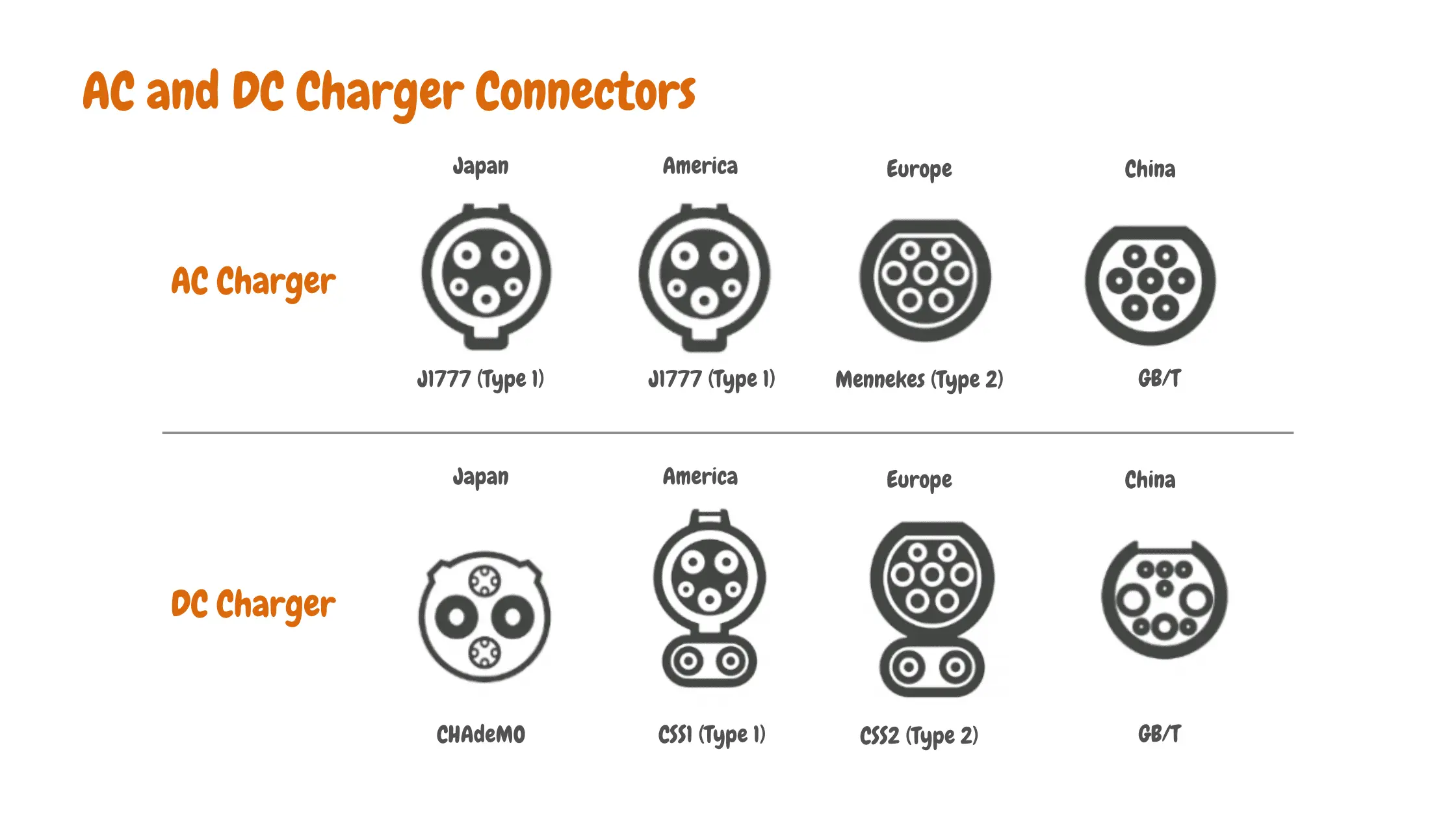
Here is how every major EV connector stacks up in terms of power, region, and use case. Use this table to see at a glance where this standard fits in the wider charging world.
| Connector | Region | Max AC Power | Max DC Power | Pin Count |
| NACS (J3400) | North America | 19.2 kW | 1,000 kW (theoretical) | 5 |
| CCS Combo 1 | North America | 19.2 kW | 360 kW | 7 |
| J1772 (Type 1) | North America, Japan | 19.2 kW | Not supported | 5 |
| Type 2 / CCS2 | Europe, Oceania | 43 kW (3 phase) | 360+ kW | 9 |
| CHAdeMO | Japan, legacy global | Not supported | 400 kW | 10 |
| GB/T | China | 27.7 kW | 237.5 kW (900 kW ChaoJi) | Dual port |
The Bottom Line on CCS Combo 1
CCS1 was the right standard at the right time and built an enormous fast-charging network across North America. It is now being succeeded by NACS, which is smaller, lighter, and better integrated. The transition will take a decade or more, and during that time, CCS1 vehicles will continue to charge at the stations they have always used.
If your car has a CCS1 port, get a factory adapter for NACS access and keep using it. The plug is here to stay long enough to make your investment worthwhile.

James Ndungu is a certified EV charger installer with over five years of experience in EVSE selection, permitting, and installation. He holds advanced credentials, including certification from the Electric Vehicle Infrastructure Training Program (EVITP) and specialized training in EV charging equipment and installation, as well as diplomas in EV Technology and Engineering Fundamentals of EVs. Since 2021, James has tested dozens of EV chargers and accessories, sharing expert insights into the latest EV charging technologies.