Complete GB/T charger guide. China’s unique dual-port EV charging standard, used vehicles, ChaoJi next-gen specs, and what US importers need to know.
If you imported a Chinese EV, are reading about BYD’s growing US presence, or just spent five minutes on EV forums in the last year, you have run into the GB/T standard. It is China’s national charging connector, mandated by the state, and it works completely differently from anything sold in North America. Most US drivers will never plug into a GB/T port. But if you are an engineer, a fleet buyer evaluating Chinese vehicles, or a curious enthusiast trying to understand why a Nio cannot use a Tesla Supercharger, this guide is for you.
This is a technical informational deep dive into how GB/T uses two separate ports, why ChaoJi is changing everything, and what the standard means for the global EV market.
GB/T Physical and Electrical Specifications
- Connector Standard: GB/T
- Primary Region: China
- Physical Port Strategy: Separate physical AC and DC charging sockets on the vehicle
- Max AC Delivery: Up to 22 kW (three-phase AC)
- Max DC Delivery: Up to 250 kW, with ChaoJi targets reaching 900 kW
- Communication Protocol: CAN Bus communication
What GB/T Actually Stands For
GB/T stands for Guo Biao Tui Jian, which roughly translates to “recommended national standard.” The first GB/T charging specifications appeared in 2011, with major revisions in 2015 that locked in the connectors used across China today. The current versions are GB/T 20234.2 for AC charging and GB/T 20234.3 for DC charging.
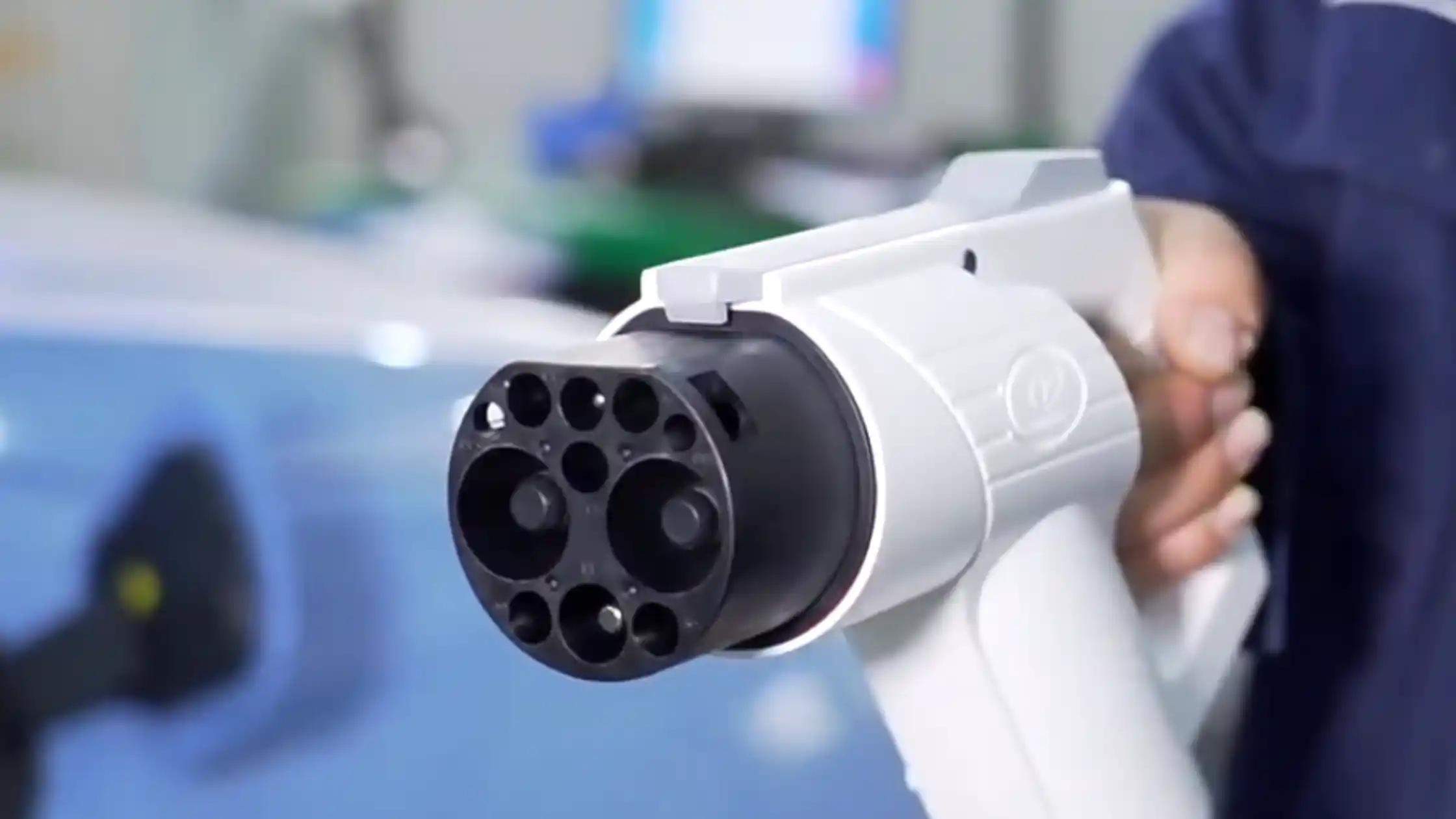
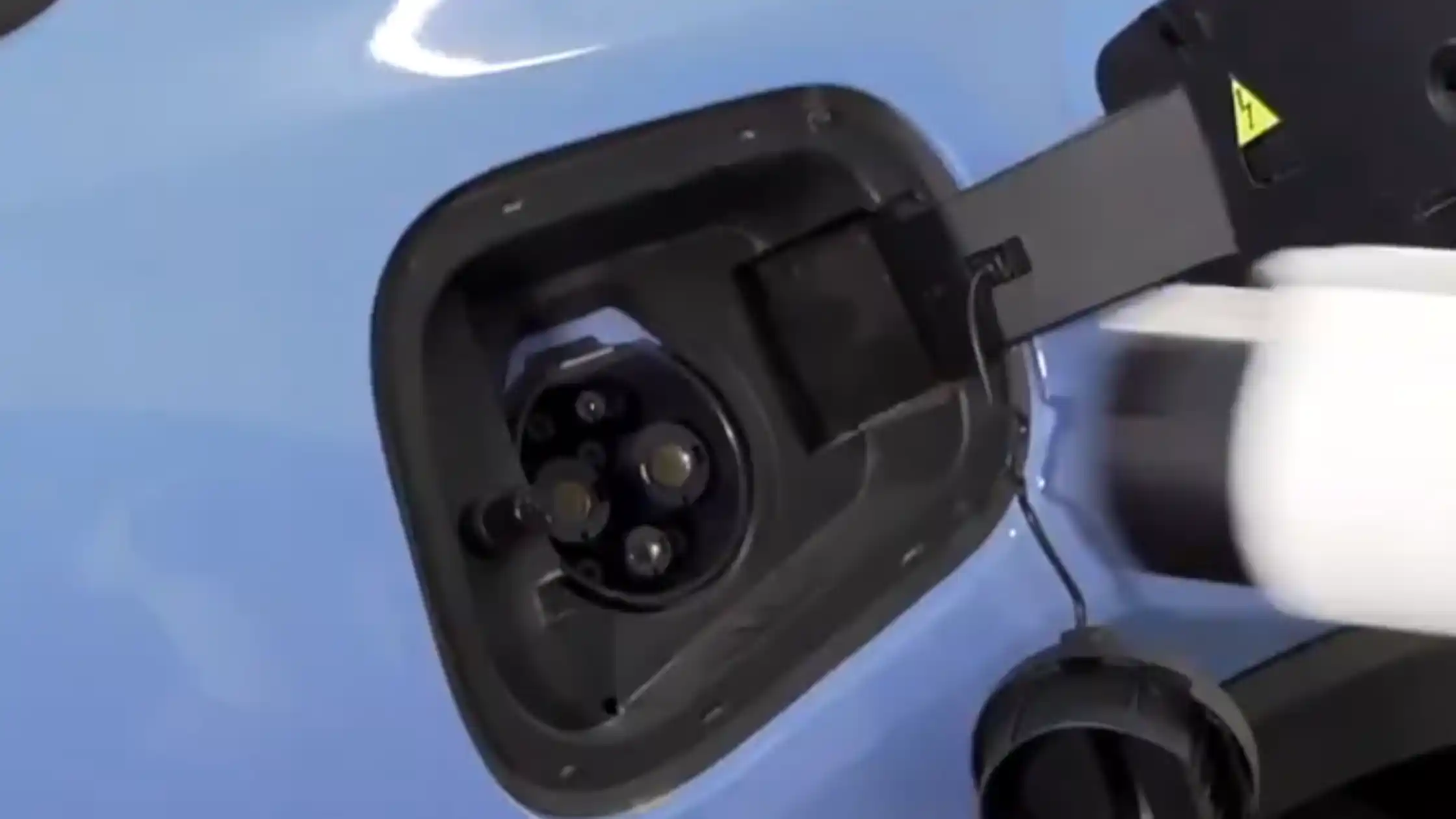
Unlike NACS or CCS, which use a single connector for both AC and DC, GB/T separates the two functions into distinct physical ports on the vehicle. Every Chinese EV has two distinct charge ports, usually located on opposite sides of the car. One accepts AC charging only. The other accepts DC fast charging only.
This dual-port design is the single most defining feature of the standard. It is the reason a casual observer can tell a Chinese spec EV apart from an American or European one at a glance.
How the Dual Port System Works
The AC port supports slow and medium-speed charging from a 220-volt home connection or a public AC charging station. It supports up to 27.7 kilowatts at 220 to 440 volts and 63 amps. That is meaningfully more than the J1772 maximum of 19.2 kilowatts, partly because Chinese residential power uses a higher base voltage and partly because the standard was designed assuming three-phase home availability, which is rare in the US.
The DC port handles fast charging. The original GB/T 20234.3 specification tops out at 237.5 kilowatts. In practice, most older stations deliver 50 to 120 kilowatts, which is comparable to early-generation American CCS1 stations. The standard has been pushed harder over time, and newer ChaoJi-compatible stations can deliver 900 kilowatts to supported vehicles.
Because the ports are physically separate, you cannot use a single cable for both. A driver at home plugs in to the AC port for an overnight session. On a road trip, that same driver pulls into a fast charging station and plugs the DC cable into the other port on the other side of the car. It sounds awkward to an American driver, but Chinese owners simply learn the layout of their own car.
GB/T Charger Pin Configuration
Because GB/T uses two ports, it has two distinct pin layouts. Each one is engineered for its specific job.
AC Port Pin Configuration (7 Pins)
The AC port has seven pins arranged in a circular layout that superficially resembles a Type 2 Mennekes plug. The pins are mirrored from the Mennekes layout, which means a Type 2 plug physically does not fit a GB/T AC inlet. This was a deliberate choice by Chinese regulators to prevent cross compatibility with imported European hardware.
The seven pins include three-phase AC lines for L1, L2, and L3, a neutral, earth ground, a confirmation pin similar to a proximity pilot, and a CC2 communication pin. The three-phase capability is the key difference from J1772, which is single-phase only.
DC Port Pin Configuration (9 Pins)
The DC port has nine pins and looks substantially different from any other DC charging connector. There are two large DC power pins for positive and negative, two auxiliary low-voltage power pins for waking up the vehicle’s battery management system, an earth ground pin, a confirmation pin, and three communication pins.
The communication runs over the CAN bus rather than the PLCs that CCS and NACS use. This is one of the deepest incompatibilities in the global EV charging world. CAN bus and PLC use different digital protocols and require active electronic translation to bridge them, not just a mechanical adapter.
Which Vehicles Use GB/T
Every electric vehicle sold legally in mainland China is certified to GB/T.
Many of these models are also exported, in which case they ship with CCS2 or NACS for the destination market. Here are the major brands you would encounter.
| Brand | Notable Models (Chinese Market) | Sold Outside China |
| BYD | Atto 3, Seal, Dolphin, Tang, Han, Yuan Plus | Yes, with regional connectors |
| Nio | ES6, ES8, ET5, ET7, EC6 | Limited European export |
| Xpeng | P7, G6, G9, X9 | Limited European export |
| Geely | Geometry, Zeekr 001, Zeekr X | Yes, with regional connectors |
| GAC Aion | Aion S, Aion Y, Aion V | Limited export |
| MG (SAIC) | MG4, MG ZS EV, MG5 | Yes, with CCS2 for Europe |
| Wuling | Hongguang Mini EV | China only |
| Great Wall (Ora) | Ora Good Cat, Ora Funky Cat | Limited European export |
| Li Auto | L6, L7, L8, L9 (range extended) | China only |
| Polestar | Polestar 4 (China-built) | Yes, with regional connectors |
| Tesla | Model 3, Model Y (China built, China sold) | China spec only uses GB/T |
What ChaoJi Means for the Future
In 2020, China and Japan jointly announced ChaoJi, a next-generation DC fast-charging standard intended to succeed both GB/T DC and CHAdeMO. The name roughly translates to “super” in Mandarin. ChaoJi is designed to support up to 900 kilowatts of charging power and uses a smaller, lighter connector that is mechanically backward-compatible with existing GB/T DC ports via an adapter.
ChaoJi was published as GB/T 38775 starting in 2020, with various subparts released through 2023. Real-world deployment began in 2024 and is accelerating. By the late 2020s, ChaoJi is expected to be the dominant DC fast-charging standard in China, and Japanese automakers are committed to supporting it as CHAdeMO’s successor.
For US drivers, ChaoJi is mostly academic. But the megawatt charging speeds it enables are setting the bar that NACS and CCS2 will have to clear in the next decade. The pin design, liquid cooling, and protocol layer of ChaoJi are influencing global standards work.
Safety, Certifications, and Build Quality
Chinese EV chargers and connectors are tested against the GB/T 18487 series of standards, which covers everything from electrical safety to environmental sealing. Stations and connectors must pass third-party certification from state-recognized labs before deployment.
Build quality varies more than you would expect. State-backed station networks, such as State Grid, maintain very high standards through regular inspections. Private operators range from excellent to mediocre. The mass-produced consumer-side adapters and cables you find on AliExpress are often genuinely well-made because the domestic Chinese market is enormous and highly competitive.
Ingress protection ratings on GB/T DC plugs are typically IP54 or IP55, similar to US standards. Thermal protection in the connector is mandatory under the latest revision of the standard.
Locking Mechanism and Security
Both GB/T ports use vehicle-side electronic locking similar to Type 2 and NACS. When you initiate a charging session, a small motor in the car port pulls a latch over the plug, holding it in place. The lock releases at the end of the session or when you tap the unlock button on the car or the station screen.
This is more secure than the J1772 thumb latch and prevents random strangers from unplugging your car. The downside is the same as every electronic lock design. If the motor fails, the plug stays stuck. Chinese EVs include a manual release pull cord in the same place as American cars, usually inside the trunk or under the front hood.
Can You Use a GB/T Vehicle in the United States?
Practically speaking, no. There are essentially zero public GB/T charging stations in the United States. If you imported a Chinese EV under the show or display exemption, or if you have a gray-market BYD, you would need to install a private GB/T charger at home and never expect to fast charge on a road trip.
Even private GB/T home chargers are difficult to obtain in the US, since they are not certified to UL standards and could expose a US-based electrician to liability. Some EV enthusiasts have built custom adapters that bridge GB/T AC to J1772 or NACS, but the safety implications of these conversions are real, and we do not recommend them.
If you are seriously considering importing a Chinese EV, the better question is whether the vehicle is street-legal in your state. The federal show-or-display rules are narrow, and most states will not register an imported EV that does not meet US safety standards.
Common GB/T Issues (For Those Who Will Encounter Them)
AC Port Charges, but DC Port Will Not
Often, a CAN bus communication error occurs. The two ports use different protocols, so a problem on one does not necessarily affect the other. Try a different DC station first. If the issue persists across multiple stations, the vehicle’s DC contactor or battery management system may need service.
Cable Will Not Release
Same procedure as any electronic lock failure. Find the manual emergency release in the vehicle, usually a yellow or red pull cord inside the trunk or behind a small access panel near the charge port.
Adapter Confusion
If you bought an adapter on AliExpress to bridge GB/T to anything else, expect it to be unreliable at best and dangerous at worst. Mechanical GB/T-to-CCS2 adapters are available for Chinese tourists in Europe, but most are not certified for high-power DC charging. Stick to the native standard or do not charge.
Why China Chose a Dual Port Design
The decision to split AC and DC into separate ports was deliberate and reflects how Chinese cities actually work. Most apartment dwellers in Beijing and Shanghai do not have private garages. They rely on shared public AC chargers at parking structures and on a growing network of DC stations on highways and at shopping centers.
Splitting the ports meant the AC inlet could be smaller and cheaper, suitable for the high-volume residential charging that dominates daily use. The DC inlet could be ruggedized for heavy-duty road-trip charging, which happens less often but at much higher power. Each port could be optimized for its specific role without compromise.
Western standards took the opposite approach, prioritizing the convenience of one port that does everything. The trade-off in Western designs is a larger, heavier, more complex single connector. Neither approach is objectively right. Both reflect the infrastructure realities each market faced when the standards were set in stone.
Battery Swap as the GB/T Plus Alternative
One reason China has tolerated relatively modest DC fast charging speeds is the parallel rise of battery swap stations. Nio, in particular, has built over 2,000 battery swap stations across China, where a robot replaces your depleted battery with a fresh one in under 5 minutes.
A battery swap bypasses the entire conversation about charging standards. The car drives into a station, the battery is exchanged, and the car drives out; no plugs, no protocols, no waiting. For commercial fleet vehicles in China, this is often faster and cheaper than waiting for a DC fast-charging session.
Battery swap has not caught on in North America or Europe, partly because automakers there refuse to standardize on battery form factors, a prerequisite for swap stations to work across multiple vehicle brands. The Chinese government mandated some level of standardization, which made the model viable. It is another example of how regulatory choices shape what is technically possible.
How GB/T Compares to Other EV Charger Plugs and Connectors
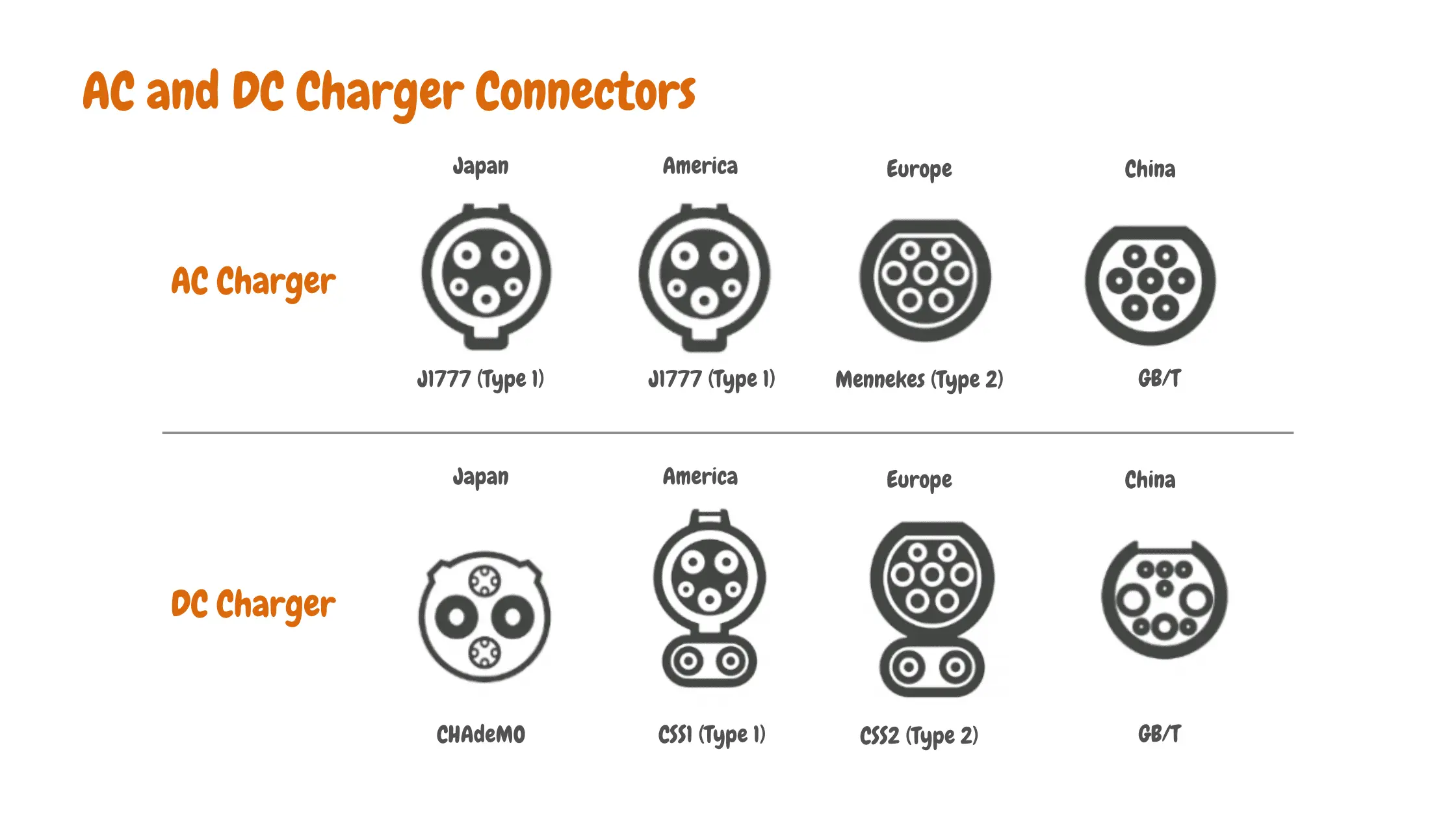
Here is how every major EV connector stacks up in terms of power, region, and use case. Use this table to see at a glance where this standard fits in the wider charging world.
| Connector | Region | Max AC Power | Max DC Power | Pin Count |
| NACS (J3400) | North America | 19.2 kW | 1,000 kW (theoretical) | 5 |
| CCS Combo 1 | North America | 19.2 kW | 360 kW | 7 |
| J1772 (Type 1) | North America, Japan | 19.2 kW | Not supported | 5 |
| Type 2 / CCS2 | Europe, Oceania | 43 kW (3 phase) | 360+ kW | 9 |
| CHAdeMO | Japan, legacy global | Not supported | 400 kW | 10 |
| GB/T | China | 27.7 kW | 237.5 kW (900 kW ChaoJi) | Dual port |
The Bottom Line on GB/T
GB/T is the standard that runs the world’s largest EV market, but it is essentially unknown outside its home country. Its dual-port architecture is unusual, its CAN bus protocol is incompatible with Western standards, and its successor, ChaoJi, promises charging speeds beyond anything currently available in North America.
For American EV drivers, you will likely never interact with GB/T directly. But understanding how it works helps you understand why Chinese EV imports are so complicated, why global charging interoperability remains a distant dream, and why the megawatt charging numbers in the news are mostly being achieved in China today.

James Ndungu is a certified EV charger installer with over five years of experience in EVSE selection, permitting, and installation. He holds advanced credentials, including certification from the Electric Vehicle Infrastructure Training Program (EVITP) and specialized training in EV charging equipment and installation, as well as diplomas in EV Technology and Engineering Fundamentals of EVs. Since 2021, James has tested dozens of EV chargers and accessories, sharing expert insights into the latest EV charging technologies.